The Digital Accessibility Mandate: How AudioEye is Bridging the Gap Between AI and Human Inclusion
In the modern digital landscape, the internet is no longer a luxury; it is the primary gateway to commerce, healthcare, civic engagement, and social connection. Yet, for approximately 1.3 billion people worldwide—nearly 16% of the global population—the web remains a fragmented, often inaccessible space. As digital transformation accelerates, the gap between those who can navigate the web and those who cannot has become a critical focal point for global regulatory bodies, legal systems, and corporate boards.
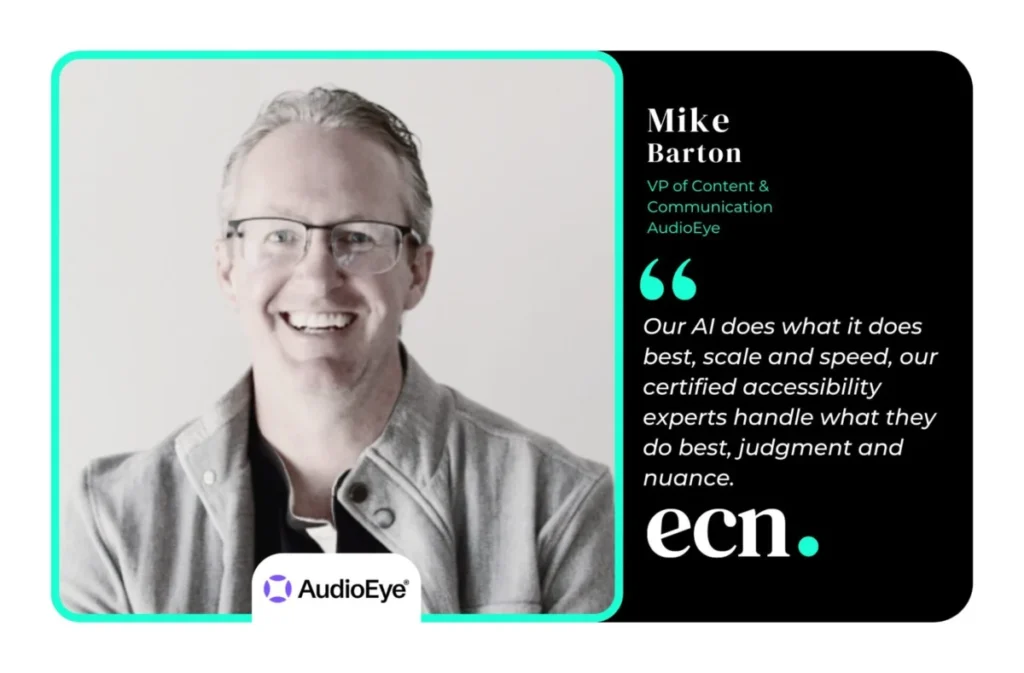
AudioEye, a leader in digital accessibility, has emerged as a pivotal player in this space. By combining artificial intelligence with human expertise, the company is attempting to redefine how organizations approach the digital rights of users with disabilities. Mike Barton, VP at AudioEye, frames the company’s vision as a shift from "accessibility as a legal afterthought" to "accessibility as a default standard."
The Evolution of Digital Accessibility: From Niche to Necessity
For nearly two decades, digital accessibility was treated by most enterprises as a secondary concern, often relegated to a "checkbox" compliance exercise. However, the paradigm has shifted dramatically. The rise of sophisticated assistive technology, combined with a surge in litigation, has forced accessibility to the forefront of corporate strategy.
"Digital accessibility was a niche concern when AudioEye started," explains Barton. "Most companies treated it as a checkbox or ignored it entirely. What’s changed is that the stakes have caught up to the principle."
Chronology of a Growing Crisis
- The Early 2000s: Accessibility was largely ignored, with minimal enforcement or standardized guidelines.
- The 2010s: The rise of mobile and e-commerce increased the visibility of the digital divide. Litigation began to tick upward as businesses failed to accommodate users with disabilities.
- 2020–Present: U.S. accessibility lawsuits have doubled since 2020. Simultaneously, the European Accessibility Act (EAA) has introduced a new, borderless regulatory framework that mandates compliance for any entity serving EU customers.
This evolution is not merely legal; it is driven by technological disruption. As AI becomes the primary architect of the modern web, it is simultaneously creating both the problem (generating inaccessible code at scale) and the solution (providing the automated tools required to scan and fix millions of pages in real-time).
Supporting Data: The Cost of Inaction
For businesses, the argument for accessibility is increasingly rooted in economic data rather than just social responsibility. AudioEye’s research highlights the "accessibility gap" as a significant drain on potential revenue.
- Spending Power: People with disabilities represent an estimated $18 trillion in global spending power.
- Consumer Loyalty: Data suggests that 83% of shoppers with disabilities limit their activity to websites they know are functional and inclusive. Conversely, 70% of users will abandon a site immediately if they encounter significant accessibility barriers.
- Legal Exposure: E-commerce remains the primary target for litigation, accounting for approximately 78% of current digital accessibility lawsuits.
"The companies treating accessibility as a checkbox are the ones getting caught off guard," says Barton. "The companies treating it as table stakes—or a growth engine—are winning."
The AudioEye Methodology: A Hybrid Approach
AudioEye’s platform functions as an intermediary layer between a website’s code and the user’s assistive technology. By deploying a single line of JavaScript, the platform operates similarly to a cookie banner or a chatbot, allowing for real-time monitoring and remediation.
The Mechanism of Action
- AI-Driven Detection: Using proprietary AI, the platform scans rendered pages against Web Content Accessibility Guidelines (WCAG). According to a 2026 independent study by Adience, AudioEye detects up to 2.5 times more issues than competing automated tools.
- Automated Remediation: Approximately 50% of detected issues are corrected automatically in real-time.
- Human Expertise: Recognizing that AI cannot grasp the nuance of human intent or complex UI context, AudioEye employs certified accessibility specialists—many of whom have disabilities—to perform deep-dive audits. These experts deploy custom fixes that address the "gray areas" where automation fails.
This hybrid approach has led to a resolution rate of approximately 97% of issues before they ever reach the internal development teams of the client. By offloading this technical burden, AudioEye allows businesses to maintain compliance without diverting expensive engineering hours toward manual accessibility testing.
Official Response: Why Humans Still Matter
One of the most persistent debates in the accessibility industry is the "automation vs. human" divide. Some vendors claim that AI-only widgets are sufficient for compliance, a claim that Barton and his team at AudioEye strongly refute.
"Automation handles the volume," Barton notes. "AI can detect and fix things like missing alt text or broken form labels across thousands of pages. But around half of accessibility issues require context. Those decisions require expertise. That combination is why our legal protection rates are three to four times higher than other solutions."
This emphasis on "legal protection" is not just marketing—it is a functional differentiator. AudioEye provides documentation and support that has been used in courtroom settings to secure dismissals, a claim few other vendors in the space can substantiate.
Implications for the Future of the Web
As we look toward the next five years, the intersection of AI and accessibility will be defined by two major trends: global regulation and the emergence of "AI Agents."
The Rise of AI-Driven Discovery
A fascinating development mentioned by Barton is the role of AI agents in web navigation. As large language models and autonomous agents begin to crawl the web to perform tasks on behalf of users, they rely heavily on the site’s "accessibility tree"—the underlying structure that explains what a page contains.
"If your site isn’t accessible, you’re invisible to one of the fastest-growing discovery channels online," says Barton. "Accessibility and AI discovery are going to be the same conversation in a few years."
A Global Regulatory Landscape
The implementation of the European Accessibility Act in 2025 has signaled that accessibility is no longer a localized US issue. Multinational corporations that previously ignored global standards are now finding their compliance maps expanding rapidly. AudioEye is positioning itself to be the guide for these firms, helping them transition from a defensive legal posture to a proactive, inclusive growth strategy.
Conclusion: The Mandate for Inclusion
The final objective for AudioEye is as simple as it is ambitious: to make the internet a default-accessible environment. By providing a scalable, hybrid solution that marries the speed of software with the discernment of human experts, the company is attempting to remove the friction that has historically prevented businesses from prioritizing accessibility.
As digital presence becomes synonymous with business survival, the question for leaders is no longer whether they can afford to implement accessibility, but rather, can they afford the legal, financial, and reputational costs of remaining inaccessible? In an era where the web is the public square, AudioEye’s mission serves as a reminder that a truly modern, efficient, and profitable internet is one that includes everyone.