Omar Abdullah Demands Restoration of Statehood for J&K as Political Pressure Mounts on Centre
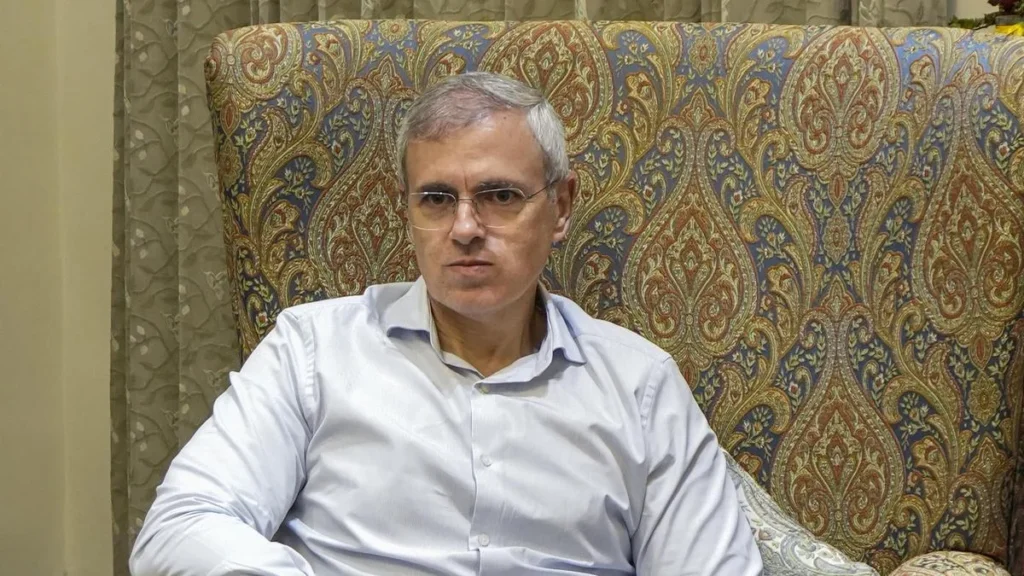
SRINAGAR — In a pointed message delivered on the occasion of Prime Minister Narendra Modi’s birthday on September 17, 2026, Jammu and Kashmir Chief Minister Omar Abdullah launched a fresh political offensive, demanding that the Union government fulfill its long-standing commitment to restore statehood to the region.
Speaking to the media, Mr. Abdullah framed the issue not merely as a political aspiration, but as a moral and constitutional imperative. The Chief Minister’s remarks come at a time when the political climate in the Union Territory (UT) is undergoing a significant transition, with the administration balancing developmental mandates with the persistent public demand for democratic autonomy.
The Core Demand: A Return to Statehood
The Chief Minister’s appeal was stark and devoid of diplomatic ambiguity. Addressing the Centre, Mr. Abdullah questioned the delay in restoring the status of the region. "If nothing else, give us the Statehood of Jammu and Kashmir. What else do we need?" he stated, highlighting the growing impatience among the local populace and the political class regarding the duration of the current administrative arrangement.
Mr. Abdullah underscored that the promise of statehood has been a recurring theme in the Centre’s discourse since the reorganization of the erstwhile state in 2019. However, he lamented the absence of a concrete, written roadmap. "Nothing was put in writing. Assurances were given verbally, even in Parliament and the Supreme Court," he noted, pointing to a trust deficit that continues to shadow the relationship between Srinagar and New Delhi.
Chronology of a Disputed Status
To understand the weight of Chief Minister Abdullah’s comments, one must examine the timeline of Jammu and Kashmir’s administrative evolution over the last seven years:
- August 2019: The Parliament of India passed the Jammu and Kashmir Reorganisation Act, bifurcating the state into two Union Territories: Jammu & Kashmir (with a legislature) and Ladakh (without a legislature). Article 370 was abrogated, effectively ending the special status the region held for decades.
- 2020–2023: The Centre maintained that statehood would be restored at an "appropriate time," contingent upon the restoration of normalcy and the completion of delimitation exercises.
- December 2023: The Supreme Court of India upheld the abrogation of Article 370 but directed the Union government to restore statehood as soon as possible, emphasizing the importance of democratic processes.
- September 2026: With the political process having stabilized and local elections concluded, the demand for the reinstatement of the state’s full powers has reached a critical juncture.
Supporting Data and Political Context
The demand for statehood is backed by a broad consensus across the political spectrum in the valley. Supporters argue that the current UT structure restricts the executive powers of the Chief Minister, particularly concerning law and order and civil services, which remain under the purview of the Lieutenant Governor (LG).

Political analysts point out that the lack of full statehood hinders the implementation of regional policies. Without the ability to influence security architecture or exercise full control over the bureaucracy, the elected government often finds itself in a state of administrative paralysis. For the Omar Abdullah administration, statehood is the final hurdle in normalizing the political landscape of the region.
Balancing the Economy: The UPI Debate
While the political discourse remained centered on statehood, Chief Minister Abdullah also took a proactive stance on fiscal policy, specifically addressing the Centre’s move to impose charges on certain UPI (Unified Payments Interface) transactions.
In a move aimed at reassuring small-scale traders and the public, Mr. Abdullah clarified the nuances of the new policy:
- Exemption for Individuals: Transactions between individual bank accounts remain free of charge.
- Protection of Consumers: The Chief Minister emphasized that businesses, not customers, would bear the brunt of the costs, and that merchants are prohibited from passing these charges onto the end consumer.
- Threshold Limits: He confirmed that merchant transactions below ₹2,000 would remain exempt from merchant discount rates (MDR) or similar levies, ensuring that the digital payments ecosystem remains accessible to small vendors.
This balanced approach suggests that while the Chief Minister is willing to cooperate with the Centre on digital infrastructure and economic reforms, he remains deeply protective of the economic interests of his constituents.
Official Responses and the Standoff
The Centre has historically maintained that the security situation in J&K is the primary driver behind the delayed restoration of statehood. Government spokespersons have previously cited the need for a "secure and stable environment" before full powers can be devolved.
However, the opposition and regional parties argue that the successful conduct of recent elections is, in itself, proof that the region is ready for self-governance. By raising the issue on the Prime Minister’s birthday, Mr. Abdullah has effectively challenged the Centre to move beyond rhetoric.

Legal experts suggest that while the Supreme Court’s verdict was non-binding regarding a specific date for statehood, the moral pressure on the Centre has intensified. The argument is that if the government can hold successful elections, it implies that the democratic process is operational, thus removing the primary excuse for withholding statehood.
Implications for the Future
The implications of this standoff are profound. If the Centre continues to delay, the Omar Abdullah administration faces the risk of being perceived as a "powerless" government, which could lead to disillusionment among the electorate. Conversely, if the Centre concedes to the demand, it would be viewed as a massive victory for the local government, potentially paving the way for a new era of federal cooperation.
Furthermore, the statehood issue is inextricably linked to the broader question of national integration. Supporters of statehood argue that a fully empowered J&K is better equipped to handle internal security and economic development than a centrally controlled UT.
The Road Ahead
As the administration looks toward the final quarter of 2026, the focus will likely remain on three fronts:
- Legislative Pressure: Pushing for a formal resolution in the assembly calling for statehood.
- Economic Stewardship: Managing the digital payment transition to ensure local businesses do not suffer from the new UPI fee structures.
- Public Engagement: Maintaining the momentum of the current political mandate to keep the demand for statehood in the national spotlight.
In conclusion, Omar Abdullah’s statement serves as a strategic reminder to New Delhi that the "normalcy" the Centre boasts of is incomplete without the restoration of the region’s democratic dignity. Whether the Prime Minister will choose to mark the occasion by offering a roadmap for this restoration remains the most anticipated political question in the region today.
The people of Jammu and Kashmir are waiting for a clear signal—not just in verbal assurances, but in the structural restoration of their identity as a state. As the debate continues, the Chief Minister’s firm stance indicates that this will be the defining battle of his current tenure.