Beyond the "Do More With Less" Trap: A New Paradigm for Data-Driven Pipeline Growth
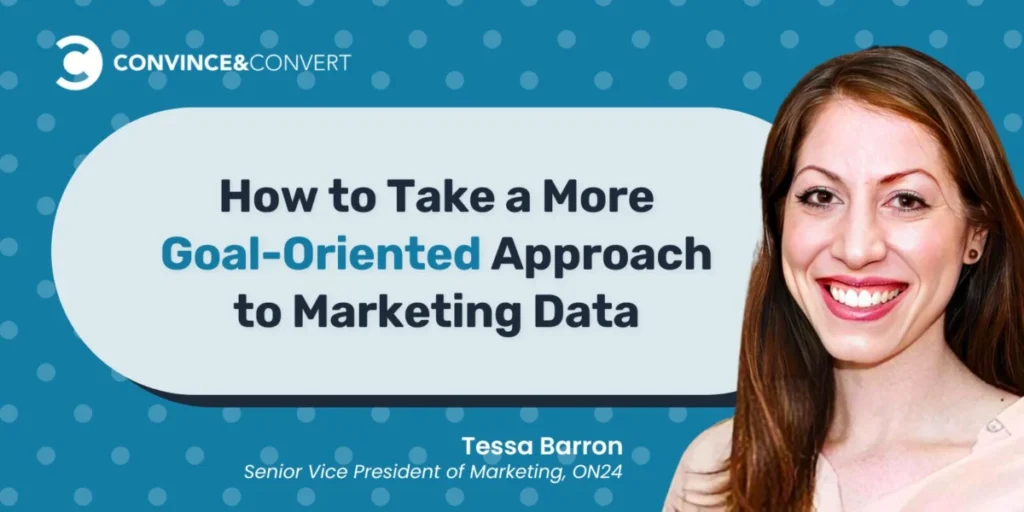
In the contemporary B2B landscape, the phrase "do more with less" has become the perennial mantra of executive leadership. For marketing departments, this mandate often feels like a paradox: budgets are tightening, resources are dwindling, and yet, the demand for aggressive pipeline growth remains unabated.
For many, the instinctive response is to ramp up the volume of content, increase the frequency of email campaigns, and widen the net of digital advertising. However, according to Tessa Barron, former Senior Vice President of Marketing at ON24 and a recent guest on the Data-Driven Decisions podcast, this "more is more" approach is a fundamental miscalculation. The solution to stagnant pipeline growth, Barron argues, is not to increase activity, but to pivot from being "tactic-oriented" to "goal-oriented."
The Core Philosophy: Moving Beyond Tactical Inertia
The shift required is not merely procedural; it is psychological. Since the onset of the pandemic, the global B2B buyer’s journey has evolved, yet many marketing departments remain anchored to the playbooks of 2019.
"We as marketers have to check in with ourselves and ask: ‘Are we still doing what we were doing three or four years ago?’" Barron notes. "If the answer is yes, that is the first sign that we need to stop expecting that executing the same way will yield better returns."
The trap, Barron suggests, lies in the comfort of familiar tactics. Webinars, whitepapers, podcasts, and blog posts are essential instruments in the marketer’s toolkit, but they are often deployed as default settings rather than strategic responses to specific business objectives. When a team plans a quarter based on "running four webinars," they have already lost the strategic thread. Instead, they should be planning based on the business outcome: "In Q1, we need to reach X number of new accounts or achieve a 10% uplift in pipeline conversion."
Chronology of a Data-Driven Strategy
To move from tactical execution to goal-oriented performance, marketers must implement a structured framework that prioritizes signal over noise.
1. The Audit Phase
The process begins with an honest assessment of current performance. Before launching new initiatives, teams must audit existing touchpoints. Are these touchpoints actually driving conversion, or are they merely vanity metrics?
2. The Objective Definition
Once the audit is complete, teams must define the "North Star" goal. If the objective is to improve the conversion rate of first meetings by 10%, every subsequent marketing activity must be stress-tested against that specific goal.
3. The Signal Collection
With the objective in place, the focus shifts to data collection. Barron emphasizes the term "signal"—a specific, actionable data point that indicates a buyer is moving closer to a purchase decision. By integrating interactive elements into content—such as polls, surveys, or Q&A sessions—marketers can transform passive content consumption into active data gathering.
4. Alignment and Iteration
The final stage is the feedback loop. This involves taking the signals collected and validating them with the sales team, ensuring that the "qualified lead" profile aligns with the reality of what closes deals.
Supporting Data and Real-World Application
The power of this framework is best illustrated through real-world implementation. ON24, a platform built for audience engagement, has utilized this approach to help clients move beyond superficial engagement metrics.
Case Study A: Technology Market Share Recovery
A technology firm aiming to regain market share identified a critical correlation: prospects using a specific cloud infrastructure provider were ten times more likely to convert into a sales opportunity. By simply adding a question to their webinar registration or polling process—"Which cloud provider are you currently using?"—the marketing team was able to immediately segment high-intent prospects for the sales team, effectively bypassing the noise of the general audience.
Case Study B: Healthcare and Risk Assessment
In the pharmaceutical sector, a company sought to reach doctors treating patients with high-risk needs. Rather than casting a wide net, they developed content specifically for specialists needing the latest drug therapy research. By asking attendees to rate the risk level of their patient base (High, Medium, or Low), the company identified a cohort of "High" risk responders. This provided the sales team with a pre-qualified list of prospects who had a demonstrated, immediate need for the product.
These examples underscore a vital truth: data is only as valuable as the action it triggers.
Bridging the Gap: The Sales and Marketing Alliance
A recurring theme in modern B2B discourse is the friction between sales and marketing. Barron contends that this friction often stems from a lack of shared intelligence.
Marketers often ask questions that assess the quality of their content—such as, "Did you find this presentation useful?" While useful for internal metrics, this does little to assist the sales team in closing a deal. Instead, marketers should consult the front line.
"Salespeople sit at the front lines of the prospect’s communication," says Barron. "They can tell you more about the client’s needs, their hesitations, and their doubts than any analytics dashboard ever could."
The role of the marketer, therefore, is not to "create" the pipeline, but to build the net that catches the right prospects and delivers them to the sales team with the fullest possible picture of their intent. When marketing creates "signals," they are effectively shortening the sales cycle by reducing the discovery time required by the sales representative.
Implications for Organizational Success
The implications of this strategy extend beyond individual campaigns; they influence the overall health of the organization.
Controlling the "In-Between"
A major insight from Barron’s framework is the focus on the "in-between" steps—the friction points between a lead becoming a qualified opportunity. Often, companies lose prospects due to mundane issues: overly long lead forms, disjointed messaging, or a lack of follow-up interaction. By optimizing these small, overlooked steps, organizations can realize significant improvements in conversion rates without increasing their overall marketing spend.
Transparency and Stakeholder Management
Finally, there is the challenge of presenting this data to leadership. In an era of data saturation, executives are easily overwhelmed. Barron advocates for the "simplest, most visually engaging" representation of data. If stakeholders cannot quickly identify the relationship between a specific marketing strategy and its impact on the pipeline, the strategy will fail to earn the necessary buy-in.
By tying every data point to a specific business outcome, marketers can present a narrative that is both defensible and transparent. This builds institutional trust, allowing marketing departments to move from being viewed as "cost centers" to being seen as "growth engines."
Conclusion: A Shift in Perspective
The transition from being tactic-oriented to goal-oriented is not a one-time adjustment; it is a continuous process of refinement. It requires the courage to abandon successful but outdated tactics and the discipline to ignore data that does not directly influence the pipeline.
As Barron suggests, the most successful marketers of the future will be those who stop trying to "do more" and start focusing on doing exactly what is necessary to illuminate the path for their sales teams. By centering the strategy on the customer’s goals—and the specific signals that reveal those goals—marketers can stop chasing volume and start chasing value.
In a tightening economic environment, the ability to focus—to see the signal amidst the noise—is the ultimate competitive advantage. For those willing to make the shift, the "do more with less" mandate is no longer a burden; it is an opportunity to streamline, sharpen, and ultimately, succeed.
For those interested in exploring these strategies further, the full discussion with Tessa Barron can be found on the Data-Driven Decisions podcast series, which offers a deep dive into the practical applications of data in modern B2B marketing.