Beyond the Click: Rethinking Digital Marketing Strategy in the Age of Data Saturation
For over a decade, the digital marketing playbook has remained remarkably static. Budgets are funneled into a predictable triumvirate: Google Ads, LinkedIn lead generation, and Facebook retargeting. These platforms are considered the “safe bets” of the industry—reliable, scalable, and, most importantly, measurable. They provide the neat, linear ROI reports that stakeholders demand.
However, a growing chorus of industry experts is beginning to question the efficacy of this reliance. Are marketers optimizing for actual business growth, or are they merely optimizing for the convenience of platform-provided metrics?
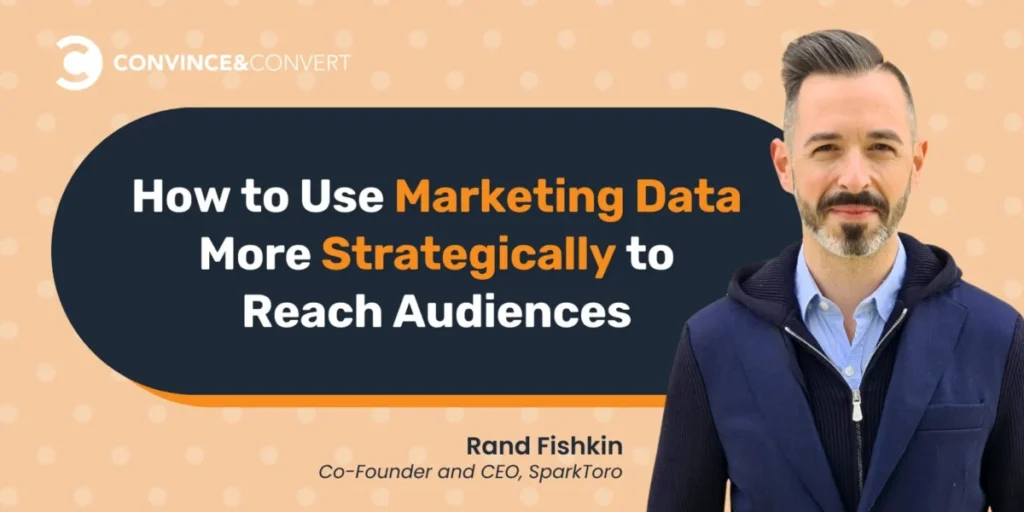
On a recent episode of the Data-Driven Decisions podcast, Rand Fishkin, founder of audience research tool SparkToro, argued that the industry’s obsession with “measurable” channels is creating a massive blind spot. By chasing attribution over relevance, marketers are increasingly ignoring the nuanced, organic ways in which customers actually discover and engage with brands.
The Illusion of Attribution: Why Your Data Might Be Lying to You
To understand the current state of marketing, one must first deconstruct the role of the modern search engine. For years, Google has been the primary beneficiary of marketing budgets worldwide, largely because it sits at the bottom of the funnel. When a user searches for a specific software solution and clicks a sponsored link, the platform claims the conversion.
Fishkin, however, characterizes this as a fundamental misunderstanding of the customer journey. “A ton of what happens in Google is actually a response to something else,” Fishkin explains. “It’s rarely a spontaneous first-touch event. A user hears about a product on a podcast, sees an influencer mention it, or discusses it at a conference. They go to Google to find the brand, and the ad platform takes the credit. Google is just the middleman.”
The "Safe Bet" Trap
The reliance on major ad platforms is driven by a culture of accountability. When a CMO asks for results, showing a dashboard from LinkedIn or Meta is easier than explaining the long-term brand equity built through niche community engagement. But this convenience comes at a cost: marketers are effectively paying a premium to reach people who were already going to find them anyway, while failing to invest in the channels that actually move the needle at the start of the awareness phase.
Chronology of a Shift: From Paid Acquisition to Audience Intelligence
The evolution of marketing strategy has moved through three distinct phases:
- The Early Digital Era (2000–2010): Focus on SEO and basic directory listings. Discovery was driven by keyword matching.
- The Ad-Tech Explosion (2010–2020): The rise of hyper-targeted paid social and programmatic advertising. The goal was granular attribution and “closing the loop” on every dollar spent.
- The Post-Attribution Era (2020–Present): A realization that data-privacy changes, ad-blockers, and platform fragmentation make perfect attribution impossible. The current focus is shifting back to audience intelligence—understanding where the target demographic consumes information, regardless of whether that platform offers a tracking pixel.
This shift is not about abandoning paid ads; it is about reallocating resources. Fishkin suggests that if the top 10% of a company’s ad spend is yielding no incremental growth, those funds should be diverted toward creative, audience-first initiatives.
Supporting Data: The Power of Niche Communities
The effectiveness of this redirected approach is supported by real-world applications where marketers bypassed traditional advertising to engage directly with established communities.
Case Study: The Podcaster’s Growth Loop
A podcaster looking to increase sponsorship revenue could follow the traditional route of paying for ads to drive downloads. Instead, they used SparkToro to identify high-reach influencers within their specific niche—specifically those with active YouTube and X (formerly Twitter) followings. By inviting these influencers as guests, the podcaster tapped into pre-existing audiences. This organic cross-pollination not only drove listenership but also provided tangible evidence of reach that attracted higher-paying sponsors.
Case Study: The "Zero-Click" Success of Chartr
Perhaps the most potent example of this shift is the strategy employed by the data storytelling firm Chartr. Rather than pouring money into lead-gen forms or gated content, the company targeted the subreddit r/dataisbeautiful. They posted high-quality, engaging data visualizations without a hard call-to-action or aggressive branding.
This is the essence of “Zero-Click Marketing”—a concept popularized by Amanda Natividad, VP of Marketing at SparkToro. The strategy is simple: provide immense value directly on the platform where the audience lives. By refusing to force a user to click through to a website, the brand builds authority and trust. When those users are eventually ready to purchase a product or service, the brand is already at the top of their consideration set.
Official Perspectives: The Limitations of Data
While data is the backbone of modern marketing, there is a growing consensus that it is not a panacea. Zontee Hou, Managing Director at Convince & Convert and author of Data-Driven Personalization, emphasizes that while data tells you what is happening, it rarely tells you why.
“We need to know everything that we possibly can about our audience,” Hou notes, “but we must be responsible in our recognition of what problems data can solve and what it can’t.”
The Blind Spot of Quantitative Analysis
Quantitative data—like click-through rates and conversion metrics—is inherently retrospective. It measures past behavior. It fails to account for:
- The "Dark Social" Journey: Private conversations, Slack communities, and offline interactions that drive brand preference.
- Non-Users: Data can tell you how your app is being used, but it cannot tell you why someone stopped using it or why they never signed up in the first place.
- Sentiment and Frustration: Qualitative insights, gained through direct customer interviews and surveys, are required to fill these gaps.
Implications for the Future of Marketing
The implications of this shift are profound. Organizations that continue to rely exclusively on the “easier to measure” channels risk becoming trapped in an echo chamber of diminishing returns. As ad costs continue to rise, the ability to build trust in niche, un-tracked spaces will become a significant competitive advantage.
1. Re-evaluating the Marketing Budget
Companies must transition from a "campaign-first" mindset to an "audience-first" mindset. Before purchasing ad space, marketing teams should ask: "Where does our audience solve their problems? Where do they learn? Where do they engage with peers?" If the answer is a niche podcast or a specific community, that is where the investment belongs—even if that channel doesn’t provide a tidy ROI report.
2. Embracing "Brand-as-a-Channel"
The success of zero-click marketing proves that the brand itself can be the distribution mechanism. By creating content that stands on its own—whether that’s a LinkedIn thread, an infographic, or a video series—marketers can build loyalty that paid ads simply cannot replicate.
3. The Return to Qualitative Research
The most successful firms of the next decade will likely be those that pair their robust data analytics with old-fashioned, high-touch customer research. Regular, structured interviews with both active customers and lost prospects will provide the qualitative context necessary to make sense of the quantitative data.
Conclusion: A More Thoughtful Path Forward
The goal of marketing is not to generate clicks; it is to build meaningful connections that result in long-term business value. As the digital landscape becomes increasingly saturated with automated, ad-driven noise, the brands that win will be those that choose to be where their audience is, rather than where they are easiest to track.
By moving beyond the comfort zone of standard attribution models and embracing a more holistic view of the customer journey, marketing teams can stop acting like middle-men for search engines and start acting as genuine participants in their customers’ lives. As Rand Fishkin concludes, the data is a tool, not a compass. The direction of the ship still requires human strategy, intuition, and a deep, empathetic understanding of the people on the other side of the screen.