The AI Revolution on TikTok: How Generative Tools and Model Context Protocols Are Democratizing Short-Form Video Advertising
By Global Business News Desk
The landscape of digital advertising is undergoing a profound structural shift. For years, small-to-medium-sized businesses (SMBs) and independent entrepreneurs looked at TikTok Ads Manager with a mixture of intrigue and intimidation. Overwhelming interfaces, steep learning curves, and complex API integration requirements traditionally turned TikTok marketing into an exclusive domain for enterprise-level brands with dedicated media buying teams and massive budgets.
Today, that barrier to entry is crumbling. Thanks to a sweeping rollout of artificial intelligence ecosystems—highlighted by TikTok’s Agentic Hub, Model Context Protocol (MCP) integrations, Symphony Creative Studio, and Content Suite—running sophisticated, high-performing TikTok advertising campaigns is increasingly becoming accessible to anyone.
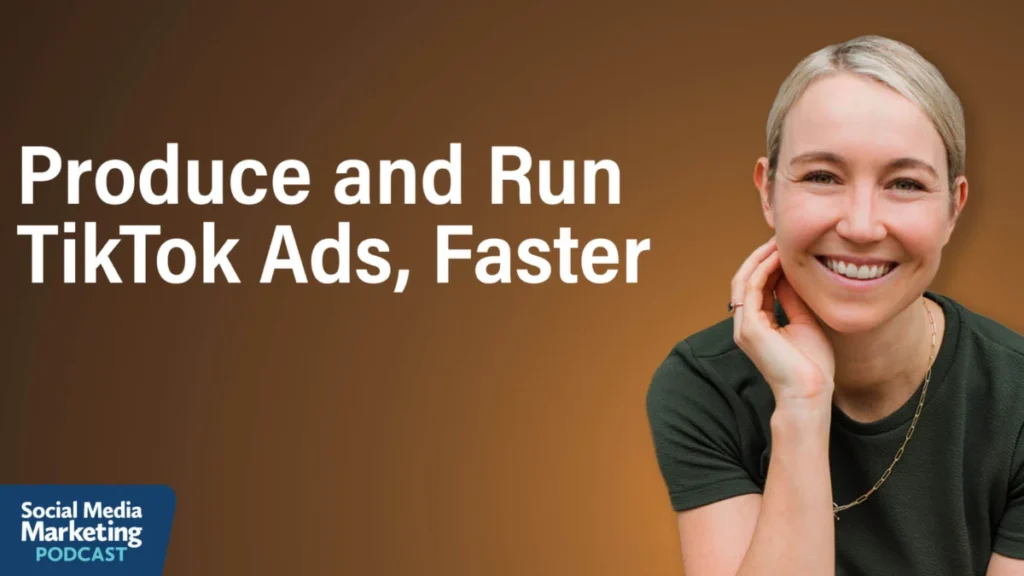
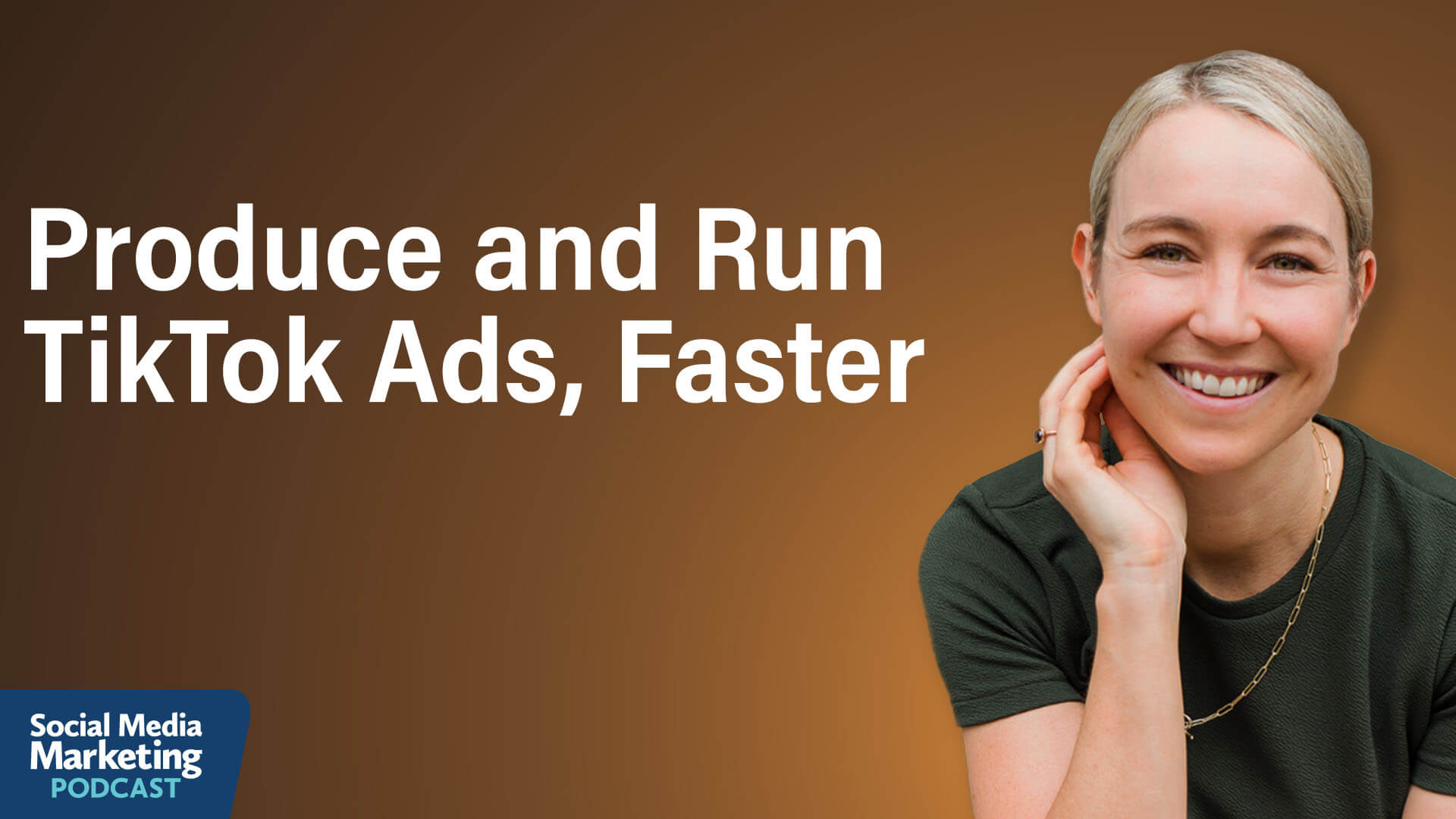
Co-created by short-form video expert Melissa Laurie alongside Michael Stelzner and Jerry Potter, recent industry discussions illuminate how these next-generation AI tools are reshaping the platform. Rather than requiring deep technical mastery of native advertising suites, marketers can now converse with AI models in plain language, generating end-to-end campaigns, auditing ad performance, and producing creative assets at a scale previously thought impossible.
Chronology of the Shift: From Manual Complexity to Autonomous AI
To understand the magnitude of TikTok’s recent updates, it helps to examine the evolutionary timeline of digital advertising platforms.
- The Era of Native Fragmentation (Pre-2023): Marketers were required to manually log into platform dashboards (such as Meta Ads Manager or TikTok Ads Manager), pore over granular metrics, and build creatives from scratch. Integrating external software required expensive developer resources and complex API connections.
- The Generative AI Boom (2023–2024): Standalone generative AI tools flooded the market, allowing marketers to draft ad copy and generate raw video concepts. However, these tools remained siloed from actual campaign infrastructure, meaning users still had to copy-paste data back and forth between ChatGPT and their ad dashboards.
- The Agentic and MCP Revolution (Late 2024–Present): TikTok launched the Agentic Hub and embraced the Model Context Protocol (MCP). This breakthrough enabled two-way, secure communication between third-party AI interfaces (like Claude and ChatGPT) and TikTok Ads Manager. For the first time, AI could pull live performance reports, execute direct optimizations, and build ad groups through conversational language. Simultaneously, TikTok rolled out official downloadable AI skills, Symphony Creative Studio, and advanced Content Suite search capabilities.
Main Facts: The Tech Stack Redefining TikTok Advertising
The modern AI-powered TikTok advertising stack relies on several core architectural components designed to remove friction at every stage of the campaign lifecycle.
1. The Agentic Hub and Model Context Protocol (MCP)
TikTok’s newly introduced Agentic Hub serves as a centralized marketplace for AI-driven advertising tools. It operates on the Model Context Protocol (MCP)—a technical framework that connects AI models like Anthropic’s Claude or OpenAI’s ChatGPT directly to TikTok Ads Manager.
Industry expert Melissa Laurie uses a restaurant analogy to clarify the setup: TikTok Ads Manager is the restaurant kitchen, the MCP serves as the waiter, and the AI model acts as the menu. Once linked, marketers can bypass the native dashboard entirely. By speaking in plain language, users can ask questions about why a campaign’s cost-per-acquisition spiked, generate structured status reports, or brainstorm optimization strategies.
Crucially, MCP allows for two-way communication. While some integrations are strictly read-only for reporting and analytics, others grant read-and-write permissions, enabling the AI to draft campaigns and adjust settings directly upon user authorization.
2. Official AI Skills as Prebuilt Expertise
To bridge the gap between generic AI prompts and expert-level media buying, TikTok developed a library of official AI skills. These downloadable instruction sets integrate directly into AI tools via the MCP server.
Available skills include:
- Viral Video Creator: Analyzes millions of top-performing ads across the platform to help marketers model high-engagement hooks, pacing, and calls-to-action.
- Ad Group Optimizer: Continuously monitors active ad sets to suggest budget reallocations and audience refinements.
- Account Diagnosis Co-pilots: Automatically flags creative fatigue, audience saturation, and spend inefficiencies.
- C-Dance: A specialized video creation skill developed by ByteDance.
These skills function as portable expertise. Marketers are no longer locked into a single platform’s ecosystem; a copywriting skill designed for TikTok can often be repurposed for Meta campaigns, representing a paradigm shift in how digital marketing teams operate.
3. Symphony Creative Studio
Symphony Creative Studio is TikTok’s native AI-powered video generation hub. Powered by the upgraded Symphony Agent, the platform ingests current TikTok trends, historical ad-performance signals, business goals, and brand guidelines to generate finished video assets from a simple text brief.
From a single prompt, Symphony can produce product briefs, insights, storyboards, scripts, and rendered video elements. Marketers then act as creative directors, refining scenes, swapping voiceovers, and polishing calls-to-action.
4. Content Suite AI Search
Finding inspiration for ad creatives has historically been a time-consuming manual chore. TikTok’s Content Suite addresses this by providing a robust library of user-generated content (UGC) and live ads running on the platform. Its upgraded AI search functionality allows marketers to filter videos by key terms, industry verticals, geographic regions, timeframes (such as the past 30 days), and specific campaign objectives (sales, leads, or brand awareness).
Supporting Data and Real-World Implementation
While the promise of automated marketing is alluring, practical execution requires a nuanced understanding of where AI excels and where human oversight remains indispensable.
The Power of Scale: Product Video Production
For product-centric brands, AI video generation tools deliver immediate ROI. For example, furniture and beauty brands leveraging Symphony Creative Studio are reportedly producing up to 100 unique product showcase videos per week. By uploading high-resolution product photography, brands can generate localized variations, dynamic backgrounds, and texture highlights at a volume that would be cost-prohibitive using traditional physical production crews.
The Limits of AI Humans
Despite rapid technological advances, industry consensus indicates that AI-generated human avatars are not yet ready to drive high-converting trust on behalf of major brands. Artificial presenters reciting scripts ("All my friends are talking about this product") frequently trigger consumer skepticism.
Consequently, leading agencies advocate for a hybrid creative model:
- Human-First with AI Enhancement: Real creators film themselves demonstrating a product (e.g., using a cleaning tool), and AI is subsequently used to overlay graphical effects (such as animated "angry germs" to visualize before-and-after transformations).
- Product-Only Showcases: Leveraging AI to render textures, lighting, and application effects for physical goods without featuring synthetic human spokespeople.
Official Responses and Expert Insights
Industry leaders emphasize that adopting AI tools does not eliminate the need for strategic thinking—it merely shifts the labor from manual execution to critical evaluation.
"AI recommendations should not be taken as gospel," warns Melissa Laurie.
For instance, when a newly launched creative has only been running for 48 hours, TikTok’s automated optimization algorithms may suggest pausing it simply because its initial metrics trail older, established ads. This recommendation often ignores the algorithmic reality that the platform inherently favors ads with historical run-time.
Laurie advises marketers to actively push back against automated suggestions by asking prompts like, "What is an alternative way to approach this?" or "How can this campaign be optimized further?" When challenged, AI tools routinely revise and improve their initial outputs.
Furthermore, structuring an ad correctly remains vital. Laurie outlines the anatomical blueprint of a high-performing short-form video:
- The First Frame: The critical single image that stops a user mid-scroll.
- Billboard Text: Large, highway-billboard-style text overlays that instantly communicate value to distracted viewers.
- The Glue: Connective phrasing that bridges the visual hook to the middle content, preventing early drop-offs.
- Structured Pacing: Grouping tips into concise sets of three or five.
- Sharp Endings: Cutting the video cleanly without slowing down speech at the conclusion, signaling a complete watch-through to the algorithm.
Implications for Marketers and Agencies
The democratization of TikTok advertising through AI agents and automated workflows carries significant implications for the broader marketing ecosystem:
- Lower Barriers for Small Businesses: SMBs that previously lacked the budget to hire specialized media buyers can now leverage conversational AI and prebuilt skills to set up, monitor, and optimize campaigns independently.
- Redefining Agency Value: The role of marketing agencies is evolving away from routine dashboard management and tactical execution. Agencies are increasingly positioning themselves as high-level creative directors, prompt engineers, and brand strategists who oversee AI-driven production pipelines.
- The Shift in Time Investment: Marketers are not necessarily saving total work hours; rather, they are trading mechanical time (building ad sets, pulling manual reports) for cognitive time (prompt engineering, creative direction, and strategic refinement).
- Interoperability and Cross-Platform Strategy: As MCPs and AI skills become more modular, the walled gardens of individual ad platforms are becoming more permeable. Marketers can test strategies across TikTok, Meta, and emerging channels with unprecedented fluidity.
Conclusion
AI is undoubtedly making it easier for anyone to run TikTok ads, but technical accessibility does not replace fundamental marketing strategy. Success in this new era belongs to those who view AI not as an autonomous miracle worker, but as an exceptionally fast, highly capable co-pilot that requires human judgment, creative vision, and rigorous oversight to achieve maximum impact.