WordCamp US 2026: Inside the Four-Day Convergence of AI, Enterprise Scalability, and the Future of Simplicity in Phoenix
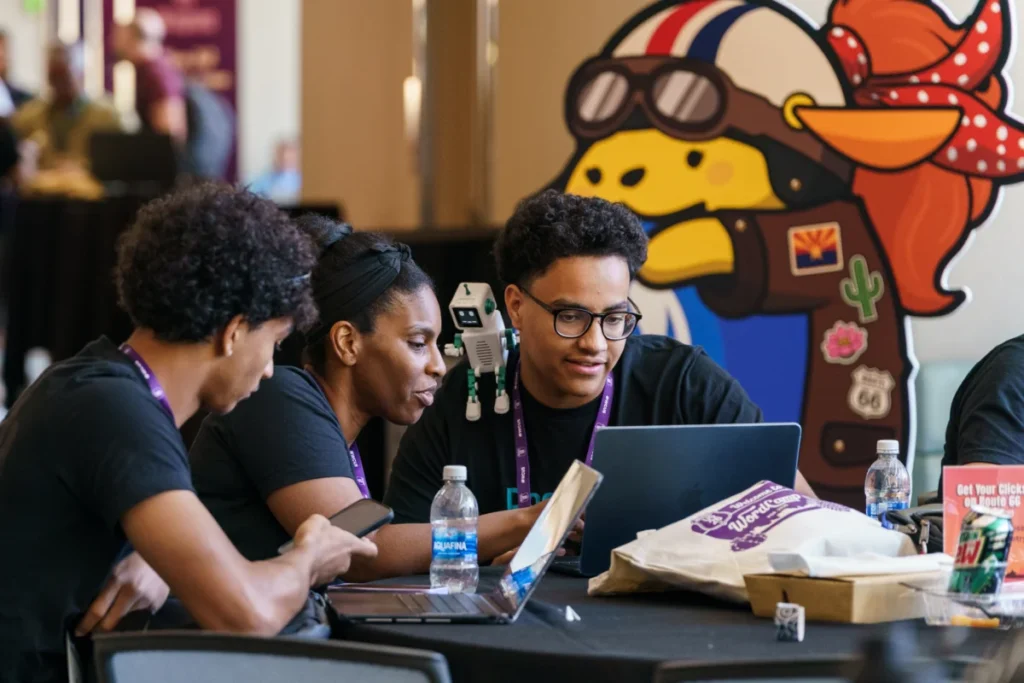
PHOENIX, Arizona — Under a blazing desert sky where temperatures reached a punishing 111°F (44°C), the global open-source web community descended upon the Phoenix Convention Center for WordCamp US (WCUS) 2026. Over four intensely packed days, more than 1,100 registered attendees from every corner of the globe—alongside thousands more tuning into global livestreams—gathered to debate the trajectory of content management, wrestle with the accelerating integration of artificial intelligence, and chart the path forward for the world’s most popular content management system.

Despite the searing Arizona heat—mitigated efficiently by fleets of golf carts ferrying travelers between the Sheraton Phoenix Downtown and the venue—the atmosphere inside was marked by rigorous technical debate, collaborative momentum, and a recurring philosophical inquiry: as technology grows exponentially more complex, how can the open web remain simple, accessible, and human-centric?

Main Facts: The Scope and Scale of WCUS 2026
WordCamp US 2026 proved to be a landmark event for the WordPress ecosystem, balancing high-level enterprise architecture discussions with grassroots community contributions.

- Attendance and Reach: Over 1,100 attendees registered on-site in Phoenix, supported by a robust virtual broadcasting framework that drew thousands of remote participants.
- Programming Structure: The event spanned four distinct phases—opening with Contributor Day and Showcase Day, followed by two core conference days featuring more than 50 speaker-led sessions across four simultaneous tracks and multiple hands-on workshops.
- Major Software Milestones: Mid-event, release leads took the stage to officially launch WordPress 7.1 ("Mary Lou"), which immediately saw hundreds of thousands of downloads. Co-founder Matt Mullenweg also introduced cutting-edge conceptual frameworks like "WordPress Piplets" and rolled out new w.org profile redirects (
w.org/@username). - Civic Recognition: The City of Phoenix officially recognized the economic and cultural impact of the community, with Michael Hammett, Phoenix’s first Chief Innovation Officer, presenting a mayoral proclamation from Mayor Kate Gallego declaring August 19 as "Phoenix WordPress Day."
Chronology: A Four-Day Journey from Code to Community
The cadence of WCUS 2026 was structured to take participants from active collaborative development to high-profile case studies, visionary keynotes, and structural product discussions.

Day One: Contributor Day and the "Real Artists Ship" Ethos
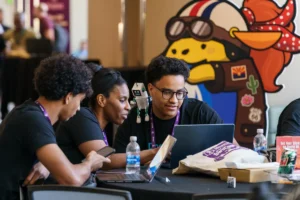
Contributor Day adopted the driving motto "Real artists ship," overhauling its traditional format to maximize tangible output. A total of 425 participants—including 29 first-time contributors—organized into 26 hyper-focused teams dedicated to shipping features before the day concluded.

Instead of open-ended tasks, goal owners delivered rapid-fire 30-second pitches, allowing participants to pivot fluidly between teams. By evening, the results were substantial:

- Tickets were closed, pull requests merged, and themes rigorously audited for accessibility.
- Specialized groups built new description-list blocks tailored for glossaries and product specifications.
- Core infrastructure teams integrated comprehensive email settings, testing tools, and robust recovery pathways for account and password-reset messages.
- Auxiliary groups advanced the Photo Directory importer, refined WordPress dashboard notes, updated Multisite documentation, and authored new foundational guidelines for integrating AI into core development. For those unable to attend in person, these new pathways were instantly codified into a dedicated course on Learn WordPress.
Day Two: Showcase Day and Real-World Scale
Monday shifted focus from code creation to operational resilience. Showcase Day examined how massive, mission-critical digital properties survive and scale on WordPress.

- Civic Infrastructure: Manny Costa opened the track by exploring municipal websites where digital architecture serves as a public utility—handling emergency notifications, citizen service requests, and benefit applications where editor workflows and accessibility are matters of public safety.
- The Ankler Migration: Nicola Catton detailed the high-profile migration of media outlet The Ankler away from Substack. By moving 15 distinct newsletters to WordPress on a custom block theme, the publication reclaimed direct ownership of its subscriber data, revenue rules, and custom paywall boundaries.
- Daily Kos at Scale: Ben Greeley and Allison McHenry presented the monumental migration of Daily Kos, a platform boasting 2.7 million users, 1.5 million posts, and 88 million comments. The transition relied on a public beta testing phase involving more than 500 active community members, proving WordPress’s viability for massive, user-generated publishing networks.
Day Three: Keynotes, Human Judgment, and the AI Inflection Point
The core conference days tackled the industry’s most pressing anxieties regarding artificial intelligence, design systems, and product security.

In her opening keynote, Bo English-Wiczling addressed the widening chasm between rapid AI adoption and engineering trust, asserting that "AI doesn’t remove your work; it moves it." While generative tools can draft code or content in seconds, human oversight remains vital to catch critical flaws in keyboard navigation, theme compatibility, and dependency security.

This theme of iterative resilience echoed through Loyal Pyczynski’s keynote on Day Three. Drawing from his extensive background at Disney and Meta, Pyczynski emphasized creative confidence and resource management: "We need to make sure that we make better mistakes tomorrow. Success is an iterative endeavor, and time is our most precious resource."

The afternoon expanded into specialized technical sessions:

- Aviral Mittal and K Adam White explored AI-driven editorial workflows and the complex challenge of mapping sprawling legacy content archives into clean block patterns.
- Nik McLaughlin introduced the structural benefits of the Abilities API for developers, while Brian Coords demonstrated how block themes and design tokens provide guardrails that blank-page AI prompts inherently lack.
- Jonathan Desrosiers and Robert Abela anchored security tracks on supply-chain safety and login hardening, highlighting that while AI accelerates defensive auditing, it simultaneously arms malicious actors with faster vulnerability-scanning capabilities.
Day Four: Simplicity, Piplets, and the Future of Open Source
The final day culminated in a dynamic fireside chat between WordPress co-founder Matt Mullenweg and Robert Jacobi, punctuated by the formal launch of WordPress 7.1 and a visionary look at architectural minimalism.

Supporting Data & Technical Innovations
WCUS 2026 was notable not just for its sociological reflections on the web, but for concrete technical proposals aimed at redefining the lightweight limits of PHP.

| Innovation / Initiative | Description / Technical Scope | Impact / Goal |
|---|---|---|
| WordPress Piplets | A conceptual revival of a 2007 architecture: a single, self-modifying PHP file containing zero database dependencies or third-party packages. | Capable of holding up to 25MB (approx. 4 million words) and loading in roughly 50 milliseconds, pushing the boundaries explored by WordPress Playground. |
| Profile URL Shorter Links | Implementation of streamlined w.org/@username redirects for all community contributor profiles. |
Enhances personal branding and cross-platform identity sharing within the broader WordPress ecosystem. |
| Five for the Future Audit | A critical evaluation of the contribution directory, contrasting self-reported weekly pledges against verifiable commits, tickets, and code reviews. | Shifting community recognition toward verified, impact-based contributions rather than speculative pledges. |
| AI Translation Human-in-the-Loop | Case studies on multilingual WordPress multisites utilizing machine translation for highly technical documentation. | Proved that while machine translation is grammatically accurate, native human review is essential to preserve contextual intent and nuance. |
Official Responses and Perspectives
The dialogue at WCUS 2026 extended far beyond traditional web development, incorporating insights from adjacent transportation and technology sectors.

-
Matt Mullenweg on Architectural Simplicity:

"I want WordPress to be known for simplicity, not just complexity."
Challenging the community to look past bloated tech stacks, Mullenweg’s introduction of self-contained PHP architectures signaled a desire to keep WordPress agile, portable, and fiercely independent.
-
Amanda Ventura (Waymo) on Trust as a Product Practice:
During a cross-industry keynote exploring autonomous vehicle adoption, Ventura emphasized that trust is earned through iterative listening rather than initial deployment. Sharing an anecdote about refining screen-reader support and adding a distinct musical horn control for low-vision riders navigating busy urban streets, she noted:
"Trust is repeated work. Teams can publish safety data and listen before arriving in a new city, but they need a direct path for product teams to act on feedback."

-
Loyal Pyczynski on Creative Teams:
Reflecting on corporate and open-source collaboration:
"The goal was not to know everything, but to know what the team should own."

-
Michael Hammett (City of Phoenix):
Highlighting the local economic engine during the official Phoenix WordPress Day proclamation:
Praised the local community of small businesses, designers, developers, and educators for driving the region’s digital and creative economy.

Implications: Where the Ecosystem Goes From Here
The ramifications of WordCamp US 2026 will shape the web development landscape for years to come.

- Re-centering Human Judgment: As generative AI becomes standard across content management systems and development environments, the industry consensus in Phoenix was clear: automation handles the execution, but human judgment remains the ultimate arbiter of quality, accessibility, and security.
- Enterprise Independence: High-profile migrations like those of The Ankler and Daily Kos signal a broader market trend. Enterprise organizations are actively fleeing closed SaaS publishing monopolies to regain absolute ownership of their data, subscriber monetization, and extensible architecture via WordPress.
- The Push for Minimalist Engineering: Experiments like WordPress Piplets and the ongoing refinement of WordPress Playground demonstrate that despite powering over 40% of the web through complex enterprise setups, the core project maintains a deep ideological commitment to ultra-lightweight, portable, serverless execution.
- Global Continuity: With WCUS 2026 successfully in the rearview mirror, the global community now looks ahead to the upcoming State of the Word, followed immediately by international flagships: WordCamp Asia 2027 in Penang, Malaysia, and WordCamp Europe 2027 in Málaga, Spain.
As Robert Jacobi noted during the closing ceremonies, observing the unprecedented influx of first-time attendees—many of whom discovered the event through AI prompts or casual curiosity—proves that the open web’s gravitational pull remains as strong as ever.