Ayodhya Ram Temple Embezzlement Case: Bail Denied for Three Accused as Legal Battle Intensifies
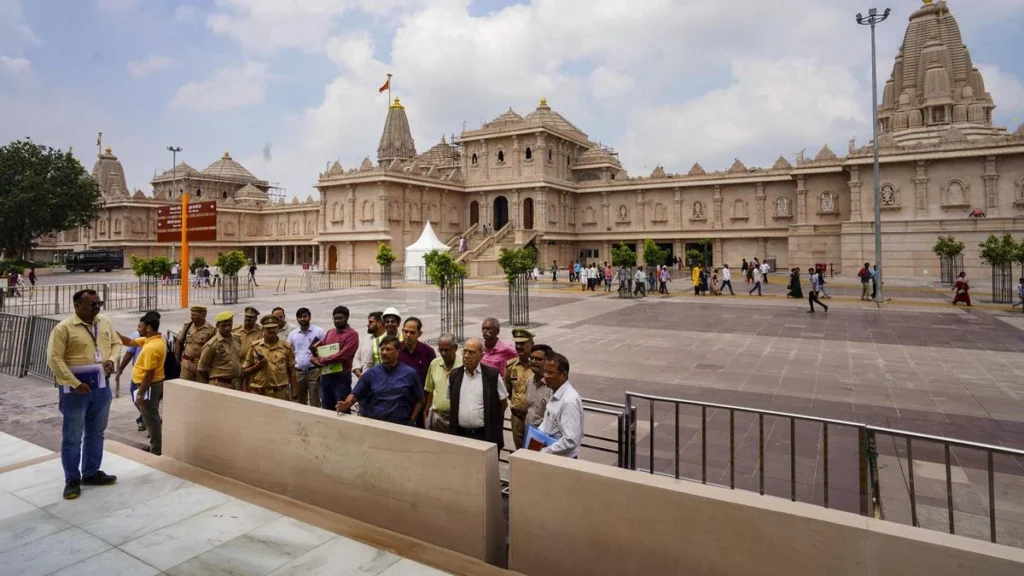
AYODHYA — The legal proceedings surrounding the high-profile embezzlement case at the Ram Janmabhoomi Temple reached a critical juncture on Monday, September 21, 2026, as a special Anti-Corruption Court in Ayodhya denied bail to three key suspects. The ruling, delivered by Special Judge Rajat Verma, marks a significant setback for the defense in a case that has sent shockwaves through the religious and administrative circles of Uttar Pradesh.
The accused—Avinash Shukla, Manish Kumar Yadav, and Ram Shankar Mishra—remain in judicial custody, part of a larger group of eight individuals currently detained in connection with the alleged siphoning of cash and valuables donated by devotees at the sacred site.
Main Facts: The Scope of the Allegations
The case centers on the systematic misappropriation of funds collected from the massive influx of pilgrims visiting the Ram Temple. Following an FIR lodged on June 25, 2026, a Special Investigation Team (SIT) constituted by the state government began probing irregularities in the donation-counting process.
According to prosecution records, investigators have successfully recovered ₹79.85 lakh thus far. The recovery, while significant, is believed by the SIT to be only a fraction of the total missing assets. The accused, most of whom were bank employees specifically deployed for the meticulous task of counting temple donations, are alleged to have exploited their positions to divert funds before they could be formally deposited into the temple trust’s accounts.
The defense, led by Advocate Kul Shekhar Singh, has challenged the validity of the charges, specifically the application of the Prevention of Corruption Act and sections pertaining to criminal breach of trust by a public servant. The defense argues that since the accused are private bank employees and not government servants, the inclusion of these stringent charges is legally flawed. They contended that, should these specific provisions be removed, the remaining charges would carry a maximum sentence of seven years, thereby warranting bail for the accused. However, the court remained unconvinced by these arguments, denying the applications and maintaining the status quo of judicial custody.

Chronology of the Investigation
The unfolding of the Ayodhya temple case has been marked by a series of legal delays and procedural hurdles:
- June 25, 2026: An FIR is formally lodged following a damning preliminary report by the SIT, which highlighted irregularities in the donation management system.
- Late July – August 2026: Eight individuals are arrested, including bank staff, supervisors, and associates of key administrative figures.
- September 18, 2026: The Ayodhya court extends the judicial custody of all eight accused until September 21.
- September 21, 2026: The bail applications for Shukla, Yadav, and Mishra are heard and subsequently rejected by Special Judge Rajat Verma.
- September 22–23, 2026: The court has scheduled the hearings for the remaining five suspects: Anukalp Mishra, Lav Kush Mishra, Karunesh Pandey, Subhash Srivastava, and Ramashankar (alias Tinnu Yadav).
The investigation has been plagued by delays, particularly concerning the submission of the case diary and the formal chargesheet. The court had previously issued stern directives to the police to produce these documents, as multiple hearings were deferred due to the Investigating Officer’s failure to present the necessary reports.
The Network of the Accused
The depth of the alleged conspiracy is reflected in the profiles of the individuals detained. The accused were not merely peripheral staff; they occupied positions that required a high degree of trust.
Subhash Srivastava, for instance, held the responsibility of overseeing the entire donation-counting process—a role designed to ensure transparency and prevent theft. His alleged involvement suggests a failure of internal controls. Furthermore, the arrest of Ramashankar (Tinnu) Yadav, who served as a driver and close associate to the former general secretary of the Shri Ram Teerth Kshetra Trust, Champat Rai, has added a layer of political and administrative complexity to the scandal. The connection between operational staff and the inner circle of the trust’s former leadership has become a primary focus of the SIT’s inquiry.
Official Responses and Prosecution Strategy
The prosecution maintains that the evidence against the accused is substantial. By invoking anti-corruption laws, the state is signaling a "zero-tolerance" policy regarding the sanctity of temple donations.

"The court rejected the bail applications after a thorough hearing of the arguments, despite the defense’s point that the chargesheet is yet to be filed," noted Advocate Kul Shekhar Singh following the proceedings.
The prosecution’s strategy relies heavily on the "recovery" aspect of the investigation. By tracing the ₹79.85 lakh, the SIT aims to establish a clear trail of the money, which they argue directly links the accused to the act of embezzlement. The police are now under immense pressure to file a comprehensive chargesheet to prevent the defense from successfully arguing for bail on the grounds of "unreasonable delay" in the legal process.
Implications: A Crisis of Trust
The ramifications of this case extend far beyond the courtroom in Ayodhya. The Ram Temple is not merely a place of worship; it is a national symbol and a site of massive financial transactions involving millions of devotees.
1. Transparency in Religious Institutions
This scandal has prompted a broader debate regarding the financial governance of large religious trusts in India. Critics argue that when donation volumes reach these scales, private management is insufficient, and greater state-led oversight or digital transparency protocols are required to prevent internal fraud.
2. Impact on Devotee Sentiment
The alleged embezzlement has deeply wounded the sentiments of the public. Donations at the temple are viewed as acts of devotion, and the suggestion that these funds were siphoned by those tasked with counting them has triggered calls for a total overhaul of the temple’s administrative staff.

3. Legal Precedent
The court’s decision to deny bail despite the absence of a filed chargesheet suggests that the judiciary is taking a stern stance, likely influenced by the sensitive nature of the case and the gravity of the accusations. This sets a precedent that in cases involving public interest and large-scale fraud, the standard leniency regarding bail pending chargesheets may not apply.
Future Outlook
As the court prepares to hear the remaining bail applications on Tuesday and Wednesday, the focus will likely shift toward the content of the investigation report. If the police fail to file the chargesheet within the next few days, the defense is expected to renew their bail applications with even greater urgency.
For the SIT, the challenge remains to provide irrefutable evidence that connects the recovered funds to the specific actions of the accused. For the Shri Ram Teerth Kshetra Trust, the scandal serves as a grim reminder of the vulnerabilities inherent in manual cash-handling processes. As the legal battle proceeds, the eyes of the nation remain fixed on Ayodhya, awaiting clarity on how a place of such profound sanctity was compromised by those entrusted to safeguard its offerings.
The coming days will be decisive. If the prosecution can substantiate their claims in court, it could lead to a landmark conviction that reinforces the legal protections for institutional donations. Conversely, any failure to present a solid case could lead to a protracted legal ordeal that may further damage the reputation of the temple administration.