NEW DELHI — The Indian new-age tech stock ecosystem endured a bruising week, weighed down by a brutal confluence of sweeping regulatory interventions, persistent macroeconomic pressures, and a broader seven-week rout in domestic benchmark indices.
The combined market capitalization of the 65 new-age technology companies tracked under industry coverage plunged by $3.6 billion (approx. 2.1%), dropping to $166.6 billion from $170.2 billion the previous week. While 28 stocks managed marginal-to-strong gains ranging between 0.26% and 24.59%, 37 counters surrendered ground, witnessing severe contractions that rattled investor sentiment across the board.
1. Main Facts: The Week’s Major Market Movements
Market sentiment turned markedly bearish following the Insurance Regulatory and Development Authority of India’s (IRDAI) proposed overhaul of insurance commission caps. The regulatory shockwave directly targeted digital insurance aggregators and intermediaries, triggering a massive sell-off.
The Heavyweights Stumble: Policybazaar parent PB Fintech plummeted 33.02% to close at INR 1,165.50 on the BSE, bringing its market valuation down to INR 53,933.83 crore ($5.6 Bn). Industry peer Turtlemint suffered an even steeper drop, plunging 34.97% to INR 87.30.
The Bright Spots: Bucking the broader downward trend, SaaS provider Capillary Technologies led the gainer board, surging 24.59% to INR 603.15. EV manufacturer Zelio E-Mobility followed closely, jumping 23.96% to INR 1,056.90.
New Milestones: Zelio, ESDS, Shadowfax, Nazara, and BlueStone touched fresh 52-week highs during the week. Conversely, heavyweights and emerging players alike—including Shiprocket, IndiaMART, Menhood, Turtlemint, PB Fintech, Lenskart, Paytm, and Swiggy—ended deep in the red, with several marking fresh 52-week lows.
2. Chronology of Weekly Developments & Corporate Actions
Despite the secondary market correction, primary market momentum remained surprisingly active as companies forged ahead with public listings, stake sales, and strategic pivots.
The Primary Market Pulse
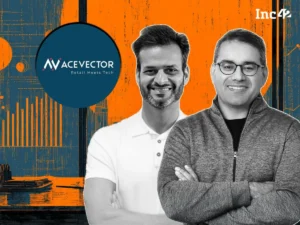
Moneyview and AceVector IPOs: Moneyview’s INR 1,092 Cr initial public offering saw robust demand, clocking a 6.01X subscription by the end of its second day of bidding, led heavily by Non-Institutional Investors (NIIs). Meanwhile, Snapdeal parent AceVector opened its INR 420 Cr IPO, securing a 23% subscription on Day 1, driven primarily by retail investor participation.
Spinny’s Confidential Filing: Used-car marketplace Spinny confidentially filed its IPO papers with SEBI, targeting a massive primary and secondary issue ranging between INR 2,500 Cr and INR 3,000 Cr.
Major Stake Sales and Private Equity Exits
Institutional investors and private equity backers trimmed their holdings across several high-profile tech firms via bulk deals:
FirstCry: TPG completed a full exit via an INR 202 Cr bulk deal.
Pine Labs: Mastercard offloaded its entire holding for INR 934 Cr.
SEDEMAC: A91 Partners and Xponentia reduced their stakes.
BlueStone: Accel and 360 ONE sold shares worth INR 513 Cr.
Lenskart: The Abu Dhabi Investment Authority (ADIA) offloaded 3.5 crore shares, raking in INR 2,390.6 Cr.
Strategic Capital Raises and Corporate Updates
Aequs Fundraise: Contract manufacturer Aequs secured board approval for a preferential issue of warrants worth up to INR 650 Cr to promoter group entity Mellwood Trustee Services to bolster aerospace and consumer manufacturing capacities.
Ola Electric Rights Issue: Ola Electric announced a board meeting to evaluate a rights issue on September 28, following a 45% year-on-year drop in Q1 FY27 revenue to INR 455 Cr.
Veefin Solutions: The fintech SaaS firm received in-principle approval from the BSE to migrate from its SME platform to the mainboard.
3. Supporting Data: Financial Health and Macroeconomic Pressures
The broader market weakness mirrored a seventh consecutive weekly decline in benchmark indices. The Sensex dropped 0.54% to close at 73,895.74, while the Nifty slipped 0.88% to settle at 23,140.50.
Macroeconomic Tailwinds and Headwinds
Domestic equities were pressured by rising crude oil prices, renewed geopolitical tensions in the Middle East, and surging US bond yields. For India, elevated crude prices amplified anxieties over ballooning import bills, domestic inflation, and currency depreciation. Foreign Institutional Investors (FIIs) sustained their flight to safety, recording net equity sales of INR 11,490 Cr between September 21 and 25.
Select Q1 Financial Performance Highlights
ESDS Software Solution: Reported a mixed bag for Q1 FY27, with net profit rising 14% YoY to INR 29.3 Cr (down 57% QoQ) and operating revenue growing 7.3% YoY to INR 133.7 Cr.
Purple Style Labs (Pernia’s Pop-Up Shop): Narrowed its Q1 FY27 net loss by 12% YoY to INR 88.1 Cr, while operating revenue climbed 13% to INR 119.4 Cr.
Lenskart/NESO Brands: Expanded its footprint by investing €0.248 Mn (INR 2.71 Cr) for an additional 2.52% stake in French eyewear brand Le Petit Lunetier, lifting NESO’s holding to 34.34%.
4. Official Responses and Regulatory Controversies
The Mahadev Betting App Fallout: EaseMyTrip’s Nishant Pitti Chargesheeted
In regulatory enforcement news, the Enforcement Directorate (ED) filed a chargesheet against EaseMyTrip co-founder and chairman Nishant Pitti in connection with the Mahadev betting app money laundering investigation. The agency alleged that Pitti facilitated the injection of illegal betting proceeds into Indian equities via Foreign Portfolio Investors (FPIs) and provisionally attached shares belonging to him valued at INR 59.6 Cr.
Responding directly to media inquiries, Pitti maintained innocence:
"I am unaware of any such chargesheet, nor have I been summoned by any court of law. All my transactions have strictly complied with applicable laws and regulatory frameworks."
IRDAI’s Proposed Commission Caps Shake Up Insurtech
The centerpiece of the week’s market anxiety was the IRDAI consultation paper proposing product- and channel-specific commission caps alongside tighter Expenses of Management (EoM) limits. If finalized, the regulations will reintroduce rigid product-level caps abandoned in April 2023.
Key highlights of the proposed caps include:
Third-Party Motor Insurance: Zero commission for distribution entities on new vehicle covers.
Own-Damage & Personal Accident Cover: Commissions capped strictly at 5%.
Health Insurance: Individual health policies capped at 15% for new issuances and 5% for renewals and portability.
Company-Level EoM Limits: Life insurers face a cap reduction to 15% of premiums within two years and 12.5% in five years; general insurers face caps of 25% and 20%, respectively.
Brokerages have been quick to evaluate the fallout. Global financial services firm Jefferies estimated that a 10% reduction in new business commission rates could depress PB Fintech’s earnings by 10% to 12%. Consequently, Jefferies lowered its price target on PB Fintech from INR 2,050 to INR 1,540 while maintaining a ‘Buy’ rating.
Forced to contemplate structural shifts, PB Fintech Co-founder and Group Chairman Yashish Dahiya revealed during an investor call that the firm is actively exploring entry into insurance manufacturing—subject to regulatory clarity—to design and underwrite policies directly.
5. Implications: Navigating Uncertainty in the Quarter Ahead
The events of the past week underscore the vulnerability of Indian new-age tech stocks to sudden regulatory interventions and broader macroeconomic volatility.
For insurtech leaders like PB Fintech and Turtlemint, the proposed IRDAI rules signal the end of an era of aggressive, high-incentive distribution growth. Companies will need to pivot toward volume expansion, lower customer acquisition costs, or alternative revenue streams to protect operating margins. Meanwhile, capital-intensive startups looking toward public listings—such as Moneyview, AceVector, and Spinny—will be forced to price their offerings under increasingly conservative public market valuations.
As the market looks toward the upcoming week, all eyes will remain locked on geopolitical developments in the Middle East, Brent crude oil trajectories, US bond yield movements, and high-frequency domestic data releases, including India’s August industrial production figures, external debt metrics, and the HSBC Manufacturing PMI.
With public market investor sentiment resting on a knife-edge, tech companies must demonstrate resilient unit economics and regulatory agility to weather what promises to be a challenging fiscal second half.