Google Launches Ultra-Lightweight Fitbit Air in India: A New Era for Screenless Health Tracking and Personalized Wellness
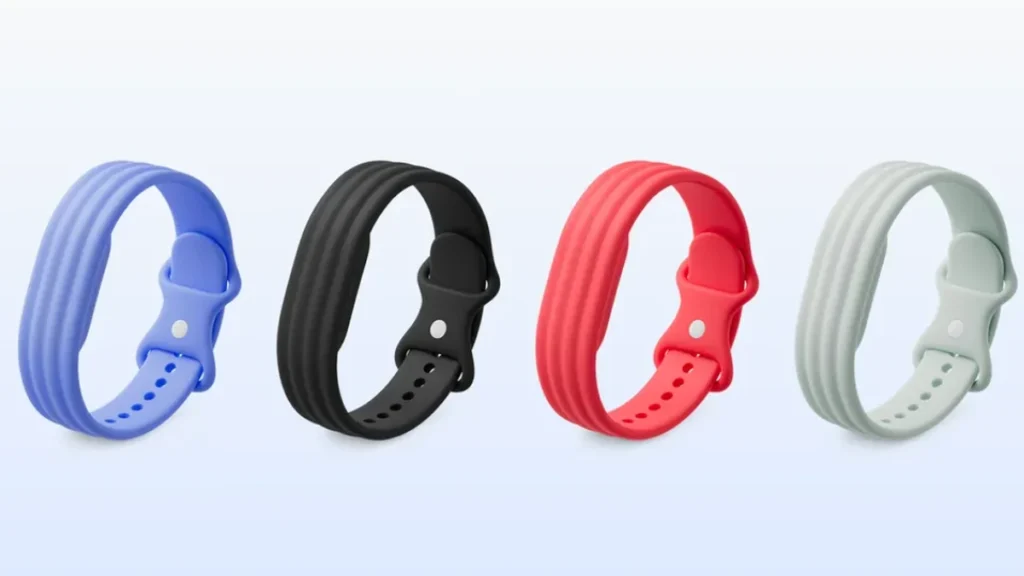
New Delhi, India — In a major push to expand its footprint in the burgeoning Indian wearables market, tech giant Google has officially announced that its cutting-edge Fitbit Air health tracker will hit shelves across the country starting October 2. Priced competitively at ₹13,999, the device represents a paradigm shift in how consumers interact with biometric data, trading traditional display screens for a minimalist, ultra-lightweight form factor.
Positioned as Google’s smallest and lightest Fitbit tracker to date, the Fitbit Air aims to bridge the gap between advanced health diagnostics and everyday comfort. Powered by deep integration with the Google Health ecosystem—including the Google Health App and the newly minted Google Health Coach—the wearable is designed to deliver comprehensive physiological insights without the distractions of a conventional smartwatch interface.
With this launch, Google is directly targeting the segment of health-conscious consumers who prefer a discreet, unobtrusive device that can be worn 24/7 without causing wrist fatigue or demanding constant attention via notifications. Available just in time for the festive shopping season, the Fitbit Air is poised to become a formidable competitor in India’s crowded mid-range fitness tracker segment.
Main Facts: What You Need to Know About the Fitbit Air
The Google Fitbit Air introduces several industry-first design and software philosophies for the brand’s entry-level and mid-tier lineups. Here is a breakdown of the core specifications and features announced by Google:
- Release Date & Pricing: Officially launching in India on October 2, carrying a price tag of ₹13,999.
- Design Philosophy: A screenless, ultra-lightweight, and compact build, making it Google’s smallest Fitbit device ever.
- Interchangeable Aesthetics: Features a versatile "pebble" design with three distinct band styles tailored for various sports and lifestyle needs. It is available in four colorways: Obsidian, Berry, Lavender, and Fog.
- Health and Biometric Monitoring: Powered by the Google Health App, tracking continuous heart rate, resting heart rate, heart rate variability (HRV), irregular heart rhythm (Afib) notifications, detailed sleep analysis, blood oxygen (SpO2) levels, and automatic activity detection.
- AI-Driven Guidance: Integrated with the Google Health Coach to translate raw biometric data into personalized, actionable wellness insights.
- Battery Performance: Offers up to seven days of battery life on a single charge, supported by a rapid-charging technology that delivers an entire day’s worth of power in just five minutes.
- Perks: Buyers will receive a complimentary three-month trial of Google Health Premium.
- Availability: Accessible via the Google Store, major e-commerce platforms like Flipkart, and leading offline retail chains including Croma, Reliance Digital, and Vijay Sales.
Chronology: The Journey to the Fitbit Air Launch
The arrival of the Fitbit Air in India is the culmination of years of hardware refinement, software integration, and strategic restructuring following Google’s acquisition of Fitbit.
Pre-Acquisition Foundations
Long before Google absorbed Fitbit, the brand was a pioneer in consumer fitness tracking. However, as smartwatches grew heavier, more feature-dense, and more expensive, a distinct sub-market of consumers emerged. These users desired the health-monitoring capabilities of advanced trackers but grew fatigued by constant notifications, glowing screens, and bulky wrist real estate.
The Google-Fitbit Integration Era
Following Google’s acquisition of Fitbit, industry watchers anticipated a deeper synergy between Fitbit’s hardware prowess and Google’s artificial intelligence and software infrastructure. The development of the Fitbit Air marked a pivot toward minimalism. Google engineers focused on stripping away the screen—traditionally the largest drain on battery and the primary source of manufacturing cost—to refocus the device entirely on bio-data collection and ergonomic comfort.
The Indian Market Strategy
India has rapidly evolved into one of the world’s most dynamic consumer technology markets, with a booming demand for affordable yet sophisticated health tech. Recognizing this, Google prioritized India as a primary launch market for the Fitbit Air. By timing the release for early October—coinciding with the festive retail season—Google aims to capture the attention of gift-buyers and fitness enthusiasts looking to kickstart their health resolutions.
Supporting Data & Ecosystem Integration
While the physical footprint of the Fitbit Air is remarkably small, its technological footprint is expansive. By leveraging the broader Google health ecosystem, the device acts as a continuous conduit between the user’s body and advanced cloud-based analytics.
Comprehensive Biometric Suite
Despite lacking a visual display, the Fitbit Air compromises nothing when it comes to sensors. Through seamless synchronization with the Google Health App on a paired smartphone, users can access an exhaustive suite of health statistics:
- Heart Health: Real-time continuous heart rate tracking, resting heart rate baselines, and advanced heart rate variability (HRV) metrics. Crucially, the device includes hardware-backed capabilities for irregular heart rhythm notifications, screening for signs of Atrial Fibrillation (Afib).
- Sleep Architecture: Deeply detailed sleep analysis breaking down light, deep, and REM sleep stages, alongside waking intervals and sleep score evaluations.
- Respiratory Metrics: Continuous blood oxygen saturation (SpO2) monitoring to track how well the body absorbs oxygen during sleep and exertion.
- Activity Tracking: Automatic activity detection that logs walks, runs, and swims without requiring manual input from the user.
Power Management and Rapid Charging
Battery anxiety remains one of the primary deterrents for wearable technology adoption. Google has addressed this head-on with the Fitbit Air. The device’s screenless architecture allows it to sip power conservatively, yielding up to seven days of continuous use on a single charge.
Furthermore, for users constantly on the move, the inclusion of rapid charging technology is a game-changer. Just five minutes on the charger yields an entire day’s worth of battery life, virtually eliminating the downtime traditionally associated with fitness tracker maintenance.
Aesthetic Versatility and Retail Reach
Understanding that a health tracker is worn as an accessory, Google designed the Fitbit Air around an interchangeable pebble concept. Users can easily pop the core tracking unit out of its housing and transition between three distinct band styles suited for the gym, the office, or casual wear. The four launch colors—Obsidian, Berry, Lavender, and Fog—cater to a wide spectrum of personal styles.

To ensure frictionless purchasing, Google has established a robust omnichannel distribution network in India. Beyond the official online Google Store, the device will be stocked by e-commerce giant Flipkart, as well as physical brick-and-mortar heavyweights like Croma, Reliance Digital, and Vijay Sales.
Official Responses and Strategic Vision
In an official press release detailing the launch, Google emphasized the philosophical shift behind the Fitbit Air, highlighting how artificial intelligence and machine learning are redefining the role of wearable tech.
"With Google Health Coach, Fitbit Air turns health and activity data into more personalized, actionable guidance," the company stated. "Users can automatically log workouts, follow guided sessions, or use their phone’s camera to capture gym equipment and workout routines for easier activity logging."
Rather than simply presenting users with raw numbers—such as step counts or calorie burns—the Google Health Coach acts as an interactive digital wellness mentor. By analyzing trends in sleep, heart rate, and exertion over time, the system offers tailored recommendations. For instance, if the device detects a drop in HRV alongside poor sleep metrics, the Health Coach may suggest a rest day or guide the user through breathing exercises.
Industry analysts have noted that this software-first approach is Google’s masterstroke. By utilizing smartphone camera integrations for logging gym routines and equipment, Google has streamlined the friction points that typically cause users to abandon fitness tracking apps within the first few months of use.
Implications for the Indian Wearables Market
The launch of the Google Fitbit Air at ₹13,999 carries profound implications for the competitive landscape of health technology in India.
1. Disrupting the Screenless and Mid-Tier Segments
Historically, the sub-₹15,000 market in India has been dominated by feature-heavy smartwatches from brands like Noise, Fire-Boltt, Amazfit, and Realme. While these devices offer bright displays and numerous sports modes, they often suffer from inaccurate sensor calibration, poor battery life, and fragile build quality.
Google’s entry with a dedicated, medically-adjacent health tracker backed by Fitbit’s decades-long algorithmic pedigree shifts the conversation away from flashy screens toward data integrity and clinical reliability.
2. The Rise of Invisible Technology
The screenless nature of the Fitbit Air speaks to a broader cultural trend: the desire for "calm technology." Consumers are increasingly experiencing digital fatigue caused by constant notifications, glowing screens, and information overload. By removing the screen, Google is encouraging users to live in the moment while their health is monitored passively in the background. This could pave the way for a new sub-genre of wearables that prioritize discretion over distraction.
3. Democratization of Advanced Diagnostics
Features like irregular heart rhythm notifications and detailed HRV tracking were once exclusive to premium-tier smartwatches costing upwards of ₹30,000 to ₹40,000. By packing these diagnostics into a ₹13,999 device, Google is democratizing preventive healthcare. Indian consumers can now monitor critical cardiovascular indicators at a much lower price point, potentially driving early medical consultations and promoting proactive health management nationwide.
Conclusion
As October 2 approaches, anticipation for the Google Fitbit Air continues to build. By combining Google’s formidable AI infrastructure with Fitbit’s trusted health metrics, an ultra-lightweight screenless design, seven-day battery life, and a competitive price point of ₹13,999, Google has crafted a compelling proposition for the Indian market.
Whether you are a seasoned marathon runner looking for distraction-free data tracking or a wellness seeker wanting to keep an eye on sleep and heart health without wearing a bulky screen on your wrist, the Fitbit Air offers a sophisticated, elegant, and deeply intelligent solution. As it rolls out across physical and digital storefronts nationwide, it may very well redefine what Indians expect from their personal health companions.