Seeds Fincap Secures Over INR 100 Cr in Series B Funding Led by Michael & Susan Dell Foundation to Scale MSME Lending
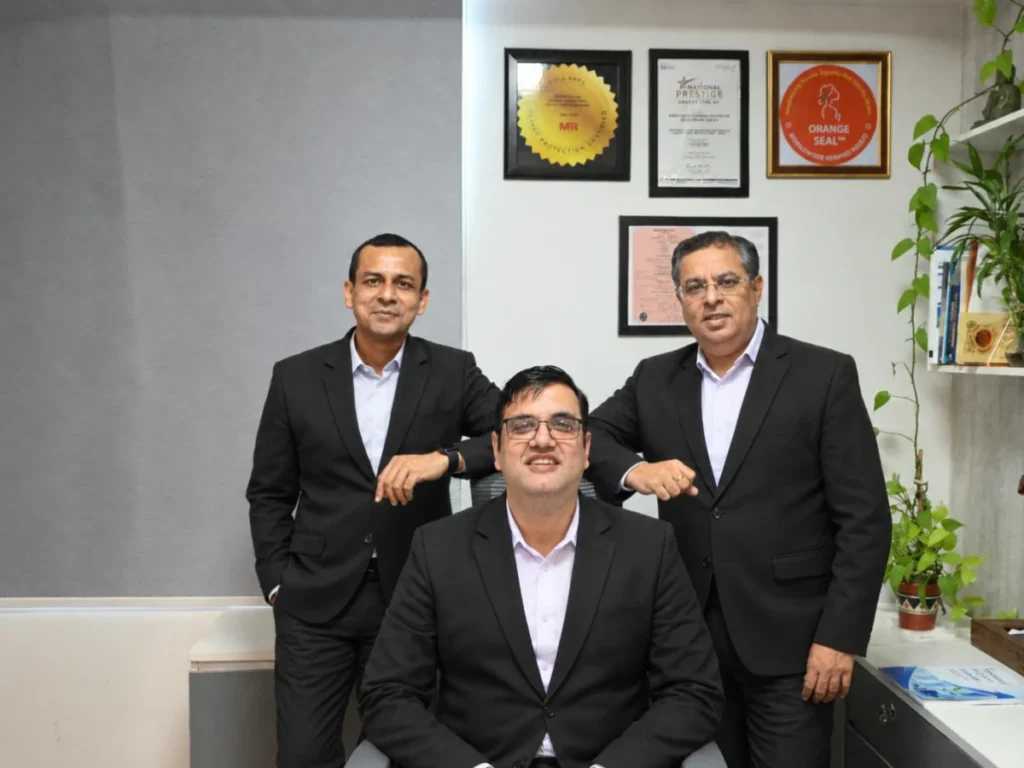
NEW DELHI — In a major validation of India’s burgeoning micro-lending and financial inclusion landscape, Delhi NCR-headquartered Non-Banking Financial Company (NBFC) Seeds Fincap has successfully raised over INR 100 crore ($10.4 million) in its Series B funding round.
The investment round was spearheaded by the global philanthropic and investment heavyweight, the Michael & Susan Dell Foundation. The round also witnessed strong participation from existing institutional backers, including venture capital firms Z47 and Lok Capital. Additionally, the financing syndicate welcomed new strategic participants, notably Norinchukin Capital and Alteria Capital, signaling expanding international and domestic confidence in the startup’s operational model.
The newly injected capital arrives at a critical juncture for Seeds Fincap. The company plans to deploy the funds strategically to accelerate its nationwide footprint expansion, scale its technological infrastructure, refine its proprietary risk-management frameworks, and aggressively penetrate new geographical markets across India.
As India’s digital lending and fintech ecosystems mature against a backdrop of increasing credit formalization, players like Seeds Fincap are carving out indispensable niches by catering to segments of the population historically overlooked by traditional institutional banking.
1. Executive Summary & Core Deal Dynamics
Seeds Fincap operates at the intersection of financial inclusion and technology-driven underwriting, targeting micro, small, and medium-sized enterprises (MSMEs) alongside underserved individuals. The Series B infusion of INR 100 crore values the company higher than its previous institutional rounds and provides substantial runway as the firm scales toward ambitious medium-term financial targets.
The composition of the funding round reflects a diversified backing profile:
- Lead Investor: Michael & Susan Dell Foundation, known for its deep commitments to education, family economic stability, and high-impact social investments globally.
- Existing Investors: Z47 and Lok Capital, both of which continue to back the startup’s growth trajectory based on its proven unit economics and consistent execution.
- New Participants: Norinchukin Capital and venture debt firm Alteria Capital, bringing structured credit and international strategic depth to the cap table.
According to company disclosures, the fresh capital will be funneled directly into three core pillars: scaling the physical branch network to reach deeper into semi-urban and rural markets, upgrading tech-enabled underwriting engines, and augmenting human capital to support rapid portfolio expansion.
2. Chronological Evolution: From Inception to Series B
To understand Seeds Fincap’s current market standing, it is essential to trace its journey through the turbulent post-pandemic economic landscape of the Indian financial sector.
The Foundation Years (2021)
Seeds Fincap was incorporated in 2021 by a trio of seasoned financial services professionals: Subhash Chandra Acharya, Avishek Sarkar, and Sumeet Dhall. Launching an NBFC during a period marked by macroeconomic uncertainty required a clear, resilient thesis. The founders recognized a persistent credit gap: while large MSMEs had access to commercial banking credit and lower-income demographics had microfinance institutions (MFIs), the "missing middle"—small merchants, micro-entrepreneurs, and growing informal businesses requiring loans between INR 50,000 and INR 1 Lakh—remained chronically underserved.
Early Traction and Seed-to-Series A Progression
By combining deep boots-on-the-ground operational strategies with digital data capture, the founders built an agile lending model. The company steadily expanded its footprint, securing early-stage capital from impact-focused investors who validated its risk-adjusted returns. Unlike many tech startups that prioritized top-line growth at the expense of bottom-line health, Seeds Fincap placed an early emphasis on sustainable unit economics, low default rates, and rigorous collection mechanisms.
The Series B Milestone (2026)
By mid-2026, Seeds Fincap had evolved from a regional startup into a multi-state NBFC operator. Crossing the threshold of 164 active branches and serving over 70,000 active members by August 2026, the company caught the eye of larger institutional investors. The culmination of this growth phase is the current Series B round, which positions the company to cross the thousand-crore AUM milestone within the next year.
3. Supporting Data, Financial Metrics, and Operational Footprint
Seeds Fincap’s financial disclosures accompanying the Series B announcement underscore a rare combination of rapid top-line growth and bottom-line profitability—a metric highly prized by investors in the current high-interest-rate environment.
Financial Performance & Profitability
- Profitability: The company proudly reports that it has remained profitable across both financial years FY25 and FY26, defying the cash-burn model historically associated with early-stage fintech firms.
- Assets Under Management (AUM): As of the latest reporting period, Seeds Fincap boasts an AUM of approximately INR 722 crore.
- Loan Disbursements: Total disbursements for FY26 stood at approximately INR 620 crore, illustrating high portfolio velocity and strong credit demand among its target demographic.
- Future Targets: Backed by the Series B capital, management has set an aggressive target to scale its AUM to INR 1,000 crore by March 2027.
Physical and Digital Infrastructure
- Branch Network: As of August 2026, the company operates a robust network of 164 branches, predominantly situated in semi-urban and tier-2/tier-3 markets where formal credit penetration remains low.
- Customer Base: The NBFC actively serves over 70,000 active members, providing structured micro-loans designed to generate livelihood opportunities and support business expansion.
- Underwriting Methodology: Eschewing traditional, paperwork-heavy collateral assessments, Seeds Fincap utilizes a proprietary, cash-flow-driven underwriting approach. This methodology evaluates the actual operational cash flows of micro-enterprises, supported by a hybrid model that blends field-level verification with tech-enabled data analytics.
4. Official Responses and Leadership Perspectives
The leadership team at Seeds Fincap, alongside its institutional investors, highlighted the broader socio-economic impact and strategic alignment driving the partnership.
Subhash Chandra Acharya, Co-founder, Managing Director, and CEO of Seeds Fincap, articulated the strategic vision behind the fundraising:
"This capital will enable us to deepen our presence, strengthen our technology and people, and expand our ability to serve more entrepreneurs and underserved communities. Our mission has always been to bridge the credit divide for micro-enterprises that form the backbone of India’s economy. With the backing of partners like the Michael & Susan Dell Foundation and our existing investors, we are uniquely positioned to accelerate our journey toward responsible, scalable financial inclusion."
Representatives from the investing syndicate similarly emphasized the developmental and economic rationale of the deal. Investors noted that Seeds Fincap’s adherence to disciplined risk management, combined with its profound social impact on informal sector entrepreneurs, makes it a benchmark model for modern Indian NBFCs. The involvement of global entities like Norinchukin Capital and Alteria Capital further demonstrates that foreign institutional capital continues to find high-conviction opportunities in India’s grassroots credit ecosystem.
5. Market Implications: India’s Fintech and Lending Tech Renaissance
The successful closing of Seeds Fincap’s Series B round occurs against a much broader, highly dynamic canvas. India’s fintech market is undergoing a structural evolution, with lending tech startups emerging as the primary growth drivers.
The Macro Picture: A $250 Billion Horizon
Industry projections indicate that lending tech startups are poised to account for more than half of India’s overall fintech market revenue. With credit adoption accelerating across retail and commercial segments, the broader fintech ecosystem is projected to generate over $250 billion in revenue by 2030. Rising smartphone penetration, the ubiquity of digital public infrastructure (such as Aadhaar, UPI, and Account Aggregator frameworks), and a young demographic eager for credit are fueling this expansion.
Maturation and the Public Markets Wave
Beyond early-stage venture rounds, the Indian lending tech sector is witnessing a historic maturation milestone: successful public market debuts and regulatory clearances. The ecosystem is no longer reliant solely on private venture capital exits; public investors are increasingly showing an appetite for mature fintech firms:
- IPO Approvals: The Securities and Exchange Board of India (SEBI) recently greenlit the proposed initial public offering (IPO) of Social Worth Technologies, the parent company of prominent lending tech startup Fibe (formerly EarlySalary).
- Stock Market Debuts: Digital lending unicorn Moneyview recently completed a high-profile stock market debut, registering a massive premium on the BSE.
- Precedents: Earlier in the year, other mature lending players such as Kissht and Aye Finance successfully navigated public listings, setting a clear path for liquidity and regulatory compliance across the sector.
What Seeds Fincap’s Success Means for the Industry
Seeds Fincap’s ability to secure INR 100 crore in Series B funding while maintaining strict profitability highlights a shifting investor sentiment. In an era where "growth at all costs" has been replaced by "sustainable unit economics," profitable NBFCs that effectively marry grassroots field operations with robust risk tech are winning the confidence of top-tier global funds.
As Seeds Fincap targets its goal of INR 1,000 crore in AUM by March 2027, its trajectory will serve as a bellwether for how tech-enabled NBFCs can successfully scale in India’s semi-urban and rural hinterlands. By empowering thousands of micro-entrepreneurs who previously operated outside the formal banking perimeter, the company is not only building a resilient commercial enterprise but also actively participating in the financial democratization of the world’s most populous nation.