India’s Electric Two-Wheeler Market Rebounds in September: Traditional OEMs Gain Ground as Mass-Market Competition Heats Up
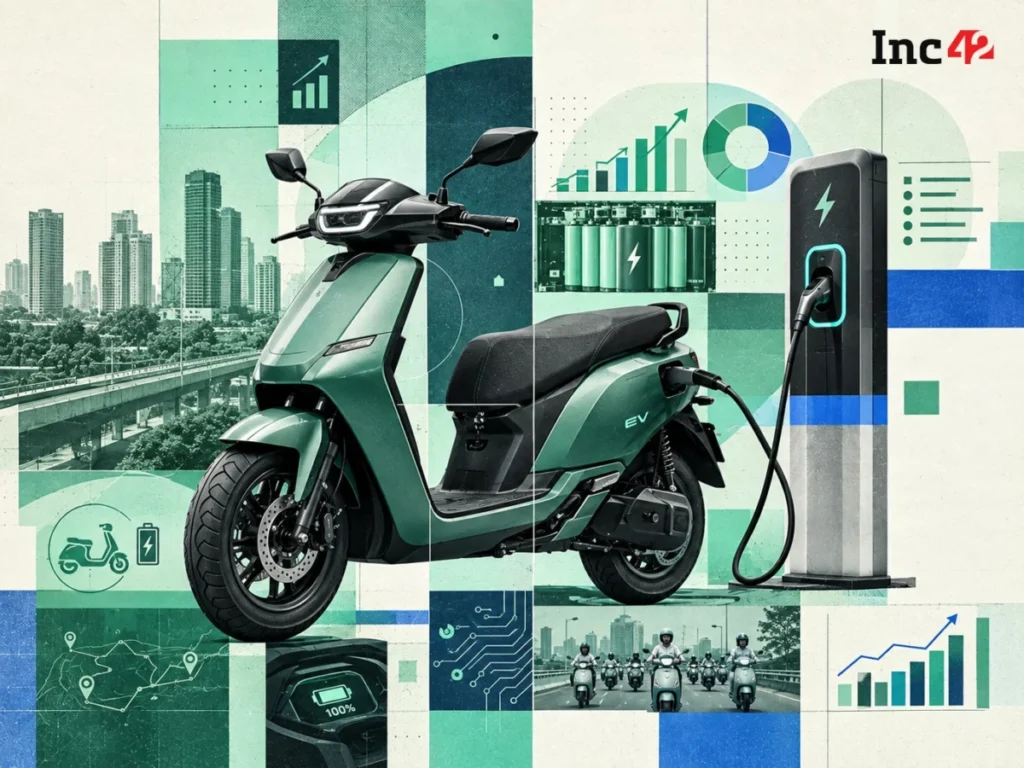
NEW DELHI — Reversing a two-month downward trajectory, India’s electric two-wheeler (E2W) sector staged a robust recovery in September, driven by aggressive festive season inventory build-ups, expanding retail footprints, and a strategic pivot toward sub-INR 1 lakh mass-market models.
According to official Vahan data, total E2W registrations climbed 12.2% month-on-month (MoM) to reach 2.07 lakh units in September, up from 1.84 lakh units registered in August. The recovery underscores a broader strengthening of India’s electric vehicle (EV) landscape. Overall EV registrations surged 64.6% year-on-year (YoY) to 3.15 lakh units during the month, with E2Ws serving as the primary growth engine.
1. Main Facts: A Paradigm Shift in Market Dynamics
The September numbers reveal a widening divide between legacy automotive giants and new-age electric vehicle startups. While traditional original equipment manufacturers (OEMs)—namely TVS Motor, Bajaj Auto, and Hero MotoCorp—cemented their dominance by capturing roughly 61% of the market, several early-age EV pioneers experienced stagnation or declines in market share.
- The Rebound: September E2W registrations hit 2.07 lakh units, almost doubling the 1.05 lakh units recorded in September of the previous year.
- Legacy Dominance: TVS Motor and Bajaj Auto posted strong double-digit growth, extending their lead in the domestic e-scooter space.
- The Mass-Market Pivot: Recognizing that early adopters have been largely saturated, manufacturers are aggressively lowering entry barriers. Companies are rolling out sub-INR 1 lakh models—such as Ather’s Konarc (priced at INR 99,999) and Ola Electric’s S1Z (priced at INR 79,999)—alongside battery-as-a-service (BaaS) frameworks to capture mainstream buyers.
2. Chronology of Events and Market Trajectory
To understand September’s turnaround, it is essential to map the sector’s performance over the preceding months:

- Late August: Realizing that sales were contracting—August registrations had initially appeared sluggish before being upwardly revised by 7% to 1.84 lakh units—manufacturers accelerated promotional campaigns. Simultaneously, players like Ather Energy and Ola Electric launched lower-priced offerings to stimulate demand ahead of the festive season.
- Early September: Major funding announcements made headlines, injecting vital capital into the ecosystem. Companies like Simple Energy secured $180 million, while Ultraviolette raised $85 million and River secured $120 million in recent financing rounds.
- Mid-to-Late September: Vahan data consolidated at the close of the month confirmed the 12.2% MoM bounce. Traditional OEMs ramped up their dealer networks, while high-growth outliers like E-Sprinto and Oben experienced exponential surges in road registrations.
3. Supporting Data & Performance Breakdown
A granular look at individual manufacturer metrics highlights contrasting fortunes across the industry:
The Incumbents
- TVS Motor: Market leader TVS retained its crown, commanding a 26% market share. The company recorded 53,989 registrations in September, marking a ~10% MoM increase from 49,284 units in August.
- Bajaj Auto: Trailing closely behind, Bajaj posted 48,383 registrations—a robust 17% jump from August’s 41,341 units. Bajaj now holds 23.4% of the market.
- Hero MotoCorp: While narrowly missing the top-three podium in raw volume, Hero saw registrations soar 27% MoM to 24,306 units, bolstered by aggressive manufacturing investments.
The New-Age Challengers
- Ather Energy: Ather experienced tepid growth, with registrations inching up 4.9% MoM to 30,479 units (up from 29,068 in August). Consequently, its market share dipped 110 basis points to 14.7%. However, Ather crossed the 8-lakh lifetime sales milestone, becoming the fourth OEM in India to do so.
- Ola Electric: Ola continued its downward trajectory, registering 13,449 units in September—a 3.5% MoM decline. The dip coincides with Ola’s structural shift toward rebuilding its retail footprint via dealer-led stores, targeting a 500+ outlet network.
- Emerging Players: E-Sprinto recorded a blockbuster 16-fold MoM surge to 1,997 units. Electric motorcycle maker Oben posted a 120% MoM surge to 1,417 units. Conversely, rivals like Ultraviolette saw registrations dip 12% to 536 units, and Simple Energy slipped 19% to 1,351 units as they channeled capital into upcoming production facilities.
4. Official Responses and Strategic Outlook
Industry executives and company statements point to a unified strategy: aggressive geographical expansion, manufacturing localization, and supply chain optimization.
Global and Domestic Expansion:
TVS Motor is rapidly expanding its footprint beyond Indian borders. Having established presences in Nepal, Kenya, and Sri Lanka, TVS is now eyeing Indonesia for a dedicated manufacturing facility. The company plans to elevate its monthly EV manufacturing capacity from 40,000–45,000 units to over 50,000 units within the next three to four months.
Capitalizing on Fresh Funding:
For startups, recent capital injections are being deployed directly into production scalability.

- Simple Energy, which secured $180 million, plans to channel funds into its new manufacturing plant, service network expansion, and the rollout of its newly launched Simple Wave family e-scooter series (priced at INR 1.10 lakh).
- Ultraviolette, armed with an $85 million equity raise, is shoring up its manufacturing capabilities while preparing for international expansions into the United States, Latin America, and Southeast Asia.
- River, which raised $120 million in August, saw its registrations tick up 6.4% to 5,549 units as it scales production infrastructure.
5. Broader Market Implications
The September rebound signals a maturation of India’s electric two-wheeler ecosystem. Several key implications emerge from the latest Vahan data:
- The Festive Catalyst: The uptick confirms that traditional retail seasonality still heavily influences the EV segment. Dealerships and OEMs successfully leveraged pre-festive sentiment to clear inventory and attract hesitant buyers.
- Mainstream vs. Niche: The scaling of sub-INR 1 lakh models proves that the future of Indian e-mobility lies in affordability and utility (such as family-focused scooters with higher range) rather than performance-only positioning.
- The Legacy Counter-Attack: Traditional automakers have successfully leveraged their deep-pocketed distribution networks, localized supply chains, and brand trust to claw back market share from tech-first startups. For new-age players, survival will increasingly depend on cost efficiency, robust after-sales service networks, and continuous product innovation.
As the industry moves deeper into the peak festive quarters of Q4, market watchers anticipate heightened competitive intensity, aggressive price-to-performance battles, and accelerated retail expansion across both tier-1 and tier-2 Indian cities.