The AI Revolution: Transforming Business Operations in the Digital Age
The landscape of modern business is undergoing a seismic shift, driven by the rapid evolution and integration of Artificial Intelligence (AI). Once relegated to the realms of science fiction or specialized academic research, AI has emerged as a cornerstone of contemporary professional strategy. Whether for streamlining supply chain logistics, enhancing customer experience, or automating complex workflows, AI is no longer a luxury—it is a functional necessity for organizations aiming to remain competitive in a digital-first economy.
The State of Play: Main Facts and Current Adoption
According to recent industry data from AuthorityHacker, approximately 35% of companies have already integrated AI into their core processes. While this figure may appear modest at first glance, the underlying sentiment among industry leaders is clear: 90% of enterprises now categorize AI assistance as a definitive competitive advantage.
The reach of this technology extends far beyond enterprise software. Today, an estimated 77% of consumer-facing devices incorporate some form of artificial intelligence, subtly influencing how individuals interact with technology, manage their time, and consume information. This ubiquity suggests that the transition toward an AI-augmented professional life is not merely a passing trend, but a fundamental change in the digital infrastructure of our society.
Chronology: From Algorithmic Seeds to Generative Power
The journey toward the current AI boom was not overnight. To understand where we are, we must look at the timeline of this evolution:
- The Foundational Era (1950s–2010s): Early efforts focused on machine learning and rudimentary rule-based systems. These technologies were primarily used for data sorting, predictive analytics, and basic automation in manufacturing.
- The Deep Learning Surge (2012–2017): The emergence of neural networks allowed machines to process unstructured data, such as images and audio, with unprecedented accuracy. This set the stage for modern voice assistants and image recognition software.
- The Generative Revolution (2020–Present): The release of Large Language Models (LLMs) and diffusion-based image generators changed the paradigm from "predictive AI" to "generative AI." For the first time, software could create original text, code, music, and art, lowering the barrier to entry for content creation and software development.
Supporting Data: Why Businesses Are Pivoting
The reliance on AI is fueled by hard data regarding productivity and market positioning. Organizations that leverage AI for operational efficiency report a significant reduction in "time-to-market" for new products. By offloading repetitive tasks—such as data entry, basic customer service queries, and routine copywriting—to AI agents, employees are freed to focus on high-value creative and strategic work.
Furthermore, in the e-commerce sector, the impact is measurable. AI-driven recommendation engines, dynamic pricing models, and automated inventory management systems are directly correlated with higher conversion rates and improved customer retention. As AI models become more adept at understanding natural language and human sentiment, the "personalization gap" that once plagued online stores is closing rapidly.
Official Responses and Perspectives
Industry leaders have expressed both optimism and caution. Tech giants like Microsoft, Google, and OpenAI have championed the "co-pilot" philosophy, suggesting that AI is meant to augment human intelligence rather than replace it.
However, regulatory bodies have also begun to take notice. The European Union’s AI Act and ongoing discussions in the U.S. Congress highlight a growing consensus: as AI becomes embedded in critical business processes, there is a mounting need for governance regarding data privacy, algorithmic bias, and ethical output. Most corporations are responding to this by adopting "human-in-the-loop" workflows, where AI generates the draft, but a human expert provides the final oversight and approval.
Implications for the Professional Landscape
The integration of AI has profound implications for various departments within a business:
1. Web Development and User Experience
Modern AI tools can now generate clean, functional code and design layouts based on natural language prompts. This accelerates the development lifecycle, allowing small teams to deploy professional-grade websites in a fraction of the time it previously took.
2. Marketing and Content Strategy
Content marketing has been revolutionized by LLMs. From generating SEO-optimized blog posts to creating complex marketing funnels, AI allows for the rapid scaling of content. However, this also shifts the marketer’s role from "writer" to "editor and curator," where the focus is on maintaining brand voice and accuracy.
3. Video Production and Multimedia
Video is the most engaging form of content, but it has historically been the most expensive to produce. AI-powered platforms can now generate lifelike avatars, translate video content into multiple languages, and perform complex video editing, making high-quality multimedia accessible to SMBs and individual entrepreneurs.
4. Project Management
AI project management tools can analyze team velocity, predict potential bottlenecks, and automate meeting summaries. By managing the "logistics of work," AI reduces the administrative burden on managers, allowing for better focus on team health and project outcomes.
Navigating the AI Tool Ecosystem
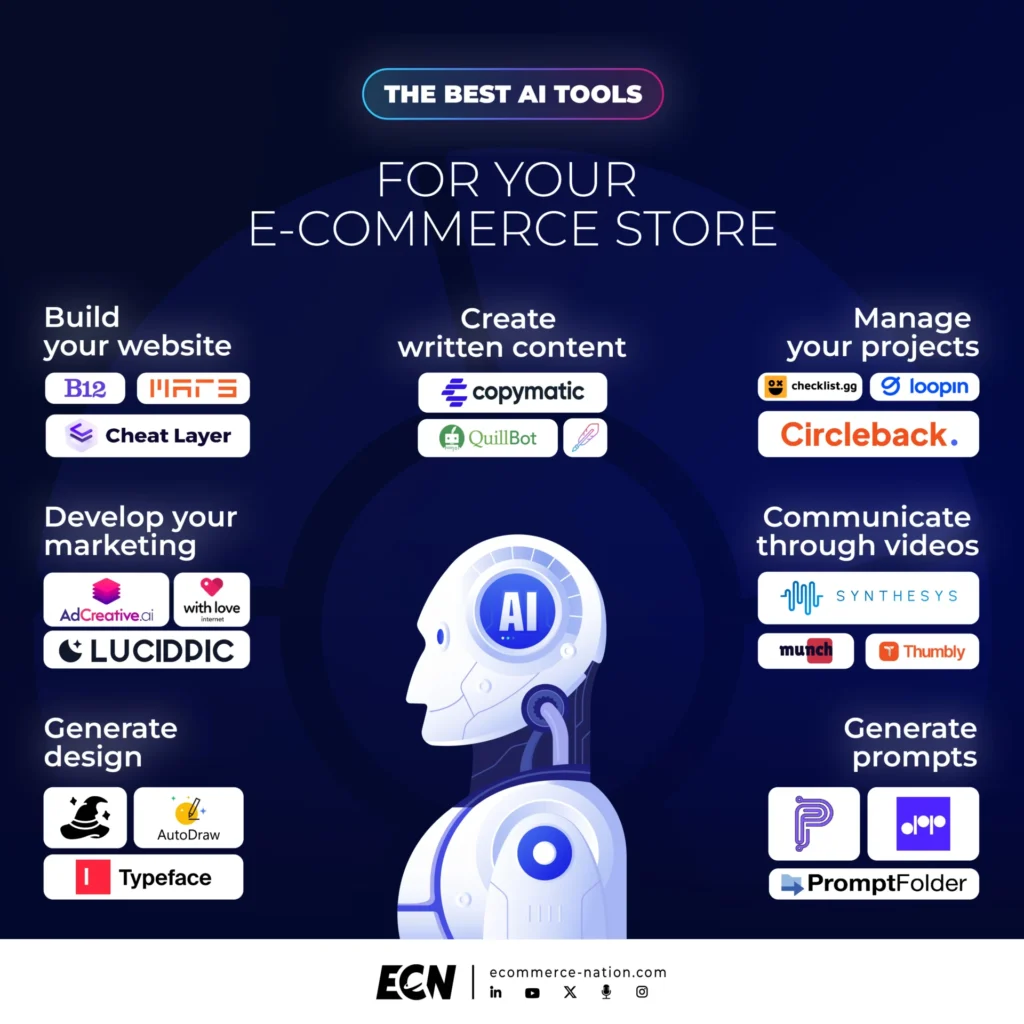
The sheer volume of available tools can be overwhelming. To provide clarity, we categorize these tools based on their specific utility in an online business environment:
Optimizing Your Digital Presence
For those looking to build or iterate on their digital storefronts, AI-driven platforms act as architects. By utilizing generative design tools, business owners can create custom assets that align perfectly with their brand identity without requiring extensive graphic design expertise.
Strategic Marketing and Prompt Engineering
As we move forward, "prompt engineering"—the art of communicating effectively with AI—has become a vital skill. By leveraging prompt generation tools, professionals can ensure their outputs are consistent, high-quality, and aligned with their strategic objectives.
Future-Proofing Your Business
The question for business owners is no longer if they should use AI, but how to implement it responsibly. The key to successful adoption lies in identifying the "low-hanging fruit":
- Identify Bottlenecks: Where is your team spending the most time on repetitive, non-creative tasks?
- Pilot Programs: Implement AI tools on a small scale to test efficacy before a company-wide rollout.
- Training: Invest in teaching your staff how to use these tools effectively. An AI-literate workforce is a company’s most valuable asset in the coming decade.
Conclusion: The Horizon
As we look toward the future, the integration of AI is set to deepen. We are moving toward a world of "agentic" AI, where software not only creates content but executes multi-step business strategies autonomously. While this presents challenges, the opportunity to scale innovation, reduce operational costs, and deliver more value to customers is unprecedented.
The tools mentioned throughout this discussion serve as the starting point for your digital transformation. By embracing these advancements with a critical and strategic eye, you position your business not just to survive the technological shift, but to lead it. The era of the AI-augmented enterprise has arrived—are you ready to adapt?