AWS Unveils a Streamlined, AI-Speed Onboarding Experience Designed to Eliminate Friction for Modern Builders
SEATTLE — In a strategic shift aimed at recapturing the frictionless ethos that defined its earliest days, Amazon Web Services (AWS) has announced a radically simplified onboarding and project management experience tailored specifically for developers operating at the speed of artificial intelligence.
For nearly two decades, AWS has stood as the undisputed global titan of cloud computing. Born from a handful of foundational building blocks—such as Amazon Simple Storage Service (Amazon S3), Amazon Elastic Compute Cloud (Amazon EC2), and Amazon Simple Queue Service (Amazon SQS)—the platform was originally engineered so that any visionary with a laptop and an idea could begin constructing applications immediately.
However, as the platform matured and became the operational backbone for the world’s largest enterprises, multinational corporations, and government agencies, its structural landscape evolved. To serve these massive institutions, AWS expanded its global footprint across dozens of Regions and layered on intricate tiers of security, networking, governance, and cost controls.
While this deep complexity is indispensable for a Fortune 500 bank or a global healthcare provider, it created a paradox for modern solo builders, indie hackers, and AI-native startups. Today, a developer wishing to spin up an AI-driven prototype often finds themselves bogged down by mandatory upfront configuration tasks—navigating identity and access management policies, setting up billing alarms, and manually provisioning virtual private clouds. Every administrative hurdle stands as an active deterrent, slowing down the pace of innovation.
With its latest announcement, AWS is bridges this gap. The cloud leader is introducing a new, streamlined onboarding framework that bypasses traditional administrative barriers, integrates deeply with modern coding agents, and allows builders to deploy fully functional cloud architectures in a matter of minutes.
Chronology of Cloud Evolution: From Bare-Metal Beginnings to AI-Speed Prototyping
To understand the significance of AWS’s latest release, industry analysts point to the cyclical evolution of cloud computing over the past twenty years.

- 2006–2010 (The Genesis): AWS launches with sparse, infrastructure-level primitives. Developers write scripts, spin up raw compute instances, and store files with minimal bureaucratic friction.
- 2011–2020 (The Enterprise Scale Era): As mass migration to the cloud accelerates, enterprise demands dictate product development. AWS introduces complex organizational units, granular cross-account access controls, and compliance frameworks. Onboarding becomes comprehensive, requiring dedicated cloud architects.
- 2023–2025 (The Generative AI Boom): The rise of generative AI coding assistants (such as Claude, GitHub Copilot, and custom coding agents) accelerates software development cycles from weeks to minutes. Traditional cloud provisioning speeds become the primary bottleneck in software creation.
- August 2026 (The Paradigm Shift): AWS rolls out its simplified builder experience, merging frictionless third-party authentication, automated agent toolkits, and project-based financial sandboxing to match the velocity of AI-native engineering.
Main Facts: How the New AWS Experience Works
The newly deployed experience reimagines how a user interacts with AWS from the ground up, stripping away early-stage configuration while preserving an invisible bridge to advanced enterprise capabilities.
1. Frictionless Authentication and Zero Credit-Card Start
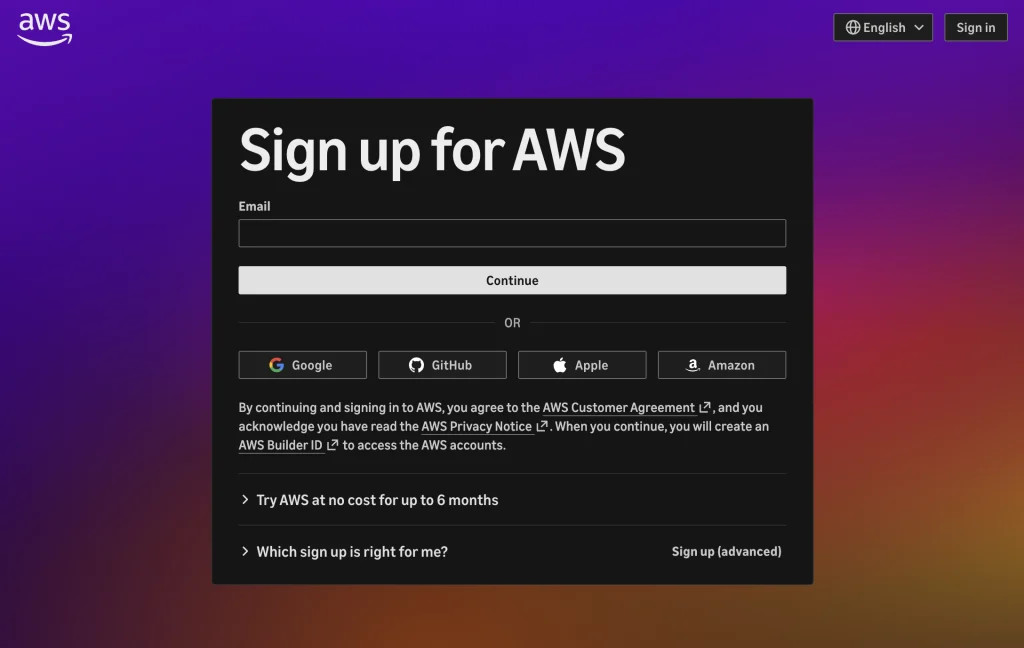
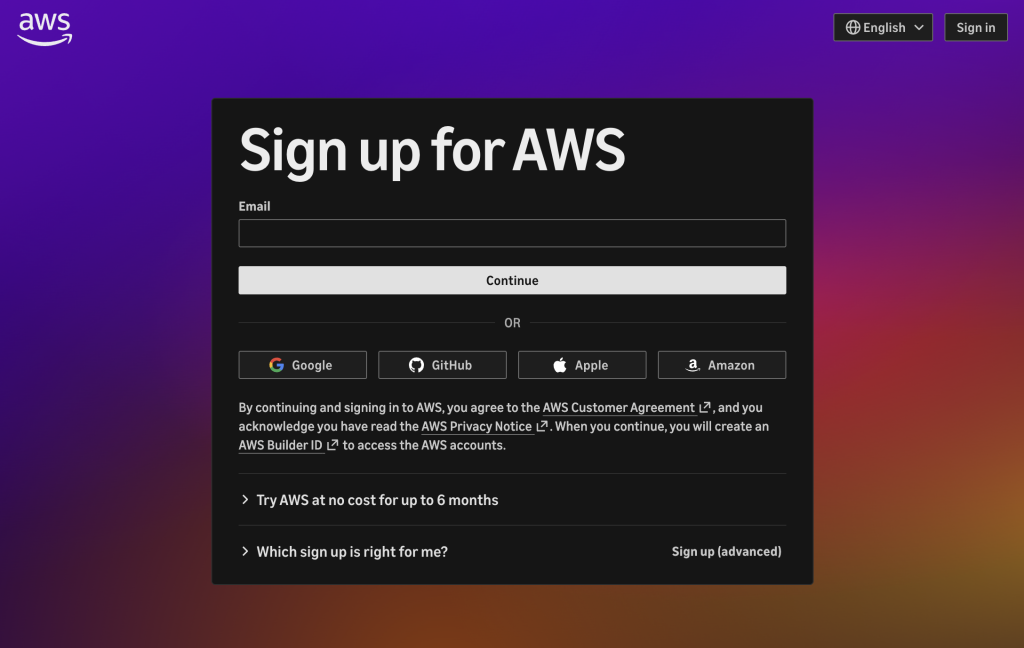
New users are no longer required to trudge through lengthy registration forms or input a credit card before writing code. Instead, builders can authenticate using existing trusted identity providers, including Google, GitHub, and Apple. Upon sign-up, new participants are automatically enrolled in the AWS Free Tier, receiving $100 in free cloud credits to jump-start their initiatives.
2. Project-Centric Architecture
Rather than dropping users into a sprawling, unorganized AWS Management Console, the new system organizes work logically into Projects.
- A project encapsulates an isolated AWS account alongside resource creation environments and team-sharing settings.
- AWS automatically establishes this architecture behind the scenes, layering on robust, pre-configured security controls so that compliance is baked in from the first line of code.
3. Native Coding Agent Integration
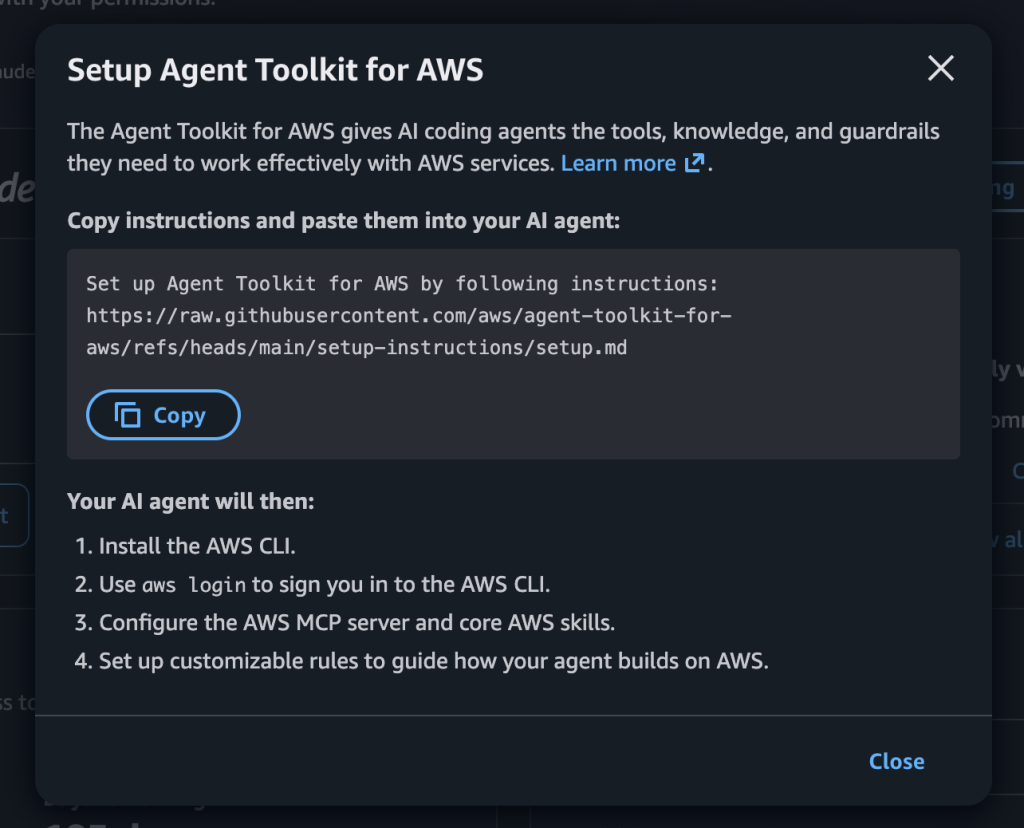
The standout feature of the new release is its embrace of AI-driven development. Immediately after authenticating, the user is provided with a contextual prompt designed to be copied and pasted directly into their coding agent of choice.
Once executed, the agent automatically configures the AWS Command Line Interface (AWS CLI), integrates the Agent Toolkit for AWS, establishes an active login session, and drops a structured configuration file (CLAUDE.md) into the project repository. From that point onward, the coding agent can autonomously deploy cloud resources, run workloads, and iterate on applications while strictly adhering to cloud best practices.
4. Simplified Team Collaboration
Collaboration no longer requires navigating the dense waters of AWS Identity and Access Management (IAM) or configuring AWS IAM Identity Center directories. Project owners can invite collaborators simply by typing in an email address. Permissions are handled automatically; invited teammates gain access only to the specific project they were invited to, eliminating the risk of accidental over-provisioning or unauthorized access to sensitive infrastructure.
5. Automated Cost Management and Spend Ceilings
Fear of runaway cloud bills has historically plagued independent developers. AWS addresses this by introducing strict, project-level spend limits starting at $20 per month.
- Developers on paid plans can set a monthly financial ceiling based on usage trajectories.
- AWS tracks costs transparently. If a project approaches its designated cap, the developer receives early notifications.
- If expenditures hit the hard limit, AWS safely pauses the project rather than letting bills accumulate—preventing unexpected financial shocks. Budgets can be independently assigned per project, allowing experimental ideas to run on a tight leash while scaling resources are funneled to high-traction workloads.
Supporting Data & Hands-On Demonstrations
To evaluate the real-world efficiency of the new onboarding workflow, early testers put the system through a controlled test case: constructing a public API that returns a unique sequential ID on every HTTP request.
The Live Testing Timeline
- Account Creation (Elapsed Time: 30 Seconds): Navigating to the AWS portal, the tester selected Create account, authenticated via a personal Google account, and was immediately directed to their clean project dashboard.
- Agent Tooling Setup (Elapsed Time: 1 Minute): The tester copied the auto-generated agent prompt, pasted it into their local coding environment, and permitted the agent to configure the AWS CLI and Agent Toolkit.
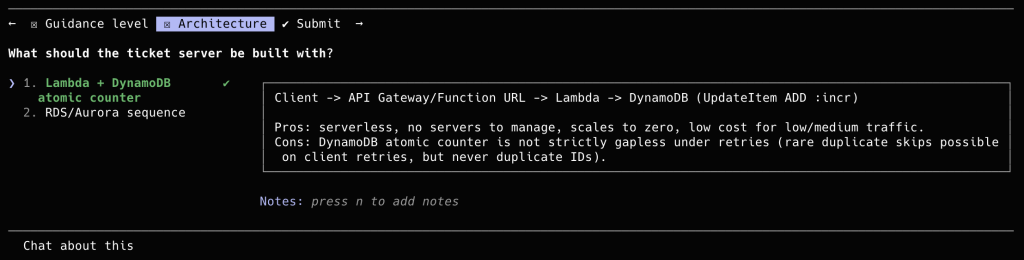
- Application Deployment (Elapsed Time: 3 Minutes): The developer issued a plain-language prompt to the coding agent: "Build an API that returns a new unique sequential ID on every request."
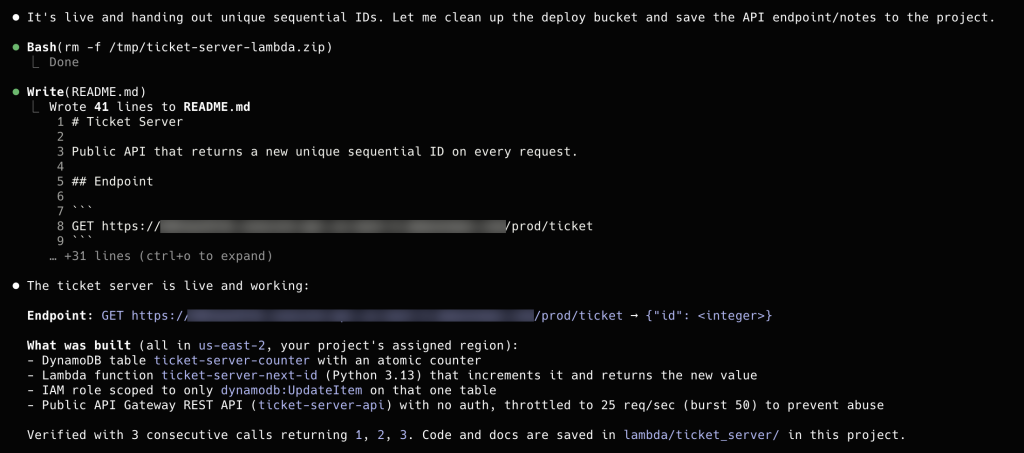
Without human intervention, the coding agent autonomously designed an efficient serverless architecture, selecting and deploying:

- An AWS Lambda function to execute the core logic.
- An Amazon DynamoDB table to track and persist sequential counters.
- An Amazon API Gateway instance to serve as the public HTTP endpoint.
Crucially, the coding agent handled all inter-service IAM permissions automatically. Within minutes, a live, publicly accessible endpoint was returning dynamically minted IDs. Furthermore, upon deploying the Lambda function, the tester received an additional $20 promotional credit bonus, supplementing their initial $100 allocation.
| Feature Metric | Legacy AWS Onboarding | New Simplified AWS Experience |
|---|---|---|
| Authentication | Email + Manual Password + MFA setup | Google, GitHub, Apple, Amazon (Federated) |
| Payment Verification | Mandatory Credit Card upfront | None required (Free tier $100 credits) |
| Team Onboarding | IAM Users, Roles, and Permission Policies | Direct email invitation with isolated scope |
| Resource Provisioning | Manual Console configuration or Terraform/CDK | Natural-language commands via Coding Agents |
| Cost Protection | Billing alarms & manual budget configurations | Automated monthly spend caps with auto-pause |
Official Responses and Strategic Implications
Industry observers note that this move represents a calculated counter-offensive by AWS to capture the loyalty of a new generation of developers who might otherwise default to specialized Platform-as-a-Service (PaaS) providers or developer-centric clouds like Vercel, Heroku, or Supabase.
In statements accompanying the launch, AWS product leadership emphasized that the core philosophy of cloud computing was never about forcing developers to become systems administrators; it was about removing infrastructure overhead so that great ideas could flourish.
"We’ve heard clearly from builders that they do not want to spend their first operational hours wrestling with cloud configurations," noted an AWS spokesperson during the rollout announcement. "They want to build what they came to build. We listened. AWS began as a place where anyone with an idea could start building instantly, and this new experience restores that starting point."
The "No-Migration" Escape Hatch
One of the most architecturally significant aspects of the new release is what happens when a small project outgrows its sandbox.
Historically, developers who started on simplified developer platforms faced painful, risky code migrations when their applications scaled up and required enterprise-grade governance, multi-Region redundancy, or complex organizational structures. AWS has eliminated this migration tax entirely.
When a project reaches a threshold where it requires multiple AWS Regions or advanced compliance policies via AWS Organizations, builders can activate advanced features directly within their dashboard at no additional cost. The underlying project is instantly promoted to a fully compliant, best-practice AWS Organization. Every line of code, every deployed database, and every active configuration remains completely intact, ensuring zero downtime and absolute architectural continuity.
Conclusion and Outlook
The rollout of this simplified builder experience is currently underway, scaling gradually to new customers globally. By blending modern third-party identity authentication, automated AI coding agent integration, and intelligent cost controls with the unmatched underlying depth of the world’s leading cloud platform, AWS is signaling that it intends to remain the definitive home for technology innovation—from the first line of prototype code to global enterprise scale.
For developers eager to test the new framework, account creation is now live via the official AWS Builder ID sign-up portal, supported by comprehensive documentation available on the AWS Documentation Hub.