The Spark of Change: How Cosmos Diamonds is Redefining the Indian Bridal Jewellery Narrative
In the intricate tapestry of Indian culture, a wedding is more than just a ceremony; it is a financial and emotional milestone of monumental proportions. For generations, the exchange of gold and diamonds has served as both a celebration of union and a strategic preservation of family wealth. However, for the modern bride, the traditional jewellery landscape has often felt like an exclusionary club—marked by exorbitant markups, stagnant designs, and an underlying anxiety regarding long-term value.
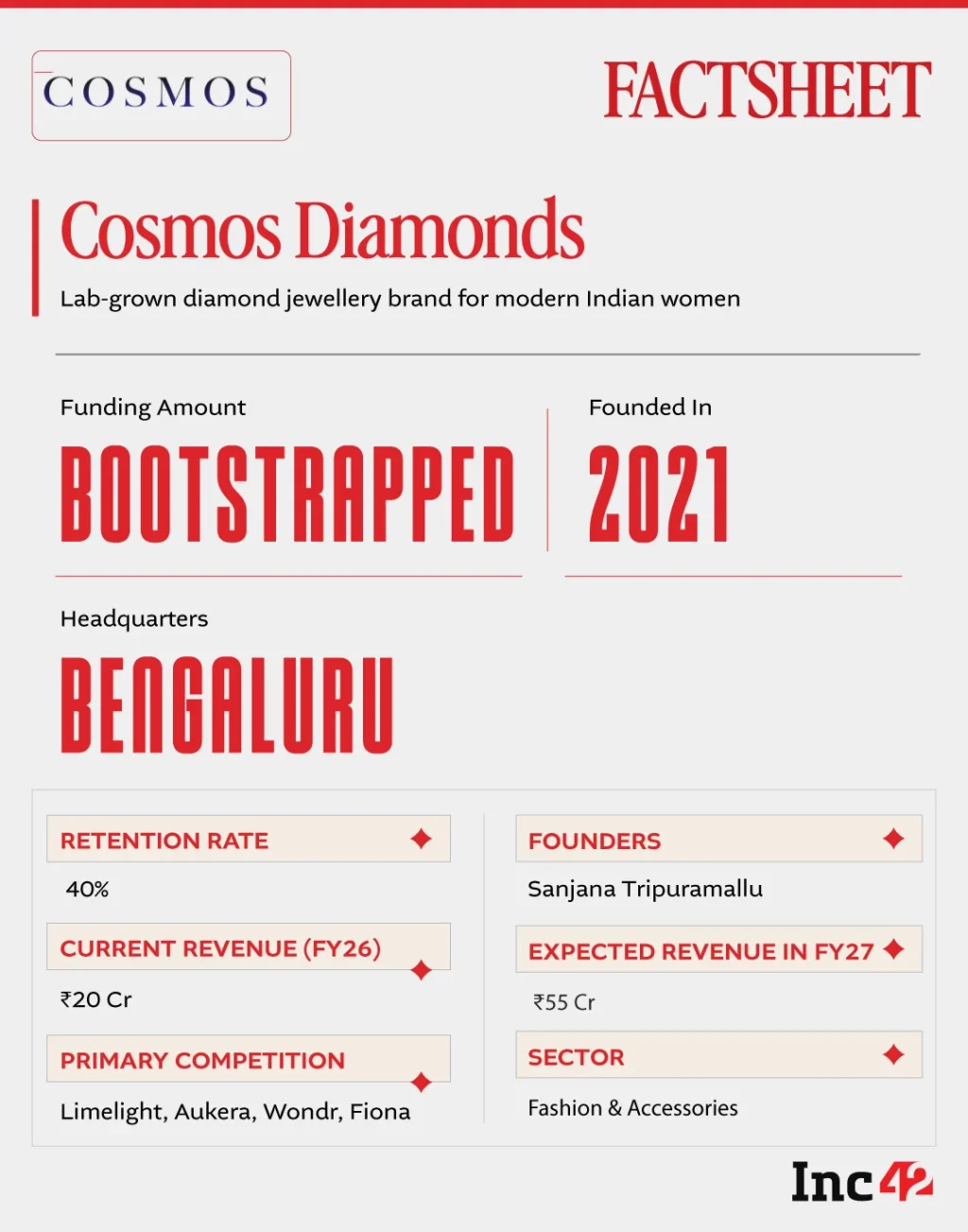
Enter Sanjana Tripuramallu, the founder of Cosmos Diamonds, who identified this systemic friction point while shopping for her own engagement ring in 2020. What began as a personal quest for the perfect piece transformed into a mission to democratize luxury. Today, Cosmos Diamonds stands as a disruptor in the burgeoning lab-grown diamond (LGD) sector, proving that with enough trust and design innovation, a bootstrapped startup can challenge the entrenched giants of the Indian jewellery industry.
The Genesis: A Bride’s Epiphany
The journey of Cosmos Diamonds is rooted in the peak of the COVID-19 pandemic. In June 2020, as Tripuramallu prepared for her May 2021 wedding, she found herself navigating the high-stakes world of retail jewellery. A graduate of the prestigious National Institute of Design (NID), she brought a critical eye to the experience.
"I remember walking out of those stores thinking, ‘Why should owning diamond jewellery feel so out of reach for so many people?’" she recalls. The realization was twofold: traditional diamonds were prohibitively expensive, and the resale value—a crucial component for Indian families—was notoriously poor, leaving buyers feeling like they were losing money the moment they stepped out of the showroom.
Tripuramallu noticed a shifting tide in the industry. India was witnessing a surge in the popularity of lab-grown diamonds, yet the market was polarized. On one side were minimalist, westernized LGD brands; on the other were traditional heritage houses like Tanishq and Kalyan. There was a glaring void for a brand that could marry the sustainable, accessible nature of lab-grown stones with the ornate, culturally rich heritage designs that Indian brides demand.
Bridging the Gap: The Research Phase
Tripuramallu did not launch Cosmos Diamonds on a whim. Recognizing that she was entering a market driven by centuries-old expectations, she initiated a deep-dive into the consumer psyche. Over a period of intense study, she engaged with more than 1,000 women to understand the barriers to entry for lab-grown jewellery.
The insights were clear:
- Design Integrity: Indian buyers did not want a "compromise" piece; they wanted jewellery that felt grand, symbolic, and rooted in Indian motifs.
- Financial Assurance: The biggest hurdle was the perception of value. To win the trust of the Indian consumer, the brand needed to provide an absolute guarantee that their investment could be liquidated or exchanged without the fear of depreciation.
By 2021, Cosmos Diamonds was born, founded on the principle that if lab-grown diamonds were to become a staple of Indian weddings, they had to be treated with the same reverence as gold heirlooms.
The Pillar of Trust: A 100% Buyback Policy
The most radical departure from industry norms at Cosmos Diamonds is its contractual 100% buyback programme. In a market where exchange and buyback policies are often buried in fine print or limited to a fraction of the original price, Cosmos offers a full-value return policy, allowing customers to choose between cash refunds or store credit.
This policy is a high-stakes bet. By absorbing the transaction risk, the brand effectively mirrors the financial security associated with gold bullion. "Trust is easy to talk about and difficult to demonstrate," says Tripuramallu. "If we genuinely believe in the long-term value of our products and our business, then we should be willing to share that confidence with our customers."
This operational discipline dictates every aspect of the company, from the quality of the diamonds sourced to the pricing architecture. It has transformed the brand from a mere retailer into a partner in the customer’s financial journey.

Design as a Language
While trust is the foundation, design is the brand’s voice. Unlike competitors who focus on solitaire solitaires and minimalist aesthetics, Cosmos Diamonds draws from the maximalist traditions of Indian architecture and history.
The brand’s design philosophy is inherently collaborative. By working with a community of over 2,000 members, the leadership team identifies emerging preferences, ensuring that each collection feels like a modern reinterpretation of a cultural artifact. Because 90% of the brand’s customers are women, the designs are optimized for real-life wearability, ensuring that a bridal necklace is not just a museum piece for the locker, but an expressive accessory for the modern, professional woman.
Supporting Data: Scaling Without Debt
The market potential for lab-grown diamonds in India is staggering. According to Vantage Market Research, the sector is projected to balloon from $2.8 billion in 2025 to $11.6 billion by 2035. While many startups are rushing to burn venture capital to capture market share, Cosmos Diamonds has chosen a more measured, bootstrapped path.
Key Performance Indicators:
- Revenue Growth: The brand reported a revenue of ₹20 Cr in FY26, a significant leap from ₹9.77 Cr in FY25.
- Operational Health: The company is currently operating at an Annual Run Rate (ARR) of approximately ₹30 Cr.
- Customer Loyalty: With a 55% in-store conversion rate and a 40% repeat customer rate, the brand’s focus on long-term relationships is paying dividends.
- Expansion Roadmap: With two flagship stores currently operating in Bengaluru and Vijayawada, the company is targeting a total of five locations by the end of this year, with an eye toward Hyderabad, Visakhapatnam, and Chennai.
- Financial Targets: The brand has set an ambitious revenue target of ₹55 Cr for FY27, with a long-term goal of reaching ₹100 Cr in ARR by the end of 2027.
Official Stance and Operational Philosophy
Tripuramallu is adamant about the benefits of a bootstrapped model. She argues that external funding often creates a pressure to grow at the expense of sustainability. For Cosmos, every store must be profitable in its own right before the next one is opened.
"Being bootstrapped forces discipline. Every decision must make economic sense," she states. This mindset extends to the company’s internal technology stack. Rather than relying on generic, off-the-shelf software, the company has developed bespoke internal systems that integrate customer feedback, inventory management, and sales analytics. This efficiency allows the brand to minimize deadstock and pivot quickly based on real-time market signals.
Implications: The Future of Indian Jewellery
The rise of Cosmos Diamonds has profound implications for the Indian luxury market. It signals a shift away from the "brand value" of legacy names toward a "value-for-money" paradigm that does not sacrifice aesthetic quality.
If a bootstrapped entity can successfully convince the Indian bride to trade a mined diamond for a lab-grown one—and provide the liquidity to back it up—it fundamentally shifts the competitive landscape. The success of Cosmos Diamonds suggests that the next generation of Indian consumers is not looking for the prestige of a logo, but the integrity of the product.
As the company moves toward its 2027 goals, the broader industry will be watching closely. Whether Cosmos Diamonds can maintain its 100% buyback policy while scaling remains the ultimate test of its model. However, for now, it stands as a testament to the fact that when you align design, financial security, and authentic consumer connection, the "diamond in the rough" can eventually outshine the industry incumbents.
By focusing on the "new language" of bridal jewellery—one that balances the grandeur of the past with the technological and ethical possibilities of the future—Sanjana Tripuramallu is not just selling diamonds; she is selling the future of the Indian wedding itself.