The "Nexus" Breach: How a Massive Data Leak Exposed 153 Million Identities
In a catastrophic failure of data stewardship, a dark web identity theft service known as "Nexus" has surfaced, offering for sale the digital fingerprints of over 153 million individuals across the United States and Canada. The trove includes high-resolution scans of driver’s licenses, government-issued identification cards, travel documents, and even medical cards.
The breach has sent shockwaves through the cybersecurity industry and federal law enforcement. Investigations suggest that the source of this massive exfiltration is a Louisiana-based identity verification firm, idscan.net. The exposure is not limited to average citizens; the personal records of high-ranking U.S. government officials, including U.S. Defense Secretary Pete Hegseth, have been confirmed as active listings on the site.
The Anatomy of the Nexus Service
The Nexus service first appeared on the Russian-language cybercrime forum "Exploit" in late August. Advertised with the promise of "exclusive access" to North American identity documents, the platform functioned with the polish and efficiency of a legitimate software-as-a-service (SaaS) provider.
By running a blank search—a test that reveals the sheer scale of the repository—researchers found roughly 11.5 million pages of results, with 15 records per page. This suggests the 153 million figure is not merely marketing hyperbole but a baseline for the staggering volume of stolen data. While the bulk of the records are American, the breach also impacts approximately 1.1 million Canadians, with Ontario residents being the most heavily affected.

The sophistication of the stolen files is particularly alarming. Each record does not simply contain a static image; many include six distinct files: standard front-and-back scans, as well as infrared and ultraviolet versions of the documents. This level of detail is characteristic of high-end commercial document-scanning hardware, providing further evidence that the breach originated from a specialized identity verification pipeline rather than a simple phishing attack or data scrap.
Chronology of a Digital Heist
The timeline of the breach suggests a long-term, calculated campaign of exfiltration.
- June 2025: Research into timestamps appended to the stolen files reveals that the images were being harvested in real-time. Victims’ records often match the exact dates of their interactions with major consumer-facing brands, such as car rental agencies and dispensaries.
- August 31, 2026: A security source alerts KrebsOnSecurity to the existence of the Nexus service on the Exploit forum. The proprietor provides a "free sample" of the reporter’s own driver’s license to prove the legitimacy of the database.
- Early September 2026: Investigative efforts by security researchers and federal agents confirm that the timestamps in the database correspond to specific travel and commerce events.
- September 2, 2026: Following inquiries from the press and the initiation of an FBI investigation, the Nexus website abruptly shuts down, replacing its login portal with a brief message: "This service is no longer available."
Tracing the Source: The Role of Third-Party Verification
The "Nexus" service claimed in its introductory post that the data was pulled from a "major identity verification company" serving Fortune 500 clients. As researchers cross-referenced the timestamps of their own leaked documents, a pattern emerged: the victims had all recently interacted with companies that utilized the services of idscan.net.
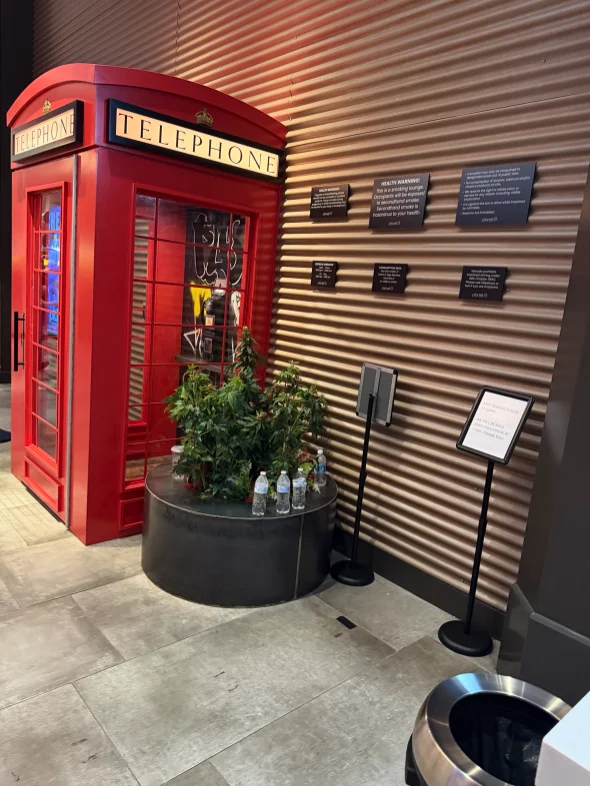
Idscan.net, headquartered in New Orleans, provides identity verification technology to over 20,000 locations globally, processing an estimated 21 million verifications monthly. Their client list is a "who’s who" of American commerce, including Hertz, FedEx, Target, and numerous marijuana dispensaries that require age verification for entry.

The data trails are telling. One researcher noted that his license scan was uploaded to the database on the exact day he rented a car from Hertz. Another researcher, who visited a Planet13 dispensary in Las Vegas, found his record uploaded on the day of his visit—a location known for using idscan.net’s proprietary hardware. When the FBI interviewed the company, the evidence suggested that the breach was not just a one-time occurrence but a persistent vulnerability that had been exploited for over a year.
Official Responses and Federal Intervention
The FBI’s New Orleans field office has launched a formal investigation into the breach. The urgency of the response was amplified when it was discovered that the database contained the credentials of senior FBI personnel and other federal employees.
Idscan.net eventually issued a brief notice confirming a "security incident." The company stated that an unauthorized third party had accessed and copied customer information, including full names and government-issued ID numbers. They have begun the process of notifying affected individuals and providing credit monitoring services.
However, the ripple effects are widespread. Caesars Entertainment, initially listed as a partner on idscan.net’s website, issued a public statement clarifying that they had severed ties with the provider in February 2025 and that no active data should have been retained by the firm, highlighting the potential for companies to be held liable for the data-retention policies of their third-party vendors.

The Profound Implications for Identity Security
The implications of this breach are staggering, moving beyond simple credit card fraud into the realm of total identity theft.
1. The Death of "Proof of Identity"
Security expert Larry Baldwin, of the firm Cybera, warns that the compromise of infrared and ultraviolet scans renders standard identity verification systems functionally useless. These scans are the "gold standard" for proving a document is not a forgery; once they are public, the systems designed to detect fakes can be easily bypassed by criminals using the leaked authentic scans.
2. Physical and Personal Safety
The exposure of this data poses a direct risk to vulnerable populations. Victims of domestic violence or individuals under government protection often rely on the secrecy of their identification. If their primary documents are searchable in a dark web database, their physical safety is compromised. Unlike a password or a credit card number, a government ID cannot be "reset."
3. The "Vendor-Over-Security" Dilemma
Zach Edwards, a privacy researcher, points to the systemic issue of "identity sprawl." To comply with increasingly strict age-verification laws and "Know Your Customer" (KYC) regulations, thousands of businesses are now collecting sensitive documents that they are not equipped to protect.

"These systems are putting sensitive data into more and more third-party vendors, and we don’t have nearly the oversight to ensure they are safe," Edwards noted. The Nexus breach serves as a case study for the dangers of centralized, third-party data collection. When a single firm like idscan.net becomes a repository for the identification of 153 million people, it becomes the ultimate "honey pot" for cybercriminals.
4. Regulatory and Legal Fallout
This incident will likely trigger a massive wave of litigation and regulatory scrutiny. Under various state and federal privacy laws, the companies that hired idscan.net to process their customers’ data may face intense pressure to explain why such sensitive information was stored in a way that allowed for such a comprehensive exfiltration. The incident highlights the growing need for "data minimization"—a practice where companies only collect the absolute minimum amount of data required to verify a transaction, rather than retaining high-resolution scans of government documents indefinitely.
Conclusion: A Wake-Up Call
The disappearance of the Nexus website from the dark web does not erase the reality of the breach. The 153 million records are now in the hands of malicious actors, likely traded in private circles or sold in smaller batches for years to come.
For the millions of affected Americans and Canadians, the incident is a sobering reminder of the fragile nature of digital identity in the 21st century. As society continues to outsource trust to third-party verification firms, the Nexus breach stands as a definitive warning: if an identity verification company claims to be "secure," the reality may be only one vulnerability away from becoming a public record for sale to the highest bidder.