Apple Pay Arrives in India: A Decade in the Making, But Can It Disrupt a UPI-Dominated Landscape?
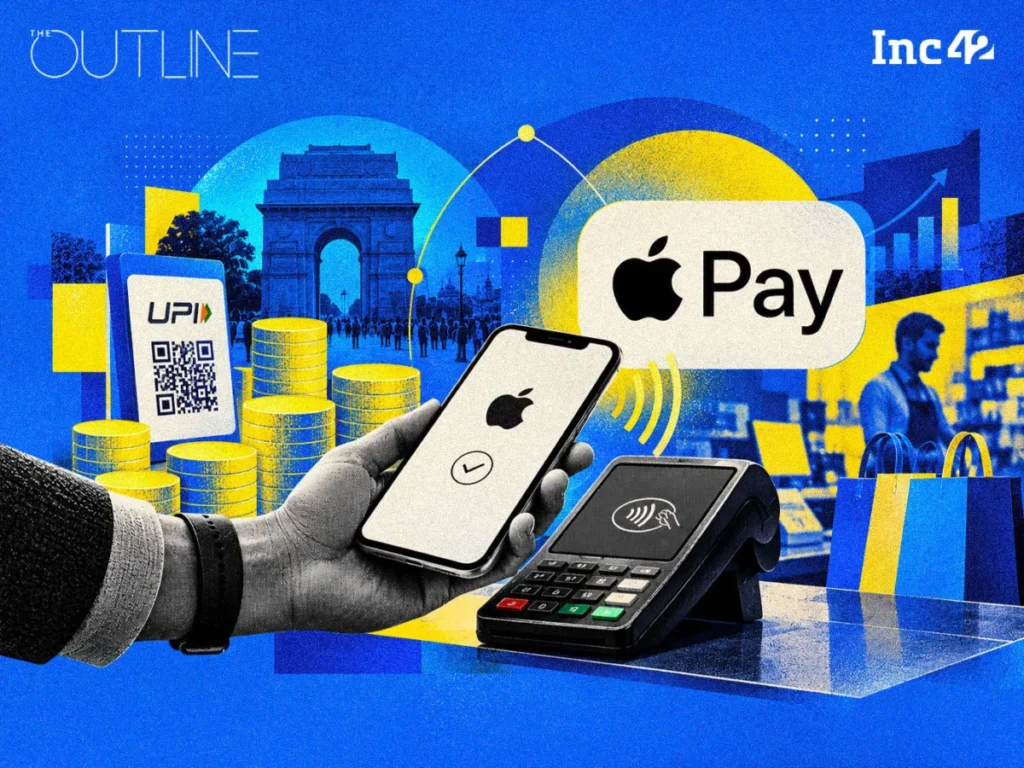
New Delhi — The past fortnight has marked a significant chapter for Apple in India. Alongside the rollout and shipping of the latest iPhone 18 Pro and the company’s much-anticipated foldable iPhone Duo, Apple has finally introduced a service it has teased, discussed, and debated for more than a decade: Apple Pay.
Launched on September 30, 2026, the service allows users to conduct seamless transactions at physical brick-and-mortar retail stores, within native mobile applications, and across web platforms using compatible Apple devices, including iPhones, iPads, and Apple Watches.
Yet, as Apple plants its flag in one of the world’s most dynamic digital economies, industry analysts, fintech veterans, and consumers are asking a fundamental question: Is Apple Pay’s arrival too late to make a meaningful dent in a market utterly transformed by native digital public infrastructure?
1. Main Facts: The Long-Awaited Debut
Apple Pay’s entry into India brings the tech giant’s signature near-field communication (NFC) tokenisation payment architecture to the subcontinent.
- The Core Mechanism: Users can add eligible credit and debit cards to their Apple Wallet, subsequently authenticating purchases via Face ID, Touch ID, or a device passcode. At physical POS (Point of Sale) terminals, users simply tap their iPhone or Apple Watch to pay; online, transactions can be completed without repeatedly inputting lengthy card numbers.
- The Catch at Launch: Unlike its robust global offerings—particularly in the United States—the Indian rollout is markedly narrower. At launch, Apple Pay exclusively supports Axis Bank-issued Visa and Mastercard credit cards. RuPay cards, along with cards from other major public and private sector banks, are currently unsupported. Furthermore, person-to-person (P2P) money transfer features akin to the US-based Apple Cash are entirely absent from the initial release.
- The Competitive Backdrop: Apple enters a market where digital payments are no longer a novelty, but an omnipresent utility deeply ingrained in daily commerce.
2. Chronology: A Ten-Year Odyssey
The journey of Apple Pay to India is a classic study in regulatory patience, market evolution, and shifting strategic priorities.
- May 2016 (The Inception): During a high-profile visit to India, Apple CEO Tim Cook publicly expressed the company’s intent to bring Apple Pay to the region. As part of exploratory talks, Cook famously met with then-ICICI Bank CEO Chanda Kochhar to gauge the landscape and understand Indian banking perspectives on mobile and digital payments.
- 2016–2025 (The Great Delay): In the decade that followed Cook’s visit, the Indian mobile payments ecosystem underwent a literal revolution. While Apple focused on scaling its device manufacturing footprint and expanding retail stores in Mumbai and Delhi, Apple Pay remained absent. Industry experts attribute the prolonged delay to a combination of stringent local data localization mandates, complex regulatory frameworks regarding tokenisation, and a relatively modest installed base of iPhone users in India compared to Android.
- December 2025 (The Regulatory Baseline): According to the Reserve Bank of India’s (RBI) Payment System Report published in December 2025, digital transactions in the country reached unprecedented heights, laying bare the sheer magnitude of the landscape Apple was preparing to enter.
- September 30, 2026 (The Launch): After ten years of speculation, Apple officially launches Apple Pay in partnership with Axis Bank, marking its official entry into the Indian fintech arena.
3. Supporting Data: The Scale of the Indian Payment Ecosystem
To understand the uphill battle facing Apple Pay, one must examine the staggering metrics defining India’s contemporary financial technology sector.
The Dominance of UPI
The Unified Payments Interface (UPI)—India’s indigenous, real-time payment system—reigns supreme. According to data from the National Payments Corporation of India (NPCI), UPI processed a staggering 24.51 billion transactions valued at ₹29.82 Lakh Crore in August 2026 alone.
Furthermore, RBI’s December 2025 Payment System Report highlighted that UPI accounted for 85.5% of all digital transaction volume in the country. Direct bank-to-bank transfers via mobile apps like PhonePe, Google Pay, and Paytm have become the default consumer behavior for everything from purchasing high-end electronics to paying street vendors.
The Rise of Credit Cards
While UPI commands everyday retail volume, credit card spending has carved out a distinct and rapidly growing niche, particularly for higher-value transactions and aspirational purchases.
- RBI data indicates that total credit card spending surged to ₹23.2 Lakh Crore in the calendar year 2025, a dramatic leap from ₹8.9 Lakh Crore recorded in 2021.
- Private sector banks have consolidated their dominance in this sector, accounting for 71.1% of all outstanding credit cards in the country.
- Conversely, debit card usage has plummeted. Transaction volumes via debit cards dropped by 67% between CY2021 and CY2025 as consumers completely bypassed plastic cards in favor of UPI for routine purchases.
4. Official Responses and Expert Perspectives
The fintech community, industry analysts, and retail infrastructure executives have expressed mixed reactions to Apple Pay’s arrival, balancing appreciation for Apple’s seamless engineering against realism regarding market dynamics.
Tarun Pathak, Counterpoint Research
Tarun Pathak notes that while Apple’s entry is undeniably late from a global launch and competitive standpoint, the delay was largely driven by unique regulatory hurdles and the historical size of India’s iPhone user base.
"Clearance of regulatory and technical roadblocks allowed Apple to hold its standard global architecture when it comes to Apple Pay experience built around NFC card tokenisation, plus the native Apple ecosystem leveraging the security of Face ID, Touch ID, and Apple Watch integration for fast NFC tap-to-pay at POS terminals," Pathak explained.
However, Pathak emphasizes that the restricted initial bank rollout means Apple must aggressively scale its institutional partnerships to capture a broader audience.

Amrish Rau, Pine Labs
Speaking during Pine Labs’ Q1FY27 earnings discussion prior to the launch, MD and CEO Amrish Rau anticipated that Apple Pay could subtly alter the transaction mix in India by incentivizing card usage.
"We do believe Apple Pay will enter the market before the end of this year. What that is going to do is flip and create a spread in terms of how payment transactions will happen. More and more payment transactions will go back to credit cards, as credit cards plus UPI continue to grow in the market," Rau stated.
Anonymous Fintech Insider
Conversely, a seasoned fintech industry veteran interviewed by Inc42 offered a more conservative assessment of Apple Pay’s immediate disruptive potential, noting severe limitations in its launch iteration.
"Apple Pay launch is only restricted to Axis Bank, with no UPI integration. Even today Android users are around 90% of the mobile phone users. Apple Pay is just allowing you to save the card and pay via NFC," the source noted.
The insider added that Android competitors like Samsung Wallet have long offered NFC-based payments alongside native support for UPI, yet have struggled to make significant market inroads against dedicated UPI apps. Furthermore, the insider expressed skepticism that Apple would ever integrate UPI, citing the strict data storage mandates enforced by the NPCI versus Apple’s strict privacy policies prohibiting the storage of user transaction details.
5. Implications: Can Apple Pay Find a Foothold?
Apple Pay’s entry into India raises critical questions about consumer habits, ecosystem lock-in, and the future of card payments in a UPI-first economy.
1. Catering to the Aspirational Spender
Apple Pay’s primary value proposition in India is unlikely to appeal to the mass-market consumer who relies on UPI for daily micro-transactions. Instead, its immediate target demographic consists of affluent urban consumers, tech enthusiasts, and iPhone owners who routinely use credit cards for high-value retail, dining, travel, and lifestyle purchases. By eliminating the need to physically carry or extract cards, Apple Pay streamlines a friction point for premium spenders.
2. The Android Dominance and Bank Restrictions
With Android commanding roughly 90% of India’s mobile phone market, Apple’s addressable audience is inherently capped by its hardware ecosystem share. When combined with the exclusive reliance on Axis Bank cards at launch, the potential user pool shrinks further. For Apple Pay to become a household name, the tech giant must onboard major issuers like HDFC Bank, ICICI Bank, and SBI in the near future.
3. The UPI Conundrum
Apple Pay’s missing link is UPI integration. Without supporting India’s foundational payment rail, Apple is swimming against the cultural tide of digital transactions. While Samsung Wallet’s inclusion of UPI failed to unseat apps like PhonePe and Google Pay, the absence of UPI altogether means Apple Pay cannot serve as an all-in-one financial app for Indian consumers.
4. A Boost for Credit Card Adoption?
If there is a silver lining for Apple, it is the secular boom in Indian credit card spending. As urban consumers increasingly look to credit cards for rewards, liquidity, and deferred payments, Apple Pay could act as a catalyst—driving higher utilization rates among existing cardholders who prefer the security and speed of biometric authentication over physical card swiping or tapping.
Outlook
Apple Pay’s arrival in India is a historic milestone for a service a decade in the making. Yet, unlike Western markets where tap-to-pay credit infrastructure rules supreme, India presents an entirely unique ecosystem governed by the unmatched velocity of UPI. Apple Pay will not threaten the established fintech giants anytime soon; rather, it enters as a boutique, premium utility tailored for the country’s growing affluent and tech-forward elite. Whether Apple can expand its banking partnerships and evolve its offering will determine if this luxury payment tool can transcend its niche beginnings.
Edited by Nikhil Subramaniam | Creatives by Abhyam Gusai