Expanding the Frontier: Amazon Bedrock Integrates Next-Generation Models with GPT-6 and Claude 5.5
Main Facts
The landscape of enterprise artificial intelligence is undergoing a profound structural shift. For years, the prevailing question in cloud architecture and machine learning deployment was singular and linear: "How smart is the model?" Organizations chased raw benchmark scores, deploying the largest available parameters regardless of computational overhead, latency penalties, or operational costs.
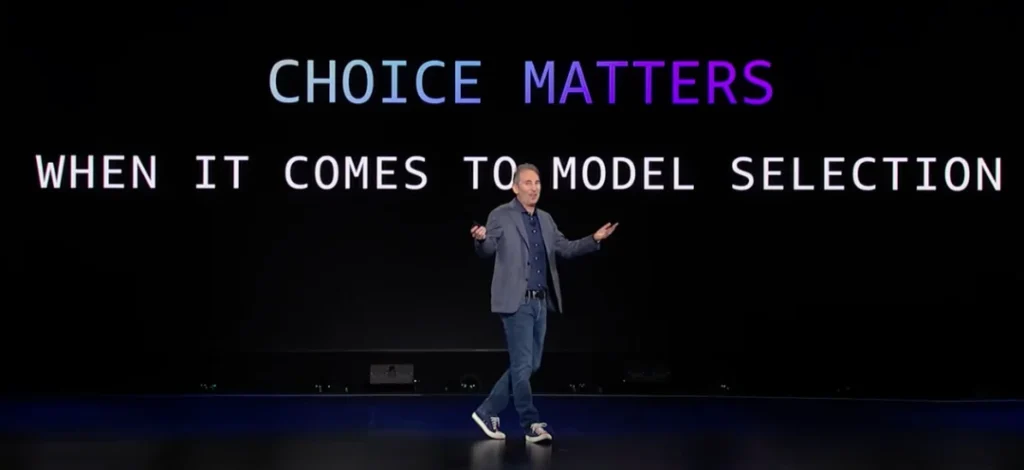
However, a new philosophy has taken root across the cloud computing ecosystem, anchored by developments on Amazon Bedrock. The defining theme of the current technological epoch is choice and calibration—the strategic alignment of specific model architectures to exact operational steps, balancing intelligence, cost, and latency with surgical precision.
This paradigm shift was underscored by major model integrations on Amazon Bedrock. OpenAI introduced two new additions to the ecosystem: GPT-6 Sol and GPT-6 Luna. Simultaneously, Anthropic launched Claude Opus 5.5, representing the inaugural release in the next-generation Claude 5.5 model family.
These launches collectively redefine the intelligence-versus-efficiency curve for enterprise workloads:
- GPT-6 Sol: Engineered specifically for the demanding, recurring workflows of modern software development and cloud operations (DevOps). It delivers high-level reasoning for complex, multi-step problem-solving while reducing cost barriers compared to its predecessors.
- GPT-6 Luna: Tailored for focused, repeatable tasks that must scale economically at high volume. Luna brings low-latency execution to high-throughput enterprise pipelines.
- Claude Opus 5.5: Designed to maximize efficiency, achieving higher task completion rates using significantly fewer tokens than the preceding Opus 5 architecture. It is heavily optimized for agentic coding environments and long-running autonomous workflows.
By decoupling the necessity of high intelligence from exorbitant computing costs, AWS and its partners are enabling developers to design multi-tier application architectures where simple tasks use lightweight, ultra-fast models, and complex reasoning tasks route dynamically to frontier models.
Chronology of Releases and Strategic Shifts
The introduction of these cutting-edge models on Amazon Bedrock did not happen in a vacuum; it represents the culmination of a multi-year maturation cycle in generative AI and cloud infrastructure.
The Evolution toward Modular AI (2024–2025)
- Early Generative AI Adoption: Enterprises initially experimented with monolithic, general-purpose frontier models. While capable, these models proved cost-prohibitive for high-frequency, low-complexity enterprise tasks.
- The Rise of Specialized Inference: Cloud providers realized that customers required tiered portfolios. Amazon Bedrock expanded its model hub to include diverse options ranging from lightweight open-weights models (such as DeepSeek and Llama variants) to high-end proprietary engines.
- Agentic Workflows Emerge: As autonomous AI agents began taking over complex, multi-day engineering and data-processing tasks, the demand skyrocketed for foundational models capable of sustained context windows without token degradation.
The Breakthrough Week
- Mid-Week Deployments: OpenAI and Anthropic deployed their next-generation architectures directly into the Amazon Bedrock ecosystem.
- Integration and Observability: Alongside model availability, AWS emphasized the critical need for observability tools designed explicitly for agentic workflows. As applications shift from simple request-response paradigms to autonomous, looping agent behaviors, tracking latency, cost accumulation, and execution traces has become paramount for enterprise deployment.
Supporting Data and Technical Architecture
The newly integrated models on Amazon Bedrock introduce significant architectural advancements over previous generations. Understanding these metrics is vital for cloud architects and engineering leaders optimizing workloads on AWS.
Comparative Architectural Overview
| Model | Primary Use Case | Efficiency Metric / Advantage | Cost Structure vs. Predecessors |
|---|---|---|---|
| GPT-6 Sol | Complex Development & DevOps | Advanced reasoning for multi-file code generation and infrastructure orchestration. | Significantly lower pricing per token compared to GPT-5.6 architectures. |
| GPT-6 Luna | High-Volume Repeatable Tasks | Low-latency inference optimized for large-scale data transformation and routing. | Highly economical for high-throughput batch processing. |
| Claude Opus 5.5 | Agentic Coding & Long-Running Tasks | Token-efficient execution; accomplishes complex tasks with fewer input/output tokens than Opus 5. | Optimized for sustained, multi-step autonomous workflows. |
The Economics of Token Efficiency
For enterprise organizations processing billions of tokens monthly, efficiency is no longer a secondary concern—it is the primary determinant of project ROI. Claude Opus 5.5 addresses this by restructuring how information is processed within its context window. By reducing the overhead required to maintain conversational and operational state over long horizons, organizations can execute multi-step software engineering tasks at a fraction of previous operational expenditures.
Similarly, the price-to-performance ratio achieved by GPT-6 Sol and Luna breaks down the financial barriers that previously prevented small-to-midsize businesses (SMBs) from embedding advanced reasoning directly into their customer-facing applications and internal microservices.
Official Responses and Industry Perspectives
Cloud leaders and AI architects have rallied around the concept of modular intelligence. Speaking on the strategic direction of Amazon Bedrock, AWS engineering leads have emphasized that the future belongs to fluid, multi-model pipelines rather than single-model reliance.
"If there’s one theme that defined last week, it’s choice. The frontier models keep arriving, and the interesting question is no longer just ‘how smart is it?’ but ‘which model fits this step, at this cost, at this latency?’ That’s exactly what landed on Amazon Bedrock over the past few days." — Daniel Abib, AWS News Blog / Engineering Contributor
Industry analysts have similarly noted that the release of GPT-6 Sol, Luna, and Claude Opus 5.5 marks a transition from exploration to production optimization. Enterprises are no longer asking proof-of-concept questions; they are demanding SLAs, predictable latency profiles, and cost governance frameworks.
Furthermore, AI development teams have praised the integration of these models into Amazon Bedrock because it avoids vendor lock-in and infrastructure fragmentation. By providing unified API access, enterprise governance, and robust security controls through AWS, organizations can switch between Anthropic and OpenAI architectures—or run them concurrently—without rewriting core application logic.
Implications for Enterprise Architecture and the Future of Work
The integration of GPT-6 Sol, GPT-6 Luna, and Claude Opus 5.5 into Amazon Bedrock carries far-reaching implications for software engineering, enterprise cost management, and the evolution of AI agents.

1. The Rise of Multi-Model Orchestration Pipelines
Enterprise applications will increasingly move away from monolithic prompt-response architectures. Instead, developers will construct intelligent routing pipelines.
- Tier 1 (Routing & Triage): Handled by low-latency, high-volume models like GPT-6 Luna.
- Tier 2 (Core Logic & Generation): Handled by balanced, general-purpose models.
- Tier 3 (Deep Reasoning & Architecture): Routed to frontier engines like GPT-6 Sol or Claude Opus 5.5.
This tiered strategy ensures that organizations do not burn capital using heavy frontier models for simple data extraction or classification tasks.
2. Acceleration of Agentic Software Engineering
With Claude Opus 5.5 and GPT-6 Sol optimized specifically for autonomous agents, the software development lifecycle (SDLC) is shifting. AI is no longer merely an autocomplete tool or a chat assistant; it is becoming an active participant in code writing, debugging, testing, and continuous deployment (CI/CD) pipelines. Long-running tasks that previously required human supervision—such as migrating legacy monolithic codebases to microservices or refactoring massive test suites—can now be delegated to autonomous agents backed by these resilient, token-efficient models.
3. Governance, Security, and Observability
As agents operate with greater autonomy over extended timeframes, enterprise risk management becomes critical. AWS’s continued focus on observability within the Bedrock ecosystem ensures that system administrators can monitor agent behavior, track token consumption in real-time, audit decision pathways, and maintain strict compliance with data privacy regulations.
Next Steps for Builders
AWS continues to expand its ecosystem resources to support developers navigating these new capabilities. Builders are encouraged to connect with peers through the AWS Builder Center, share architectural solutions, and explore upcoming virtual and in-person events via the official AWS Events portal.
As the frontier continues to expand, the winning organizations will not necessarily be those with access to the biggest model, but those that master the art of matching the right model to the exact job, at the optimal cost and latency.