Judicial Scrutiny: Jammu & Kashmir High Court Demands Transparency on Official Housing Policy for Political Figures
Srinagar, October 15, 2026: In a significant development that touches upon the intersection of public policy, security protocols, and political privilege, the Jammu and Kashmir High Court has initiated a rigorous inquiry into the criteria governing the retention of government-allotted residences by high-profile political figures.
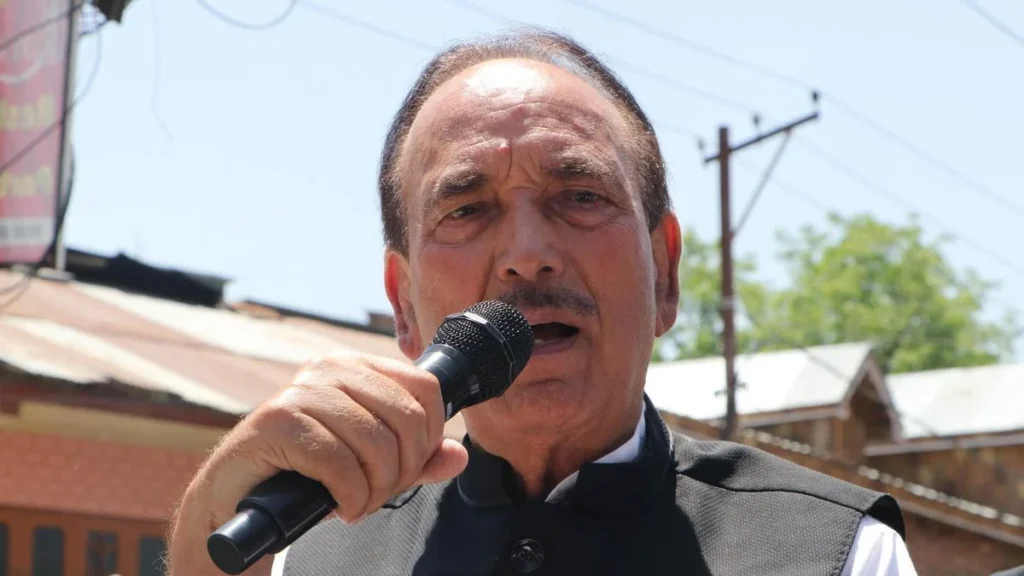
A Division Bench comprising Chief Justice Dr. Pushpendra Bhati and Justice Rajesh Sekhri has directed the Union Territory (UT) administration to present a clear, codified policy document explaining the legal framework under which former ministers and party leaders are permitted to occupy state-owned assets. The court’s intervention stems from a petition challenging the continued residency of prominent figures, including former Chief Minister Ghulam Nabi Azad and former J&K BJP president Ravinder Raina.
The Judicial Inquiry: Seeking Transparency
The courtroom proceedings on Wednesday underscored a growing judicial impatience regarding the perceived opacity in how the J&K administration manages its real estate assets. The bench expressed skepticism regarding the ad-hoc nature of decisions made by a "designated committee," which has been the primary mechanism for approving extended stays in government bungalows.
"As to what is the policy in the UT of J&K which governs the retention of Government accommodation, which has been applied in the present case, and wherefrom the designated committee derives its power to consider whether such Government accommodation has to be retained by the political persons?" the Bench asked.
The court’s query serves as a direct challenge to the administrative ambiguity that has historically allowed political figures to maintain state-provided housing long after their official terms have concluded. By demanding a uniform policy, the High Court is signaling a shift toward enforcing stricter accountability in the management of public property.
Chronology of the Dispute
To understand the gravity of the current judicial directive, it is essential to trace the history of housing allotments in the region:
- 2005–2008: Ghulam Nabi Azad serves his tenure as the Chief Minister of Jammu and Kashmir.
- 2018–2024: Ravinder Raina serves as the President of the BJP’s J&K unit.
- 2022: The J&K High Court sets a precedent by refusing to grant blanket protection against eviction to political figures, explicitly stating that "security concerns" cannot be used as a universal shield to avoid vacating government property.
- August 14, 2026: A designated committee meets to review the status of the residences occupied by Azad and Raina, recommending the continuation of their allotments.
- October 2026: The matter reaches the High Court for formal adjudication, where the administration reveals that the competent authority has permitted retention until March 2027 or "until the next review."
- October 15, 2026: The High Court directs the UT administration to file an affidavit clarifying the underlying policy framework.
The Administration’s Stance and Legal Hurdles
Representing the UT administration, Additional Advocate General (AAG) Monika Kohli informed the court that the retention of the properties in question was not an arbitrary decision but the outcome of a deliberate process involving a "designated committee."
According to the administration, the committee reviewed the security and administrative requirements of both Mr. Azad and Mr. Raina before deciding that the allotments should continue. The administration maintains that the extension granted until March 2027 is a measured administrative response, subject to periodic reviews.
However, the Bench remained unconvinced by the explanation of "committee recommendations." The court is interested in the legal source of the committee’s power—essentially asking if the committee is acting under an established, transparent policy, or if it is exercising discretionary powers that lack statutory backing. AAG Kohli has been granted time to file an appropriate affidavit, which the court expects will outline a "uniform policy" applicable to all similarly placed individuals. The case is now slated for further hearing on November 12, 2026.
Security vs. Privilege: The Core Debate
At the heart of this legal battle lies a recurring conflict in Indian governance: the use of state-provided housing as a security imperative versus its use as a perquisite of political status.

The Security Narrative
Proponents of allowing continued housing argue that individuals who have held high constitutional or party offices in a sensitive region like Jammu and Kashmir remain perpetual targets for militant outfits. Consequently, the state has a "duty of care" to ensure their safety, which often necessitates keeping them in high-security zones where government bungalows are clustered.
The Public Interest Perspective
Critics, however, argue that the "security" argument is often a veil for political patronage. With limited government housing available for serving bureaucrats, judicial officers, and essential staff, the continued occupation of these assets by former politicians creates a resource crunch. There is also the matter of market-rate rent; often, these figures occupy prime real estate at nominal costs, which critics describe as an unfair burden on the exchequer.
The 2022 court order mentioned in the proceedings is particularly significant. It established that security threats must be assessed on an individual basis by specialized intelligence agencies, rather than being used as a blanket justification for holding onto government property after the cessation of public office.
Implications of the High Court’s Directive
The implications of this case extend far beyond the immediate residences of Mr. Azad and Mr. Raina. A ruling that mandates a strict, uniform policy could have a ripple effect across the Union Territory.
- Uniformity and Rule of Law: If the court forces the administration to draft a rigid policy, it will eliminate the room for "special cases" based on political connections. This would align the UT’s housing rules with those of the central government, which have become increasingly stringent.
- Increased Accountability: The requirement to justify the "power of the committee" forces the administration to cite specific acts or rules. If no such rules exist, the administration may be forced to initiate large-scale evictions to avoid legal challenges of arbitrariness.
- The "Security" Audit: If the court demands that security assessments be made public or at least verifiable, it may lead to a reduction in the number of protected persons. This would allow the state to reallocate resources toward more critical security infrastructure.
- Political Precedent: For senior politicians, this case serves as a warning. The days of lifelong housing benefits—often taken for granted—are facing unprecedented scrutiny. Future administrations may find it much harder to justify these allotments to an active and vigilant judiciary.
Historical Context: A Legacy of Entitlement
The issue of government accommodation in Jammu and Kashmir has historically been tied to the region’s volatile political history. For decades, the proximity of a leader’s residence to the centers of power (the Civil Secretariat or official residences of the Lieutenant Governor/Governor) was seen as a mark of influence.
Ghulam Nabi Azad, as a former Chief Minister and a veteran of national politics, holds a profile that the state has long considered "high risk." Similarly, Ravinder Raina’s tenure as the BJP state president during a period of significant political transition in J&K placed him in a category of individuals deemed vulnerable to extremist elements.
However, as the Union Territory moves toward a more normalized administrative structure, the transition from "patronage-based governance" to "rule-based governance" is inevitable. The High Court’s intervention is, in many ways, an indicator of this broader transition. By demanding a policy that can withstand judicial review, the court is effectively asking the administration to treat government housing as a public trust rather than a personal privilege.
Conclusion: The Path Ahead
As the November 12 hearing approaches, all eyes will be on the UT administration’s affidavit. The government finds itself in a delicate position: it must satisfy the court’s demand for transparency while maintaining its commitment to the safety of political leaders who have served in high-stakes roles.
If the administration fails to produce a robust, uniform policy, the High Court may be forced to intervene further, potentially issuing direct orders for the vacation of properties. Such an outcome would not only be a legal landmark but also a symbolic turning point in the governance of Jammu and Kashmir, signaling that the era of political entitlements is being firmly dismantled in favor of equitable, policy-driven administration.
The upcoming hearing will determine whether the "designated committee" can continue to operate with its current level of discretion, or if it must bow to the principles of equality and transparency that the High Court is so clearly advocating. For now, the status quo remains, but the clock is ticking for a definitive, policy-based resolution to one of the most persistent issues in J&K’s administrative landscape.