Haryana Congress Launches State-Wide Offensive as BJP Government Marks Two-Year Milestone
By Political Correspondent
October 22, 2026
Introduction: A State at the Crossroads
As the Bharatiya Janata Party (BJP) government in Haryana marked the completion of two years of its third consecutive term this week, the political atmosphere in the state has reached a fever pitch. On Wednesday, October 21, 2026, the Indian National Congress launched a synchronized, state-wide offensive, accusing the ruling establishment of systemic failure. From the industrial hubs of Gurugram to the agrarian heartlands of Sirsa and Rohtak, Congress leaders held a series of press conferences and protest demonstrations, painting a grim picture of a state allegedly paralyzed by administrative apathy, rising crime, and unfulfilled electoral pledges.
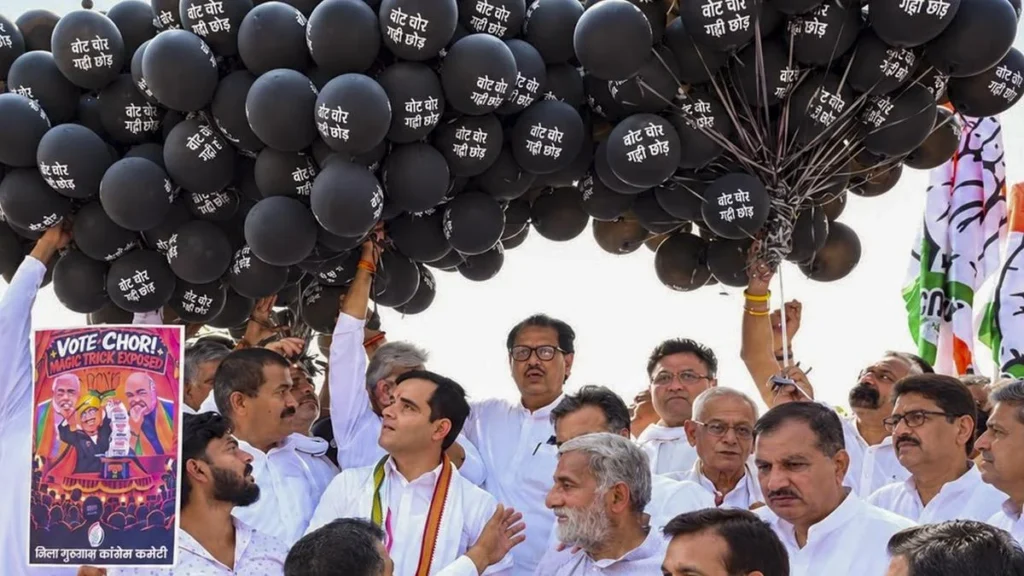
The protests, which included symbolic gestures such as the display of black balloons in Farrukhnagar, signal a shift in the Congress party’s strategy. No longer content with localized dissent, the opposition is now framing the government’s two-year tenure as a period of "total distress," demanding accountability for what they term as a "betrayal of the public mandate."
Chronology of the Escalating Conflict
The current confrontation is the culmination of months of simmering tension. The timeline of the recent political friction can be summarized as follows:
- Mid-October 2026: Preparations for the two-year anniversary of the BJP’s third term saw the government promoting its infrastructure and welfare projects. Simultaneously, the Congress began mobilizing its cadre, focusing on "failure report cards."
- October 17, 2026: A significant protest took place in Farrukhnagar, Gurugram. Led by Haryana Congress in-charge Sanjay Dutt, former MP Ashok Tanwar, and State President Rao Narendra Singh, party workers held placards against the Election Commission and the state administration, alleging that the democratic process is being undermined by the ruling party’s misuse of official machinery.
- October 21, 2026: Following the protests, the party organized a coordinated state-wide campaign. Senior leaders held simultaneous press conferences in Chandigarh, Rohtak, Sirsa, and other key districts to present a unified narrative of government failure.
- October 22, 2026: The political discourse has shifted toward the public domain, with the Congress challenging the BJP to a "White Paper" debate on the status of their pre-poll manifesto promises.
Supporting Data and Key Areas of Contention
The Congress party’s critique is not merely rhetorical; it is structured around specific socio-economic indicators. By focusing on six key pillars, the opposition is attempting to resonate with the daily struggles of the common citizen.
1. Law and Order
The deterioration of law and order remains a primary concern for the opposition. Congress leaders argue that the increase in street crime and organized extortion rackets in urban areas like Gurugram and Faridabad indicates a breakdown of the police-civilian interface. The party claims that the perception of safety has plummeted, driving away potential investment and creating a climate of fear.
2. The Unemployment Crisis
Despite the state’s proximity to the national capital, youth unemployment remains a massive pressure point. Deepender Singh Hooda, speaking in Rohtak, highlighted that the state’s educated youth are facing limited job prospects, forcing many to look toward migration. The Congress alleges that the government’s recruitment processes are either stalled or marred by corruption, leaving thousands of vacancies in public departments unfilled.
3. Farmers’ Grievances
In the agricultural belt of Sirsa, the discourse centers on the fair pricing of crops and the systemic failure of the procurement process. Rao Narender Singh noted that despite high-level assurances, farmers continue to face delays in payments and lack of adequate infrastructure for storage and cold chains, further squeezing their margins in an era of rising input costs.
4. Healthcare Disparity
Kumari Selja, addressing the press in Chandigarh, brought the focus to the healthcare sector. She specifically questioned the implementation of the state’s "free medical treatment" scheme, which promised coverage of up to ₹10 lakh per family. The Congress demands transparency: "How many families have actually availed this?" she asked, challenging the government to release a district-wise audit of beneficiaries.
5. Welfare Schemes for Women
One of the most potent arguments raised by the opposition involves the promised monthly financial assistance of ₹2,100 for women. The Congress claims this was a cornerstone of the BJP’s campaign. By questioning the government on the number of eligible women currently receiving this benefit, the Congress is tapping into the anxieties of households struggling with inflation and the rising cost of living.

Official Responses and the Governance Narrative
While the Congress continues to barrage the administration with these allegations, the BJP government has maintained a stance of defensive confidence. Government spokespersons have repeatedly stated that the "two-year milestone" is a testament to the stability of the administration.
The government’s official response typically emphasizes:
- Infrastructure Development: Completion of several major highway projects and the expansion of the metro connectivity in the NCR region.
- Digital Governance: The push toward "Parivar Pehchan Patra" (Family ID) as a means to streamline direct benefit transfers and curb leakages in the system.
- Stability: Contrasting their tenure with the alleged infighting and instability of previous opposition governments.
However, the BJP has yet to release a detailed, independent audit of the specific promises questioned by leaders like Kumari Selja, which the Congress claims is an admission of failure.
Implications for the Future of Haryana Politics
The intensity of the protests and the specific nature of the allegations have profound implications for the political landscape of Haryana.
The Erosion of Voter Trust
If the Congress succeeds in cementing the narrative that the BJP has failed to deliver on its core welfare promises, the political cost for the ruling party could be significant. The middle class, traditionally a BJP stronghold, is increasingly vocal about inflation and the quality of public services. If these segments feel alienated, the electoral arithmetic for upcoming local and state-level polls will become increasingly volatile.
Intensification of Grassroots Mobilization
Sanjay Dutt’s statement that the party "will not allow the people’s voice to be silenced" suggests that the coming months will see more frequent, aggressive street-level activism. The Congress is transitioning from a period of relative quietude to a phase of active confrontation, likely attempting to build momentum for the next electoral cycle.
The Burden of Accountability
The primary implication of this conflict is the shifting standard of accountability. By demanding specific figures on healthcare, financial aid, and employment, the Congress is forcing the government to shift from broad, optimistic rhetoric to granular data-sharing. Whether the BJP complies with these demands or dismisses them as political theatrics will determine the public perception of the government’s sincerity.
Conclusion: A Critical Juncture
As Haryana enters the third year of this legislative term, the state finds itself at a critical juncture. The BJP, having secured a third term, is under the spotlight to prove that its longevity translates to effective governance. Conversely, the Congress party, acting as the primary watchdog, is leveraging the public’s frustration to reinvent itself as a viable, service-oriented alternative.
The rhetoric of "accountability" is now the central theme of Haryana’s political discourse. As the opposition continues its campaign of public rallies and press scrutiny, the government is left with a binary choice: either engage in a transparent, data-driven defense of its policies or risk losing the narrative to a relentless opposition that is successfully tapping into the daily grievances of the citizenry. The next few months will not only test the administrative resilience of the current regime but also determine which party better understands the pulse of the evolving Haryana electorate.
The people of Haryana, meanwhile, remain caught in the middle, waiting for the gap between election-time promises and the reality of their daily lives to be bridged. As the black balloons of protest dot the skyline, the message from the streets is clear: patience with political rhetoric is wearing thin, and the demand for tangible results is becoming the defining feature of the state’s political identity.