The AI-Powered Enterprise: Automation, Landing Page Mastery, and Major Ecosystem Updates
As the landscape of digital business continues to shift at a breakneck pace, marketing professionals, small business owners, and solo entrepreneurs are constantly searching for ways to cut through the noise. Between mastering task automation tools, leveraging AI to build and deploy landing pages in record time, and navigating massive ecosystem updates from industry giants like Google and OpenAI, the modern workflow is undergoing a profound transformation.
This comprehensive report examines the latest strategies, technical workflows, and industry news designed to help marketers do more with less—without losing the human touch.
Main Facts: The Intersection of Automation, AI Landers, and Privacy
The modern marketing stack is no longer defined by massive budgets and dedicated development teams. Instead, democratization through generative artificial intelligence and accessible automation platforms has shifted the power back to individual creators and small teams.
Key developments shaping the digital workspace include:
- The Rise of "Trigger-Action" Workflows: Routine, repetitive tasks—such as logging form responses or saving email attachments—can now be completely automated without writing a single line of code, using tools like Make, n8n, and Google Workspace Studio.
- End-to-End AI Landing Page Deployment: AI strategists are moving past simple chat prompts, utilizing structured scopes of work to plan, design, write, and launch high-converting landing pages in a fraction of the traditional time.
- Google Expands Small Business Tools: Google has rolled out new Gemini-powered capabilities tailored specifically for entrepreneurs, integrating branding, financial insights, and automated asset generation into a unified business hub.
- Enhanced Privacy Controls on ChatGPT: OpenAI has introduced "Locked Chats," allowing users to secure individual conversations with PINs or biometrics, addressing long-standing enterprise and personal privacy concerns.
Chronology: How the Modern AI-Driven Workflow Evolved
To understand where marketing technology stands today, it is helpful to look at how the workflow has matured over recent years:
- Phase 1: The Prompt Era (Early Generative AI Adoption)
Users experimented with isolated text prompts, generating blog outlines, ad copy, and basic social media captions. While helpful, these outputs often required extensive manual copy-pasting and formatting before they could be deployed in a live campaign. - Phase 2: The Integration of No-Code Automation
Platforms like Zapier, Make, and n8n allowed marketers to string disparate applications together. However, these tools still required rigid logic-building, and non-technical users often struggled to map out complex multi-step data flows. - Phase 3: Conversational Design and Scoped Work (Current Landscape)
Today, AI tools don’t just generate text; they act as co-strategists. By feeding models comprehensive scopes of work, marketers can oversee end-to-end projects—like building full-funnel landing pages or managing intricate operational workflows—purely through natural language description and custom delegation skills.
Supporting Data and Technical Insights: Demystifying Automation and Page Building
For many professionals, the barrier to entry with AI and automation is not a lack of interest, but a lack of technical clarity. Breaking these systems down into core components reveals how accessible they truly are.

How Automation Tools Actually Work
Every workflow—whether built in Make, n8n, or Google Workspace Studio—operates on a fundamental programmatic premise: when this happens, do that.
Every system comprises two main elements:
- The Trigger: The initial event that kicks off the process (e.g., a new lead fills out a contact form, an invoice PDF arrives in your inbox, or a calendar event is created).
- The Action: The subsequent task executed by the system (e.g., copying the data into a Google Sheet, notifying a Slack channel, or drafting a personalized welcome email).
Three Beginner-Friendly Automations to Start With:
- Lead Capture Logging: Automatically route form submissions straight into a centralized database or CRM.
- Attachment Archiving: Direct incoming billing or resource documents from your email client directly into structured cloud storage folders.
- Schedule Reminders: Sync vital external commitments with personal task managers to eliminate manual calendar maintenance.
Choosing the right tool depends heavily on your existing ecosystem. If your business runs primarily on Google Workspace, Google Studio offers seamless native integration. For those needing a visual, drag-and-drop interface connecting thousands of external applications, Make is ideal. Meanwhile, n8n provides advanced control, including the ability to self-host for heightened data security.
Planning and Launching Landing Pages with AI
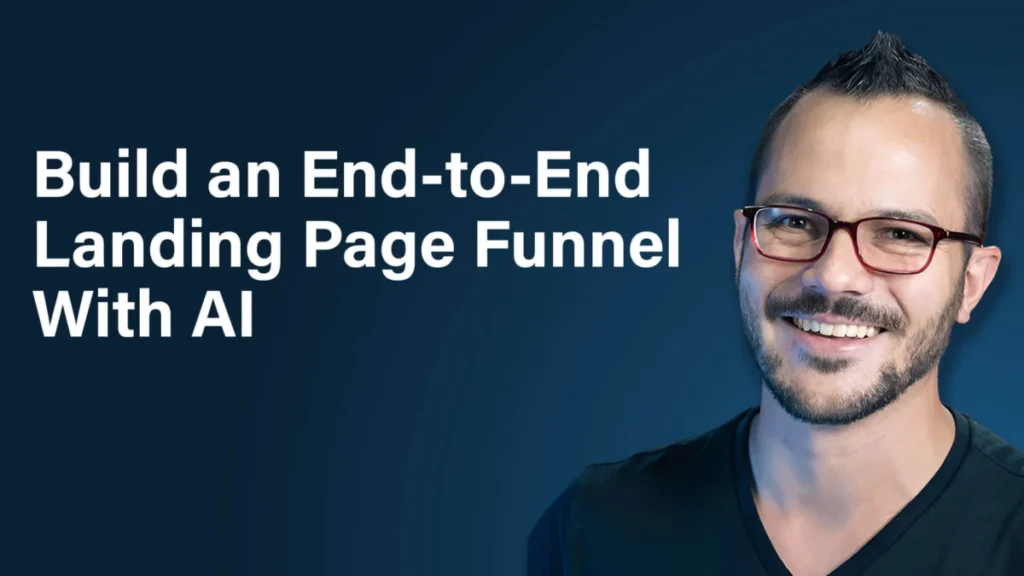
According to Dan Sanchez, host of the AI Driven Marketer podcast, the true bottleneck in modern digital growth isn’t generating ideas—it’s the speed at which you can put a new offer in front of an audience. Landing pages are historically where campaigns stall, requiring coordination between copywriters, designers, and developers.
Sanchez outlines a refined framework for bypassing these bottlenecks using AI:
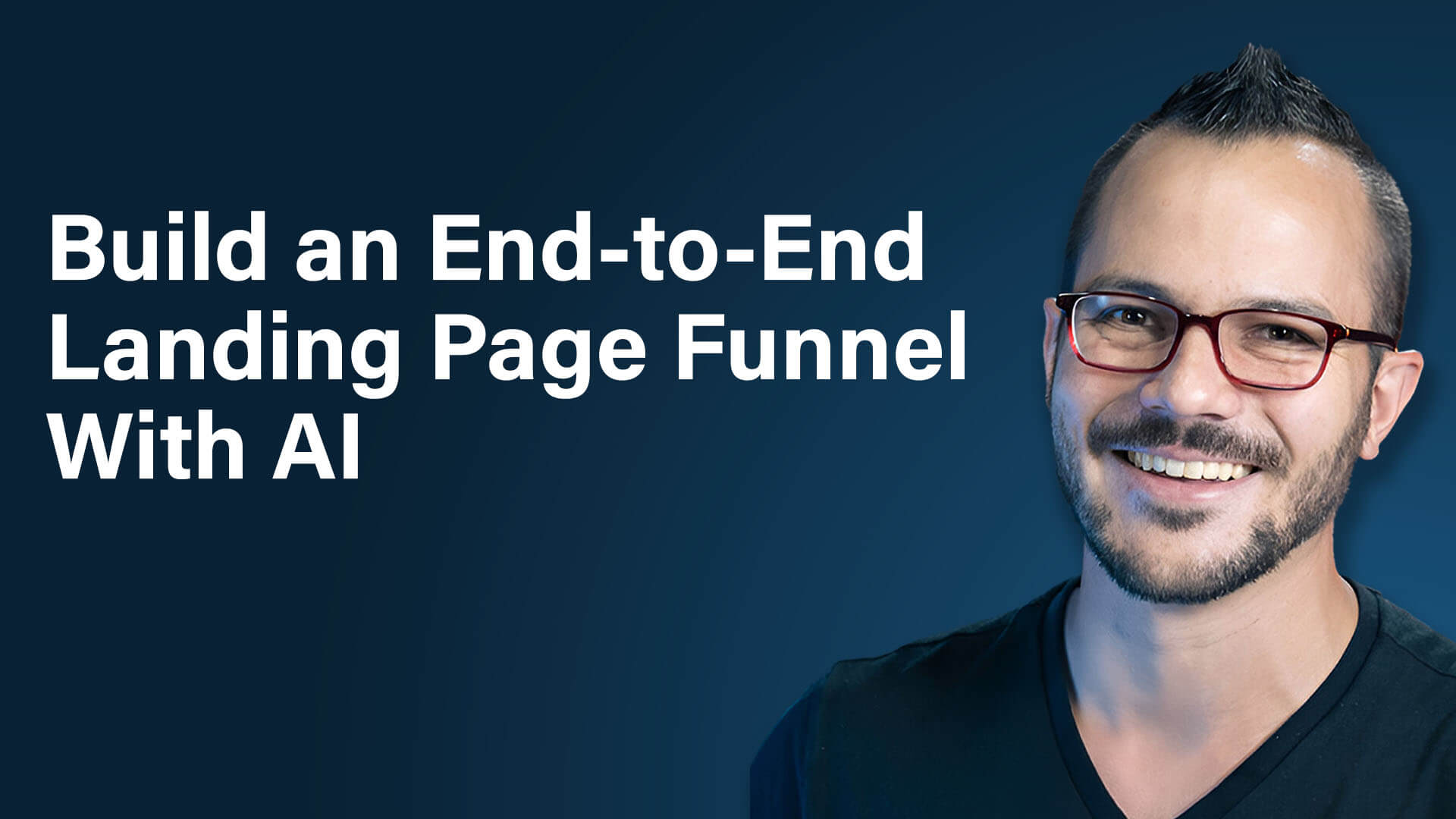
- Start With a Scope of Work: Before opening any coding or page-building interface, plan out the entire campaign in a chat window. Define the target audience, offer positioning, objection-handling angles, and post-conversion paths.
- Unified Copy and Layout: Instruct the AI to tackle both the persuasive copy and the structural layout simultaneously. Applying proven copywriting frameworks ensures the visual hierarchy matches the psychological flow of the reader.
- Cost-Efficient Model Delegation: Advanced marketers are now building custom delegation skills, allowing premium, high-reasoning models to hand off routine drafting and formatting tasks to cheaper, faster models—drastically cutting API and subscription costs.
- Rigorous Human Review: Even the most advanced AI-generated landing pages require human oversight. Review steps must include end-to-end testing of user flows, form submissions, and mobile responsiveness before any campaign goes live.
Official Responses and Ecosystem Updates
The broader technology sector continues to adapt to the demands of small business owners and privacy-conscious consumers, highlighted by recent rollouts from Google and OpenAI.
Google Expands Small Business Tools via Gemini
Google has announced a major expansion of Gemini capabilities designed specifically to assist small business owners. Recognizing that entrepreneurs often wear every hat in their organization—from chief financial officer to head of marketing—Google’s new dedicated business hub consolidates crucial operations into a single platform.
The update features:
- Unified Branding and Asset Generation: Enhanced image generation tools that help businesses establish reusable visual identities, ensuring consistent marketing assets across social media, email campaigns, and advertisements.
- Interactive Financial Insights: Upgraded data analytics capabilities that translate complex financial records and spreadsheets into conversational, interactive insights.
- Ecosystem Integrations: Deep connectivity between Google Workspace and third-party business applications, lowering the technical threshold for small business digitization.
The rollout is designed to make enterprise-grade AI assistance accessible to sole proprietors and micro-businesses without requiring dedicated IT support.
OpenAI Introduces "Locked Chats" for Enhanced Privacy
Addressing growing concerns over data visibility and shared device access, OpenAI has rolled out a new privacy feature for ChatGPT users: Locked Chats.
Key details regarding the update include:

- Biometric and PIN Security: Users can now secure individual conversations behind a PIN or supported device biometric authentication (such as FaceID or fingerprint scanning).
- Isolated Memory: Protected conversations are housed in a distinct section with their own dedicated Memory, allowing users to revisit sensitive professional or personal discussions without bleeding that context into their everyday general chats.
- Scope of Protection: While the feature successfully guards against casual snooping by anyone sharing the same physical device, OpenAI has clarified that Locked Chats do not alter the platform’s underlying data retention, encryption, or enterprise privacy policies.
The feature began rolling out globally across most ChatGPT tiers, reinforcing the industry trend toward granular, user-controlled data management.
Implications: What This Means for Marketers and Entrepreneurs
The convergence of no-code automation, generative landing page builders, and smarter ecosystem tools signals the death of the "slow-moving campaign."
For marketers, the mandate is clear: technical literacy is no longer optional, but it no longer requires a background in computer science. By mastering the art of the prompt, structuring clear scopes of work, and chaining repetitive duties into automated triggers and actions, solo operators can now achieve an output volume that once required an entire agency.

However, speed must not outpace quality. As AI-generated assets—from landing pages to Gemini-backed marketing graphics—flood the digital marketplace, the differentiating factor will be human oversight. The strategic planner who can curate, test, and refine automated workflows while maintaining brand authenticity will command the market.
Whether you choose to build your first automation flow in Make, secure your strategic brainstorming sessions in ChatGPT, or deploy a high-converting landing page using an AI-guided workflow, the tools to scale your enterprise are more accessible than ever before. The only remaining question is how quickly you will put them to work.