Navigating the Labyrinth of Big Media Product Recommendations: How Trust, Authority, and Affiliate Commerce Shape Online Shopping
Introduction: The Evolution of Digital Media Monetization
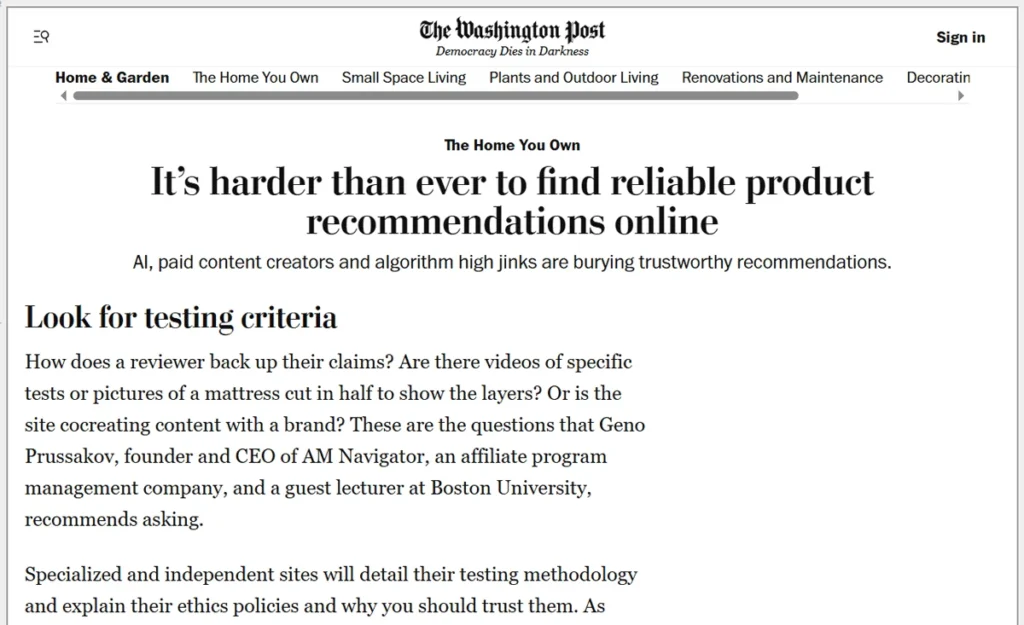
Earlier this year, The Washington Post reached out to industry experts for insights on a growing phenomenon: how consumers should approach and evaluate online product recommendation lists published by major media outlets. The resulting discussion touched on a fundamental shift in the digital publishing landscape. While my initial thoughts were distilled into a concise feature, the topic warrants a much deeper, more thorough examination.
For years, prominent publishers have leveraged their hard-earned brand authority into lucrative monetization streams. Once known strictly as bastions of journalism, investigative reporting, and cultural commentary, today’s household-name media companies routinely publish "best of" lists, buying guides, and product roundups. While these lists offer consumers a seemingly shortcut-laden path to finding the best products on the market, they also introduce complex ethical dilemmas regarding trust, commercial bias, and search engine optimization (SEO).
To truly understand how to navigate this ecosystem, we must look at the mechanics behind media monetization, explore how publishers protect their reputations, examine the vulnerabilities inherent in affiliate partnerships, and empower ourselves as consumers to make informed purchasing decisions.
Main Facts: The Intersection of Editorial Authority and Commerce
The transformation of editorial websites into virtual storefronts is not accidental; it is a calculated business model designed to offset declining traditional advertising and print revenues.
- The Monetization of Authority: Major media organizations possess high Domain Authority (DA) in the eyes of search engines like Google. This means their articles rank exceptionally well for high-intent commercial keywords (e.g., "best air purifiers," "top-rated laptops").
- The Affiliate Engine: Rather than relying solely on display ads, these publishers embed affiliate links within their content. When a reader clicks a link and purchases a product, the media outlet earns a percentage of the sale (a commission) at no extra cost to the consumer.
- The Conflict of Interest: Because publishers directly financially benefit from the products they recommend, a natural conflict of interest arises. Does a product rank #1 because it is genuinely the best, or because its manufacturer offered a higher commission rate or paid a placement fee?
- Consumer Skepticism: As more media brands enter the commerce space, discerning readers have grown increasingly skeptical, questioning whether product roundups are driven by rigorous editorial testing or by revenue quotas.
Chronology: How Big Media Became E-Commerce Powerhouses
To understand where we are today, it is helpful to trace the timeline of how traditional media embraced commercial content.
Phase One: The Banner Ad Era (Late 1990s – Late 2000s)
In the early days of the commercial internet, media sites relied heavily on banner ads and programmatic advertising. Publications provided the eyeballs, and third-party ad networks filled the spaces. However, ad-blockers and plunging Cost-Per-Mille (CPM) rates eventually made this model insufficient for sustaining large newsrooms.
Phase Two: The Rise of Native Advertising and Sponsored Content (2010 – 2015)
As traditional banner revenue declined, publishers experimented with sponsored content—articles written in the style of editorial pieces but paid for by brands. Consumers quickly grew wise to native advertising, demanding clearer disclosures and threatening the core credibility of trusted journalistic institutions.
Phase Three: The Affiliate Commerce Gold Rush (2015 – Present)
Recognizing that readers actively sought product advice before making purchases, media companies began integrating commerce teams directly into their newsrooms. Specialized commerce departments were formed, distinct from traditional newsrooms, dedicated entirely to producing SEO-optimized shopping guides. Over the last decade, this has evolved into a multi-billion-dollar industry, with some publishers generating a substantial portion of their total revenue through affiliate partnerships.
Supporting Data: Behind the Scenes of Media Commerce Programs
Working directly with big media publishers as affiliate partners—managing programs for merchants through agencies like AM Navigator—reveals that most established media outlets take their commerce operations remarkably seriously. Contrary to the belief that these lists are thrown together haphazardly for a quick buck, reputable publishers employ rigorous safeguards to protect their brand equity.
Before turning a brand or product into an editorial endorsement, serious media organizations typically engage in four key validation steps:
1. Dedicated Commerce and Testing Teams
Unlike standard bloggers who might simply aggregate reviews from Amazon, major media brands often maintain dedicated product-testing laboratories. Outlets like Wirecutter (owned by The New York Times) famously put hundreds of products through rigorous, physical, side-by-side testing processes before crowning a winner.
2. Strict Separation of Editorial and Commercial Divisions
To maintain ethical standards, reputable publishers maintain a firewall between their commercial teams (who negotiate affiliate deals and track revenue) and their testing/editorial teams (who choose what products to review). While the business side may ensure a product has an affiliate program available, the testing team retains final say on whether the product actually performs well enough to be recommended.
3. Rigorous Fact-Checking and Compliance Standards
Major media brands are subject to legal and regulatory scrutiny (such as FTC guidelines regarding affiliate disclosures). Consequently, their legal and compliance teams review commerce content to ensure that claims are accurate, disclosures are prominent, and sponsored placements are clearly labeled.

4. Data-Driven Updates and Maintenance
Product quality changes, models get discontinued, and new competitors enter the market. Serious publishers do not just publish a list and walk away; they routinely update their roundups based on ongoing testing, consumer feedback, and return rates to ensure their recommendations remain valid.
Official Responses and Industry Realities: The Vulnerabilities in the System
Despite the best intentions and stringent internal controls of major publishers, the system is not infallible. We all know that, at times, a product’s ranking can be influenced by financial arrangements between advertisers and publishers.
Common Industry Pressures
In the hyper-competitive world of digital publishing, commerce teams face immense pressure to hit revenue targets. This economic pressure can occasionally lead to vulnerabilities in the review process, manifested through:
- Placement Fees: Brands paying directly to guarantee a spot in a high-visibility roundup (often disguised as cooperative marketing funds).
- Inflated Affiliate Commission Rates: A brand offering an unusually high commission rate (e.g., 20% instead of the standard 5%) may inadvertently or intentionally sway commerce editors to feature their product more prominently.
- EPC (Earnings Per Click) Guarantees: Agreements where a merchant guarantees a minimum return per click for the publisher, incentivizing the publisher to drive as much traffic as possible to that specific product, regardless of whether it is objectively the best choice.
- Exclusivity Demands: Brands leveraging their massive ad spend across the broader media company to secure favorable product placements in editorial roundups.
When commercial incentives bypass editorial integrity, consumers are the ones who ultimately pay the price for subpar recommendations.
Implications: What You Can Do as a Consumer
Because the line between objective journalism and sponsored commerce has blurred, consumers must adopt a more critical approach when reading online product roundups. You do not need to abandon big media recommendations entirely, but you should be better equipped to evaluate them.
Here are four practical steps you can take to make smarter buying decisions:
1. Look for Transparency and Disclosures
Always check the top or bottom of an article for an affiliate disclosure statement. While a disclosure does not automatically mean a review is biased (in fact, reputable sites are legally required to disclose affiliate relationships), the presence of clear, transparent language about how the publisher makes money is a good indicator of overall ethical standards. Furthermore, check if the site explains how they test products. Vague statements like "we love this" should be viewed with caution; detailed methodologies like "we tested 15 models over 40 hours" inspire much more confidence.
2. Cross-Reference Across Multiple Sources
Never rely on a single "best of" list to make a high-stakes purchase. If a particular product is recommended by multiple independent outlets—especially those with different monetization models or testing methodologies—it is far more likely to be genuinely high quality. Conversely, if a product appears exclusively on one site alongside aggressive promotional banners, dig deeper.
3. Dig Into Consumer Reviews and Community Feedback
Editorial roundups provide a controlled snapshot, but they cannot replace the collective experience of thousands of real-world users. Look at independent user review platforms, Reddit communities dedicated to specific product categories, and unvarnished customer feedback to see if everyday users experience the same performance praised by the media outlet. Pay special attention to negative reviews to see if recurring flaws are mentioned that the editorial review glossed over.
4. Understand the Motivation Behind the List
Ask yourself why a specific article was published. Is it a timeless, deeply researched guide updated annually, or is it a rushed, search-optimized list published right before Black Friday or Prime Day? Seasonal roundups are much more susceptible to hurried testing and last-minute commercial deals than evergreen product guides maintained by dedicated testing teams.
Conclusion
The monetization of big media authority is a permanent fixture of the modern internet. While it introduces valid concerns regarding bias and commercial influence, it also provides publishers with the financial oxygen needed to fund quality journalism in an era of declining ad revenues.
By understanding the mechanics of affiliate commerce, recognizing the safeguards put in place by reputable publishers, and arming yourself with critical cross-referencing habits, you can successfully navigate online product recommendations. You no longer have to choose between complete cynicism and blind trust; instead, you can become a more empowered, discerning digital consumer.
What would you add to the above? Have you ever felt misled by a big media product recommendation, or have you found them to be reliably accurate? The comments area below is all yours, and every contribution is welcome.