Mastering the Python Descriptor Protocol: A Deep Dive into Attribute Control
In the sophisticated landscape of Python development, the ability to exert granular control over how attributes are accessed, assigned, and managed is a hallmark of a senior-level architect. While many developers are comfortable with basic attribute assignment or the standard @property decorator, the true power of the language lies within the Descriptor Protocol. Descriptors provide a low-level, reusable mechanism to define the behavior of attributes, enabling developers to build elegant, declarative, and robust class interfaces.
This article explores how descriptors function as the backbone of advanced Pythonic design, focusing on three essential patterns: validated, computed, and lazily loaded attributes. By implementing these patterns within a fictitious Japan tourism application, we will demonstrate how to replace cluttered, repetitive logic with clean, encapsulated, and high-performance code.
1. The Core Mechanics: What is a Descriptor?
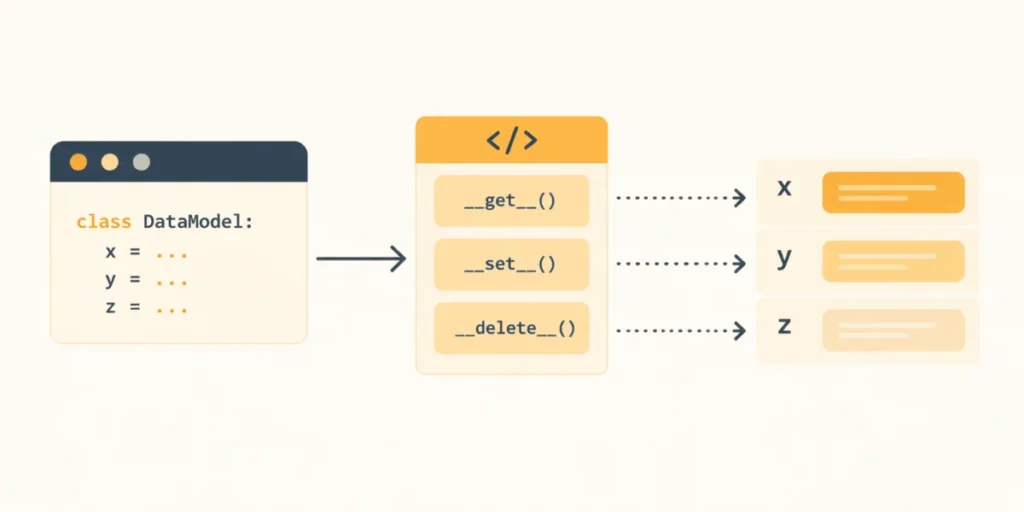
At its most fundamental level, a descriptor is a class that implements at least one of the methods in the descriptor protocol: __get__, __set__, or __delete__. When an object is defined as an attribute of another class (the "owner" class), Python intercepts access to that attribute, delegating the logic to the descriptor’s methods rather than performing a standard dictionary lookup.
The Evolution of the Protocol
Since Python 3.6, the inclusion of the __set_name__ method revolutionized the way descriptors handle metadata. It allows the descriptor to automatically identify the variable name it is assigned to within the owner class, eliminating the need for hard-coding strings and preventing potential namespace collisions. This makes descriptors significantly more modular and easier to deploy across large codebases.
2. Chronology of Attribute Control: From Getters to Descriptors
In the early days of Python, managing attribute access was often handled by manual "getter" and "setter" methods, a pattern borrowed from Java. As the language matured, the @property decorator became the standard for creating computed or validated attributes. However, as the complexity of an application grows, repeating @property logic for every field leads to "code bloat"—a situation where boilerplate logic overwhelms the actual business logic.
Descriptors represent the next step in this evolution. Instead of defining logic within each individual class, developers can now define a "policy" in a separate class and apply it to any attribute across any number of models. This is the "Dry" (Don’t Repeat Yourself) principle taken to its logical extreme.
3. Implementation: Validated, Computed, and Lazy Patterns
To illustrate the utility of these patterns, let us consider a hypothetical JapanTour class. We need to ensure that our tour ratings are valid, our prices are converted in real-time, and our travel itineraries are fetched only when needed to save system resources.
Validated Attributes
Validation is the most common use case for descriptors. By centralizing validation logic, we ensure that data integrity is maintained at the point of assignment.
class ValidatedRating:
    def __init__(self, min_val=1.0, max_val=5.0):
        self.min_val = min_val
        self.max_val = max_val

    def __set_name__(self, owner, name):
        self.public_name = name
        self.private_name = f"_name"

    def __get__(self, obj, objtype=None):
        if obj is None: return self
        return getattr(obj, self.private_name)

    def __set__(self, obj, value):
        if not isinstance(value, (int, float)):
            raise TypeError(f"self.public_name must be a number.")
        if not (self.min_val <= value <= self.max_val):
            raise ValueError(f"self.public_name must be between self.min_val and self.max_val.")
        setattr(obj, self.private_name, float(value))
Computed Attributes
Computed attributes are "read-only" by design. They do not store data themselves but derive their value from the state of other attributes on the instance. In our travel app, we calculate the price in USD based on a base JPY value.
class ComputedUSDPrice:
    def __init__(self, exchange_rate=0.0067):
        self.exchange_rate = exchange_rate

    def __set_name__(self, owner, name):
        self.name = name

    def __get__(self, obj, objtype=None):
        if obj is None: return self
        jpy_price = getattr(obj, 'price_jpy', 0)
        return round(jpy_price * self.exchange_rate, 2)

    def __set__(self, obj, value):
        raise AttributeError(f"self.name is a computed read-only attribute.")
Lazily Loaded Attributes
For operations involving heavy I/O—such as querying a database for a full Shinkansen itinerary—the cost of initialization can be prohibitive. A lazy descriptor performs the "heavy lifting" only once, then caches the result in the instance’s __dict__.
import time

class LazyItinerary:
    def __set_name__(self, owner, name):
        self.name = name

    def __get__(self, obj, objtype=None):
        if obj is None: return self
        print(f"[System] Querying database for obj.destination...")
        time.sleep(1) # Simulate latency
        itinerary = f"Day 1: Arrival in obj.destinationnDay 2: Temple TournDay 3: Shinkansen"
        obj.__dict__[self.name] = itinerary
        return itinerary
4. Supporting Data: The Power of Integration
When we aggregate these descriptors into the JapanTour class, the result is a lean, expressive definition that hides complexity from the end user.
class JapanTour:
    rating = ValidatedRating(min_val=1.0, max_val=5.0)
    price_usd = ComputedUSDPrice()
    itinerary = LazyItinerary()

    def __init__(self, destination, price_jpy, rating):
        self.destination = destination
        self.price_jpy = price_jpy
        self.rating = rating
Performance Analysis
By using descriptors for lazy loading, we observe a significant improvement in memory and processing efficiency. If a JapanTour object is instantiated but the itinerary attribute is never accessed, the expensive database query is never performed. This "pay-only-for-what-you-use" model is critical for scaling applications that handle massive datasets or complex object graphs.
5. Official Perspectives and Best Practices
Python’s core developers emphasize that while descriptors are powerful, they should be used judiciously. The Python documentation highlights that descriptors are the mechanism behind property, classmethod, staticmethod, and super().
Best Practices:
- Prefer Composition: Use descriptors when the logic is truly reusable across different classes.
- Avoid Over-Engineering: If a simple
@propertysuffices for a unique, one-off requirement, do not force it into a descriptor class. - Handle
Nonein__get__: Always ensure that if the descriptor is accessed on the class rather than the instance, it returns the descriptor object itself, as shown in the examples.
6. Implications for Modern Python Architecture
The use of descriptors has profound implications for the design of large-scale Python systems.
Scalability and Maintainability
By abstracting attribute logic into descriptors, teams can maintain a library of "smart attributes." If the business requirements for "Rating" change—perhaps we need to log invalid attempts to an external monitoring service—we only need to update the ValidatedRating class. Every model in the application that uses this descriptor will inherit the new behavior automatically.
Readability
Critics of descriptors often cite their "magic" as a potential barrier for new developers. However, when properly documented and named, descriptors actually improve readability by reducing the number of repetitive methods inside a class. A class containing 50 lines of boilerplate setters and getters is significantly harder to read than a class that uses clear, declarative descriptors.
Future-Proofing
Asynchronous programming in Python (via asyncio) is becoming increasingly common. Advanced implementations of descriptors can be adapted to handle asynchronous data fetching, ensuring that the attribute access protocol remains consistent even as the underlying data layer evolves from synchronous database calls to asynchronous API requests.
7. Conclusion
Python descriptors represent a bridge between high-level application code and the low-level mechanics of the language interpreter. By mastering these tools, developers gain the ability to create sophisticated, self-validating, and high-performance objects that are both easier to maintain and more robust against common programming errors.
Whether you are building a travel application, a data science pipeline, or a complex backend framework, the descriptor protocol offers the precision and flexibility required to manage data with confidence. As you incorporate these patterns into your workflow, remember that the goal is not merely to write code, but to create a framework that is intuitive, extensible, and, above all, Pythonic.