Beyond the Framework: Architecting a High-Efficiency RAG Pipeline with Scikit-Learn
In the rapidly evolving landscape of Artificial Intelligence, Retrieval Augmented Generation (RAG) has emerged as the gold standard for grounding Large Language Models (LLMs) in proprietary or specific data. However, the prevailing industry narrative suggests that building a RAG system requires a complex, multi-layered stack: expensive vector databases, heavy-duty orchestration frameworks, and costly API subscriptions to closed-source models.
For developers, researchers, and startups operating under strict cost constraints or working with small-to-medium-sized datasets, this perception is a significant barrier to entry. Fortunately, the fundamental mechanics of RAG—semantic vector search and context-aware generation—can be distilled into a lightweight, transparent, and entirely open-source pipeline. By utilizing scikit-learn for retrieval and compact, high-performance open-source models for inference, we can democratize RAG, making it accessible to anyone with a standard IDE or a free-tier Google Colab environment.
The Core Concept: Simplifying Retrieval
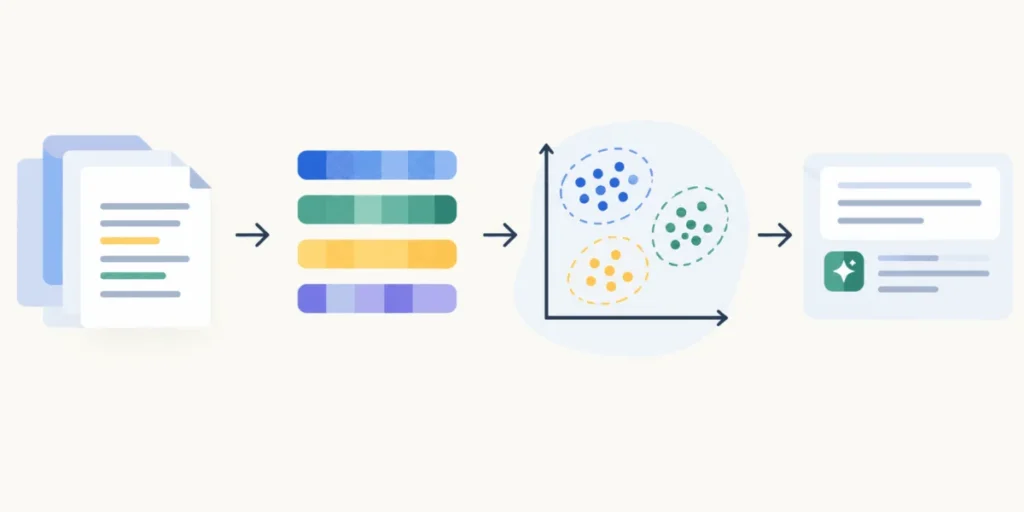
Modern RAG systems are often marketed as inseparable from massive infrastructure. Yet, at their core, these systems are simply performing a mathematical comparison: they calculate the geometric distance between semantic vectors representing the user’s query and the vectors representing the documents in a knowledge base.
When working with a corpus that fits within the memory of a standard machine, dedicated vector database management systems (DBMS) can introduce unnecessary latency and configuration overhead. Instead, by leveraging scikit-learn’s NearestNeighbors algorithm, we can achieve high-fidelity retrieval with minimal code. This "DIY" approach offers unparalleled transparency, allowing developers to inspect the vector space, tune distance metrics, and understand exactly how their data is being queried.
Chronology of Construction: A Step-by-Step Implementation
Building a RAG pipeline from scratch is an exercise in data flow management. The following roadmap details how to move from raw text to a functional, generative system.
Phase 1: Environment and Dependencies
Before data processing begins, we must establish our foundation. The pipeline relies on two pillars: sentence-transformers for generating dense embeddings and transformers for the generative LLM. Using Google Colab with a T4 GPU provides a seamless environment for this task, as it balances compute power with ease of access.
!pip install -q sentence-transformers transformers
import os, glob, urllib.request, zipfile, numpy as np, pandas as pd
from sklearn.neighbors import NearestNeighbors
from sentence_transformers import SentenceTransformer
from transformers import pipeline
Phase 2: Data Acquisition and Preprocessing
For our demonstration, we utilize a curated set of documents detailing various Asian countries. The goal is to move from unstructured text files to a refined list of semantic chunks. While our sample data is small, the methodology is scalable.
Preprocessing is arguably the most critical stage. We must define a chunking function that balances context preservation with the constraints of the embedding model’s token limit. By implementing a sliding window approach with overlap, we ensure that semantic information is not lost at the boundaries of text segments.
Phase 3: The Embedding Stage
We employ the all-MiniLM-L6-v2 model, a powerhouse in the open-source community known for its efficiency and speed. This model maps our text chunks into a high-dimensional vector space. In this space, the "meaning" of a sentence is represented by its position, allowing us to perform mathematical operations to find similarities.
Phase 4: Vector Indexing via Scikit-Learn
This is where the magic happens. By wrapping sklearn.neighbors.NearestNeighbors in a custom class, we create a lightweight "vector database." We set the metric to cosine, which is the industry standard for measuring the angular distance between vectors, effectively gauging the semantic proximity of a query to a document.
Phase 5: The Generative Engine
For the final stage—synthesis—we use Qwen/Qwen2.5-0.5B-Instruct. By using an instruction-tuned model, we can enforce strict system prompts, ensuring that the model acts only as a synthesizer of the provided context rather than relying on its internal, potentially hallucinated knowledge.
Supporting Data and Technical Nuance
The efficacy of a RAG pipeline is measured by its "retrieval accuracy" and "generative fidelity." Using the NearestNeighbors approach with brute-force searching is remarkably efficient for datasets under 100,000 documents.
| Component | Technology | Role |
|---|---|---|
| Embedding Model | all-MiniLM-L6-v2 |
Converts text to numerical vectors. |
| Retriever | sklearn.neighbors |
Finds the top-k nearest semantic neighbors. |
| Generator | Qwen2.5-0.5B-Instruct |
Synthesizes retrieved context into a natural language answer. |
| Framework | Native Python / Scikit-learn | Orchestrates the data flow without external middleware. |
The choice of cosine distance is deliberate. Because the embedding model produces normalized vectors, the angle between the query vector and the document vector directly correlates with semantic similarity. By retrieving the vectors with the smallest angular distance, we ensure that the LLM receives the most relevant information possible.
Official Perspectives: The Case for Open-Source Modularity
The AI research community, led by institutions like Hugging Face, has been vocal about the importance of modular, transparent systems. The "monolithic framework" approach—where a single provider handles everything from vector storage to generation—often creates a "black box" effect.
By building an end-to-end pipeline using scikit-learn, developers reclaim control. This modularity allows for the seamless swapping of models. If a new, more efficient embedding model is released, it can be swapped into the pipeline in seconds without needing to migrate data between proprietary database schemas. This agility is the true hallmark of modern, high-velocity AI development.
Implications for Future AI Development
The implications of this lightweight architecture are profound. First, it democratizes AI for small organizations that cannot justify the recurring costs of vector database-as-a-service providers. Second, it promotes sustainability; by running smaller, specialized models, we significantly reduce the carbon footprint and energy consumption associated with calling massive, generalized models through APIs.
Prototyping vs. Production
While this architecture is perfect for proof-of-concepts and small-to-medium deployments, it is also a vital testing ground for larger systems. By understanding the granular mechanics of retrieval, engineers can better diagnose issues like "semantic drift" or "context leakage" in larger, more complex systems. When the time comes to scale—perhaps to millions of documents—the move to a dedicated vector database becomes a deliberate, informed architectural decision rather than a mandatory prerequisite.
Transparency and Trust
In an era where AI-generated misinformation is a growing concern, the "transparent pipeline" is a defensive asset. Because this system explicitly relies on a retrieval step that can be inspected, audited, and logged, developers can provide citations for every claim the AI makes. By showing users exactly which document chunks were used to generate an answer, we bridge the gap between "black-box AI" and "accountable technology."
Conclusion
The path to building a powerful RAG system is not paved with expensive subscriptions or complex, bloated frameworks. As demonstrated, a robust, high-performance pipeline can be constructed using the familiar, reliable tools of the data science community. By combining the semantic intelligence of modern open-source models with the foundational power of scikit-learn, we can build systems that are not only effective but also transparent, cost-efficient, and fully under our control.
Whether you are a developer looking to prototype a new idea or an organization aiming to reduce its infrastructure overhead, this approach offers a proven blueprint. The future of AI is not just about scale; it is about precision, efficiency, and the ability to build sophisticated tools with the building blocks already at our fingertips.