A Legacy of Reform: Remembering Mahakavi Gurajada Apparao on his 164th Birth Anniversary
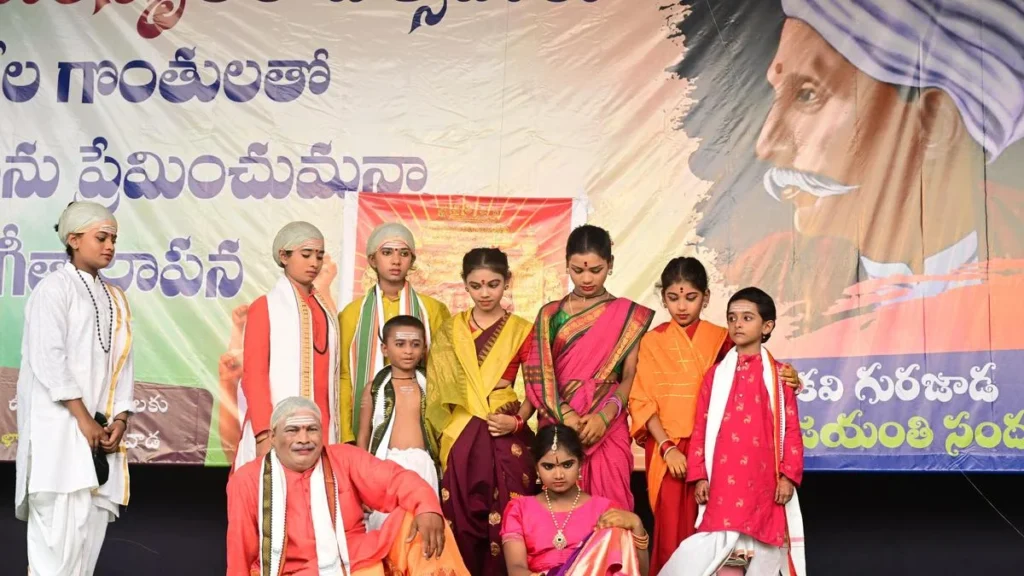
Vijayawada, September 21, 2026 — Across the state of Andhra Pradesh, the spirit of social reform and literary brilliance was rekindled on Monday as the nation commemorated the 164th birth anniversary of Mahakavi Gurajada Venkata Apparao. From the corridors of the Ghantasala Venkateswara Rao Government College of Music and Dance in Vijayawada to the administrative centers of Visakhapatnam and Paderu, the day was marked by cultural fervor, academic discourse, and a renewed call to integrate his progressive ideals into the modern educational curriculum.
The Vanguard of Social Consciousness: Main Facts
Gurajada Apparao (1862–1915) remains a foundational figure in Telugu literature, often credited with transitioning the language from archaic, classical forms to Vyavaharika Bhasha—the language of the common people. His magnum opus, Kanyasulkam (The Bride Price), remains one of the most significant plays in Indian literature, serving as a scathing indictment of child marriage and the exploitation of women in 19th-century society.
Monday’s celebrations served as more than a ritualistic tribute; they acted as a platform for socio-political reflection. In Vijayawada, the Andhra Pradesh Congress Committee (APCC) office hosted a commemorative event where the poet’s life was celebrated through traditional music and oratory. Simultaneously, government offices across the state witnessed officials paying floral tributes, signaling a cross-institutional recognition of Apparao’s enduring impact on Telugu identity and social reform.
A Chronology of Commemoration: Across Andhra Pradesh
The day’s proceedings unfolded in a coordinated wave of regional tributes:
- Morning in Vijayawada: The Ghantasala Venkateswara Rao Government College of Music and Dance became the epicenter of cultural engagement. Young students performed traditional songs and rhythmic drum pieces, breathing life into the verses that once mobilized a generation.
- Mid-Day at the APCC Office: The event featured intellectual discourse led by APCC vice-president Kolanukonda Shivaji, who focused on the contemporary relevance of Apparao’s humanistic philosophy.
- Administrative Tributes in Visakhapatnam: At the Collectorate, District Revenue Officer M. Visweswara Naidu led the proceedings. The focus here was on the duty of the youth to internalize the anti-superstition stances of the poet.
- Civic Recognition in GVMC: At the Greater Visakhapatnam Municipal Corporation (GVMC) headquarters, senior officials S.S. Varma and P. Nallannayya underscored the logistical and social weight of Kanyasulkam, noting that the play’s themes of systemic injustice remain potent today.
- Highland Remembrance in Paderu: In the Alluri Sitharama Raju district, Collector T. Nishanthi concluded the day’s formal observations by emphasizing the pedagogical value of Apparao’s body of work, particularly his ability to weave social messaging into accessible, melodic prose.
The Philosophy of the People: Analyzing the "Nationhood" Doctrine
Central to Monday’s discussions was the immortal line penned by Apparao: "A nation is not the soil; it is its people."
For modern audiences, this quote serves as a cornerstone of civic nationalism. During the APCC proceedings, Kolanukonda Shivaji highlighted that 85 years after his passing, this mantra challenges contemporary notions of patriotism. In an era often dominated by geopolitical boundaries and territorial rhetoric, Apparao’s definition shifts the focus back to the human element—the welfare, education, and dignity of the citizenry.
This philosophy was not merely a poetic flourish; it was the foundation of his reformist agenda. By prioritizing the "people," he advocated for the eradication of caste-based discrimination, gender-based subjugation, and the crushing weight of religious dogma. Speakers across the state echoed this, noting that Apparao was one of the first in the Telugu-speaking region to identify that a nation’s progress is fundamentally tethered to the social advancement of its most vulnerable members.
Policy Proposals: The Demand for National Curricular Inclusion
Perhaps the most significant development of the 164th anniversary was the formal demand to integrate Gurajada Apparao’s works into the national curriculum. APCC vice-president Kolanukonda Shivaji explicitly proposed that the works of the Mahakavi be included in NCERT and CBSE syllabi.

Why the Curriculum Matters:
- Patriotism vs. Jingoism: Educators and political figures argue that Apparao’s work teaches a "constructive patriotism"—one rooted in building a just society rather than empty nationalistic fervor.
- Social Awareness: His literature offers a historical lens through which students can understand the struggle against child marriage and superstitious practices.
- Linguistic Evolution: Apparao’s contribution to the democratization of the Telugu language is a masterclass in how literature can empower the masses. By studying his transition from classical to colloquial, students can better understand the evolution of modern Indian languages.
- Value-Based Education: His works instill "progressive values," a necessity in a digital age where the youth are often disconnected from their regional literary heritage.
Officials in Visakhapatnam and Paderu reinforced this sentiment, urging the youth not just to celebrate the poet on his birthday, but to engage with his writings as a "guide for social awareness."
Official Responses and Public Sentiment
The tone of the commemorations was one of somber reflection mixed with urgent advocacy. District Revenue Officer M. Visweswara Naidu, in his address, urged the youth to view the Mahakavi not as a relic of the past, but as a "contemporary conscience." He noted that while the society has evolved, the "superstitions and injustices" that Apparao fought against have merely morphed into new, more complex forms.
Similarly, the GVMC Additional Commissioners S.S. Varma and P. Nallannayya highlighted the role of the play Kanyasulkam in shaping modern Telugu drama. They noted that the characters created by Apparao—often representing the hypocrisy of the elite—act as a mirror for modern power structures. Their address served as a call to action for civil servants to maintain the ethical standards that Apparao championed in his literature.
Implications for the Future
The widespread commemoration of the 164th birth anniversary of Gurajada Apparao indicates that his relevance is far from fading. As India navigates the complexities of the 21st century—marked by rapid urbanization, technological integration, and evolving social norms—the "Gurajada Model" of literature remains a vital compass.
If the proposal to include his works in the NCERT and CBSE curriculum gains traction, it could mark a significant shift in how regional literary icons are treated at the national level. It would move beyond the regional confines of Andhra Pradesh, positioning Apparao alongside national stalwarts like Rabindranath Tagore and Subramania Bharati, who similarly used their pens to ignite social change.
Conclusion: A Legacy Carried Forward
As the sun set on the 164th anniversary, the cultural performances in Vijayawada left a lingering impression: the music, the speeches, and the floral tributes were all manifestations of a society that recognizes its debt to a poet who dared to speak truth to power.
Gurajada Apparao’s legacy is not held in the statues erected in his honor, but in the ongoing conversation about human dignity, the pursuit of justice, and the belief that a nation is only as strong as the compassion it shows its people. As the state looks toward the future, the words of the Mahakavi continue to serve as both a critique of the present and a blueprint for a more equitable future. The call to "understand his ideals" is, in essence, a call to continue the work he started—a work that remains, in every sense, unfinished.