Ascend Capital Reports Explosive Growth in FY26: EV-Focused NBFC Surges on Rising Commercial Demand
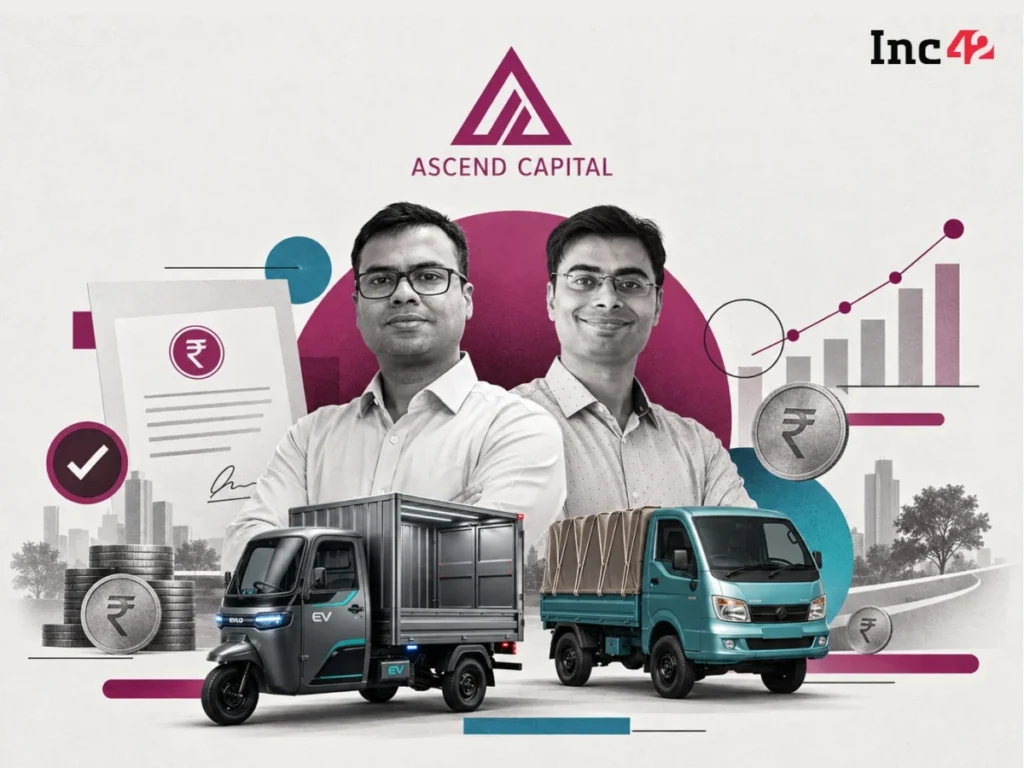
NEW DELHI — In a testament to the surging momentum of India’s electric vehicle (EV) ecosystem, Jaipur-headquartered non-banking financial company (NBFC) Ascend Bizcap (operating as Ascend Capital) has posted exceptional financial results for the fiscal year 2026 (FY26). Backed by prominent venture capital investors like Info Edge Ventures and Asha Ventures, the specialized lender witnessed its profit after tax (PAT) multiply more than sixfold, underscoring the massive, largely untapped financing opportunities available within India’s commercial EV landscape.
According to recent rating reports released by credit rating agency ICRA, Ascend Capital’s total income more than doubled during the fiscal year, jumping approximately 131% to INR 50.3 crore from INR 21.8 crore in FY25. Concurrently, the company’s bottom line swelled to INR 10 crore, marking an astonishing 6.25-fold expansion from the modest INR 1.6 crore profit recorded in the previous fiscal year.
This financial acceleration coincides with a broader national shift toward sustainable mobility. Driven by commercial applications, particularly in the micro-entrepreneurial and logistics segments, India’s EV market is rapidly maturing from an urban consumer novelty into the backbone of the country’s green last-mile delivery and public transport networks.
Main Facts: Financial Highlights and Portfolio Scale
Ascend Capital’s FY26 performance highlights a high-growth operational model capable of balancing aggressive scaling with strong top-line generation.
The primary metrics defining the NBFC’s performance in FY26 include:
- Surging Profitability: Profit after tax soared over 600% to INR 10 crore, up from INR 1.6 crore in FY25 and a negligible INR 0.1 crore in FY24.
- Doubled Revenue: Total income crossed the half-century mark at INR 50.3 crore, registering a steep 131% year-on-year (YoY) increase.
- Assets Under Management (AUM): Total managed assets expanded by 46% YoY to reach INR 238.6 crore, compared to INR 163.7 crore in FY25.
- Asset Quality Realities: Gross Non-Performing Assets (GNPA) experienced a modest uptick, rising to 2.6% in FY26 from 1.7% in the previous fiscal year.
- Capital Adequacy: The Capital-to-Risk Weighted Assets Ratio (CRAR) moderated to 34.8% from 41% a year earlier. Despite this moderation, the company remains comfortably capitalized well above regulatory thresholds.
Chronology: The Evolution and Scaling of Ascend Capital
To understand Ascend Capital’s current market standing, one must examine its systematic progression from a nascent lending experiment to a critical enabler of tier-2 and tier-3 green mobility.
2019–2023: Foundation and Initial Operations
Ascend Capital was founded in 2019 by industry veterans Lokesh Chandra and Gaurav Maheshwari. Recognizing a distinct credit gap for micro-entrepreneurs seeking to purchase electric three-wheelers (e-rickshaws) and associated lithium-ion batteries, the founders set out to build an underwriting model tailored to informal-economy borrowers who traditionally lacked access to formal institutional credit.
January 2024: Strategic Expansion into L5 and Commercial Fleets
A pivotal moment in the company’s trajectory occurred in January 2024, when Ascend officially commenced loan disbursements for larger, high-value commercial vehicles, including electric autos (e-autos) and e-loaders (L5 vehicles). This strategic pivot allowed the NBFC to capture higher ticket sizes and tap into the lucrative B2B logistics supply chain. During FY24, the company’s total income stood at INR 13.7 crore, with a nominal PAT of INR 0.1 crore—a baseline from which its subsequent hyper-growth phase was launched.
2024: Institutional Capital Injection
To fuel this expanding loan book, Ascend Capital successfully secured INR 50 crore in equity financing during 2024 from Info Edge Ventures and Asha Ventures. This capital infusion not only strengthened its balance sheet but also provided the leverage needed to attract institutional debt and execute structured finance transactions. As of the latest filings, these institutional backers collectively hold a 24.8% stake in the NBFC.
FY25–FY26: The Scale-Up and Portfolio Maturation
Over the past two fiscal years, Ascend shifted into high gear. By FY26, its total income skyrocketed to INR 50.3 crore, while AUM climbed to nearly INR 239 crore. The portfolio’s resilience was rigorously tested and validated through systematic securitization deals, positioning the company as one of the premier niche EV financiers in the country.
Supporting Data: Portfolio Health, Borrower Demographics, and Macro Trends
A granular review of ICRA’s credit assessment reveals critical insights into Ascend Capital’s risk management, borrower demographics, and the structural health of its underlying loan portfolio.
Asset Quality and Portfolio Performance
- Securitized Portfolio Strength: Data as of July 2026 indicated that cumulative collection efficiency from Ascend’s securitized EV loan portfolio—spanning e-autos, loaders, and L5 vehicles—stood at an impressive 97.5%.
- Delinquencies: The 90+ days past due (dpd) delinquency metric remained tightly controlled at a low 1.3%.
- GNPA Realities: While early-bucket metrics remain strong, the company’s gross non-performing assets (GNPA) crept up to 2.6% in FY26 from 1.7% in FY25. Industry analysts note that this is a natural consequence of scaling operations into semi-urban and rural markets where cash-flow volatility among informal borrowers can occasionally impact repayment schedules.
Geographic Reach and Borrower Base
As of September 2025, Ascend Capital’s footprint extended across 60 cities spanning five states and Union Territories. However, the portfolio displays a notable degree of geographic concentration: its top three operating states accounted for 87.5% of its total asset portfolio. At the time, the NBFC’s active borrower base stood at 18,975 individuals—primarily independent drivers, micro-fleet operators, and delivery contractors.
Macroeconomic Tailwinds: The India EV Market in FY26
Ascend’s internal growth mirrors an unprecedented boom in India’s broader EV landscape. According to official Vahan data, a record 24.5 million (24.5 Lakh) EVs were sold across India in FY26, marking a robust 25% YoY increase.
Electric three-wheelers (E3Ws)—the core asset class financed by Ascend—played a starring role in this expansion. E3W sales crossed 831,000 units, accounting for roughly 34% of total EV sales nationwide. Moreover, electric three-wheelers officially crossed a historic milestone during the year, capturing more than a 60% market share of India’s overall three-wheeler segment (inclusive of internal combustion engine vehicles). This structural dominance of electric powertrains in last-mile mobility guarantees a sustained pipeline of credit demand for specialized lenders.
Official Responses and Strategic Insights: Overcoming Underwriting Challenges
Financing commercial EVs—especially for buyers operating in the informal cash economy—presents unique operational hurdles that traditional commercial banks are ill-equipped to handle. Ascend Capital has sought to differentiate itself by developing proprietary technological and analytical frameworks to mitigate these risks.
The Underwriting and Valuation Problem
A primary barrier in EV financing has historically been residual value uncertainty. Unlike traditional fossil-fuel vehicles, an electric vehicle’s economic lifespan is heavily dictated by the health and degradation rate of its lithium-ion battery pack, which can account for up to 40% to 50% of the vehicle’s total cost.
To tackle this, Ascend Capital has constructed an internal proprietary benchmark for valuing batteries. By developing an extensive data repository covering Original Equipment Manufacturers (OEMs), local battery distributors, and end-user drivers, the NBFC can accurately assess asset depreciation and second-hand residual values.
Funding and Capital Recycling Mechanics
Ascend operates on a hybrid capital model. While it originates loans directly through its balance sheet NBFC, it funds its aggressive loan book expansion by combining institutional debt with securitization. By packaging pools of its high-performing EV loans into marketable securities and selling them to larger institutional investors, Ascend successfully frees up capital, allowing the firm to continuously recycle funds into fresh loan originations without over-leveraging its equity base.
Loans typically range between INR 2 lakh to INR 4 lakh per borrower, targeting everyday commercial operators looking to transition away from polluting diesel or CNG auto-rickshaws.
Implications: Market Dynamics and Risk Factors
While Ascend Capital’s financial trajectory is undeniably stellar, credit analysts and market observers maintain a balanced view, noting that rapid scaling in a niche, emerging sector naturally introduces specific structural risks.
1. Navigating Geographic Concentration
ICRA’s risk assessment specifically pointed out that Ascend’s heavy reliance on its top three states—which make up 87.5% of its portfolio—exposes the NBFC to localized economic shocks, regional regulatory shifts, or state-specific policy rollbacks concerning EV subsidies. Expanding its geographic diversification will be a critical priority for the management team in FY27 and beyond.
2. Operational History and Market Maturity
Having commenced operations in 2019, Ascend is still a relatively young financial institution. Its models have largely been tested during a period of secular growth in the EV industry. How its underwriting book behaves through broader macroeconomic cycles or extended inflationary pressures remains a factor that rating agencies and prospective lenders will closely monitor.
3. Heightened Competition in EV Financing
The immense commercial success of companies like Ascend Capital, coupled with soaring EV adoption figures, has not gone unnoticed. Traditional banks, public sector lenders, and a wave of new-age fintech startups are aggressively entering the EV financing arena. This increased liquidity and competition could compress lending yields, forcing NBFCs to optimize their operational efficiencies further to maintain net interest margins (NIMs).
4. Broad Implications for India’s Green Transition
Despite these operational caveats, Ascend Capital’s success signals a crucial breakthrough for India’s climate goals. The decarbonization of India’s transport sector cannot happen solely through urban passenger cars; it requires the wholesale electrification of commercial three-wheelers, delivery vans, and last-mile transit networks utilized by millions of blue-collar entrepreneurs.
By proving that commercial EV portfolios can achieve high collection efficiencies (97.5%) and strong institutional backing, NBFCs like Ascend are opening the floodgates for mainstream financial inclusion. As more capital flows into underserved markets beyond major metropolitan centers, specialized EV lenders are rapidly transforming from financial experiments into systemic pillars of India’s sustainable economic future.