The Expanding Horizon: AWS Weekly Roundup and the Rise of Swift at the Edge
The cloud computing landscape is undergoing a period of rapid, multifaceted expansion. As the industry pushes toward increasingly sophisticated edge computing and AI-integrated workflows, Amazon Web Services (AWS) continues to evolve its infrastructure to meet these shifting demands. This week’s developments, ranging from the long-awaited arrival of the AWS IoT Device SDK for Swift to the deployment of OpenAI’s most advanced models on Amazon Bedrock, underscore a broader strategy: empowering developers with versatility and ensuring enterprise-grade resilience across global architectures.
The New Frontier: Swift Takes Root in IoT and Edge Computing
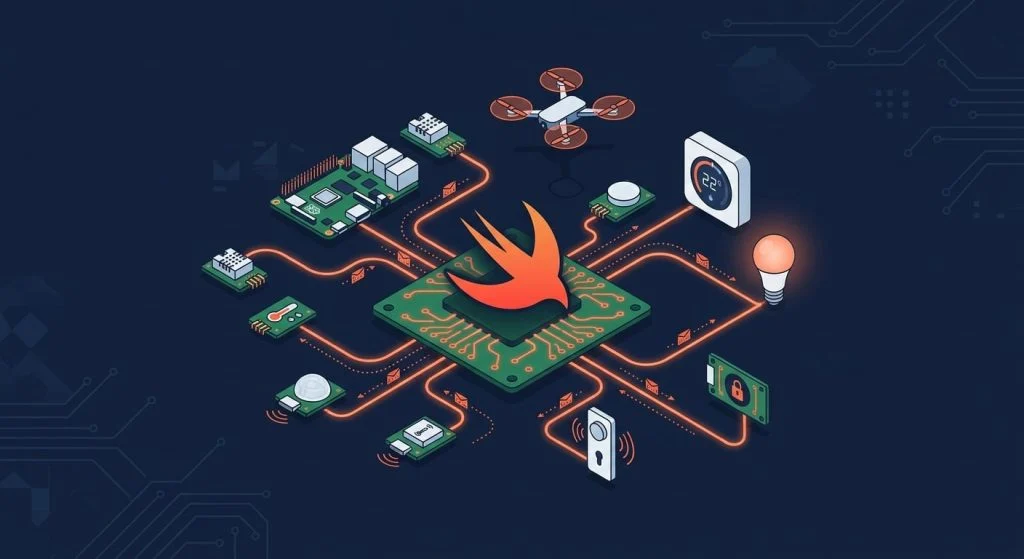
Perhaps the most significant signal regarding the future of developer tooling is the general availability of the AWS IoT Device SDK for Swift. This milestone represents more than just a new library; it marks the official maturation of the Swift language within the server-side and embedded systems ecosystem.
The Significance of Swift’s Expansion
For years, Swift was primarily associated with Apple’s closed-garden application development—iOS, macOS, and tvOS. However, the Swift Server Workgroup (SSWG) has tirelessly bridged the gap between a high-level, safety-oriented language and the low-level requirements of server and IoT environments. With the release of this SDK, developers can now leverage production-ready MQTT 5 connectivity, utilize Device Shadow functionality, and manage fleet provisioning using the same language they use to build their mobile frontends.
The implications for "Edge AI" are profound. As specialized operating systems like WendyOS gain traction—providing first-class support for deploying AI workloads to hardware like the NVIDIA Jetson and Raspberry Pi—the ability to run Swift code natively on these devices becomes a competitive advantage. It allows teams to unify their tech stack, reducing the friction between cloud-based data processing and the intelligent decisions being made at the physical edge.
Chronology of the Week’s Major Announcements
The AWS ecosystem has seen a flurry of activity, specifically focused on enterprise-grade reliability and generative AI performance. The following updates represent a strategic push to harmonize legacy migration needs with cutting-edge AI capabilities.
1. Amazon RDS for SQL Server: Bring Your Own Media (BYOM)
Mid-week, AWS addressed a significant pain point for enterprise customers: license portability. With the introduction of "Bring Your Own Media" (BYOM) for Amazon RDS for SQL Server, organizations can now migrate their on-premises workloads while retaining their existing Microsoft SQL Server licenses. By integrating this with the AWS License Manager, AWS is providing a streamlined compliance pathway, allowing businesses to leverage their Software Assurance investments in the cloud without incurring the "double-licensing" penalty often associated with legacy migrations.
2. Resilience Redefined: Amazon Cognito Multi-Region Replication
In an era where uptime is the ultimate currency, AWS announced that Amazon Cognito now supports multi-Region replication. This feature allows for the near real-time synchronization of identity data—including credentials, user pools, and federation configurations—to a standby Region. The architectural impact is immediate: in the event of a primary Region outage, users can maintain access to their applications without needing to re-authenticate, significantly reducing the blast radius of infrastructure disruptions.
3. Generative AI Maturity: GPT-5.5 and Codex on Bedrock
Arguably the most headline-grabbing news is the general availability of OpenAI’s GPT-5.5, GPT-5.4, and Codex on Amazon Bedrock. This move represents a deepening partnership between the two giants, allowing developers to deploy the latest, most capable iterations of OpenAI’s models within the secure, governed environment of AWS. Specifically, GPT-5.5 is being positioned as a powerhouse for agentic coding and autonomous multi-step tasks, while the inclusion of Codex aims to revolutionize the software development lifecycle (SDLC) through deep IDE integrations.
Supporting Data: Why Resilience and Flexibility Matter
To understand why these updates are being prioritized, one must look at the current market trajectory. According to recent industry benchmarks, enterprise cloud adoption has reached a saturation point where "migration" is no longer the primary hurdle—"optimization and resilience" are.
- Identity Continuity: The shift toward multi-Region replication for identity providers like Cognito is a response to the increasing frequency of regional cloud outages. Data suggests that identity-related downtime can cost enterprises upwards of $50,000 per hour in lost productivity and customer churn.
- AI Economic Efficiency: By enabling usage of OpenAI models on Bedrock to count toward existing AWS service commitments, AWS is successfully removing the financial barrier to entry for large-scale AI adoption. It allows CTOs to justify the cost of GPT-5.5 deployment as part of their existing cloud spend rather than treating it as a new, volatile budget line item.
Official Responses and Strategic Implications
AWS leadership has consistently emphasized that their strategy is driven by "customer-obsession." When asked about the rapid integration of advanced models like GPT-5.5, an AWS spokesperson noted: "Our goal is to ensure that our customers have the most powerful tools available at their fingertips, but within a framework that guarantees data privacy, security, and operational consistency."

Implications for the Developer
The combination of Swift-based IoT SDKs and powerful LLMs like Codex signifies a shift in how applications are constructed. Developers are no longer just writing code; they are orchestrating agents.
- Development Velocity: With Codex integrated into VS Code, JetBrains, and Xcode, the barrier for junior developers to perform at senior levels is shrinking.
- System Integrity: With the new RDS and Cognito features, the "plumbing" of the cloud—databases and identity—is becoming increasingly invisible and self-healing.
Looking Ahead: The Builder’s Roadmap
The rapid pace of these updates serves as a reminder that the AWS ecosystem is an evolving organism. The focus for the coming months will likely remain on autonomous operations. As models like GPT-5.5 become more adept at "agentic coding," the role of the developer will transition from manual implementation to high-level architectural oversight.
For those looking to engage further, the AWS community continues to be the best resource. The AWS Builder Center serves as a vital hub for developers to share solutions, particularly as they navigate the complexities of integrating Swift into their IoT fleets or migrating legacy SQL databases to the cloud.
Upcoming Opportunities
- AWS Summits & Community Days: These events remain the premier venue for networking and learning about the practical applications of these new tools.
- Developer-Led Events: Whether virtual or in-person, these sessions are increasingly focusing on the intersection of AI and edge computing, a trend that began in earnest this week with the Swift SDK release.
In conclusion, this week’s news highlights a clear theme: AWS is hardening the foundation of the cloud while simultaneously lowering the floor for AI innovation. Whether you are an IoT engineer looking to standardize your edge stack with Swift, or an enterprise architect looking to achieve near-perfect availability with multi-Region identity replication, the tools provided this week are designed to scale your operations into the next generation of computing.
As we look toward the future, the integration of these disparate technologies—from low-level Swift code to high-level Generative AI—is not just an upgrade; it is a fundamental shift in the definition of a "modern" application. Stay tuned to the next Weekly Roundup as we track how these new tools reshape the development landscape.