Amarnath and Vaishno Devi Pilgrimages Halted: Authorities Prioritize Safety Amid Severe Weather Forecast
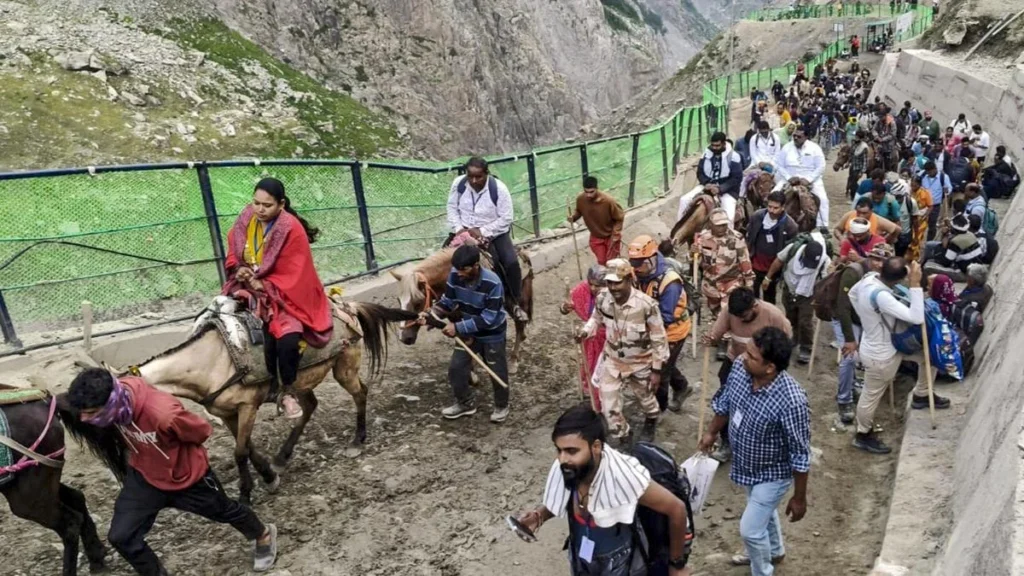
SRINAGAR/JAMMU: In a decisive move to ensure the safety of thousands of devotees, authorities in Jammu and Kashmir announced on Sunday, July 19, 2026, the temporary suspension of two of India’s most significant religious pilgrimages: the annual Shri Amarnathji Yatra and the Shri Mata Vaishno Devi Yatra. The decision, triggered by an urgent advisory from the India Meteorological Department (IMD) warning of widespread, heavy precipitation, underscores the administration’s commitment to preventing tragedies in the ecologically fragile and weather-sensitive Himalayan terrain.
The Immediate Mandate: A Precautionary Standstill
The suspension, which took effect in the early hours of July 19, marks a significant disruption to the peak Yatra season. Divisional Commissioner of Kashmir, Anshul Garg, issued an official statement clarifying the extent of the order. "In view of the inclement weather forecast issued by the India Meteorological Department, the Shri Amarnathji Yatra shall remain temporarily suspended from both the Pahalgam and Baltal routes," the statement read.
The mandate is comprehensive: no onward movement is permitted from the primary base camps at Baltal and Nunwan/Chandanwari in the Kashmir Valley. Simultaneously, the Bhagwati Nagar Yatri Niwas in Jammu—the gateway for the arduous journey to the holy cave—has been closed to outgoing pilgrim convoys. The directive serves as a strict administrative firewall, ensuring that no devotee is caught on the high-altitude tracks during the window of predicted meteorological volatility.
Meteorological Context: The "Moderate to Widespread" Threat
The India Meteorological Department has issued a high-alert forecast for the Union Territory, predicting moderate to widespread rainfall between July 19 and July 23, 2026. These conditions, common in the monsoon season, pose severe risks to the mountainous terrain of the Himalayas.
The danger stems from three primary factors:
- Landslides and Rockfalls: The narrow, winding paths leading to the Amarnath cave are prone to shifting soil and falling debris when saturated by heavy rain.
- Flash Floods: Rapid runoff from melting glaciers and concentrated rainfall can turn small mountain streams into life-threatening torrents within minutes.
- Hypothermia and Visibility: At altitudes exceeding 12,000 feet, even moderate rain creates freezing conditions. Reduced visibility further complicates rescue operations, making it impossible for helicopter support or mountain rescue teams to function effectively.
By halting the Yatra now, officials are aiming to avoid the "bottleneck" scenario, where thousands of pilgrims find themselves stranded at high-altitude transit points without adequate shelter or supplies during a storm.
Chronology of the 2026 Yatra
The 2026 pilgrimage season has been characterized by high fervor and significant participation. Before the sudden halt, the Yatra was proceeding with relative stability.
- June 2026: Preparations were finalized with the deployment of multi-tier security grids, including the Indian Army, CRPF, and J&K Police, to secure the routes.
- Early July 2026: Successive batches of pilgrims moved through the transit camps in Jammu, experiencing favorable weather for the first two weeks of the month.
- July 18, 2026: The last major batches of pilgrims successfully reached the base camps, with reports indicating a total of 3.76 lakh devotees having already completed their darshan at the holy cave.
- July 19, 2026 (Early Morning): Following the IMD’s urgent weather warning, the administration issued the suspension order, triggering a coordinated effort to manage the thousands of pilgrims currently stationed at various staging points across the region.
The Vaishno Devi Suspension: A Parallel Safety Measure
While the Amarnath Yatra draws intense focus due to its high-altitude nature, the suspension of the Shri Mata Vaishno Devi Yatra, located in the Trikuta Mountains, is equally significant. A spokesperson for the Shri Mata Vaishno Devi Shrine Board (SMVDSB) confirmed the suspension shortly after the government announcement.

"The decision has been taken in the interest of public safety," the spokesperson noted. Unlike the remote Amarnath route, the Vaishno Devi track is paved, but it remains susceptible to landslides during heavy monsoon downpours. The shrine board has urged all devotees currently in the Katra base camp to refrain from attempting the trek until the skies clear and safety clearances are issued by local magistrates.
Official Responses and Administrative Preparedness
The coordination between the civil administration, the police, and the Shrine Boards has been rapid. Following the announcement, control rooms have been activated across Jammu and Srinagar to provide real-time updates to pilgrims.
Divisional Commissioner Anshul Garg emphasized that the resumption of the Yatra is not a matter of a fixed calendar date but a result of rigorous field assessments. "Updates regarding the resumption shall be issued in due course of time after ensuring route safety and a comprehensive assessment of the weather conditions," he stated.
The administration has also instructed local law enforcement to assist stranded pilgrims by ensuring they have access to food, water, and medical facilities within the base camps. For many pilgrims, the abrupt halt is a test of patience, but the memory of past weather-related incidents in the region has generally ensured public compliance with the government’s safety protocols.
Implications for Pilgrims and Infrastructure
The suspension has immediate logistical and economic implications.
- Logistical Strain: Thousands of pilgrims are currently in limbo. The government is working to manage the occupancy levels at Yatri Niwas and private accommodations in Katra, Pahalgam, and Baltal to prevent overcrowding.
- Economic Impact: The Yatra is the backbone of the local economy, supporting thousands of pony-wallahs, tent operators, and small shopkeepers. A prolonged suspension during the peak season represents a significant loss of income for the local community, though this is universally accepted as secondary to the preservation of human life.
- Security Protocols: The security grid remains in place. Even while the pilgrimage is suspended, the presence of security forces ensures that the sensitive border region remains protected, preventing any opportunistic threats from disrupting the safety of the stranded pilgrims.
The Path Ahead: Patience and Vigilance
As the region braces for four days of heavy rain, the focus remains firmly on disaster mitigation. The administration has issued a strong advisory to the public: "Devotees are requested to remain updated through official communication channels and avoid undertaking the pilgrimage until further orders."
The suspension of the Amarnath and Vaishno Devi Yatras is a stark reminder of the volatile relationship between man and the high Himalayas. While the spirit of the devotees remains unshaken, the pragmatic approach adopted by the authorities reflects a modern, safety-first governance model. For the 3.76 lakh pilgrims who have already completed their journey, the news of the suspension serves as a reminder of their good fortune. For those currently waiting, the message is one of caution: the mountains will remain, and the holy sites will be there when the skies clear.
The administration’s ability to manage this transition—ensuring that the flow of thousands of people is halted safely without creating a crisis—will be the defining test of their operational capacity over the next 96 hours. All eyes are now on the IMD bulletins, with the hope that the predicted weather system moves through the region rapidly, allowing the sacred journey to resume.