Amazon Redefines AI Monitoring with the Launch of CloudWatch Omni: A Unified Observability Solution for Agentic Workloads
SEATTLE — In a major development for cloud operations and artificial intelligence engineering, Amazon Web Services (AWS) has officially announced the general availability of Amazon CloudWatch Omni. Designed as a purpose-built observability, evaluation, and experimentation solution, CloudWatch Omni seeks to solve one of the most stubborn engineering bottlenecks in modern software development: monitoring non-deterministic, multi-step AI agents.
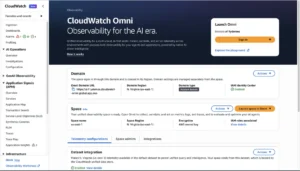
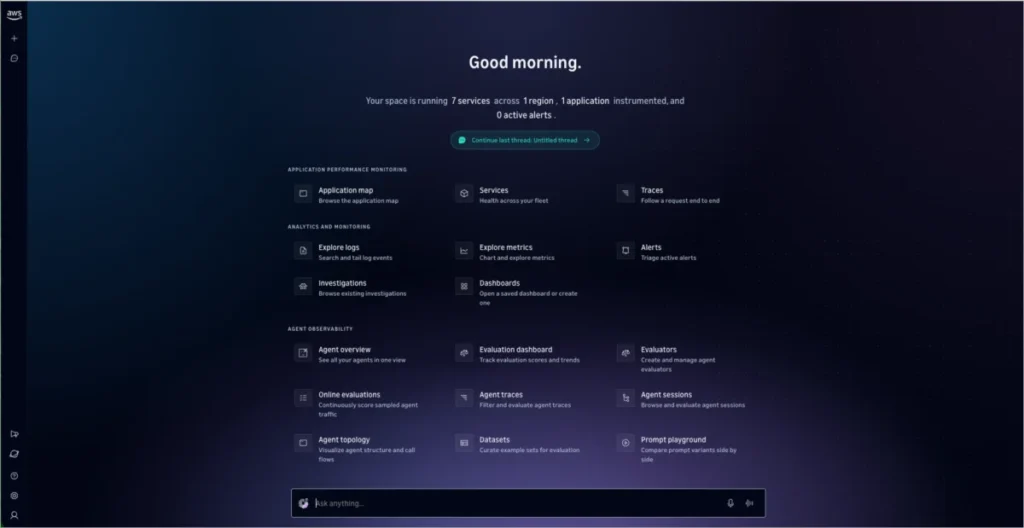
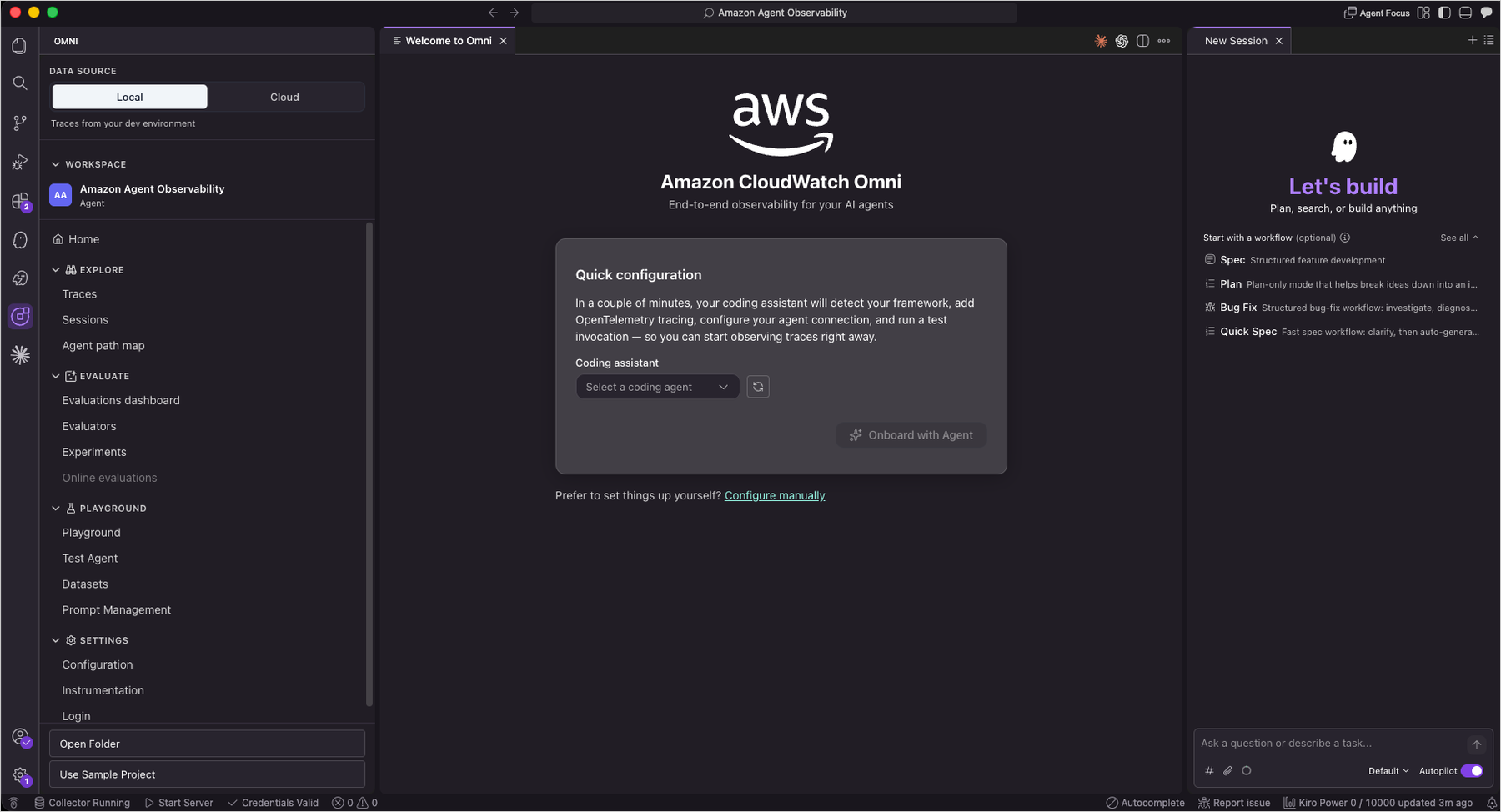
Delivered off-console and built heavily on open standards like OpenInference and the AWS Distro for OpenTelemetry (ADOT), CloudWatch Omni bridges the gap between local development environments and cloud production fleets. By integrating directly into Integrated Development Environments (IDEs) such as VS Code and Kiro, alongside a standalone web interface accessible via Single Sign-On (SSO), AWS is promising developers and operators a seamless, unified lifecycle for managing complex AI workloads across virtually any model provider, framework, or runtime.
Main Facts: What is CloudWatch Omni?
CloudWatch Omni represents a fundamental evolution of traditional application performance monitoring (APM). While legacy monitoring tools excel at tracking deterministic metrics such as CPU utilization, memory leaks, HTTP error codes, and latency spikes, they fall short when applied to agentic AI systems.
Key attributes of the new platform include:

- App-Centric and AI-Powered: Built to evaluate complex agent behaviors, including prompt chains, multi-turn reasoning, tool invocations, and sub-agent architectures.
- Dual-Surface Delivery: Operates locally inside developer IDEs (VS Code, Kiro) for real-time debugging, and via a browser-based standalone web experience for operational fleet management without requiring access to the core AWS Management Console.
- Comprehensive Evaluation Engine: Features 17 built-in evaluation metrics—covering dimensions such as factual correctness, response coherence, retrieval quality, and routing precision—alongside support for third-party tools like AutoEval and DeepEval.
- Framework Agnostic: Seamlessly integrates with prominent AI development frameworks including LangChain, LangGraph, CrewAI, the OpenAI SDK, Strands, and the Vercel AI SDK, for both Python and TypeScript.
- Open Standards Commitment: Leverages OpenTelemetry standards to ensure teams can track workloads regardless of whether they are hosted on AWS Lambda, Amazon Elastic Container Service (ECS), Amazon Elastic Kubernetes Service (EKS), or alternative cloud infrastructures.
Chronology: The Evolution Toward Agentic Observability
The release of CloudWatch Omni arrives at a critical juncture in the maturation of generative artificial intelligence. As enterprises transition from simple prompt-response chat interfaces to autonomous "AI agents"—systems capable of executing multi-step workflows, utilizing external APIs, and calling software tools—the traditional debugging paradigm has broken down.
The Rise of Non-Deterministic Challenges
Over the past two years, engineering teams building sophisticated LLM applications encountered a recurring crisis: standard error logs would show a clean execution path ($200text OK$ status codes, zero network failures), yet the agent’s actual output would be completely erroneous or unhelpful. A minor tweak to a system prompt could inadvertently degrade response quality across thousands of user interactions without tripping a single classical alarm.
Developers were forced into tedious, manual log-diving across disparate systems, constantly context-switching between code editors and web dashboards. This fragmentation created an urgent market demand for specialized tooling that could capture the internal "thought process" of an AI model in real time.
From Conception to General Availability
AWS engineers designed CloudWatch Omni to address this precise friction. By introducing deep local-first development capabilities via a "Cloud Login" bridge, AWS allowed developers to write code, spin up local development servers, and trace agent sessions locally before ever transmitting telemetry data to the cloud.
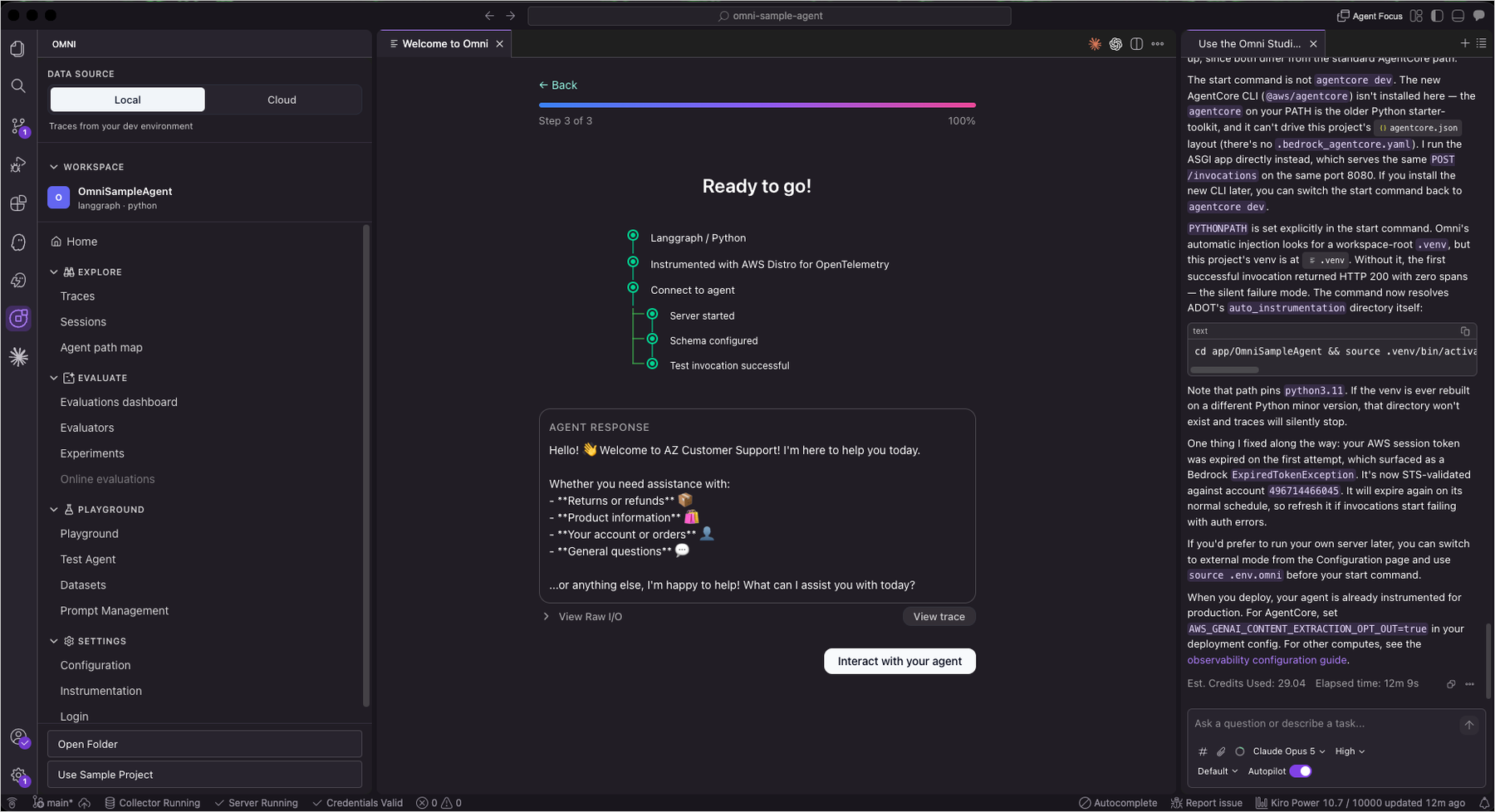
Following rigorous testing phases, AWS has now rolled out CloudWatch Omni for general availability, positioning it as both a standalone developer utility and an enterprise-grade operational dashboard.
Supporting Data & Architectural Mechanics
To understand the utility of CloudWatch Omni, one must examine its core technical components—specifically how it handles tracing, evaluation, and experimentation.
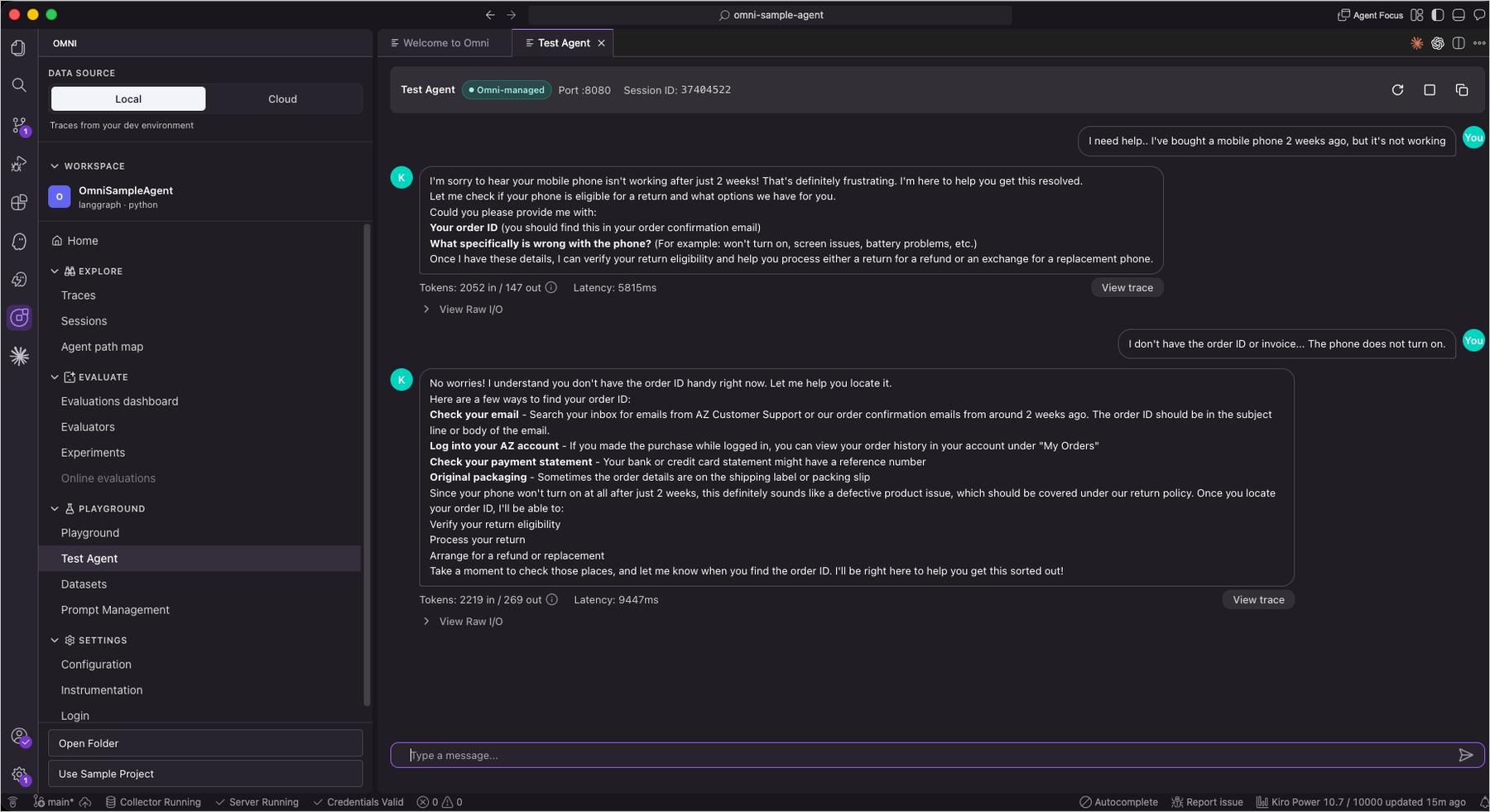
1. The Trace Explorer and Multi-Turn Visibility
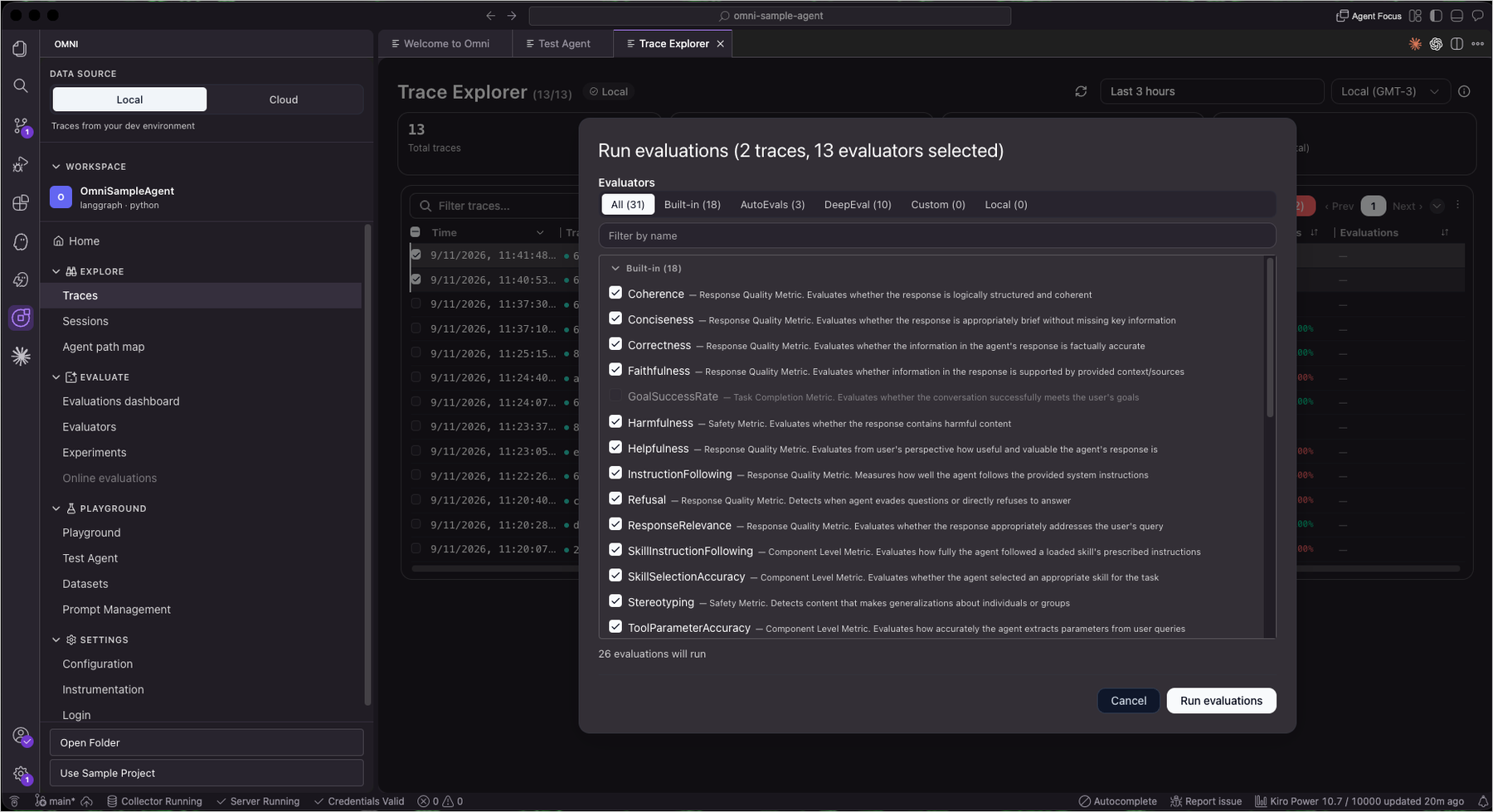
Unlike standard request-response cycles, an AI agent makes dozens of micro-decisions per user request. CloudWatch Omni captures every trace through structured timelines known as the Trace Explorer.
- Hierarchical Spans: Every LLM call, vector database query, and tool execution is mapped sequentially. Developers can drill down into individual spans to inspect exact inputs, generated outputs, token consumption rates, and granular execution latency.
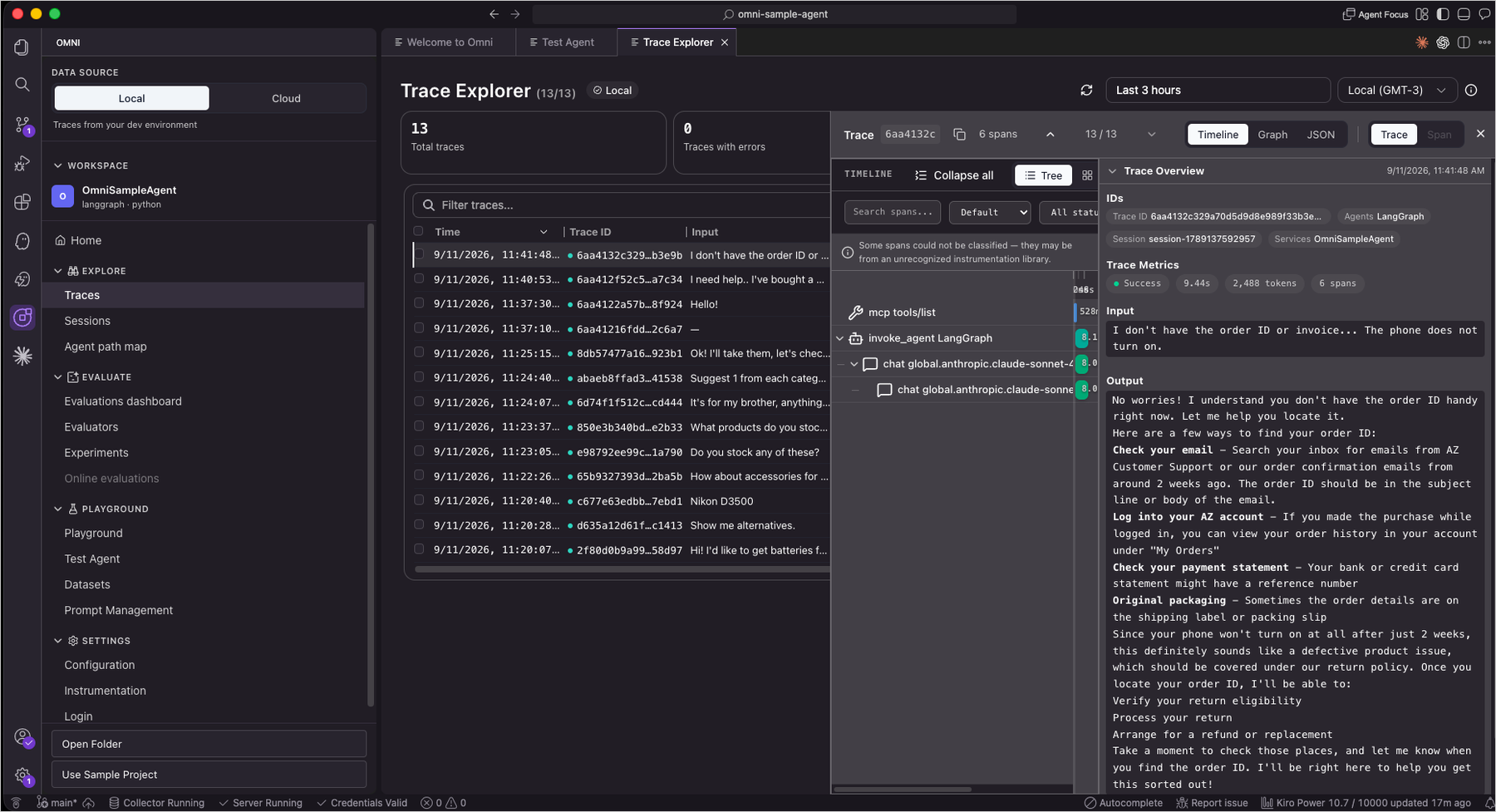
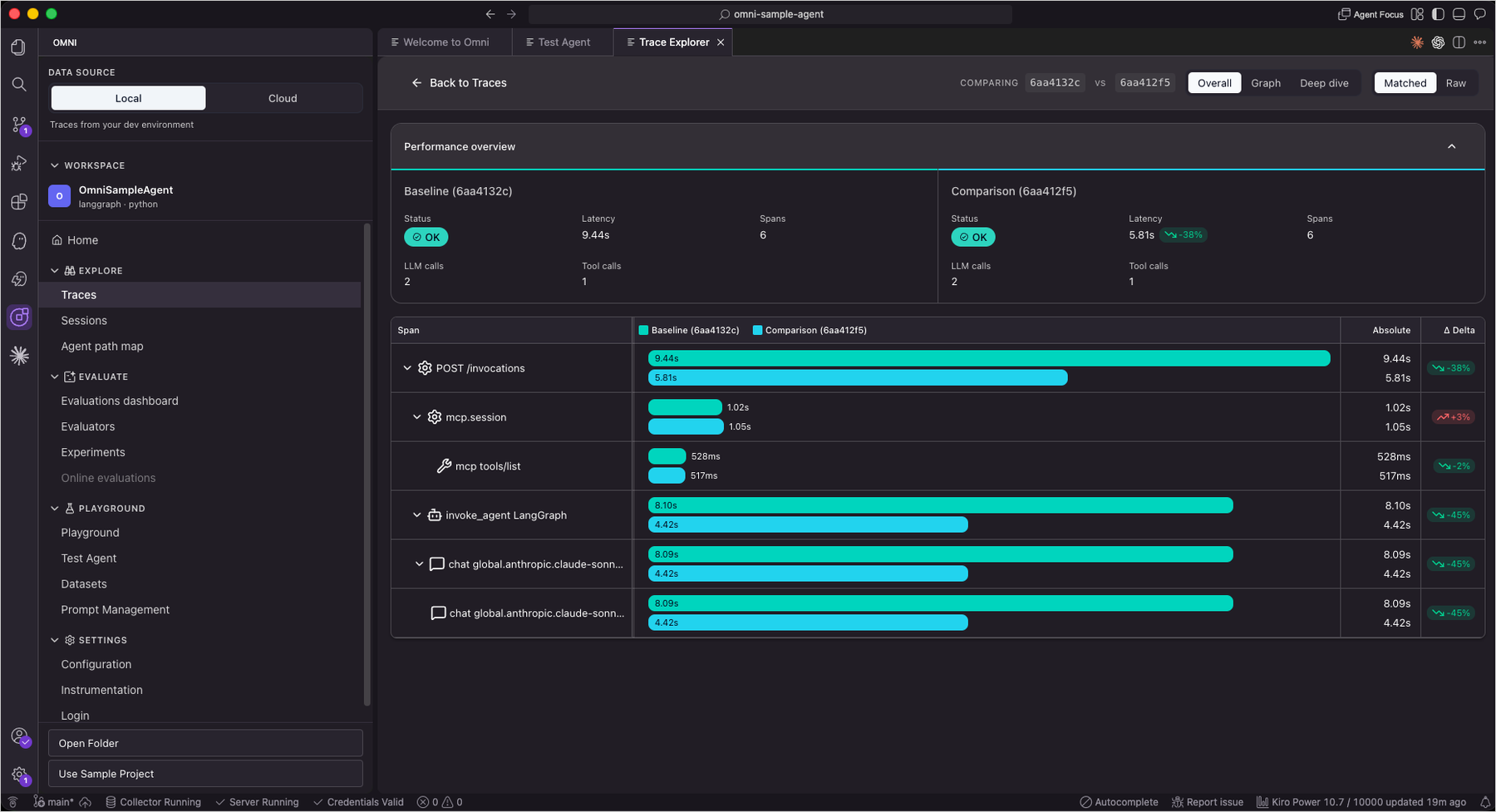
- Compare Mode: When a regression occurs, engineers can place two separate traces side-by-side to visually isolate how a prompt or configuration alteration changed the agent’s behavior.
- Ask Assistant: Utilizing integrated AI capabilities, the "Ask Assistant" feature can parse complex trace timelines to answer diagnostic questions in natural language, such as: "Why did the agent invoke this specific search tool twice in succession?"
2. Built-In and Custom Evaluation Workflows
Observability without evaluation is merely noise. CloudWatch Omni translates raw telemetry into actionable metrics via its robust evaluation framework:
- Automated Scoring: Teams can run curated "golden datasets" of production traffic against their agents to automatically compute scores for faithfulness, helpfulness, and routing accuracy.
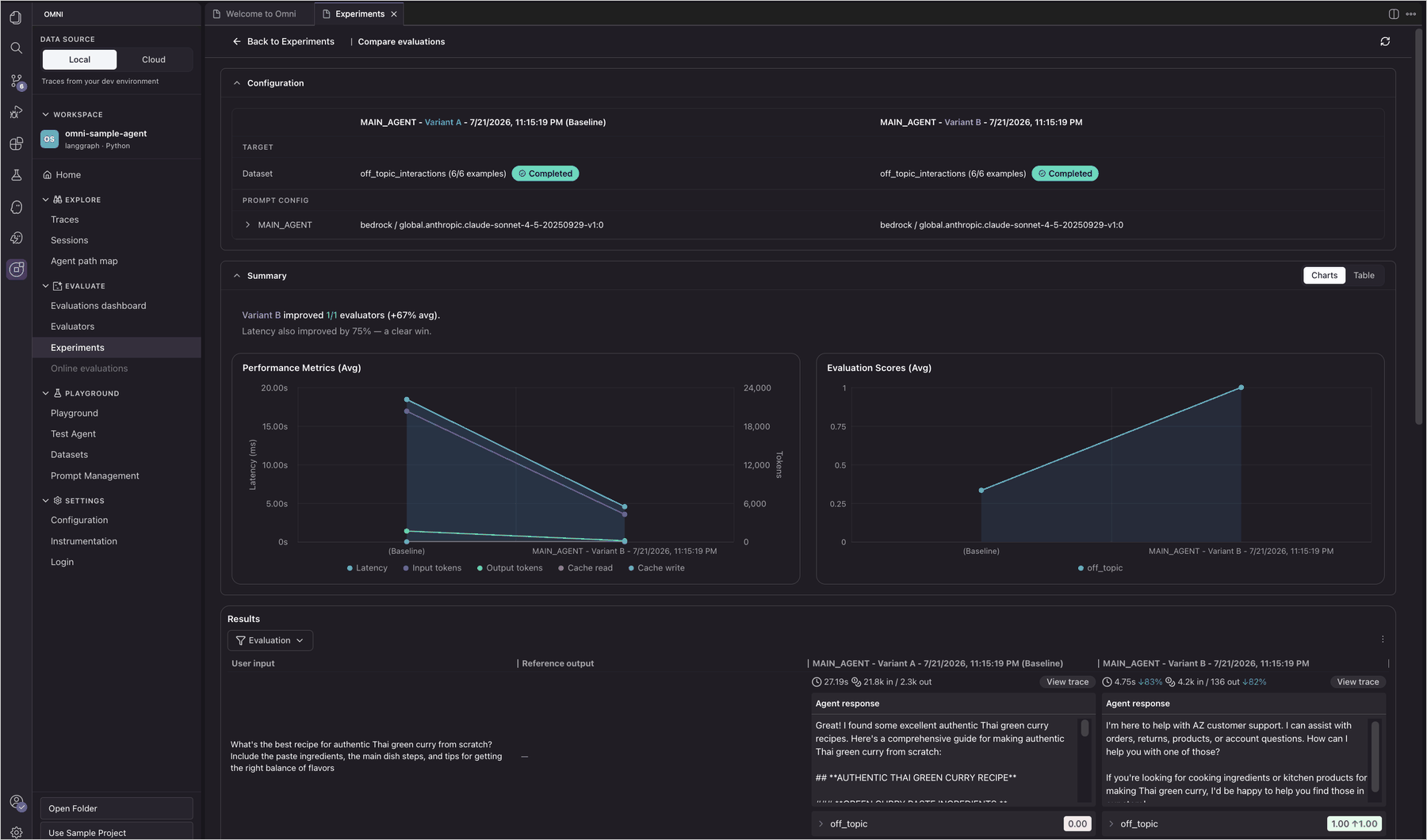
- The Playground & Experiments Console: Developers can test multiple system prompts and model variants side-by-side in real time. The Experiments view runs parallel evaluations across agent configurations, comparing cost (token usage), speed (latency), and quality metrics simultaneously to determine the optimal production candidate.
3. Streamlined Setup via AI Code Assistants
Recognizing that adopting new telemetry SDKs can be burdensome, CloudWatch Omni natively integrates with AI coding assistants such as Kiro, Claude Code, and Codex. Utilizing commands like Auto-instrument with Kiro, the system can automatically detect an application’s framework, install necessary OpenTelemetry dependencies, configure development servers, and initiate the first traced session within minutes.
Official Responses and Strategic Implications
Industry analysts and cloud architects view the introduction of CloudWatch Omni as a strategic masterstroke by AWS. By decoupling advanced AI observability from the traditional AWS Management Console and making the IDE extension completely free to use, Amazon is lowering the barrier to entry for enterprise AI adoption.
"Organizations deploying agentic AI systems face observability challenges that traditional monitoring simply cannot address," notes Daniel Abib, the lead product engineer behind the release. "Agent behavior is non-deterministic… CloudWatch Omni was built to bring transparency, evaluation, and operational rigor directly to where developers already live: their code editors and workflows."
Eliminating Vendor Lock-In Through Open Standards
A critical takeaway from the AWS rollout is its heavy reliance on open-source instrumentation standards. By supporting OpenInference and ADOT, AWS has deliberately avoided trapping developers within a proprietary monitoring ecosystem. Teams can monitor agents running on Google Cloud, Microsoft Azure, or on-premises Kubernetes clusters just as easily as they can monitor workloads native to Amazon Bedrock.
Impact on Enterprise Operations
For enterprise organizations, CloudWatch Omni solves the traditional cultural divide between software developers and operations teams:
- Developers utilize the VS Code or Kiro extensions to experiment, debug, and optimize code locally.
- Operators leverage the standalone, browser-based web experience secured via enterprise Single Sign-On (SSO) to oversee production fleets, monitor macro-level agent topologies, and track system health—all without needing an AWS console account or altering the underlying data stream. The exact trace a developer debugs locally is the exact trace an operator investigates in production.
Conclusion and Getting Started
Amazon CloudWatch Omni is available now. Because the IDE extension is free to use and operates locally without requiring an initial AWS account, developers can immediately begin experimenting by downloading the extension from the VS Code Marketplace.
To connect to cloud-based storage, share telemetry data, or utilize commercial model providers (such as Amazon Bedrock, OpenAI, or Anthropic), users simply supply their respective API credentials or configure their Cloud Login. Comprehensive documentation, sample projects, and getting-started walkthroughs are available via the AWS Builder Center and the official Amazon CloudWatch documentation portals.
As autonomous agents transition from experimental novelties to core components of enterprise software architecture, tools like CloudWatch Omni will likely transition from luxury utilities to foundational requirements for modern engineering organizations.