The Future of the Inclusive Web: An In-Depth Look at AudioEye’s Mission to Democratize Digital Access
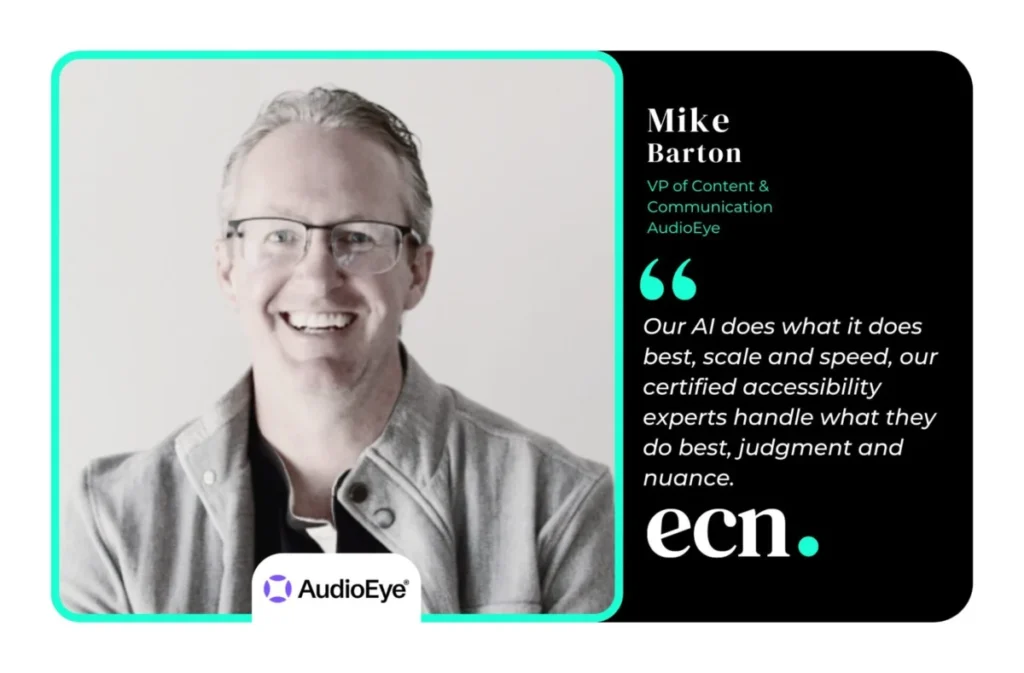
In an era where the internet serves as the primary gateway to commerce, healthcare, government services, and social connection, the digital divide is no longer just a technical hurdle—it is a profound societal and economic issue. With 1.3 billion people globally living with some form of disability, the inability to navigate the web effectively is a barrier to fundamental human participation.
AudioEye, a leader in the digital accessibility space, is working to dismantle these barriers. Through a sophisticated hybrid approach—blending AI-driven automation with human expert oversight—the company is reshaping how organizations perceive and manage accessibility. In this comprehensive report, we explore the evolution of digital accessibility, the rising legal stakes for global businesses, and why the "accessible web" is rapidly becoming a mandatory standard rather than a corporate elective.
The Evolution of Digital Accessibility: From Niche to Necessity
For nearly two decades, digital accessibility was often treated as an afterthought—a checkbox for compliance departments or a feature implemented only when a lawsuit demanded it. However, the landscape has shifted dramatically. Mike Barton, VP at AudioEye, notes that the "stakes have caught up to the principle."
A Timeline of Transformation
- The Early Years (Pre-2015): Accessibility was largely a niche concern. Web development focused on aesthetics and speed, with little regard for screen readers or keyboard navigation.
- The Legal Wave (2015–2020): Digital accessibility litigation began to climb as the judiciary recognized that websites are "places of public accommodation."
- The Regulatory Expansion (2020–Present): With the introduction of the European Accessibility Act (EAA) and a doubling of U.S. lawsuits since 2020, compliance has moved from a "nice-to-have" to a board-level risk management priority.
- The AI Era (2025 and Beyond): As generative AI transforms how websites are built and consumed, the need for automated, real-time accessibility monitoring has become critical.
Supporting Data: The Business Case for Inclusion
The argument for accessibility is often framed through the lens of legal risk, but the economic opportunity is even more compelling. Businesses that ignore accessibility are effectively locking themselves out of a massive, underserved market.
The $18 Trillion Opportunity
People with disabilities control an estimated $18 trillion in global spending power. Yet, research indicates that seven out of ten users will abandon a website if it does not accommodate their assistive technology. Furthermore, 83% of consumers with disabilities tend to limit their shopping to brands they know are accessible. For e-commerce retailers, the math is simple: accessibility is a direct conversion lever.
The Legal Landscape
The cost of inaction is rising. According to industry reports, accessibility lawsuits have surged, with 78% of these legal actions targeting the retail sector. The message is clear: companies that treat accessibility as a secondary concern are vulnerable. Conversely, those that integrate it into their digital fabric—often referred to as "table stakes"—are better positioned to capture market share and avoid the high costs of legal defense.
The AudioEye Methodology: Automation Meets Human Expertise
At the heart of AudioEye’s platform is a philosophy that technology alone is insufficient for true digital inclusion. While software can identify patterns, humans provide the context necessary to solve complex barriers.
The Hybrid Approach
AudioEye utilizes a "JavaScript-first" deployment model, allowing for real-time monitoring and automated remediation of common issues like missing alt text or broken form labels. According to a 2026 independent study by Adience, this automation detects up to 2.5 times more issues than competing tools.
However, the "last mile" of accessibility requires human judgment. AudioEye employs certified accessibility experts—many of whom have lived experience with disabilities—to review the "gray areas" of web design. These specialists evaluate how a site actually feels to a user relying on a screen reader, ensuring that the experience is not just compliant, but functional. This methodology leads to a resolution rate of approximately 97% before internal development teams are even required to intervene.
Implications: The Intersection of AI and the "Accessible Web"
As we look toward the future, the relationship between Artificial Intelligence and accessibility is becoming the most critical narrative in tech development.
The AI Paradox
AI is a double-edged sword. On one hand, it allows AudioEye to scale accessibility across thousands of pages in real time. On the other, general-purpose AI coding tools are currently generating massive amounts of inaccessible code, trained on a web that was already fundamentally broken.
"Solving that gap is one of the most important problems in our industry," says Barton. AudioEye is positioning itself to be the bridge, ensuring that as the web becomes more automated, it does not become more exclusive.
The Rise of AI Agents
The next frontier of the internet is the "AI Agent"—software that browses the web on behalf of a user to compare prices, book travel, or manage healthcare tasks. These agents rely on the "accessibility tree" of a website to understand its structure. If a site is not accessible to a human, it is essentially invisible to the AI agents of the future. By investing in accessibility today, brands are effectively "optimizing" their sites for the next generation of AI-driven discovery.
Official Perspective: A Global Regulatory Outlook
The regulatory map is expanding. With the European Accessibility Act (EAA) now in full force, businesses that previously focused only on U.S. ADA (Americans with Disabilities Act) compliance are finding their geographical obligations have shifted overnight.
AudioEye’s response to this is a move toward a more robust legal guarantee. Unlike standard "widget" providers that offer limited protection, AudioEye provides expert-backed reporting and legal support. Their track record includes documented courtroom dismissals, which the company attributes to their comprehensive, multi-layered approach to compliance.
The Future Vision
The goal for AudioEye, and for the broader digital landscape, is to move beyond "legal scrambling." The vision is a web where accessibility is the default setting—built into the CMS, the design systems, and the developer workflows from day one.
"Accessibility and AI discovery are going to be the same conversation in a few years," notes Barton. "Our job is to make sure that the internet works for everyone who uses it."
Conclusion: A Call to Action for Digital Leaders
The transition to an accessible digital world is inevitable. As regulatory pressure mounts, as the spending power of the disability community becomes impossible to ignore, and as AI agents become the new gatekeepers of information, accessibility will define the winners and losers of the digital age.
For organizations looking to future-proof their digital presence, the strategy is clear:
- Prioritize Automation: Use AI to handle the volume and speed of modern web updates.
- Incorporate Human Expertise: Ensure that technical compliance is validated by those who rely on assistive technology.
- Shift to Proactive Management: Stop treating accessibility as a legal risk to be managed and start treating it as a growth engine to be leveraged.
The internet was built to connect people. By ensuring that connection is universal, companies like AudioEye are not just fixing code—they are fulfilling the original promise of the web: a global, accessible, and inclusive space for all.