AWS Revolutionizes Certificate Lifecycle Management with Native ACME Support in ACM
In a significant move to simplify the increasingly complex landscape of web security, Amazon Web Services (AWS) has announced the integration of the Automatic Certificate Management Environment (ACME) protocol directly into AWS Certificate Manager (ACM). This development marks a pivotal shift for PKI (Public Key Infrastructure) administrators and DevOps engineers, providing a standardized, automated, and secure path for issuing public TLS certificates from Amazon Trust Services.
The Looming Crisis: Why Automation is No Longer Optional
For years, the management of TLS/SSL certificates has been a source of operational friction. Certificates are finite, and their expiration is an inevitable event that, if left unmanaged, results in service outages, broken browser trust, and significant reputation damage. Historically, the industry relied on manual tracking or custom-built scripts to handle renewals.

However, the regulatory landscape is shifting rapidly. The Certification Authority (CA)/Browser Forum, the industry body governing certificate standards, has mandated a dramatic reduction in certificate validity periods. Starting in March 2027, the maximum validity period will shrink to 100 days, followed by a further contraction to 47 days by 2029. Under these tighter constraints, manual renewal processes are effectively dead on arrival. Organizations that fail to adopt robust, automated certificate management will find themselves in a perpetual state of emergency renewal, exponentially increasing the likelihood of human error and downtime.
The ACME Protocol: A Standard for the Modern Web
The ACME protocol, developed by the Internet Security Research Group (ISRG) and popularized by Let’s Encrypt, has become the de facto standard for automated certificate issuance. By enabling a client-server interaction that allows for automatic domain validation and certificate acquisition, ACME removes the need for human intervention in the renewal process.

Until today, AWS users wanting to leverage ACME often faced a "fragmented visibility" dilemma. While they could use ACME-compliant clients to issue certificates from external authorities, those certificates existed outside the native AWS ecosystem. This meant they were invisible to standard ACM dashboards, disconnected from native AWS monitoring tools like CloudWatch and CloudTrail, and difficult to audit. With the launch of native ACME support in ACM, AWS has bridged this gap, allowing organizations to treat all certificates—regardless of how they were requested—as first-class citizens within the AWS ecosystem.
Chronology: Building the Infrastructure for Trust
The road to this integration began with the growing demand for tighter security and reduced operational overhead. Over the past several years, as the complexity of microservices architectures grew, AWS observed that customers were struggling to manage fragmented PKI environments.
- Phase 1 (The Pre-ACME Era): Users managed certificates primarily through the ACM console or API. While secure and integrated, it lacked the flexibility of the open-standard ACME protocol for non-AWS compute environments.
- Phase 2 (The Hybrid Challenge): Organizations adopted external ACME-based CAs to automate certificate lifecycle management (CLM). This created "blind spots" where security teams could not see or control the full scope of certificates in use across their infrastructure.
- Phase 3 (The Integration Strategy): AWS engineers developed a fully managed ACME server endpoint within ACM. This allows the service to act as the CA, providing the same high-availability, globally trusted certificates that customers have come to expect from Amazon Trust Services, but through the universal ACME interface.
Technical Implications: Governance and Security
The introduction of ACME support in ACM is not merely a convenience feature; it is a sophisticated governance tool. By implementing External Account Binding (EAB), AWS has provided PKI administrators with granular control over who can request certificates and for which domains.
Centralized Control and Compliance
Previously, delegating certificate issuance to application teams often meant distributing sensitive DNS keys or credentials. With the new ACME integration, the validation process is decoupled from the request process. A PKI administrator can validate a domain once at the endpoint level using their own administrative credentials. Application developers then use EAB credentials to request certificates, with the endpoint enforcing strict domain scopes. This means developers can automate their own certificate renewals without ever needing access to the underlying DNS configuration.
Auditability and Monitoring
Integration with AWS CloudTrail and Amazon CloudWatch is a major win for compliance teams. Every certificate request made via ACME is logged, providing a clear, immutable audit trail of who issued what, and when. Operational metrics are automatically surfaced in CloudWatch, allowing teams to set alerts for high-frequency issuance patterns or potential misconfigurations.
The Mechanics of Implementation: A Step-by-Step Guide
The setup process is designed to be seamless for existing ACME users.
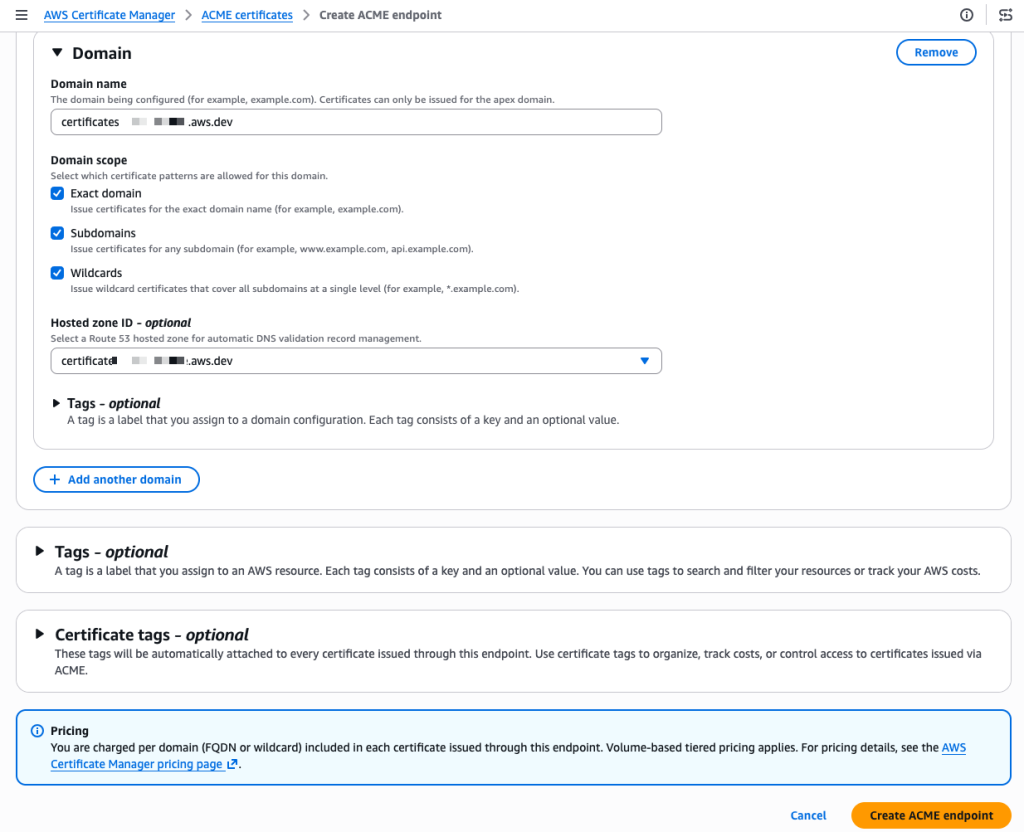
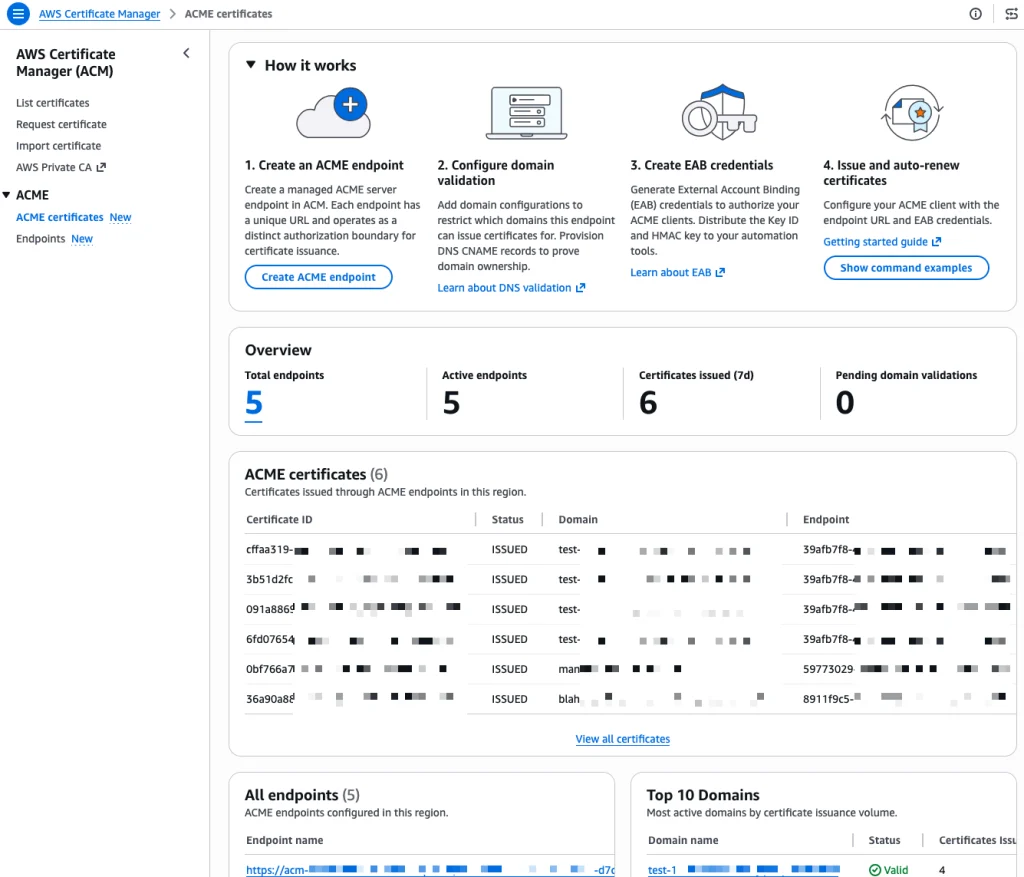
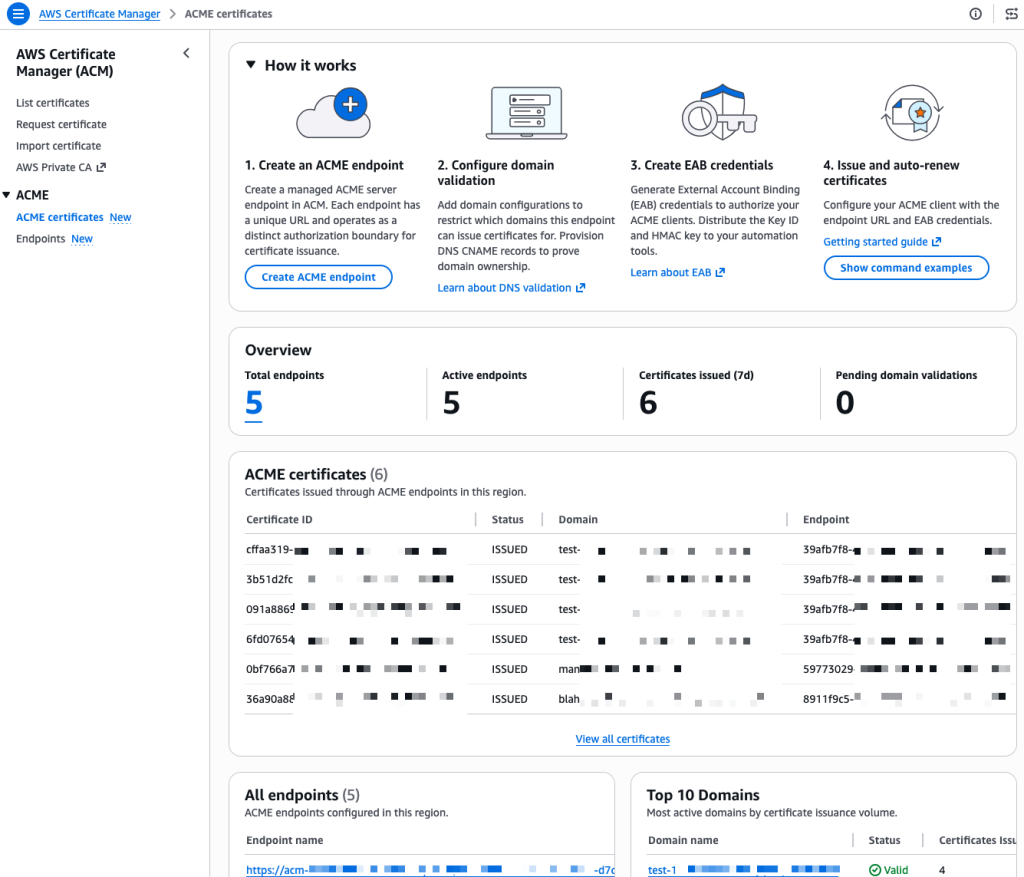
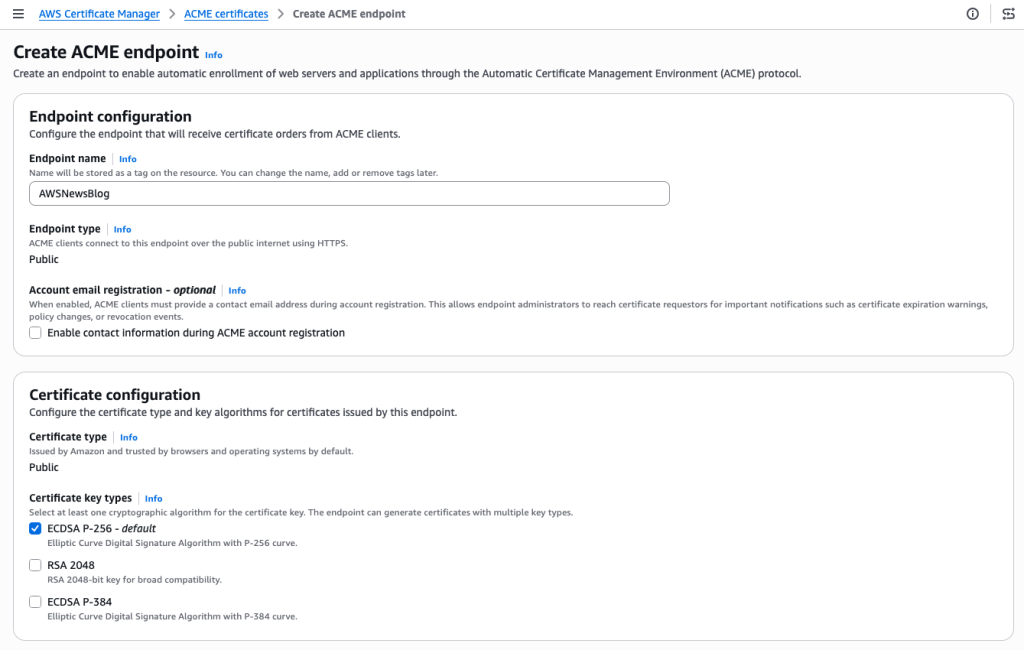
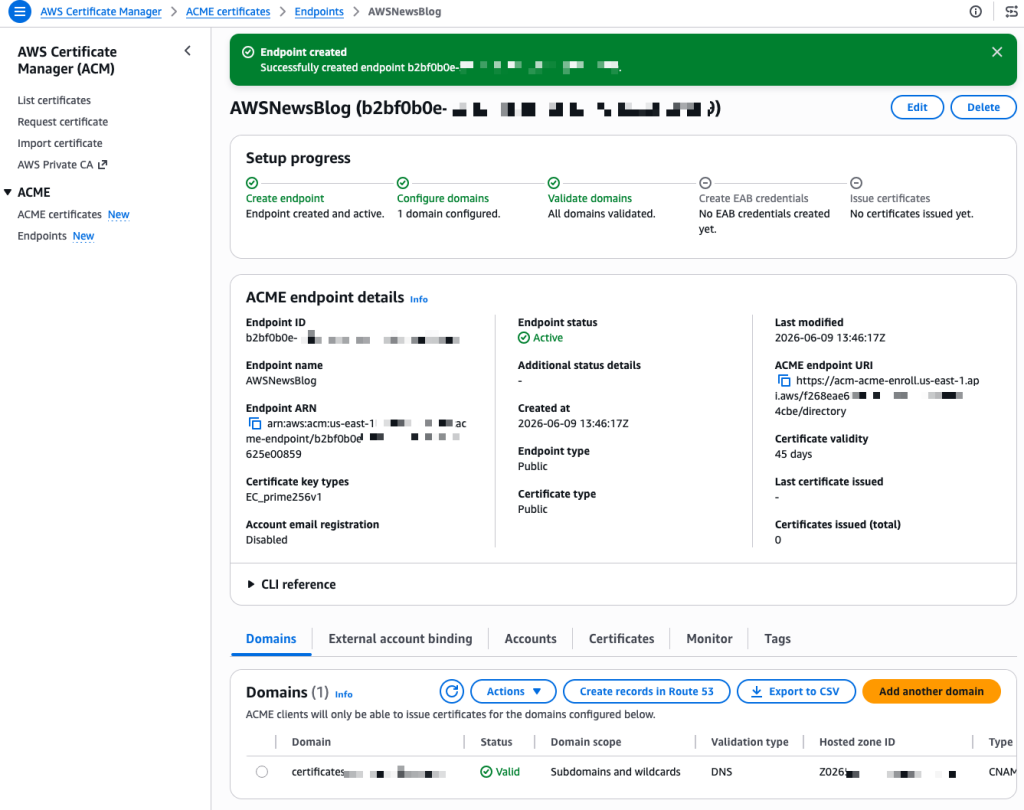
- Endpoint Configuration: Administrators create an ACME endpoint in the ACM console. This endpoint can be configured for specific domain scopes—allowing or denying subdomains and wildcards—providing a "safety rail" that prevents unauthorized issuance.
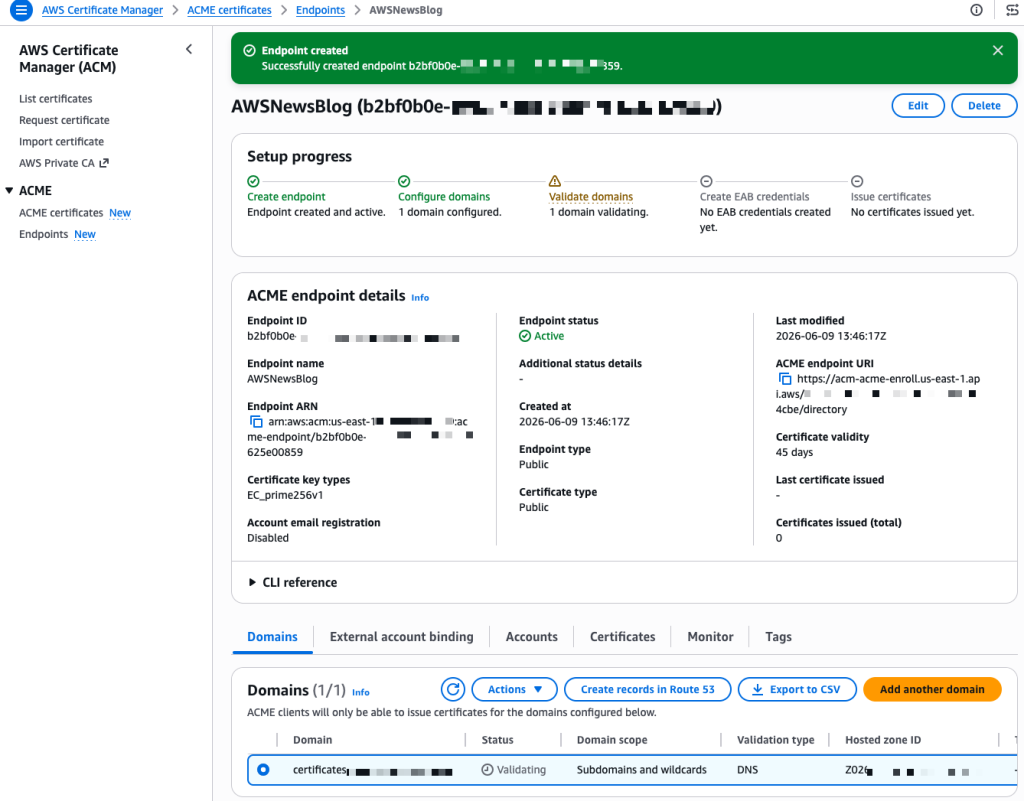
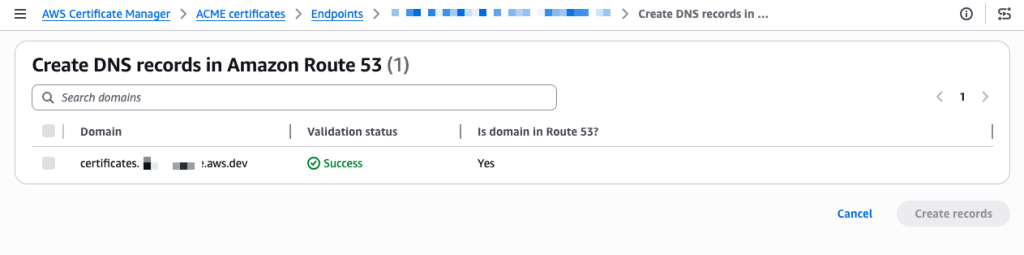
- DNS Validation: For domains managed in Route 53, ACM automates the creation of necessary CNAME records. For external DNS providers, the console provides the specific records required for manual entry, ensuring the validation process remains centralized.
- EAB Credential Generation: Once the endpoint is live, the administrator generates a Key ID and HMAC key. These are provided to the ACME client (such as Certbot or cert-manager for Kubernetes).
- Automated Issuance: Using the standardized ACME server URL and EAB credentials, the client performs the validation and receives a signed certificate from Amazon Trust Services, which is then immediately visible in the ACM console.
Industry Impact and Future Outlook
The implications of this move extend far beyond simple convenience. By providing a managed ACME endpoint, AWS is effectively commoditizing high-quality, trusted certificate management. This will likely force a market shift where manual, high-touch PKI management is replaced by automated, policy-driven infrastructure.
Reducing the "Cost of Security"
For many enterprises, the cost of certificate lifecycle management has been twofold: the price of the certificates themselves and the labor costs associated with maintaining them. By embedding these capabilities directly into the platform, AWS is reducing the need for third-party CLM (Certificate Lifecycle Management) vendors. Organizations can now define security policies at the infrastructure level rather than the application level.
Supporting a Multi-Cloud World
While the ACME endpoint is hosted within AWS, it is inherently interoperable. Because ACME is an open protocol, teams can use it to issue certificates for resources running on-premises, in other cloud environments, or in hybrid configurations, all while maintaining a centralized "source of truth" within the AWS console.
Official Stance and Availability
AWS has confirmed that the service is available immediately in all commercial AWS Regions. Support for specialized partitions, including AWS GovCloud (US), China Regions, and the AWS European Sovereign Cloud, is slated for a future release.
Pricing is structured to encourage scale, with costs calculated based on total domain occurrences per month. This tiered approach is designed to provide cost predictability for organizations ranging from small startups to global enterprises.
"The goal," as noted in internal technical briefings, "is to remove the friction of certificate management so that security becomes a byproduct of the infrastructure, rather than a recurring manual task."
Conclusion: The Road Ahead
As the internet continues to move toward shorter certificate lifespans, the industry is entering an era where manual intervention is a liability. AWS’s decision to embrace the ACME protocol is a clear signal that the future of web security is automated, centralized, and standards-based.
For the modern IT organization, the message is clear: the tools to survive the transition to 47-day certificate validity are here. By adopting native ACME support in ACM, teams can stop managing the minutiae of expiration dates and start focusing on the broader, strategic aspects of their security posture. As we look toward 2027 and beyond, this integration will likely be viewed as a foundational milestone in the professionalization of certificate management at scale.