Beyond the Click: Why Your Marketing Strategy Needs a Data-Driven Paradigm Shift
In the modern digital ecosystem, marketing departments have largely defaulted to a "safe" playbook. The roadmap is well-trodden: allocate a significant portion of the budget to Google Ads, set up retargeting campaigns on Meta, and sponsor content on LinkedIn. These platforms offer the siren song of granular attribution, measurable ROI, and simplified reporting for stakeholders. But as the digital landscape grows increasingly crowded and ad-blindness becomes a systemic issue, a critical question arises: Are marketers optimizing for business impact, or are they simply optimizing for the ease of measurement?
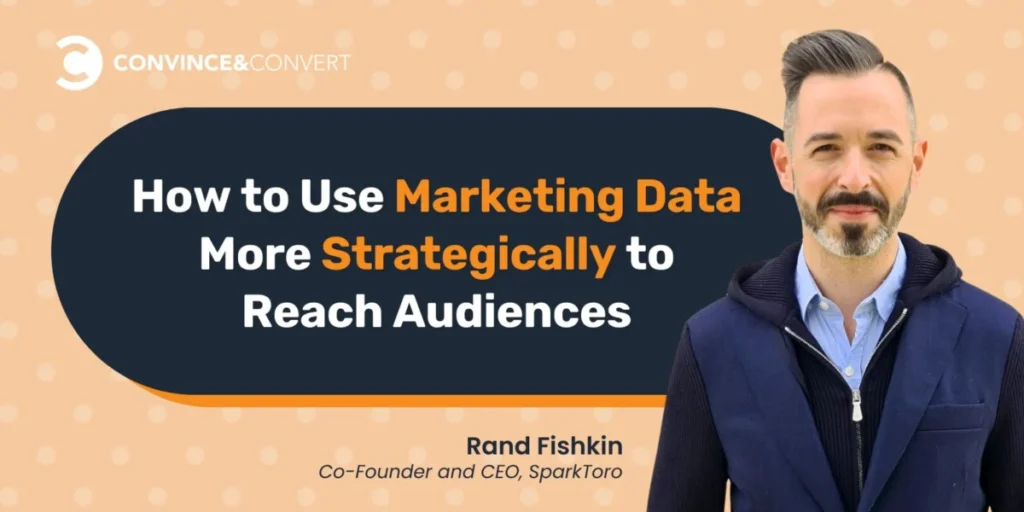
According to Rand Fishkin, co-founder of SparkToro and a veteran of the digital marketing industry, the industry’s obsession with "easy-to-track" metrics is creating a massive blind spot. In a recent appearance on the Data-Driven Decisions podcast, hosted by Zontee Hou, Fishkin argued that by relying exclusively on familiar platforms, marketers are ignoring the broader, more complex journey of the customer—and missing out on the high-value, niche communities where trust is actually built.
The Illusion of Attribution: Google as the Middleman
The central tension in contemporary marketing lies in the difference between attribution and influence. Marketers often credit Google Ads with the lion’s share of their conversions because the platform provides a clear, linear path from click to sale. However, Fishkin suggests that this view is fundamentally flawed.
"A ton of what happens in Google is actually a response to something else," Fishkin explains. "People who performed a search query in Google, very rarely was that a spontaneous first-touch thing. It was like, ‘Oh, I heard about this software,’ so I went to Google and searched for it and clicked on it. And of course, the attribution looks like Google drove all the value. No, Google was just the middleman."
This phenomenon, often referred to as "dark social" or "offline influence," describes the reality that customers are usually educated about a brand long before they hit the search bar. They hear about a solution on a niche industry podcast, see a peer recommend it in a private community, or catch a mention at a conference. When they finally search for the brand, they are already pre-sold. By attributing the success solely to the final search click, marketers fail to invest in the channels that actually built that initial brand affinity.
Strategic Allocation: Where Does the Audience Actually Spend Time?
The primary mission of SparkToro, as Fishkin outlines, is to pivot the marketing conversation from "which channel has the best tracking pixel" to "where does our customer actually hang out?"
The Anatomy of Audience Insight
Effective marketing begins with profound audience intelligence. It requires moving beyond demographic data (age, location, job title) to psychographic and behavioral data: What podcasts do they listen to? Which influencers do they trust? What subreddits do they visit?
When a brand identifies these high-relevance nodes, they can break through the noise. Fishkin points to two practical examples:
- The Podcaster’s Strategy: A podcaster seeking to increase sponsorship revenue identified influential figures within their target demographic using SparkToro. Instead of spending on broad ads, they invited these influencers as guests. By leveraging the influencer’s existing audience, the podcast attracted high-value sponsors, creating a self-sustaining revenue loop.
- The Event Organizer’s Pivot: A tech event organizer used audience intelligence to identify speakers who held sway over specific segments of their target market. By curating a speaker lineup that resonated deeply with those segments, they secured sponsors who were eager to reach that specific, highly engaged crowd.
Both examples share a common thread: they target potential leads at the beginning of the customer journey, establishing a relationship before the prospect even realizes they have a "problem" that requires a specific product.
The Rise of Zero-Click Marketing
Perhaps the most significant paradigm shift in recent years is the transition toward "Zero-Click Marketing." Coined by Amanda Natividad, VP of Marketing at SparkToro, this strategy flips the traditional conversion funnel on its head.
Traditional digital marketing is built on the premise of "click-throughs." You create an ad or a teaser, and the goal is to get the user to leave the platform (like LinkedIn or Reddit) and arrive at your website. However, users are increasingly resistant to leaving the platforms they trust.
The Chartr Case Study
Chartr, a company specializing in data storytelling, provides a textbook example of this strategy. Rather than using Reddit to drive traffic to their site, they began posting high-quality, standalone data visualizations directly within the r/dataisbeautiful subreddit. They included no aggressive calls-to-action and no overt branding. The goal was purely to provide value to the community.
The result? The company built immense credibility and brand recognition within the exact demographic they needed to reach. Because they provided value on the platform where the audience was already present, they fostered a level of trust that paid ads could never replicate.
Navigating the Limitations of Data
While the push for data-driven strategy is essential, Fishkin offers a cautionary note: data is not a panacea. It is, by definition, a reflection of the past, and it often lacks the nuance required to predict human behavior accurately.
The Danger of Biased Data
"I’m not saying don’t be data-informed, but I think it pays to be responsible in your recognition of what problems data can solve and what it can’t solve," Fishkin warns.
He highlights the difference between quantitative and qualitative data. While tools like SparkToro can identify where your audience goes online, they cannot tell you why they feel a certain way about your product. To understand the "why," you need to get out of the spreadsheet and into the room. Regular customer interviews, surveys, and deep-dive ethnographic research are the only ways to uncover frustrations, desires, and brand perceptions that aren’t captured by click-streams.
A common trap is to rely solely on in-app data. If you only look at how your users interact with your software, you are only seeing the perspective of people who have already bought your product. You are effectively blind to the "non-user" segment—the people who looked at your site, felt frustrated by the UX, and left without ever creating an account. Without qualitative input, your data strategy will inevitably lead you to optimize for a shrinking pool of existing users while ignoring the broader market.
Implications for Modern Leadership
For marketing leaders, the implications are clear: it is time to stop prioritizing the "ease of measurement" over the "effectiveness of strategy."
1. Shift from Attribution to Influence
Leaders must accept that not every marketing dollar will show a direct, linear ROI in a dashboard. Some investments—like community engagement, content creation on social platforms, and influencer relationships—build brand equity that eventually manifests as "direct traffic" or "branded search" later on.
2. Diversify the Marketing Mix
The reliance on Google and Meta is a vulnerability. If an algorithm changes or ad costs spike, the strategy collapses. By using tools to identify niche, high-relevance communities, companies can build a more resilient marketing presence that is not entirely dependent on the whims of Big Tech.
3. Cultivate Cross-Functional Collaboration
Data is not just a marketing tool; it is a business strategy. As noted in Zontee Hou’s book, Data-Driven Personalization, the best organizations use data to bridge gaps between sales, product, and marketing. When these departments share a single source of truth about the customer’s journey, they can create a more cohesive and less "noisy" brand experience.
Conclusion: A More Thoughtful Approach
Rand Fishkin’s message is not a rejection of paid advertising; it is a call for a more balanced, intentional allocation of resources. If your current ads are yielding high incremental value, by all means, continue. But if you find that the top 10% of your spend is yielding diminishing returns, redirect those funds.
Move toward a strategy that prioritizes the customer’s experience over the platform’s metrics. Listen to your audience through direct conversation, find the communities where they engage in genuine discourse, and provide value without asking for a click in return. By doing so, you move away from being a vendor fighting for attention and toward becoming a brand that your audience trusts.
In an era of infinite digital noise, the most effective marketing is not the one that shouts the loudest—it is the one that understands exactly where the conversation is happening and contributes something of genuine worth.
To learn more about how data can reshape your business, listen to the full episode of the Data-Driven Decisions podcast featuring Rand Fishkin. For further insights into the role of data in modern organizations, check out Zontee Hou’s book, Data-Driven Personalization, and the accompanying eight-part limited series.