Beyond the Tactic: Redefining Pipeline Growth in an Era of "Do More with Less"
For modern marketing teams, the phrase "do more with less" has become a haunting mantra. It is a directive that, in many corporate environments, feels inherently paradoxical: how can an organization simultaneously tighten its budgetary belt and slash resources while expecting an accelerated, high-volume pipeline?
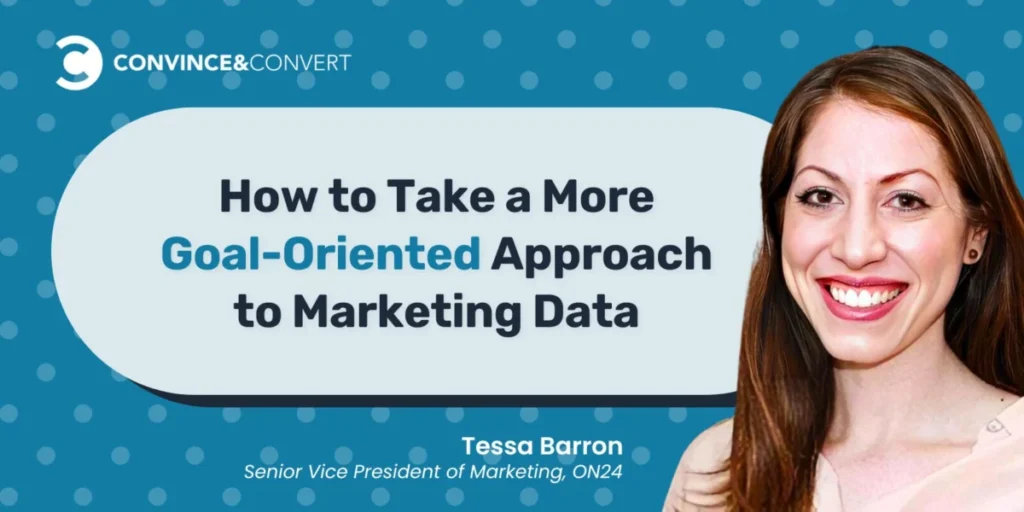
For many, the instinctive reaction is to double down on existing playbooks—cranking out more blog posts, hosting more webinars, and increasing social media cadence. However, according to Tessa Barron, former Senior Vice President of Marketing at ON24, this reflex is exactly what prevents sustainable growth. In a recent appearance on the Data-Driven Decisions podcast, Barron argued that the solution isn’t to work harder or faster, but to fundamentally dismantle the "tactic-first" mentality that has dominated the industry for years.
The Mandate for a Mindset Shift
The landscape of B2B marketing has undergone a seismic shift since the onset of the pandemic. Buyer behaviors, expectations, and the digital environments in which they operate have evolved at a breakneck pace. Yet, many marketing departments remain anchored in a "pre-2020" strategy, hoping that a higher volume of the same activities will yield the same—or better—results.
"We as marketers have to check in with ourselves and ask: ‘Have we changed? Are we still doing what we were doing three years ago?’" Barron notes. "If the answer is yes, that is the first sign that we need to stop expecting that executing in the same way, just at a higher volume, is going to get us more in return."
The trap, Barron suggests, is that seasoned marketers often lean on "tried-and-tested" formats—whitepapers, webinars, and podcasts—as a safety blanket. While these channels remain effective, they are tools, not objectives. When a team starts by planning a calendar of four webinars for a quarter, they have already failed to prioritize the business outcome. Instead, they should be starting with a specific, quantifiable goal: for example, a 10% uplift in pipeline or a specific number of new accounts. Once that target is established, the tactic becomes a deliberate choice driven by data, rather than a line item on a calendar.
A Chronology of Strategic Evolution
To understand the shift from tactic-oriented to goal-oriented marketing, one must examine the progression of the modern buyer’s journey.
- The Legacy Era: Marketing was defined by "vanity metrics." Teams measured success by lead volume, downloads, and page views. The goal was to cast as wide a net as possible, regardless of the quality of the catch.
- The Data-Saturated Era: With the explosion of MarTech, marketers gained access to granular tracking. However, this often led to "analysis paralysis," where teams collected vast amounts of data without actionable insights.
- The Signal-Driven Era (The Current State): This is where Barron’s framework takes root. It is no longer about gathering data; it is about identifying "signals"—specific behaviors or attributes that indicate a high probability of conversion. In this era, the marketer’s job is to create interactive environments that invite the prospect to reveal their intent.
The Science of Signal Capture
Data is only as valuable as the decisions it enables. To transform raw data into a pipeline engine, marketers must treat every customer interaction as an opportunity to collect "signals."
Barron highlights the ON24 platform as a prime example of this methodology. By utilizing interactive elements—polls, Q&A sessions, and dynamic call-to-actions (CTAs)—marketers can transform a passive webinar into a two-way diagnostic tool.
Case Study: Precision Targeting in Technology
A technology firm struggling to regain market share identified that their most profitable clients shared a specific characteristic: they relied on a particular cloud provider. Rather than guessing at a strategy, the marketing team integrated a simple, direct question into their webinar registration and event flow: "What cloud provider are you currently using?" By segmenting the audience based on this specific "signal," the marketing team was able to prioritize high-intent prospects for the sales team, significantly increasing the conversion rate from prospect to opportunity.
Case Study: High-Stakes Pharmaceutical Engagement
In the pharmaceutical sector, the goal is often to provide value to medical professionals who are time-poor and information-hungry. By hosting educational webinars on new drug therapies, the company implemented a diagnostic question: "How would you rate the risk profile of your patient base?" This allowed the company to immediately filter attendees by "High," "Medium," or "Low" risk, enabling sales representatives to tailor their follow-up conversations based on the specific, identified needs of the physician.
Aligning the Front Lines: Sales and Marketing Integration
Perhaps the most critical, yet frequently ignored, element of pipeline growth is the alignment between the marketing and sales departments. Barron emphasizes that marketers must stop operating in a silo, as they are rarely the ones who actually close the business.
"Marketers are creating signals and developing a net to catch people who might turn into pipeline," Barron explains. "But it’s the salespeople, those on the front lines, who create the actual pipeline."
To bridge this gap, marketers should conduct regular, formal audits with their sales colleagues. They should be asking:
- What questions do you ask to determine if a lead is truly qualified?
- What are the most common points of friction or doubt in a prospect’s decision-making process?
- What information would make your initial discovery call more effective?
By incorporating these insights into the content strategy, marketing can effectively "pre-sell" the prospect. The goal is to provide the sales team with a complete, high-definition picture of the prospect before they even pick up the phone.
The Implications of Intentional Data Usage
The shift toward goal-oriented, signal-based marketing has profound implications for how teams are structured and how they communicate success to company leadership.
1. Removing Operational Friction
Often, the biggest barriers to conversion are not the quality of the content, but the administrative hurdles placed in the user’s path. Outdated lead forms, excessive fields, or disconnected messaging can destroy a conversion rate regardless of how compelling the webinar or whitepaper may be. By focusing on the "in-between" steps—the journey from lead to opportunity—marketers can identify and remove these bottlenecks.
2. Simplifying the Narrative for Stakeholders
One of the greatest challenges for marketing leaders is presenting data to C-suite stakeholders who are often removed from the day-to-day execution. Barron advises that simplicity is paramount. Stakeholders do not need to see every dashboard metric; they need to see how specific investments (budget) are moving the needle on critical growth metrics (pipeline). By stripping away the "noise" and focusing on the signals that correlate with revenue, marketing teams can secure greater buy-in and justify their strategic direction.
3. A Culture of Intent
Ultimately, the framework of "do more with less" is a misnomer. The goal should be "do more with purpose." By becoming more intentional, marketing teams can stop chasing vanity metrics and start building a predictable, measurable path to revenue.
Conclusion: The Path Forward
The future of marketing success lies in the ability to pivot from being a "tactic factory" to being a "signal intelligence unit." As Tessa Barron points out, the tools are already at our disposal. The webinars, the blogs, and the social channels are not the end game; they are merely the laboratory in which we test our hypotheses and collect the data necessary to inform our next move.
By aligning marketing activities with the specific, identified goals of the sales team, and by stripping away the noise to focus on the signals that truly matter, organizations can overcome the limitations of shrinking budgets. The path to growth is not found in doing more—it is found in doing what works, for the people who matter, with the data that confirms their intent.