New Delhi Under Siege: Security Lockdown Imposed as Cockroach Janta Party Prepares for Landmark Protest
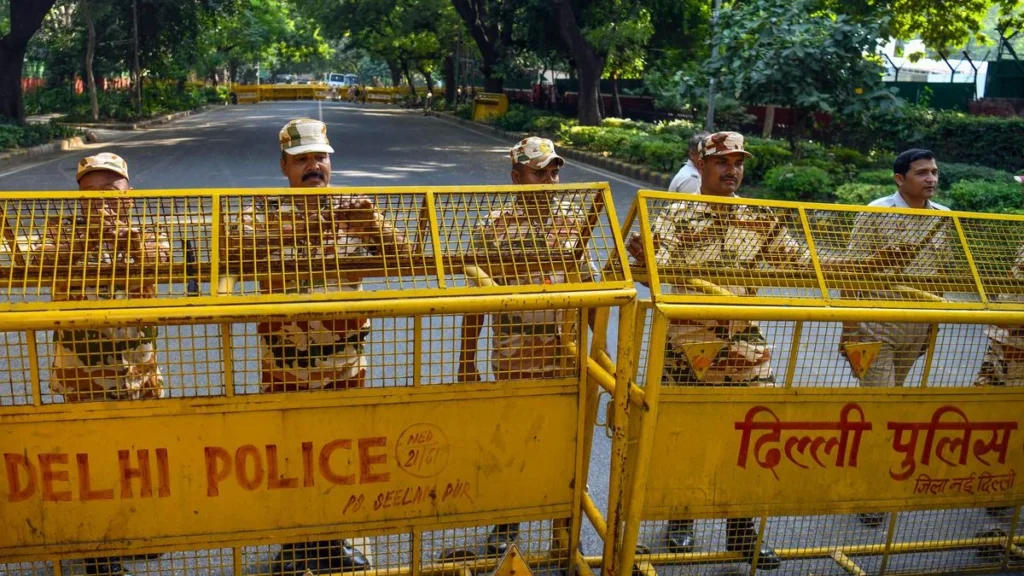
New Delhi, October 9, 2026: The heart of the Indian capital has transformed into a fortress as authorities scramble to preempt a massive demonstration organized by the Cockroach Janta Party (CJP). With tensions reaching a boiling point, the national capital is witnessing its most extensive security lockdown in recent memory ahead of the scheduled October 10 protest at Jantar Mantar.
The CJP, led by founder Abhijit Dipke, has issued a direct ultimatum to the Election Commission of India (ECI), demanding the immediate resignation of Chief Election Commissioner (CEC) Gyanesh Kumar. The party alleges systemic irregularities in the electoral rolls and accuses the ECI of bias during the recent Special Intensive Revision (SIR) exercise. As the deadline for the protest nears, the administration has responded with a show of force that has effectively paralyzed movement across the city.
The Core Conflict: Allegations and Demands
The seeds of this confrontation were sown on October 3, when Abhijit Dipke formally announced a national call to action. The primary grievance centers on the integrity of the electoral roll. According to the CJP, the SIR exercise—a routine process intended to update voter lists—has been weaponized to systematically disenfranchise specific demographics.
"The integrity of our democracy is currently on life support," Dipke stated in a recent press release. The CJP is not merely seeking a change in leadership; they are demanding criminal investigations into the conduct of CEC Gyanesh Kumar. The party alleges that the ECI has operated in a partisan manner, failing in its constitutional duty to ensure a free and fair electoral environment.
The ECI has yet to issue a comprehensive rebuttal to these specific allegations, maintaining a stance of administrative neutrality. However, the legal threat posed by the CJP—calling for criminal proceedings against the CEC—has escalated the situation from a political grievance to a direct institutional challenge.
Chronology of Escalation: From Petition to Protest
The path to the October 10 showdown has been marked by a rapid deterioration in communication between the protesters and the state:
- October 3: Abhijit Dipke officially announces the Jantar Mantar protest, setting the October 10 deadline for CEC Gyanesh Kumar’s resignation.
- October 5–7: Reports emerge of alleged police crackdowns. The CJP and various allied left-leaning groups claim that party supporters are being detained in preventive custody across several states.
- October 8: The Ministry of Home Affairs (MHA) holds a high-level security meeting to assess the potential for civil unrest.
- October 9: As the protest eve arrives, the Delhi Police, supported by the Border Security Force (BSF), begins a full-scale lockdown. Over 55 metro stations are ordered shut.
- October 10 (Current Status): Major thoroughfares, including Janpath and Ashoka Road, are blocked. Central Armed Police Forces (CAPF) are deployed, and internet suspension protocols are activated in sensitive zones.
The Security Apparatus: A City Paralyzed
The measures taken by the Delhi administration have been described by critics as "draconian." The scale of the lockdown suggests that the government is operating under the assumption that the protest could spiral into widespread civil disobedience.
The Metro Shutdown
The closure of more than 55 Delhi Metro stations is an unprecedented logistical move. By severing the primary mode of transport for millions of daily commuters, the authorities have effectively created a containment zone in the center of the city. Officials cited the "likelihood of unruly crowd movement towards sensitive locations" as the primary justification for the total service suspension in these sectors.
Paramilitary Deployment
Beyond the standard Delhi Police presence, the deployment of Border Security Force (BSF) jawans and additional Central Armed Police Forces (CAPF) signals a shift in the government’s risk assessment. The visual presence of security forces armed with tear gas munitions near Jantar Mantar serves as a stark deterrent to those intending to join the rally.
Digital Blackout
Perhaps the most controversial move is the MHA-approved temporary internet suspension. In an era where digital communication is the backbone of political mobilization, the state’s decision to sever connectivity aims to disrupt the CJP’s ability to coordinate real-time movements or broadcast the proceedings of the protest to the broader public.

Official Responses and Institutional Stance
The Ministry of Home Affairs has maintained that the restrictions are a necessary measure to ensure public safety and prevent the loss of property. An official spokesperson stated, "The administration is committed to maintaining law and order. We have received intelligence suggesting that anti-social elements intend to infiltrate the protest to incite violence. The restrictions are precautionary, not punitive."
In contrast, legal experts and civil rights activists have voiced significant concern regarding the proportionality of these measures. The preemptive detention of protesters, as alleged by the CJP, raises questions about the fundamental right to peaceful assembly under the Indian Constitution. "If a group is banned from protesting before they have even reached the venue, it effectively silences the democratic feedback loop," noted a constitutional lawyer familiar with the situation.
Implications: A Stress Test for Indian Democracy
The events of October 10 represent a significant stress test for the Indian electoral and political system. The implications of this standoff are manifold:
1. Erosion of Trust in the Election Commission
The ECI has historically been viewed as an impartial referee. By calling for the resignation of the CEC, the CJP is signaling a collapse in public confidence. Regardless of the validity of the claims, the fact that a political entity feels compelled to take to the streets against the election watchdog suggests a deep-seated crisis of legitimacy that will likely persist long after the current protest ends.
2. The Normalization of Preemptive Lockdowns
The heavy-handed response from the government risks setting a precedent. If the state routinely uses total metro shutdowns, internet bans, and mass preventive detentions to quell dissent, it may inadvertently shrink the space for legitimate political expression. The "New Delhi Model" of managing protests—characterized by total infrastructure paralysis—is becoming a standard operating procedure that critics fear will stifle future democratic movements.
3. Future of the CJP
For the Cockroach Janta Party, the success of the October 10 protest will be measured not just by the number of attendees, but by the party’s ability to maintain its narrative in the face of a state-imposed blackout. If the party fails to mobilize effectively due to the crackdown, it may face internal fragmentation. Conversely, if the state’s measures are perceived as overly harsh, it could generate a "sympathy wave" that strengthens the CJP’s political base.
Conclusion: The Road Ahead
As the sun sets on October 9, the tension in New Delhi is palpable. The streets, usually teeming with the chaotic energy of the capital, are eerily silent, marked only by the presence of barricades and security personnel. The protest scheduled for October 10 has already achieved one of its goals: it has brought the city to a standstill and forced the central government to dedicate its full attention to the CJP’s demands.
Whether this standoff results in a peaceful demonstration or an escalation of force remains to be seen. What is certain is that the conflict between the Cockroach Janta Party and the Election Commission has exposed a raw nerve in India’s political landscape. As the nation watches, the events of tomorrow will likely serve as a pivotal chapter in the ongoing debate over the health of India’s democratic institutions, the sanctity of its electoral processes, and the boundaries of the state’s power in controlling public dissent.
The government maintains that its priority is stability. The CJP maintains that its priority is accountability. In the clash between these two imperatives, the citizens of Delhi find themselves caught in the middle, navigating a city transformed into a high-security zone, waiting to see if the morning of October 10 brings a breakthrough or a breakdown.