Beyond Traditional SEO: How to Map, Audit, and Win Visibility in the Era of AI Search
WASHINGTON — Traditional search engine optimization (SEO) has long operated on a predictable, albeit complex, paradigm: rank high on a search engine results page (SERP), capture the click, and convert the visitor. For over two decades, digital marketers mastered the art of keyword optimization, technical site hygiene, and backlink acquisition to climb those coveted top ten positions.
However, the rapid ascent of generative AI search engines—including Google AI Overviews, OpenAI’s ChatGPT, Microsoft Copilot, and Perplexity—has fundamentally fractured this model. Today, a brand can maintain robust organic visibility in traditional rankings yet remain entirely invisible within the synthesized answers generated by AI platforms.
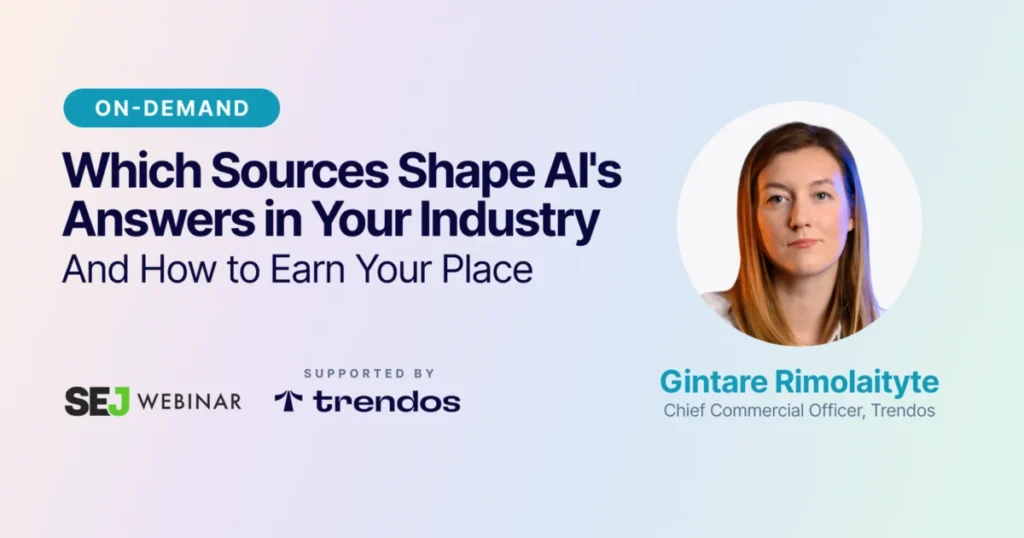
To demystify this shifting digital landscape, a recent high-profile industry webinar featuring Gintare Rimolaityte, Chief Commercial Officer at Trendos, laid out a pragmatic roadmap for modern marketers. Moving far beyond abstract theories about algorithms, the session provided a masterclass in AI citation mapping, industry-specific content strategy, and turning algorithmic gaps into actionable growth worklists.
Main Facts: The New Reality of Generative Engine Optimization (GEO)
The core thesis presented by Rimolaityte is direct: traditional search rankings no longer paint a complete picture of a brand’s visibility.
When a user submits a query to an AI-powered search engine, the system does not merely spit out a list of blue links. Instead, it reads multiple sources, synthesizes the information, and presents a direct narrative answer. While some engines provide inline citations or a sidebar of sources, others require users to dig deeper to inspect the underlying references.
Key takeaways from Trendos’ extensive analysis of AI search behaviors include:
- The Citation Disconnect: High performance in traditional SEO does not guarantee inclusion in AI-generated responses. Brands must look beyond rankings to audit the specific web pages, forums, and directories that AI models trust and cite.
- The Power of User-Generated Content (UGC): Across multiple sectors—ranging from retail to enterprise IT—community discussions, user reviews, and forum threads frequently underpin AI answers.
- Engine Fragmentation: Different AI engines rely on vastly different citation ecosystems. A drop in visibility on one platform (e.g., ChatGPT) does not inherently signal a trend across all engines (e.g., Gemini or Perplexity).
- Actionable Gap Analysis: By auditing competitor citations against real-world customer queries, digital marketing teams can build precise, high-ROI outreach and content worklists rather than chasing indiscriminate backlink campaigns.
Chronology: The Evolution from SERPs to Synthesized Answers
To understand how the industry reached this inflection point, it is helpful to trace the rapid evolution of search technology over recent years:
- The Era of the Blue Links (Pre-2023): Search engines operated primarily as indexing and ranking directories. Success was measured strictly by keyword positions, click-through rates (CTR), and organic traffic volumes driven by standard SERPs.
- The Generative AI Disruption (2023–2024): The public launch of LLM-powered chat interfaces and conversational search tools shifted user behavior. Consumers stopped merely searching for keywords and began asking complex, multi-layered questions, expecting synthesized, direct answers rather than a list of homework assignments to sift through.
- The Rise of Hybrid Search and AI Overviews (2025): Major search engines integrated generative AI directly into traditional results pages. Marketers realized that traditional SEO metrics were failing to capture true brand share of voice in AI responses.
- The Current State of Citation Auditing (2026): Forward-thinking brands are no longer asking “Where do we rank?” but rather “What sources are feeding the AI engine when a buyer asks about our category?” Analysts like Rimolaityte are now providing the frameworks necessary to reverse-engineer these AI citation pathways.
Supporting Data: Industry Patterns and Engine Divergence
During the webinar, Rimolaityte shared cross-industry insights drawn from Trendos’ data analysis, highlighting how consumer products and retail, IT and solution services, and communication services experience AI search very differently.
Industry-Specific Mixes
The research demonstrated that a one-size-fits-all digital marketing budget is fundamentally flawed.
- Retail and Consumer Goods: AI engines frequently pull data from structured product pages where specific facts, pricing details, and specifications are easily parsed. However, customer review aggregators and third-party editorial roundups also heavily dictate visibility.
- IT and Solution Services: B2B buyers utilizing AI tools for software or enterprise solutions are often met with citations from peer review sites, analyst reports, and specialized tech communities.
- Communication Services: For telecom and digital services, editorial deep-dives and user-driven forum discussions dominate the citation landscape.
Engine-Level Discrepancies
A critical warning issued during the session was against treating "AI search" as a monolith. Rimolaityte used Reddit as a prime case study. While a brand might experience a temporary dip in visibility or a shift in citation frequency on ChatGPT, that same community source might remain aggressively prominent on Perplexity or Google AI Overviews.
Furthermore, the foundational architecture of each engine dictates its source mix. For instance, Google AI Overviews heavily leverages traditional indexing strength combined with structured web data, whereas Gemini’s source dependency fluctuates dramatically based on the niche industry of the query. Consequently, digital marketing reporting must keep engine-level analytics distinct to avoid masking where a particular channel is thriving or failing.
Official Perspectives and Expert Insights: Gintare Rimolaityte on Strategic Auditing
Rather than encouraging brands to abandon search engine optimization, Rimolaityte urged professionals to expand their strategic toolkits. She outlined a step-by-step methodology for conducting an AI citation audit:
- Define the Buyer’s Journey Questions: Compile a list of 10 to 20 realistic questions that a customer or client would naturally ask when evaluating products or services in your sector.
- Execute Multi-Engine Audits: Run these queries across the dominant AI search engines used by your target demographic.
- Record and Categorize Sources: Document every cited URL, grouping them into owned content, editorial publications, review platforms, and community discussions.
- Identify the Gaps: Cross-reference the citations against your own digital footprint. Find the specific pages where your competitors are actively cited, but your brand is missing.
Articulating the immense value of this gap analysis, Rimolaityte noted:
"If your competitor appears in those sources and you don’t, this is your opportunity to get the mention on the source because this source is already being used to get the answer, right?"
This approach transforms vague public relations or content marketing campaigns into laser-targeted interventions. Instead of wondering why organic traffic is flat, a team can look at a specific URL, analyze why the AI trusts it, and determine what authoritative, helpful contribution their business needs to make to earn a rightful place on that page.
The Role of Video and Structured Content
Addressing audience questions during the session, Rimolaityte also tackled the rising prominence of video content—specifically YouTube—within AI-generated answers. She confirmed that brand-owned and founder-led video content can successfully earn citations, provided they meet strict quality thresholds.
To maximize the discoverability of video assets, she recommended:
- Concise, Q&A-Driven Formats: Structuring video content to directly address specific customer pain points rather than relying on sprawling, unstructured narratives.
- Accurate Transcripts: Providing clean, machine-readable transcripts that allow AI models to easily crawl, parse, and extract the factual data embedded within the video.
- Intentional Tracking: Rather than publishing videos blindly and hoping for algorithmic luck, marketers should monitor whether their branded channels or specific video assets appear alongside the prompts being tracked in their core audit.
Implications for Digital Marketers and Agencies
The transition toward AI-driven search models carries profound implications for how marketing budgets are allocated, how agencies report value to clients, and how content is produced.
1. Re-evaluating Content and Outreach Priorities
Marketers must stop treating content creation as a volume game driven purely by keyword search volume. If an AI engine consistently pulls answers from Reddit threads, niche industry forums, and third-party review sites, pouring thousands of dollars into yet another unread corporate blog post yields diminishing returns. Resources must be shifted toward digital PR, community engagement, and earning authoritative mentions on trusted domain sources.
2. Evolving Agency-Client Reporting
For marketing agencies, explaining AI visibility to clients requires a shift in narrative. When an agency cannot directly control a client’s presence inside an AI answer, Rimolaityte advises building concise, highly customized audit reports. These reports should hand clients a concrete "to-do list" detailing specific citation gaps, actionable PR targets, and content restructuring recommendations.
3. Ethical Community Participation
A dangerous temptation in the age of AI optimization is attempting to manipulate user-generated platforms through fake reviews, disguised corporate accounts, or paid bot networks. Experts strongly caution against these tactics. AI search engines are increasingly sophisticated at evaluating authentic engagement. Brands must participate honestly in community discussions, positioning employees or company leaders as genuine subject matter experts who provide real, actionable value to public forums.
Looking Ahead: The Intersection of AI Ads and GEO
As the digital marketing ecosystem continues to evolve, the intersection of organic AI visibility (Generative Engine Optimization) and paid monetization models is taking center stage. Industry leaders are already looking toward the next frontier of search economics—exemplified by upcoming platform updates like ChatGPT Ads.
For brands navigating this complex transition, the foundational rule remains unchanged: understanding how your buyers search, mapping the sources that inform their decisions, and showing up with genuine, authoritative answers wherever the algorithms are looking.