Bridging the AI Skills Gap: The First Cohort of ‘AI Leaders’ Graduates in Chicago
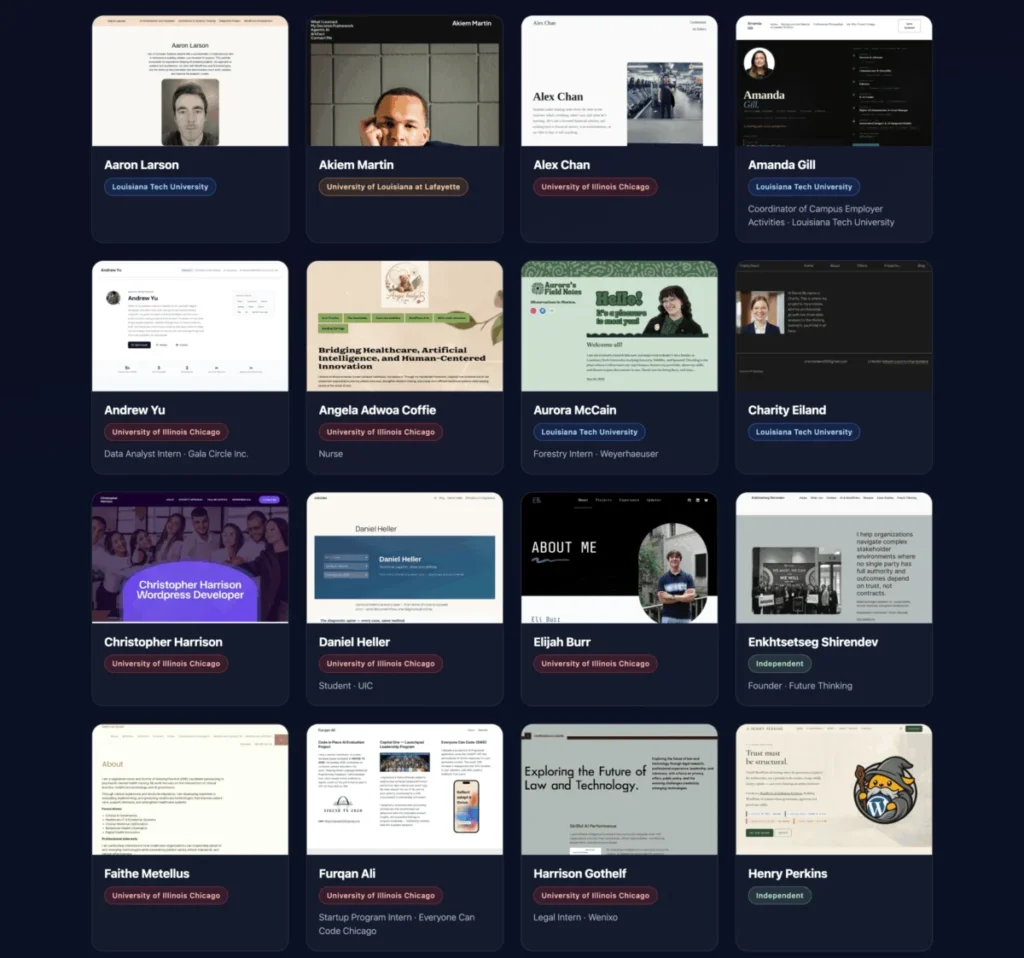
In a landmark moment for workforce development and open-source education, a group of 40 students from the University of Illinois Chicago (UIC), Louisiana Tech University, and the University of Louisiana at Lafayette gathered in Chicago on June 23 to mark a significant professional milestone. These students represent the inaugural cohort to earn the "AI Leaders" Micro-Credential—the nation’s first workforce-focused artificial intelligence literacy program that bridges the gap between theoretical knowledge and verifiable, real-world application.
This graduation ceremony was more than a celebration of academic achievement; it was the culmination of a bold experiment designed to prove that the future of the digital workforce lies in the democratization of AI skills through open-source contribution.
The Genesis: A New Paradigm for Tech Education
The AI Leaders program, which was officially announced in February 2026, was born out of a perceived disconnect in the current tech education landscape. While traditional computer science degrees provide a strong foundation, the rapid evolution of generative AI has created a "skills lag," where the tools used in the classroom often trail behind the tools used in the professional workplace.
The program’s creators aimed to solve this by building a curriculum that is rooted in the WordPress ecosystem—a platform that currently powers more than 40% of the web. By focusing on WordPress, the program ensures that students are not just learning about AI in a vacuum; they are applying it to the very infrastructure that sustains the global internet.
The pilot program was built on a simple, yet ambitious premise: open-source learning should lead directly to employment pathways, not merely to a decorative certificate. To achieve this, the curriculum mandated that every student contribute to real-world projects and open-source software, ensuring that their learning was practical, observable, and directly relevant to industry needs.
Chronology: From Concept to Graduation
The journey of the inaugural cohort was structured as a multi-stage immersion into the intersection of AI and web development.
- February 2026: The AI Leaders initiative is officially announced. The program sets out to recruit students from diverse geographic and academic backgrounds, focusing on UIC and partner institutions in Louisiana.
- March – April 2026: Students undergo a rigorous curriculum. Unlike traditional courses, the AI Leaders program requires participants to build personal project portfolios. They are tasked with integrating generative AI into workflows, debugging code, and engaging with the open-source community.
- May 2026: The final phase of the course involves active contributions to the WordPress codebase. Students are evaluated not just on their ability to use AI tools, but on their ability to solve complex, real-world problems that benefit the broader digital community.
- June 23, 2026: The graduation ceremony in Chicago. The 40 students are formally awarded their micro-credentials and a $1,000 stipend—a financial incentive made possible by the collaborative funding from Automattic and UIC.
Supporting Data: Why Open Source Matters
The success of the AI Leaders program is rooted in its unique pedagogical approach. The program functions as a tripartite collaboration: funding is provided by the UIC Tech Solutions Open Source Fund, technical expertise and curriculum development are supplied by the WordPress project and the WordPress Foundation, and industry integration is bolstered by Automattic.
The program’s efficacy can be measured by the output of its students. Each graduate completed a comprehensive project portfolio, showcasing their ability to:
- Deploy Generative AI: Using AI to streamline content creation, site management, and coding workflows within the WordPress ecosystem.
- Navigate Open Source: Contributing to the software that powers nearly half of the world’s websites, providing them with a verifiable "paper trail" of their technical contributions that employers can examine directly on platforms like GitHub or WordPress.org.
- Collaborate Globally: Operating within a decentralized community, a skill that is increasingly vital in the age of remote and hybrid work.
The $1,000 stipend provided to each student serves as more than just a reward; it lowers the barrier to entry, ensuring that students from varied socioeconomic backgrounds can participate in high-level tech training without the burden of unpaid internships or expensive certification fees.
Official Responses and Strategic Vision
The collaboration behind the AI Leaders program reflects a shared commitment to the "democratization of technology."
"WordPress was built to expand access to publishing and participation on the open web," stated a representative from the WordPress Foundation. This guiding philosophy is at the heart of the AI Leaders program. By making AI literacy accessible, the organizers hope to prevent a new "digital divide" from forming, where AI skills are concentrated only among the elite.
University administrators at UIC have touted the program as a model for future industry-academia partnerships. By aligning university resources with the needs of the open-source community, the program ensures that students leave with a credential that is recognized and respected by employers.
"The goal is to move beyond the certificate," a program spokesperson noted. "We want our graduates to walk into an interview with a portfolio of live projects, a history of code contributions, and a clear understanding of how to leverage AI to solve business problems."
Implications for the Future of Work
The graduation of this first cohort carries significant implications for the tech industry at large. As AI continues to reshape the labor market, the traditional four-year degree is being supplemented by micro-credentials that prove specific, actionable expertise.
1. The Rise of the "Open-Source-Ready" Employee
By training students within the WordPress ecosystem, the program produces graduates who are "day-one ready." They are already familiar with the collaborative workflows, version control, and community standards used by major corporations. Employers no longer need to spend months onboarding these individuals into the mechanics of the web; they are already integrated.
2. Validated Competency
One of the primary challenges in the AI space is the proliferation of "AI-certified" courses that lack rigor. The AI Leaders credential stands apart because it is anchored in a professional, high-stakes environment. An employer can visit a student’s portfolio and see exactly how they utilized AI to improve a website’s functionality or security, providing a level of transparency that a multiple-choice exam cannot replicate.
3. A Model for Geographic Equity
The inclusion of universities in Louisiana alongside a major institution like UIC in Chicago demonstrates that the program is designed to reach students regardless of their physical location. By leveraging the distributed nature of the open-source community, the program proves that top-tier AI training does not have to be confined to Silicon Valley or major tech hubs.
What Comes Next: Scaling the Impact
The gathering in Chicago was not just a celebration; it was a networking event. Representatives from various agencies and tech firms were in attendance, scouting the graduates for internships, contract roles, and full-time positions.
The organizers have confirmed that the first cohort was merely a pilot. The success of this initial group has validated the model, and plans are already in motion to expand the program to include more universities and a larger volume of students. For those interested in the next cycle, the program encourages prospective applicants to subscribe for updates, as the demand for seats is expected to be high.
Conclusion: A New Standard for Digital Literacy
The AI Leaders program represents a vital pivot in how we prepare the next generation for an AI-augmented economy. By prioritizing open-source values—transparency, collaboration, and shared access—the program is creating a blueprint for how institutions can adapt to the rapid pace of technological change.
As these 40 students enter the workforce, they carry with them more than just a credential; they carry the experience of having built, broken, and fixed the digital infrastructure that the world relies on every day. For the tech industry, the message is clear: the most valuable AI practitioners of the future will be those who can harness the power of artificial intelligence to strengthen the open web, one line of code at a time.
For those looking to deepen their engagement with the open-source community, WordPress continues to offer a wealth of educational resources. Whether you are a beginner taking your first steps or a seasoned developer looking to contribute to the core, the WordPress Education portal provides workshops, lesson plans, and community-driven resources to support your journey. The path to becoming an AI Leader is open to anyone with the curiosity to learn and the drive to contribute.