Bridging the Data Gap: Integrating Facebook Ads with BigQuery for Advanced Analytics
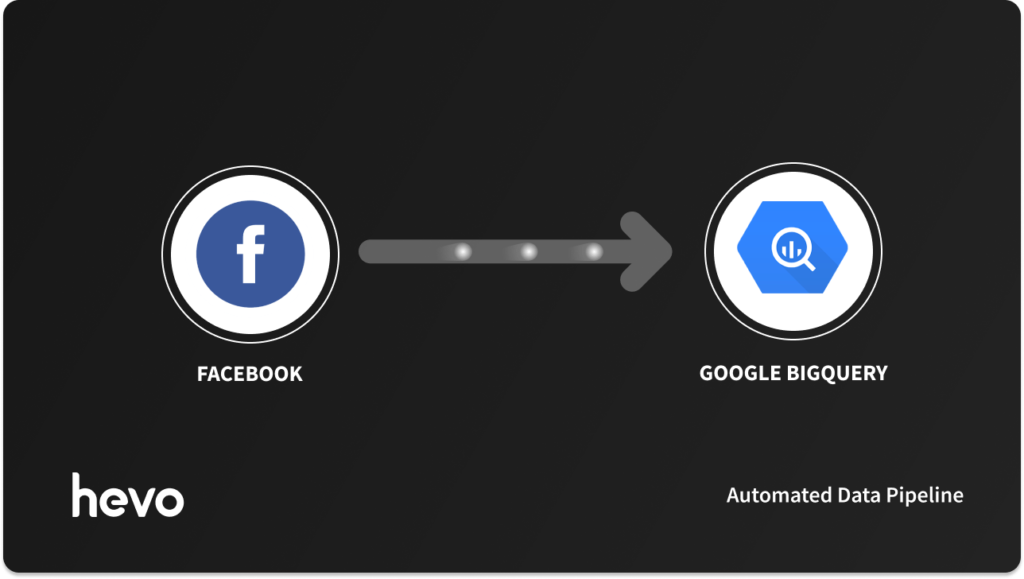
In the contemporary digital landscape, data is the lifeblood of marketing strategy. For businesses heavily reliant on paid social media, Facebook Ads Manager serves as the primary gateway for campaign execution. However, as organizations mature, the limitations of keeping ad performance data siloed within the Facebook ecosystem become glaringly apparent. While the platform offers robust dashboarding, it fails to provide a holistic view when cross-referenced with internal CRM data, product usage logs, or revenue metrics.
The solution lies in centralizing this information within a cloud data warehouse, specifically Google BigQuery. By migrating Facebook Ads data into BigQuery, organizations can transform disparate metrics into a cohesive, actionable intelligence asset.
The Strategic Imperative: Why Move Facebook Ads Data?
The core challenge for modern data teams is not merely "having" data, but "trusting" and "analyzing" it at scale. Within Ads Manager, data is often restricted to surface-level insights. Conversely, BigQuery provides a serverless, highly scalable environment that allows for complex, multi-dimensional analysis that Facebook’s native interface cannot support.
1. Breaking Down Data Silos
When you consolidate Facebook Ads data with data from your CRM (like Salesforce or HubSpot), your product database, and your payment processors, you unlock the ability to calculate true Customer Acquisition Cost (CAC) and Lifetime Value (LTV). You are no longer just looking at "Clicks" or "Impressions"; you are looking at actual bottom-line revenue attributed to specific ad creatives.
2. Advanced Analytical Power with SQL
BigQuery’s engine is built for speed and complexity. By leveraging standard SQL, data analysts can perform cohort analysis, attribution modeling, and time-series forecasting that would be impossible to execute manually within the Facebook Ads interface.
3. Future-Proofing Through Machine Learning
With your data residing in BigQuery, you can leverage Google’s BigQuery ML to build predictive models. You can forecast future campaign performance, identify high-value customer segments, or automate bid adjustments based on historical trends, effectively turning your marketing data into a predictive asset.
Methods of Integration: A Comparative Analysis
For organizations looking to bridge the gap between Facebook and BigQuery, there are three primary pathways, each catering to different operational needs and technical resource levels.
The Three-Tiered Approach
| Method | Best For | Pros | Cons |
|---|---|---|---|
| No-Code Pipelines (e.g., Hevo) | Data-driven teams, marketers | Fully managed, automated schema updates, reliable | Limited deep-customization |
| Custom Code (API/Webhooks) | Engineering-heavy startups | Unlimited flexibility, real-time sync | High maintenance, prone to breakage |
| Manual Export/Upload | Ad-hoc, low-frequency needs | Zero cost, no setup | Not scalable, error-prone, labor-intensive |
Method #1: The Automated Pipeline (Hevo Data)
For teams that prioritize speed and reliability, automated ETL (Extract, Transform, Load) platforms like Hevo Data offer a "set-it-and-forget-it" solution. These platforms are designed to handle the "dirty work" of data engineering—managing API rate limits, handling schema drift, and ensuring data consistency.
How to Implement via Hevo:
- Source Configuration: Connect your Facebook Ads account by authenticating your credentials. Select the specific ad accounts, attribution windows, and historical data ranges you wish to sync.
- Destination Setup: Configure BigQuery as your destination by providing your Google Cloud Project ID and authentication keys.
- Pipeline Activation: Once the handshake is confirmed, Hevo handles the ongoing synchronization. As Facebook updates its API—a frequent occurrence that often breaks custom scripts—the platform manages the migration in the background, ensuring your dashboards never go stale.
Method #2: The Engineering Route (Custom Code)
Building a custom pipeline requires a dedicated engineering team, but it offers unparalleled control over how data is transformed before it lands in your warehouse.
Phase 1: Extraction
You can utilize the Facebook Marketing API to pull performance data. A standard request to the insights endpoint using cURL or Python allows you to specify fields like spend, impressions, clicks, and reach.
Technical Note: To handle real-time changes, developers often implement Webhooks. By setting up an HTTPS endpoint, your server can listen for events from Facebook (such as campaign status changes or budget updates) and ingest them into your database immediately.
Phase 2: Loading to BigQuery
Once the data is extracted, you have two options for loading:
- Google Cloud Storage (GCS) Batch Loading: Write your data to a CSV or JSON file, upload it to a GCS bucket, and trigger a BigQuery load job. This is the most stable method for high-volume, batch-processed data.
- Direct Streaming API: For mission-critical, low-latency needs, you can stream data directly into BigQuery tables using the
tabledata.insertAllAPI. This allows for near-real-time visibility into ad performance.
Method #3: Manual Management (The Ad-Hoc Approach)
While not recommended for long-term production environments, manual uploads remain a fallback for one-off analyses. This involves exporting reports from Facebook Ads Manager as CSV files and using the "Upload" feature in the BigQuery console. The lack of automation, however, creates a "data lag" that often leads to stale reporting and missed optimization windows.
Strategic Use Cases: Putting the Data to Work
Integrating your ad data is only the first step. The true value is realized when you apply this data to specific business challenges.
1. Precision Audience Targeting
By correlating conversion data from your website with Facebook ad segments in BigQuery, you can identify which specific audience subsets are yielding the highest ROI. You can then use this data to create "lookalike" audiences that are statistically more likely to convert, optimizing your ad spend efficiency.
2. Competitive Benchmarking
BigQuery allows you to store your internal metrics alongside industry benchmark data. By running SQL queries that compare your performance metrics against external industry standards, you can quickly identify whether a drop in performance is an internal campaign issue or a broader market trend.
3. Multi-Channel Performance Analysis
Marketing does not happen in a vacuum. A user might see a Facebook ad, then later search for your brand on Google, and finally convert via an email link. By centralizing your Facebook Ads data in BigQuery alongside your Google Ads and CRM data, you can build a cross-channel attribution model that accurately credits Facebook for its role in the customer journey.
Official Perspective: The Evolution of Data Infrastructure
The industry trend is moving away from manual data wrangling. Meta’s frequent updates to its Marketing API—specifically the deprecation of older versions—mean that organizations relying on custom-coded, unmaintained scripts face a constant risk of data pipeline failure.
Industry leaders are increasingly adopting managed services to mitigate this "technical debt." As platforms like BigQuery become the industry standard for cloud warehousing, the necessity for a reliable, automated bridge between social media platforms and the warehouse has never been greater. The goal is simple: Shift the focus from "how to move data" to "how to use data."
Conclusion: The Path Forward
The integration of Facebook Ads with BigQuery is not just a technical task; it is a business transformation. It moves an organization from reactive decision-making—based on fragmented, delayed reports—to proactive strategy, driven by unified, real-time insights.
Whether you choose the agility of a no-code solution like Hevo or the flexibility of a custom-built engineering pipeline, the benefits are clear. By centralizing your data, you are not just optimizing your ad spend; you are building a data-centric culture capable of navigating the complexities of the modern digital marketplace.
For those ready to scale, the time to automate is now. As API ecosystems become more complex and data volume continues to grow, the companies that thrive will be those that have turned their data infrastructure into a competitive advantage.