Bridging the Data Gap: Integrating Facebook Ads with BigQuery for Scalable Analytics
In the modern digital landscape, data is the lifeblood of marketing strategy. Facebook Ads Manager provides a wealth of granular performance metrics, but for many organizations, it remains a "walled garden." Relying solely on the native interface for analysis often leaves teams struggling to reconcile ad spend with actual revenue, customer lifetime value (CLV), and product usage metrics.
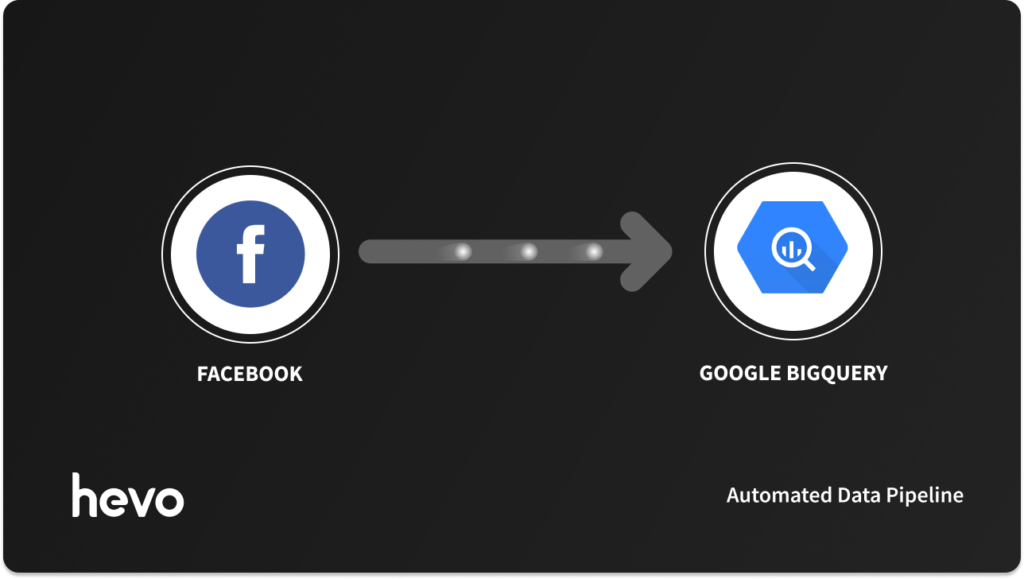
The solution lies in centralizing this information within a cloud data warehouse like Google BigQuery. By moving Facebook Ads data into BigQuery, businesses can break down silos, enabling a holistic view of the customer journey. However, moving this data at scale is a significant engineering challenge. This article explores the methodologies, implications, and strategic advantages of building a robust data pipeline between Facebook Ads and BigQuery.
The Strategic Imperative: Why BigQuery Matters
For growing businesses, the limitations of Facebook Ads Manager become apparent quickly. As campaign complexity increases, the ability to correlate ad performance with offline conversion data or cross-channel interactions becomes nearly impossible within the native platform.
The Problem with "Walled Gardens"
Facebook Ads Manager is optimized for ad management, not deep analytical modeling. When data is trapped within the platform, teams face three primary hurdles:
- Data Silos: Marketers cannot easily join Facebook spend data with CRM records (like Salesforce or HubSpot) or internal product databases.
- Sampling and Latency: Native reporting tools often struggle with large datasets, leading to slow load times and restricted historical look-backs.
- Scaling Constraints: As the number of ad accounts and campaigns grows, the manual effort required to export, clean, and merge data becomes a full-time job for analysts.
The BigQuery Advantage
BigQuery acts as a central repository where disparate datasets converge. Once Facebook Ads data is ingested, it can be joined with website analytics, email marketing performance, and financial data. This unified data layer allows for:
- Advanced SQL Analytics: Writing complex queries to calculate true ROAS (Return on Ad Spend) across the entire funnel.
- Cost Efficiency: Storing large volumes of data in BigQuery is significantly cheaper than maintaining proprietary data silos or using specialized, expensive marketing reporting software.
- ML Readiness: With data sitting in BigQuery, organizations can easily leverage BigQuery ML to build predictive models, such as propensity scoring or churn forecasting, directly on their marketing data.
Methods of Data Integration: A Technical Overview
Organizations generally choose between three paths to bridge the gap between Facebook and BigQuery. Each carries different trade-offs regarding engineering resources, maintenance, and data freshness.
Method 1: Automated ETL (Hevo Data)
For teams that prioritize speed-to-insight, automated ETL (Extract, Transform, Load) pipelines are the gold standard. Tools like Hevo act as a middleware, handling the complexities of API authentication, schema mapping, and incremental data synchronization.
- Reliability: Automated pipelines are built to handle API rate limits and data type inconsistencies automatically.
- Maintenance: With Meta frequently updating its Marketing API, automated tools manage these changes in the background, ensuring the pipeline doesn’t break when Facebook pushes a version update.
- Efficiency: By offloading the "plumbing" of data movement, engineering teams can focus on high-value tasks like data modeling and business intelligence.
Method 2: Custom Engineering (API & Webhooks)
For enterprises with highly specific needs or massive, bespoke data architectures, building a custom pipeline using Python or Node.js is an option.
- The Process: Engineers interact directly with the Facebook Marketing API to pull insights, perform transformations, and load data into BigQuery via the BigQuery Storage Write API.
- Pros: Complete control over data granularity and real-time ingestion capabilities.
- Cons: High technical debt. Every time Meta deprecates an API version, internal teams must scramble to rewrite code. Scaling the system to handle millions of rows while maintaining error-handling and logging is a significant, resource-intensive burden.
Method 3: Manual Export and Load
Small businesses or those with ad-hoc reporting needs often rely on manual CSV exports.
- The Reality: While free, this method is highly prone to human error and significant data latency. It is inherently unscalable and fails the moment reporting requirements shift from "weekly summaries" to "daily decision-making."
Comparative Analysis: Which Path Should You Choose?
| Feature | Automated ETL (Hevo) | Custom Code | Manual Export |
|---|---|---|---|
| Setup Time | Minutes | Weeks/Months | Hours (per report) |
| Maintenance | None (Managed) | Constant | Frequent |
| Reliability | High | Variable | Low |
| Cost | Subscription Fees | Engineering Salaries | Labor (Time) |
| Scalability | High | Medium (Complex) | None |
Implementation Chronology: Moving Data via Hevo
Integrating Facebook Ads to BigQuery using a platform like Hevo typically follows a three-stage chronology:
- Source Configuration: The user authenticates their Facebook Business account. The platform identifies the ad accounts, campaigns, and attribution windows required for synchronization.
- Destination Setup: The user points the pipeline to their BigQuery project. The platform automatically creates the necessary datasets and tables, mapping the JSON response from Facebook to structured SQL-friendly schemas.
- Activation and Monitoring: Once the pipeline is activated, initial historical data is backfilled. From there, the system switches to incremental loads, ensuring the data in BigQuery is always within minutes of the live Facebook dashboard.
Implications for Modern Marketing Teams
The shift toward a "Data Warehouse First" architecture for marketing has profound implications for organizational culture and performance.
1. From "What Happened?" to "Why Did It Happen?"
In a dashboard environment, marketers see that spend increased. In a data warehouse environment, they can cross-reference that spend against server logs to see if the traffic resulted in high-intent product sign-ups or merely bounce-rate inflation.
2. Improving Audience Targeting
By pushing conversion data back into a unified pool, teams can segment audiences based on deep-funnel actions. For instance, you can identify users who visited your pricing page three times but never converted and create a custom audience in Facebook for a high-incentive retargeting campaign.
3. Competitive and Benchmarking Analysis
BigQuery’s processing power allows teams to ingest public industry benchmark data alongside their internal metrics. By running SQL queries that compare your CPA (Cost Per Acquisition) against historical industry averages stored in the same database, you can create a real-time "Health Score" for your marketing department.
Official Perspective and Future-Proofing
Meta (Facebook) has been aggressive in its deprecation of older API versions. As of 2026, the shift toward more secure, OAuth-based, and granular API requests is non-negotiable.
Expert Insight: "Data engineering is no longer a luxury for large enterprises; it is a necessity for any brand that spends meaningful budget on paid social," says a lead data architect at a major marketing firm. "If you are not moving your ad data into a warehouse, you are effectively flying blind, relying on the ‘black box’ of Facebook’s own reporting, which is naturally biased toward encouraging more spend."
For teams choosing a path, the recommendation is clear: unless your business model relies on highly custom, proprietary ingestion logic, the "buy vs. build" debate usually favors managed solutions. The time saved in maintenance alone is often worth the cost of the subscription, as it allows marketing analysts to spend their time optimizing campaigns rather than debugging failed Python scripts.
Conclusion: The Path Forward
The transition from viewing Facebook Ads as an isolated channel to viewing it as a core input for a data-driven business is the defining shift for successful modern marketing teams. By moving your ad data into BigQuery, you gain the agility to pivot strategies, the precision to target effectively, and the foresight to predict performance.
Whether you choose the hands-off automation of a tool like Hevo or the full-control route of custom coding, the goal remains the same: democratizing access to data. As we move further into an era defined by AI and automated bidding, the ability to store, clean, and query your marketing data will not just be an advantage—it will be the baseline for survival in a competitive market.
Ready to streamline your data infrastructure? Start by auditing your current manual reporting processes, identify your most critical KPIs, and begin the migration to a unified warehouse today.