Bridging the Gap: Mastering LLM Lifecycle Management with Scikit-LLM and MLflow
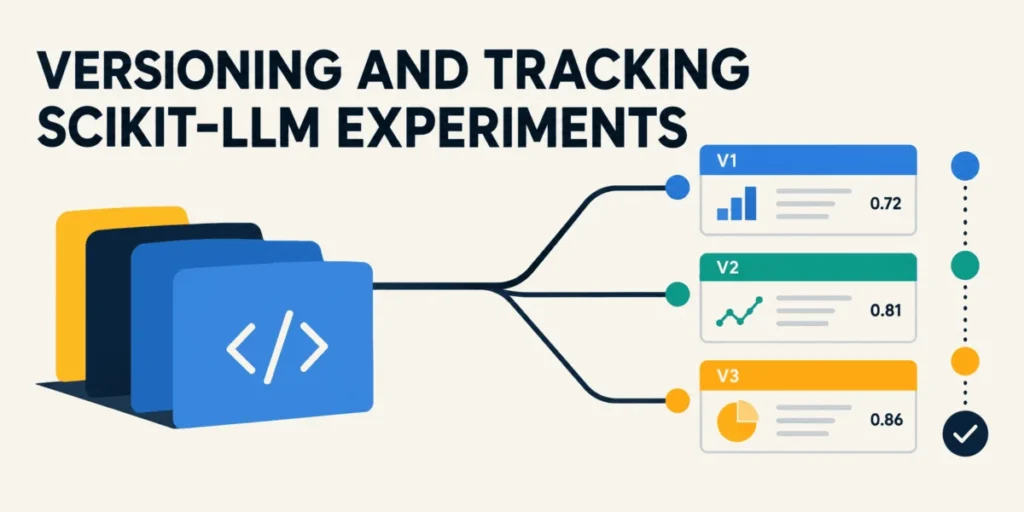
In the rapidly evolving landscape of artificial intelligence, the transition from experimental notebook code to production-grade machine learning systems is often fraught with complexity. This challenge is magnified when integrating Large Language Models (LLMs) into standard workflows. As organizations increasingly adopt "LLM-Ops" (Large Language Model Operations), the need for robust, reproducible, and version-controlled pipelines has never been more critical.
This article explores the sophisticated integration of Scikit-LLM—a library that bridges the gap between scikit-learn’s intuitive API and the power of LLMs—with MLflow, the industry-standard framework for managing the end-to-end machine learning lifecycle. By combining these two tools, developers can build, track, compare, and register LLM-driven pipelines with the same rigor applied to traditional tabular machine learning models.
The Core Challenge: Why LLM Versioning Matters
In traditional machine learning, model versioning involves tracking hyperparameters, training data, and the resulting weights. With LLMs, the variables expand significantly. We must now account for prompt engineering, specific model backends (like GPT-4All, OpenAI, or Anthropic), tokenization strategies, and the underlying model files (such as GGUF or BIN formats).
Without a centralized registry, teams often struggle with "model sprawl," where multiple versions of an LLM pipeline exist in fragmented scripts, leading to irreproducibility and significant technical debt. By leveraging MLflow’s tracking and registry capabilities, developers can enforce a standard for auditability, ensuring that every iteration of an LLM-powered pipeline is documented, logged, and ready for deployment.
Chronology of an LLM Pipeline Project
Building a production-ready LLM pipeline is a methodical process. To ensure maximum utility, the workflow follows a strictly defined chronological order:
- Environment Setup and Configuration: Establishing the infrastructure for local model execution.
- Baseline Development: Constructing the initial pipeline and recording its parameters in an MLflow experiment.
- Iteration and Upgrading: Modifying the pipeline (e.g., swapping model backends) and logging the results in separate, distinct runs.
- Audit and Selection: Searching through the experiment history to compare performance metrics.
- Formal Registration: Promoting the high-performing model to the central registry for downstream consumption.
Phase 1: Setup and Initial Configurations
The foundation begins with ensuring the environment is equipped to handle LLM artifacts. For developers operating in cloud-based environments like Google Colab or AWS SageMaker, library management is the first hurdle.
pip install "scikit-llm[gpt4all]" mlflowThe importance of the [gpt4all] extra cannot be overstated; it ensures that the local inference engines are correctly linked. Once installed, the configuration of SKLLMConfig provides the necessary hooks for local execution. In a production setting, these credentials would be replaced with secure environment variables. Simultaneously, configuring the MLflow backend to use a persistent database (such as sqlite:///mlflow.db) is essential for maintaining a long-term record of experiments.
Phase 2: Building the Baseline Pipeline
The baseline is the "North Star" of your experiment. We utilize the ZeroShotGPTClassifier from Scikit-LLM to create a classification task. In our example, we categorize support tickets.
LLM_V1 = "gpt4all::orca-mini-3k-71m-q4_0.gguf"
pipeline_v1 = Pipeline([
    ('llm_classifier', ZeroShotGPTClassifier(model=LLM_V1))
])
By wrapping this in an mlflow.start_run block, we effectively "freeze" the state of the model. We log the backend engine and the model file path as parameters, which creates a searchable metadata trail for future audits.
Phase 3: The Iterative Upgrade
Machine learning is rarely a linear process. After the baseline, we often test heavier, more capable models to see if they offer performance gains. By swapping the orca-mini model for a more robust falcon model, we create a new iteration. MLflow excels here, as it isolates the Upgraded_Falcon run from the Baseline_Orca_Mini run, allowing for side-by-side comparison without overwriting previous data.
Supporting Data: Auditing and Comparison
Data-driven decision-making requires visibility. Once several iterations have been logged, the mlflow.search_runs API becomes the primary tool for the machine learning engineer.
The Power of the Audit Trail
The audit trail is not merely a list of files; it is a historical record of technical intent. By extracting the experiment data into a pandas DataFrame, we can identify:
- Failed Experiments: Identifying runs that crashed due to memory constraints or API timeouts.
- Model Lineage: Mapping which LLM file led to which performance metrics.
- Consistency: Ensuring that the same pipeline architecture was maintained across different runs.
The ability to sort these runs by metrics—such as accuracy DESC—allows the developer to ignore the "noise" of failed or suboptimal experiments and focus on the candidates that are ready for the registry.
Official Responses and Best Practices
Industry leaders in AI engineering suggest that the "Registration" phase should be a gatekeeper process. It is a common mistake to register every single experiment in the registry. Instead, the registry should be treated as a "Production-Ready" zone.
The Role of the Model Registry
When we use mlflow.register_model(), we are moving from the "experimentation" phase to the "deployment" phase. The registry serves as the source of truth for the entire organization. If a different team needs to deploy the classification service, they do not need to hunt for the Python script; they pull the versioned model directly from the MLflow registry by URI.
Key Best Practices:
- Serialization Consistency: Always use
cloudpicklewhen logging scikit-learn pipelines with LLM components. It ensures that the complex internal state of the LLM wrapper is correctly serialized. - Tagging: Always use descriptive
run_nametags. A run ID is a string of random characters, but a clear name tells the story of the experiment. - Metadata Enrichment: Log more than just the model file. Log the prompt template, the system instructions, and the temperature settings. These are often the hidden drivers of model performance.
Implications for the Future of LLM-Ops
The integration of Scikit-LLM and MLflow has profound implications for how companies scale their AI initiatives.
- Reduced Barrier to Entry: By wrapping LLMs in the scikit-learn API, the barrier for traditional data scientists to contribute to LLM projects is significantly lowered. They can use the tools they already know—
fit,predict, andPipeline—to manage sophisticated language models. - Compliance and Governance: In regulated industries (finance, healthcare, legal), the ability to prove which model version was used to make a specific classification is a legal requirement. The MLflow registry provides an immutable audit trail that satisfies these compliance standards.
- Faster Prototyping: The ability to swap backends (from local GGUF models to cloud-hosted APIs) without rewriting the entire application logic accelerates the R&D cycle. Teams can test five different LLMs in an afternoon, document the results, and pick the winner by the end of the day.
Conclusion: From Chaos to Clarity
Building, tracking, and registering LLM pipelines is no longer a luxury—it is a necessity for any team aiming to maintain a competitive edge. By following the structured approach outlined above, developers can move away from "adhoc" experimentation and toward a systematic, repeatable, and transparent machine learning lifecycle.
The combination of Scikit-LLM’s ease of use and MLflow’s robust tracking infrastructure provides the perfect toolkit for modern AI practitioners. As LLMs continue to become more specialized, the tools we use to manage them must remain just as flexible and rigorous. Whether you are building a simple zero-shot classifier or a complex multi-stage agentic workflow, the principles of logging, auditing, and registering your artifacts remain the bedrock of successful production AI.
By treating your LLM pipelines with the same level of discipline as any other software engineering project, you ensure that your models are not just impressive experiments, but reliable, scalable, and version-controlled assets that drive real business value.