The End of the Free Ride? India’s Proposed UPI MDR Framework Signals a Paradigm Shift in Digital Payments
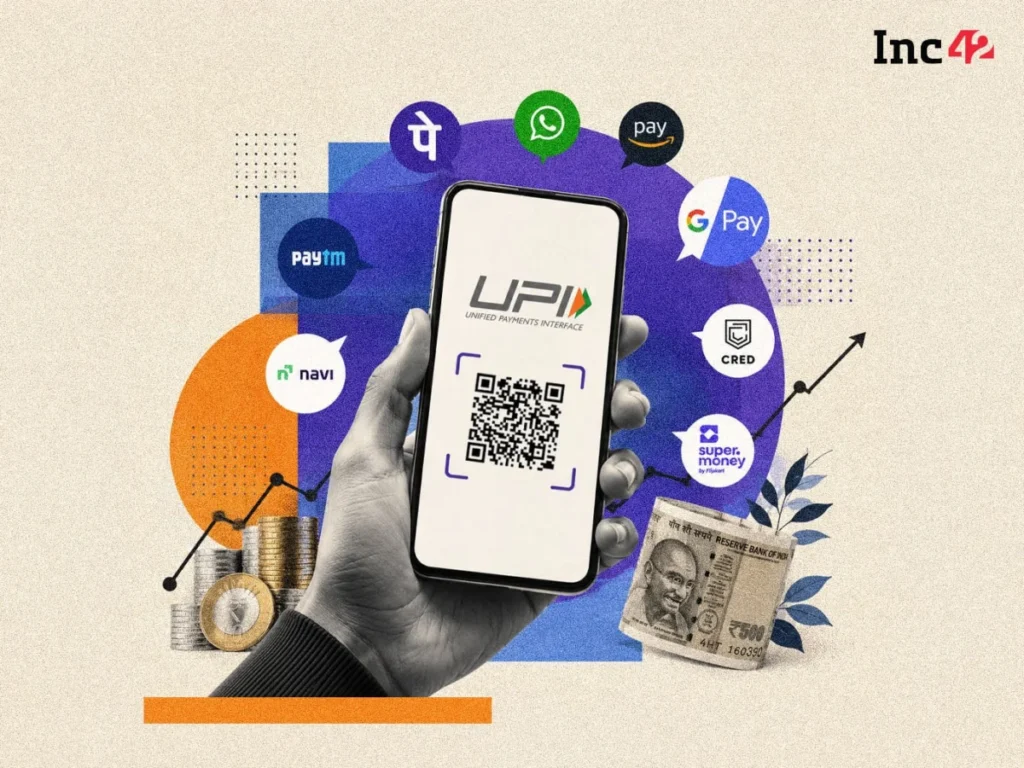
New Delhi: India’s ubiquitous Unified Payments Interface (UPI), a global poster child for digital public infrastructure, stands at a critical historical crossroads. Nearly six years after the central government eliminated merchant fees to supercharge digital adoption across the country, policymakers are drawing up a framework to introduce a Merchant Discount Rate (MDR) on select transactions.
According to recent reports, the proposed framework could set the MDR at approximately 40 basis points (bps)—or 0.4%—of the transaction value. This potential policy pivot marks a massive departure from the zero-fee regime that has defined India’s digital economy since January 2020. While the government, banking regulators, and industry stakeholders emphasize that retail consumers will remain insulated from any costs, the introduction of a merchant fee is poised to fundamentally alter the revenue models of issuing banks, acquiring banks, and third-party application providers (TPAPs) alike.
Main Facts: Decoding the Proposed 40 Basis Points UPI MDR Framework
The contours of the upcoming policy framework reveal a structured revenue-sharing mechanism designed to compensate the vast financial ecosystem underpinning India’s real-time payment rails.
Under the blueprint currently being finalized by the National Payments Corporation of India (NPCI) and the Ministry of Finance, the proposed 40 bps MDR will not be swallowed by a single entity. Instead, it is slated for distribution among the three critical pillars of a digital transaction:
- Issuing Banks (The banks holding the customer’s account): Poised to receive the lion’s share at 40% of the total MDR. At a 40 bps rate, this translates directly to 16 bps of the transaction value.
- Third-Party Application Providers (TPAPs like PhonePe, Google Pay, and Paytm): Slated to receive 30% of the MDR, translating to 12 bps.
- Acquiring Banks (The banks processing payments for merchants): Also slated to receive 30% of the MDR, translating to 12 bps.
Despite these figures circulating widely through industry circles and financial reports, the framework has not yet been formally notified. Government and regulatory authorities stress that the final MDR percentage, transaction value thresholds, and merchant eligibility criteria remain fluid and subject to change before the official notification drops in the coming weeks.
Crucially, government officials have repeatedly reassured the public that peer-to-peer (P2P) transactions will remain entirely free, and retail consumers will face zero charges for utilizing UPI to buy goods or services. The fee, if implemented, will apply exclusively to select merchant categories, likely targeting larger businesses above specific annual turnover thresholds.
Chronology of Events: From Zero-MDR to the Return of Monetisation
To understand how India arrived at this inflection point, one must retrace the legislative, economic, and operational timeline that shaped the UPI ecosystem over the past decade.
1. The Genesis of the Zero-MDR Regime (2019–2020)
As UPI began capturing the public imagination following its 2016 launch, the Indian government sought to remove all friction points for merchants and consumers. In late 2019, the Ministry of Finance announced that businesses with an annual turnover exceeding ₹50 crore must accept payments via UPI and RuPay debit cards without levying any MDR. By January 2020, the zero-MDR policy officially took effect. This move effectively prohibited banks and payment aggregators from charging merchants a percentage of digital transactions, transforming UPI into a public utility where processing costs were absorbed entirely by the ecosystem or subsidized by the state.
2. The Subsidy Era and Budgetary Strain (2020–2024)
Recognizing that processing millions of transactions daily without revenue was commercially unviable for banks and fintech firms, the Union Budget introduced an incentive scheme. The government began allocating funds annually to compensate banks for deploying infrastructure and processing low-value UPI and RuPay transactions.
- This incentive outlay ballooned over the years, peaking at an unprecedented ₹3,631 crore in FY24.
- However, as fiscal pressures mounted, subsequent budgetary allocations fluctuated wildly, dropping sharply to ₹437 crore for FY26 before the government was forced to revise allocations upward to manage mounting industry deficits.
3. Parliamentary Scrutiny and Committee Warnings (2023–2025)
As transaction volumes exploded into the tens of billions, parliamentary committees on finance began raising alarms. Industry bodies and banking associations repeatedly petitioned lawmakers, pointing out that government incentive payouts were erratic, insufficient, and failed to match the massive capital expenditures required to maintain server capacities, combat fraud, and scale infrastructure securely. Parliamentary reports noted that the existing incentive mechanism was unsustainable over the long term.

4. Legislative Amendments Open the Door (August–September 2025)
The legal architecture for introducing an MDR was formally unlocked when Parliament cleared crucial amendments to the Payment and Settlement Systems Act, 2007. These legislative changes explicitly paved the way for the Central Government to notify which electronic payment modes would remain exempt from MDR and which could attract targeted fees. While Finance Minister Nirmala Sitharaman maintained that the amendment itself did not instantly impose an MDR, it provided the executive branch with the statutory backing required to formulate a localized fee structure.
5. Shifting Rate Projections (Late 2025–Present)
Initial policy discussions last month pointed toward a much lighter touch, with officials floating a modest MDR of 5 to 7 bps specifically for UPI transactions above ₹2,000, aimed strictly at businesses with annual turnovers exceeding ₹1 crore to ₹1.5 crore. However, recent reports indicating a jump to 40 bps suggest that policymakers are leaning toward a more comprehensive monetization model capable of adequately compensating institutional stakeholders.
Supporting Data: The Explosive Growth of UPI vs. The Revenue Void
The debate over the return of MDR is fundamentally anchored in a paradox: UPI is a staggering commercial success in terms of volume and velocity, yet it generates almost zero direct transaction-based revenue for the institutions that keep it running.
- Astounding Transaction Volumes: According to data from the National Payments Corporation of India (NPCI), UPI transactions hit an all-time high in August, recording 24.51 billion transactions valued at an astronomical ₹29.82 lakh crore, marking a robust 20% year-on-year growth.
- The Valuation vs. Revenue Mismatch: While payment gateways and fintech apps process billions of dollars worth of gross merchandise value (GMV) monthly, their revenue-per-transaction on UPI has remained negligible. Companies rely heavily on cross-selling lending products, credit cards, or value-added services to monetize their user bases—strategies that carry their own credit and operational risks.
- Infrastructure Costs: Maintaining uptime of 99.99% across millions of merchant point-of-sale (PoS) terminals, dynamic QR codes, and soundbox devices requires constant capital expenditure. Banks and fintechs have argued that without a direct fee stream, investing in cutting-edge fraud prevention, artificial intelligence-driven risk monitoring, and network expansion becomes increasingly difficult.
Official Responses and Stakeholder Perspectives
The prospect of introducing a 40 bps MDR on select UPI transactions has elicited a complex array of responses from government ministries, regulatory bodies, and industry participants.
- The Ministry of Finance: Finance Minister Nirmala Sitharaman and other key ministry officials have maintained a cautious stance. While acknowledging that the recent legislative amendments empower the government to regulate digital payment charges, the Ministry has repeatedly emphasized that no final framework has been cast in stone. Officials have reiterated two foundational red lines: retail consumers will continue to enjoy free UPI services, and person-to-person (P2P) transfers will remain entirely untouched by any fee structure.
- The National Payments Corporation of India (NPCI): As the umbrella organization operating the UPI network, NPCI has been tasked with drafting the operational modalities of the proposed framework. When approached by financial media outlets, NPCI representatives declined immediate comment, noting that further announcements will follow formal government notifications.
- The Banking Sector: Traditional public and private sector banks have largely welcomed the discussion. Issuing banks, which bear the brunt of managing customer account databases, authentication gateways, and security protocols, stand to gain the most from the proposed 16 bps allocation. For years, banks have argued that absorbing transaction processing costs undermined their digital investments.
- Fintech Startups and TPAPs: Third-party application providers—including market heavyweights like PhonePe, Google Pay, and Paytm—have viewed the development with guarded optimism mixed with strategic caution. While a 12 bps share provides a direct monetization channel that could ease their path to sustainable profitability, startups remain anxious about how the fee thresholds might impact merchant retention. If merchants feel the pinch of a 40 bps charge, some businesses might discourage UPI payments or push customers toward alternative payment instruments, threatening app usage metrics.
Implications: What a 40 bps MDR Means for India’s Digital Economy
The implementation of a targeted 40 bps MDR framework will send ripples across the entire financial technology ecosystem, altering competitive dynamics and commercial strategies.
1. Financial Sustainability for Banks and Fintechs
The most immediate impact will be financial relief for ecosystem participants. By establishing a direct revenue stream, banks and TPAPs will become less dependent on fluctuating government subsidies and cross-subsidy models. This predictable cash flow can be reinvested directly into core infrastructure resilience, cybersecurity enhancements, and next-generation payment technologies.
2. Potential Behavioral Shifts Among Merchants
While small mom-and-pop stores (kirana shops) and low-turnover enterprises are expected to be shielded by high revenue thresholds and transaction limits, medium and large merchants could face increased operating costs. This raises a legitimate concern: will businesses pass these costs down to consumers through hidden charges, or will they restrict the acceptance of certain payment apps? Maintaining a delicate balance will be vital to prevent merchants from migrating away from digital rails.
3. Market Share Reductions and Competition
A 30% revenue share for acquiring banks and TPAPs could intensify competition among payment aggregators. Smaller fintech players operating on razor-thin margins may find new breathing room, while dominant market leaders could leverage their scale to negotiate better institutional partnerships. Furthermore, the fee structure may accelerate the push toward proprietary merchant monetization models, shifting focus away from sheer transaction volume toward high-value merchant acquisition.
4. Setting a Global Benchmark
India’s journey with UPI has been studied by central banks and policy planners across the globe. By pioneering a zero-MDR model that successfully scaled to tens of billions of transactions, India proved that digital financial inclusion is possible at scale. Now, by transitioning toward a calibrated, sustainable monetization model, India is once again charting new territory—demonstrating how a developing digital economy can balance universal consumer access with long-term commercial viability for financial institutions.
Conclusion
As the Ministry of Finance and NPCI iron out the final modalities, the introduction of a structured UPI MDR framework represents a mature evolution of India’s digital payments landscape. The era of the completely "free ride" for commercial merchant transactions is drawing to a close, making way for a balanced ecosystem where structural costs are shared transparently among banks, payment apps, and large enterprises—all while fiercely guarding the foundational promise of free, accessible digital payments for the everyday Indian consumer.