Culinary Diplomacy and Political Discourse: Rahul Gandhi’s Remarks Spark Debate Following BRICS Gala Dinner
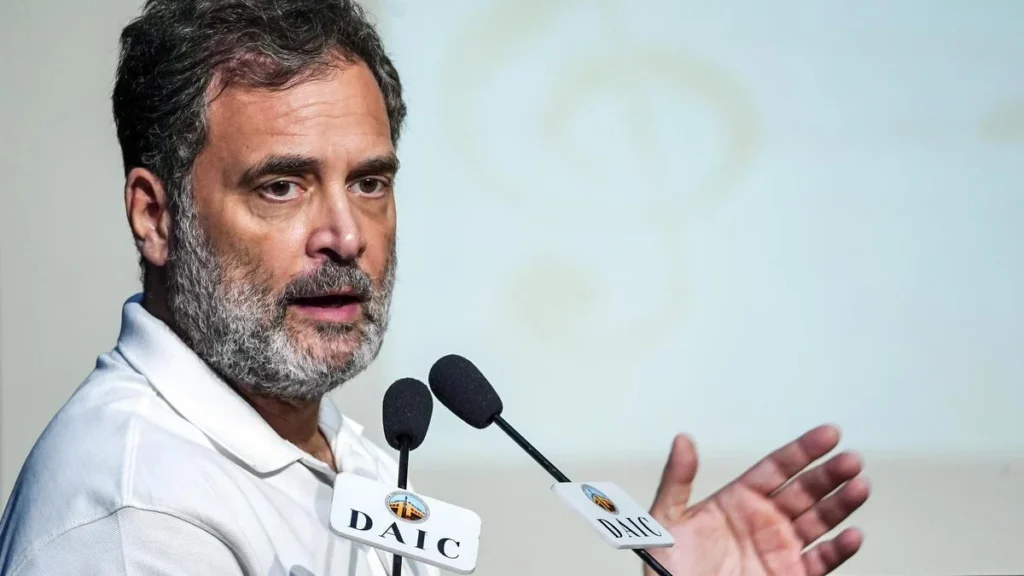
New Delhi, September 13, 2026: In a move that has ignited a fresh round of cultural and political debate, Leader of the Opposition in the Lok Sabha, Rahul Gandhi, took to social media on Sunday to offer a pointed commentary on the dietary habits of the Indian populace. His remarks came precisely one day after Prime Minister Narendra Modi hosted a high-profile gala dinner for the BRICS Summit at the iconic Bharat Mandapam, which featured an exclusively vegetarian menu.
Mr. Gandhi’s post, which appeared across X (formerly Twitter), Facebook, and Instagram, served as a counterpoint to the official proceedings, asserting that "80% of Indians are non-vegetarian" and praising the quality of Indian non-vegetarian cuisine.
The Chronology of the Controversy
The discourse began on the evening of September 12, 2026, when world leaders and delegates gathered at the Bharat Mandapam in New Delhi for a gala dinner hosted by Prime Minister Modi. The event, intended to showcase India’s soft power and rich culinary heritage, was meticulously curated to reflect a strictly vegetarian ethos.
The menu served to the VVIPs included a sophisticated array of plant-based dishes:
- Starters: ‘Khandvi mille’ (a modern take on the traditional feuille steamed gram-flour roll) and ‘khumb galouti’ (pan-grilled mushroom kebabs infused with mint pearls).
- Main Course: ‘Paneer lababdar’, ‘gucchi marmik’ (Himalayan morel mushrooms with tender asparagus), and ‘carrot bean poriyal’.
- Sides: ‘Thakkali belle saaru’ (a light lentil broth), millet pulao, beetroot raita, and a selection of traditional Indian breads.
- Desserts: A fusion of ‘Old Delhi fruit cream with jalebi’ and ‘shahtoot phirni’.
While the culinary presentation was lauded for its aesthetic and technical mastery—complemented by a grand performance by an ensemble of over 100 international and Indian artistes—it did not escape the notice of the political opposition. By Sunday afternoon, Mr. Gandhi utilized the platform of social media to challenge the narrative presented by the state dinner. Posting a photograph of chole bhature—a popular, albeit vegetarian, North Indian dish—he added a personal touch by praising his sister’s cooking, while simultaneously highlighting his stance on the broader dietary demographics of the country.
Supporting Data: Dietary Demographics in India
Rahul Gandhi’s claim that 80% of Indians are non-vegetarian is a figure that has been the subject of intense sociological study and public debate for decades. Various surveys, including those conducted by the Sample Registration System (SRS) and the National Family Health Survey (NFHS), have provided data on meat consumption across the Indian subcontinent.
While India is often culturally perceived as a largely vegetarian nation due to historical, religious, and social norms, empirical data tells a more complex story. According to multiple large-scale surveys, the majority of Indian households report the consumption of some form of animal protein, including fish, poultry, eggs, or red meat.
However, experts point out that the definition of "non-vegetarian" in India is nuanced. Many individuals identify as non-vegetarian even if their consumption of meat is infrequent, often dictated by religious fasting calendars or economic constraints. The contrast between the cultural image of "vegetarian India" and the reality of consumption patterns remains a persistent fault line in the country’s socio-political discourse. By invoking this statistic, Mr. Gandhi sought to highlight a perceived disconnect between the official state narrative—which often emphasizes vegetarianism as a national value—and the lived reality of the vast majority of citizens.
Culinary Diplomacy: A Tool of Statecraft
The decision to serve a purely vegetarian menu at a BRICS Summit is not merely a matter of catering; it is a manifestation of "Culinary Diplomacy." For years, the Indian government has used such events to project a specific image of the nation. By curating a menu that emphasizes millet (which India has heavily promoted on the global stage) and high-end vegetarian delicacies, the government positions India as a champion of sustainable, healthy, and culturally distinct gastronomy.

However, the politicization of food in India has historically been fraught with tension. Food habits are inextricably linked to caste, class, and regional identity. In recent years, debates over meat consumption have often veered into the territory of communal politics, with calls for the banning of certain meats or the restriction of sales during religious festivals.
Mr. Gandhi’s intervention, therefore, can be viewed through two lenses. Supporters see it as an attempt to reclaim the diversity of Indian culture, ensuring that the culinary habits of the majority are not erased or stigmatized in the face of state-sponsored "vegetarian-normative" events. Critics, conversely, argue that the timing of his comments—immediately following an international summit—was a political distraction that undermined a moment of global unity for India.
Implications for Future Political Discourse
The fallout from this social media exchange suggests that the "politics of the plate" will remain a significant theme in the lead-up to future electoral cycles.
1. Polarization of Identity
The incident underscores the growing divide in how political ideologies project "Indianness." For the current administration, the emphasis on vegetarianism aligns with a narrative of cultural pride and tradition. For the opposition, challenging this narrative is a way to appeal to a more inclusive, secular, and diverse definition of the Indian electorate.
2. The Role of Social Media in Opposition Strategy
Rahul Gandhi’s strategy of using short, punchy, and often irreverent posts to challenge government optics has become a staple of his political communication. By juxtaposing his own dining table with the glitz of the Bharat Mandapam, he attempted to create a sense of relatability, positioning himself as someone who understands the "common" Indian experience.
3. Diplomatic Constraints vs. Domestic Messaging
While international summits generally strive for neutrality, the expectation for states to represent a "unified" national culture often forces organizers to choose one cultural narrative over another. The choice to feature only vegetarian food at the BRICS dinner was an intentional act of branding. The subsequent controversy serves as a reminder that any domestic policy or cultural projection by the state is subject to rigorous domestic scrutiny.
Conclusion: Beyond the Menu
As the dust settles on the BRICS Summit, the conversation has shifted from international trade and global economic cooperation to the contents of a dinner plate. Whether or not Mr. Gandhi’s commentary changes the long-term perception of Indian dietary habits, it has successfully forced a conversation about the symbols of power and the representation of the Indian people.
Ultimately, the event serves as a microcosm of the broader political landscape in India—a space where every choice, from the food served at a gala to the statements made on social media, is scrutinized for its symbolic weight. In the evolving theater of Indian politics, the kitchen has become just as much a battlefield as the floor of the Lok Sabha, proving that in a democracy as diverse as India, even the most mundane aspects of daily life remain inherently, and intensely, political.
As of September 13, 2026, no official response has been issued by the Prime Minister’s Office regarding the comments, but the digital discourse continues to rage, reflecting the deep-seated ideological fractures that define modern India.