"Do Not Cede Control": OpenAI’s Sam Altman Urges G7 Leaders to Reclaim AI Governance
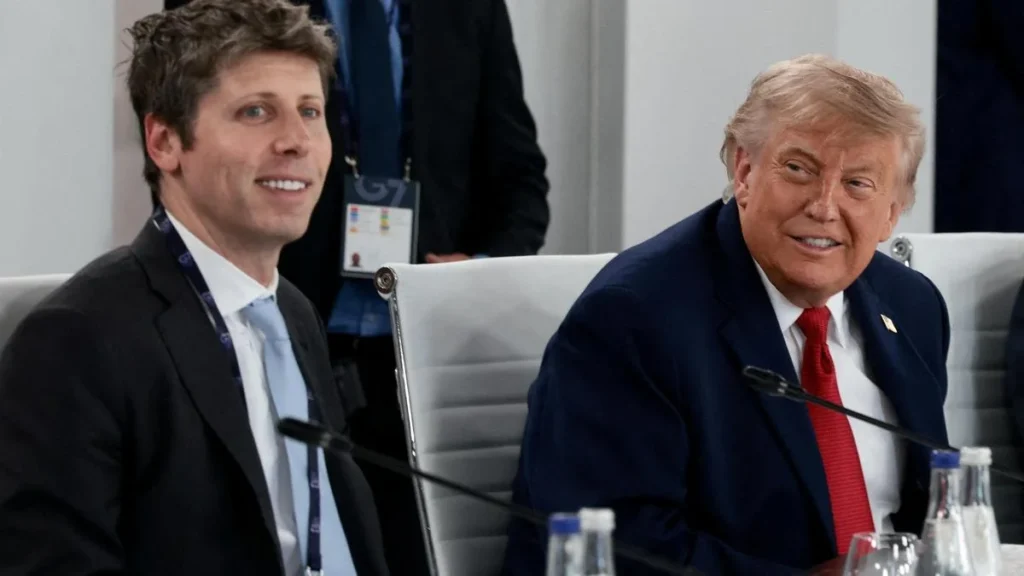
EVIAN-LES-BAINS, France — In a dramatic appeal at the Group of Seven (G7) summit, OpenAI Chief Executive Officer Sam Altman warned world leaders against relinquishing the regulation and governance of artificial intelligence to the private corporations developing it. Addressing a high-level assembly of democratic heads of state, outreach partners, and global technology executives, Altman called for the immediate establishment of international standards to govern the deployment of frontier AI models.
"Do not cede your responsibilities to AI labs like mine," Altman told the gathering during a closed-door session in the French Alpine resort of Evian-les-Bains. His remarks, released in excerpts by OpenAI, represent a pivotal moment in the ongoing global debate over technology governance, effectively asking sovereign governments to strip corporate entities of the power to make the most consequential ethical and existential choices regarding AI.
1. Main Facts: The Corporate Plea for Democratic Oversight
The three-day G7 summit in France culminated in a dedicated session on digital technology, artificial intelligence, and economic security. Against the backdrop of rapid technological advancement and rising geopolitical friction, Altman’s address challenged the traditional boundaries between corporate autonomy and state sovereignty.
The Core Message: Technologists Are Not Philosophers
Altman’s address centered on the premise that while tech companies possess the specialized knowledge required to build artificial cognitive systems, they lack the democratic legitimacy or systemic wisdom to decide how those systems should integrate into human society.
"We develop the technology, and the citizens of the free world make the rules," Altman stated. "Technologists have special knowledge about AI, but they don’t have any special wisdom about humanity."
A Paradigm Shift in Human History
According to Altman, the debate over whether AI holds practical utility is officially "settled." He projected that within the next 12 to 24 months, the global community will witness the deployment of AI systems of "astonishing power." He compared the impending societal transformation to the historical integration of electricity, predicting changes to labor, statecraft, and daily life on a scale unseen for over a century.
Geopolitical and Corporate Demarcation
While acknowledging that OpenAI operates as an American company bound by the federal laws of the United States, Altman emphasized that the firm respects the "sovereignty of the democratic nations" represented at the summit. This distinction highlights the growing tension between multinational tech giants and sovereign states, particularly as AI capabilities begin to intersect with national security, public discourse, and economic stability.
2. Chronology: The Road to the Evian-les-Bains Summit
The discussions at the G7 summit in June 2026 are the culmination of several years of accelerating technological breakthroughs, financial volatility, and divergent regulatory strategies.
[Late 2022 – 2024] ------------------> [2025 – Early 2026] ---------------> [June 2026]
Generative AI Boom                     Extreme Capital Expenditures             G7 Summit (Evian-les-Bains)
- Launch of ChatGPT                    - OpenAI Q1 2026 burn: $3.7B             - Altman addresses G7 leaders
- EU drafts AI Act                     - US restricts Anthropic exports         - Calls for global standards
- US issues executive orders           - EU enforces risk-based compliance       - Trump pursues deregulation
2022–2024: The Generative AI Boom and Early Regulatory Panic
The commercialization of large language models (LLMs) sparked a global race to develop advanced artificial intelligence. While developers focused on scaling compute power, governments scrambled to understand the implications of generative technologies. The European Union began drafting its comprehensive AI Act, while the United States relied on voluntary commitments and executive orders to manage risk.
2025–Early 2026: Capital Intensity and National Security Guardrails
By early 2026, the financial reality of building frontier AI became starkly apparent. Operating costs, talent acquisition, and massive data center investments drove corporate expenditures to historic heights. Simultaneously, national security concerns prompted the U.S. government to intervene directly in the export and access of proprietary AI software.
June 15–17, 2026: The G7 Summit in France
- June 15 (Day 1): G7 leaders from Canada, France, Germany, Italy, Japan, the United Kingdom, and the United States arrive in Evian-les-Bains. Initial sessions focus on macroeconomic stability, supply chain resilience, and relations with the Global South.
- June 16 (Day 2): Outreach partners, including leaders from major developing democracies such as India, Brazil, and Kenya, join the summit to discuss equitable technology transfer and climate finance.
- June 17 (Day 3): The summit hosts a working lunch featuring G7 leaders, outreach partners, and prominent tech CEOs, including Sam Altman. Altman delivers his address, urging states to reclaim regulatory control.
- June 18, 2026: Excerpts of Altman’s speech are published globally, igniting intense debate among policymakers, industry analysts, and civil society.
3. Supporting Data: The Cost of Progress and Regulatory Divergence
To understand the urgency behind Altman’s address, it is necessary to examine the financial pressures facing AI developers and the stark regulatory division between the world’s leading economic blocs.
The Financial Strain of Frontier AI
Developing next-generation AI models requires unprecedented financial resources. According to financial reports from early 2026, OpenAI burned through an estimated $3.7 billion in the first quarter of 2026 alone.
| Metric / Financial Category | Estimated Q1 2026 Value (USD) | Primary Drivers |
|---|---|---|
| Total Cash Burn | $3.7 Billion | Infrastructure, R&D, Talent Acquisition |
| Compute & Hardware Costs | ~$2.1 Billion | Next-generation GPU clusters, electricity, cloud hosting |
| Research & Development | ~$1.1 Billion | Post-training, safety alignment, red-teaming |
| Personnel & Operations | ~$500 Million | Hyper-competitive compensation for top-tier AI researchers |
These figures underscore a critical reality: the race to build advanced AI is concentrated in a handful of heavily capitalized firms, creating a corporate oligopoly that holds immense leverage over the future of human computing.
The Regulatory Divide: United States vs. European Union
The G7 summit highlighted a profound ideological split between the United States and its European allies regarding the oversight of artificial intelligence.

                       ┌─────────────────────────────────────┐
                       │       APPROACHES TO AI POLICY       │
                       └──────────────────┬──────────────────┘
                                          │
                  ┌───────────────────────┴───────────────────────┐
                  ▼                                               ▼
┌───────────────────────────────────┐           ┌───────────────────────────────────┐
│     UNITED STATES (DEREGULATORY)  │           │      EUROPEAN UNION (PREVENTATIVE)│
├───────────────────────────────────┤           ├───────────────────────────────────┤
│ • Focus: Speed, innovation, &     │           │ • Focus: Fundamental human rights │
│   maintaining lead over China.    │           │   and systemic risk mitigation.   │
│ • Actions: Rolling back federal   │           │ • Actions: Risk-based tiers,      │
│   oversight under Trump admin.    │           │   strict compliance, penalties.   │
│ • National Security: Strict state │           │ • Sovereignty: Standardizing      │
│   unilateral restrictions.        │           │   practices across 27 nations.    │
└───────────────────────────────────┘ └───────────────────────────────────┘- The European Union’s Preventative Framework: EU member states (including G7 participants France, Germany, and Italy) have implemented a risk-based compliance model. This framework categorizes AI systems by their potential for harm—ranging from "minimal risk" to "unacceptable risk." High-risk applications face stringent transparency requirements, data governance audits, and steep financial penalties for non-compliance.
- The United States’ Competitive Deregulation: Under President Donald Trump, the U.S. executive branch has pursued a deregulatory strategy. The administration has systematically rolled back federal oversight to foster rapid commercial innovation, aiming to maintain American dominance over foreign adversaries like China.
- Unilateral Protectionism: Despite its domestic deregulatory stance, the Trump administration has taken protectionist actions to safeguard intellectual property. This includes a temporary ban on foreign nationals accessing the most advanced AI models developed by U.S.-based Anthropic, citing acute national security risks.
4. Official Responses and Geopolitical Posturing
Altman’s statements provoked immediate, varied reactions from world leaders, policy experts, and international delegates attending the summit in Evian-les-Bains.
The Host Nation and European Allies
French officials, representing the host country, welcomed Altman’s speech as validation of the European Union’s regulatory philosophy. European leaders argued that a laissez-faire approach to AI is unsustainable, particularly when technologies pose systemic risks to labor markets, public discourse, and democratic integrity.
"We cannot allow corporate entities, however well-intentioned, to dictate the social contract of the 21st century," remarked a senior French diplomat close to the negotiations. "Mr. Altman’s admission that tech labs lack ‘special wisdom about humanity’ is a sobering reminder that democratic institutions must take the lead."
The United States Administration
President Donald Trump and his advisors maintained a complex position. While the administration supports keeping American tech companies unburdened by domestic red tape, it views the underlying technology through a national security lens. U.S. officials at the summit emphasized that any global standards must not compromise Western competitiveness or hinder the rapid deployment of defense-oriented AI systems.
"We want American companies to win the global race," a U.S. commerce official stated on the sidelines of the summit. "But we also recognize that national security requires us to keep our most sensitive breakthroughs out of the hands of hostile foreign actors. There is a balance to be struck between corporate freedom and national defense."
Outreach Partners and the Global South
Delegates from outreach countries, including India, Brazil, and Kenya, expressed concerns over the concentration of AI power in Western corporations. Leaders from these nations argued that global standards must be inclusive, ensuring that the Global South is not merely a consumer of Western-designed technologies but an active participant in their development and governance.
Indian representatives highlighted the need for open-source models and localized AI solutions that address regional challenges in agriculture, education, and healthcare, warning against a "digital neo-colonialism" where a select few Silicon Valley firms dictate global economic rules.
5. Implications: The Future of Global AI Governance
Altman’s address at the G7 summit exposes a fundamental tension at the heart of modern technology: the mismatch between the borderless, rapid advancement of corporate AI and the localized, deliberate processes of democratic governance.
The Risk of Regulatory Capture
While Altman’s call for government regulation appears altruistic, some critics and industry watchdogs view it with skepticism. Analysts suggest that calling for complex, global regulatory frameworks can act as a form of "regulatory capture."
By encouraging governments to erect high compliance barriers, established giants like OpenAI—despite their massive cash burn—can solidify their market positions. Startups and open-source developers, lacking the capital to navigate dense international regulatory webs, could be effectively locked out of the market.
The Illusion of a Unified Global Standard
The divergence between the U.S. protectionist-deregulatory model and the European Union’s rights-based approach suggests that a single, unified global standard is unlikely to materialize. Instead, the world may see a fragmented digital landscape characterized by:
- A Western Democratic Bloc: Divided internally between the EU’s strict compliance protocols and the US’s market-driven, national-security-centric policies.
- Sovereign Enclaves: Individual nations restricting access to foreign-made models to protect local labor markets, cultural values, or domestic security.
- An AI Cold War: Intensified competition between Western allied nations and state-directed tech ecosystems in autocratic states, primarily China.
The Challenge of the "Electricity" Era
If Altman’s prediction holds true and AI systems achieve "astonishing power" within the next two years, the window for proactive legislation is rapidly closing. Unlike electricity, which took decades to scale and integrate into global infrastructure, software-based AI can be deployed globally in a matter of seconds.
The challenge for G7 leaders is to build agile regulatory frameworks that can adapt to the exponential growth of machine intelligence without stifling the scientific breakthroughs that could solve humanity’s most pressing challenges. Altman’s address served as a stark reminder: if elected governments do not step up to write the rules of this new era, corporate laboratories will write them by default.