OpenAI’s Frontier Models Arrive on Amazon Bedrock: A New Era for Generative AI and Developer Productivity
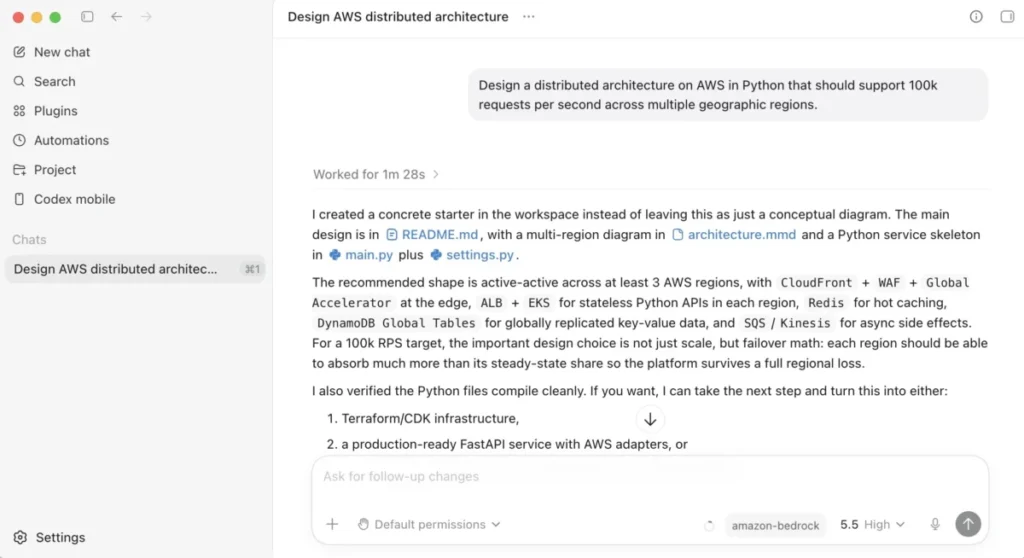
In a landmark expansion of its generative AI ecosystem, Amazon Web Services (AWS) has officially integrated OpenAI’s latest flagship models—GPT-5.5 and GPT-5.4—alongside the powerful Codex coding agent into the Amazon Bedrock platform. This strategic move, initially teased during the "What’s Next with AWS 2026" event, represents a significant evolution in how enterprise-grade applications access frontier AI, combining OpenAI’s sophisticated reasoning capabilities with the robust, secure, and highly scalable infrastructure of the AWS cloud.
Main Facts: Unlocking Frontier Intelligence
The integration brings OpenAI’s most advanced models to the Bedrock environment, specifically designed to handle the rigorous demands of modern software engineering and complex agentic workflows.
At the core of this announcement are two distinct iterations of the GPT-5 series:
- GPT-5.5: Engineered for the most demanding professional workloads, this model excels in high-stakes reasoning, nuanced decision-making, and complex problem-solving. It is positioned as the premier choice for organizations requiring the highest level of cognitive performance from their AI infrastructure.
- GPT-5.4: Optimized for price-performance, this model provides a highly efficient alternative for businesses that need top-tier reasoning capabilities without the overhead associated with the most intensive parameter models.
These models are accessed via the new Responses API, a next-generation inference engine built from the ground up to ensure high availability, low latency, and enterprise-grade security. By leveraging this API, developers can maintain stateful, multi-turn conversations and orchestrate complex tool usage, which is essential for background processing and long-running AI operations.
Beyond the core models, the inclusion of Codex—OpenAI’s dedicated coding agent—marks a turning point for developer productivity. With over 4 million active weekly users, Codex is now turbocharged by the GPT-5.5 inference engine, allowing it to handle long-horizon workflows, refactoring, and sophisticated debugging across massive codebases with unprecedented precision.
Chronology of the Integration
The rollout of these capabilities has been a phased, strategic effort aimed at ensuring stability and widespread availability:
- May 24, 2026: Initial preview announcement at "What’s Next with AWS 2026," signaling the impending arrival of OpenAI models on Bedrock.
- June 1, 2026: Official launch of GPT-5.5 and GPT-5.4 on Amazon Bedrock. The initial release emphasized the
ResponsesAPI, with a commitment to integrating console support shortly thereafter. - June 3, 2026: Expansion of GPT-5.4 availability to include the AWS GovCloud (US-West) Region, catering to public sector and highly regulated industry requirements.
- June 7, 2026: Integration of the new, optimized Amazon Bedrock console, providing a streamlined user experience for managing both Anthropic and OpenAI-compatible APIs in a unified dashboard.
Supporting Data and Technical Implementation
The technical architecture of this integration is built on simplicity and portability. By using the OpenAI SDK, developers can transition to Bedrock with minimal code changes.
Authentication and Connectivity
To ensure security, all processing remains within the selected Bedrock region, addressing critical data residency requirements. Developers can authenticate using either standard Bedrock API keys or the AWS SDK credential chain. For those using the Codex CLI or the VS Code extension, configuration is handled via a simple config.toml file:
model = "openai.gpt-5.5"
model_provider = "amazon-bedrock"
[model_providers.amazon-bedrock.aws]
region = "us-east-2"
Efficiency and Scaling
Unlike traditional software models that require hefty seat licenses or long-term commitments, Amazon Bedrock operates on a pure per-token pricing model. This democratization of access allows startups and global enterprises alike to scale their AI usage in direct proportion to their business needs. The Responses API, specifically, handles the heavy lifting of state management, meaning developers no longer need to manually track conversation history or context windows for complex, multi-step tasks.
Official Perspectives and Strategic Implications
The partnership between AWS and OpenAI, facilitated through the Bedrock platform, underscores a shift in how companies view AI deployment.

Why the "Responses" API Matters
The decision to utilize the Responses API instead of standard chat completion endpoints is intentional. For enterprises, the primary bottleneck in AI adoption is often "tool orchestration"—the ability for an AI to actually do things rather than just provide text. The Responses API allows for hosted tools and function calls, enabling the model to interact with AWS services directly, query databases, or trigger CI/CD pipelines as part of a single workflow.
Impact on Developer Productivity
Codex’s integration with GPT-5.5 is expected to reduce the "context fatigue" often associated with AI-assisted coding. Because the model can maintain a long-horizon understanding of an entire repository, it can suggest refactors that are aware of downstream dependencies, a task that was previously prone to hallucination in smaller models.
Implications for the Enterprise
The availability of these models in AWS GovCloud is particularly telling. It signals that the security and governance protocols surrounding these OpenAI models have reached a level of maturity that satisfies even the most stringent regulatory bodies. This opens the door for government agencies and financial institutions to leverage frontier AI for document analysis, policy compliance, and secure software development.
Looking Ahead: A Hybrid Future
The integration of OpenAI’s models into Amazon Bedrock does not simply represent a new tool in the toolbox; it represents the maturation of the "Model-as-a-Service" (MaaS) paradigm. By allowing customers to choose between various model providers—whether it be Anthropic’s Claude, Amazon’s own Titan, or now OpenAI’s GPT-5 series—AWS is positioning Bedrock as the definitive "neutral ground" for AI infrastructure.
As of June 2026, the ecosystem is fully operational. Organizations can now deploy high-performance reasoning agents, automate complex software engineering cycles with Codex, and maintain strict data sovereignty within the AWS cloud.
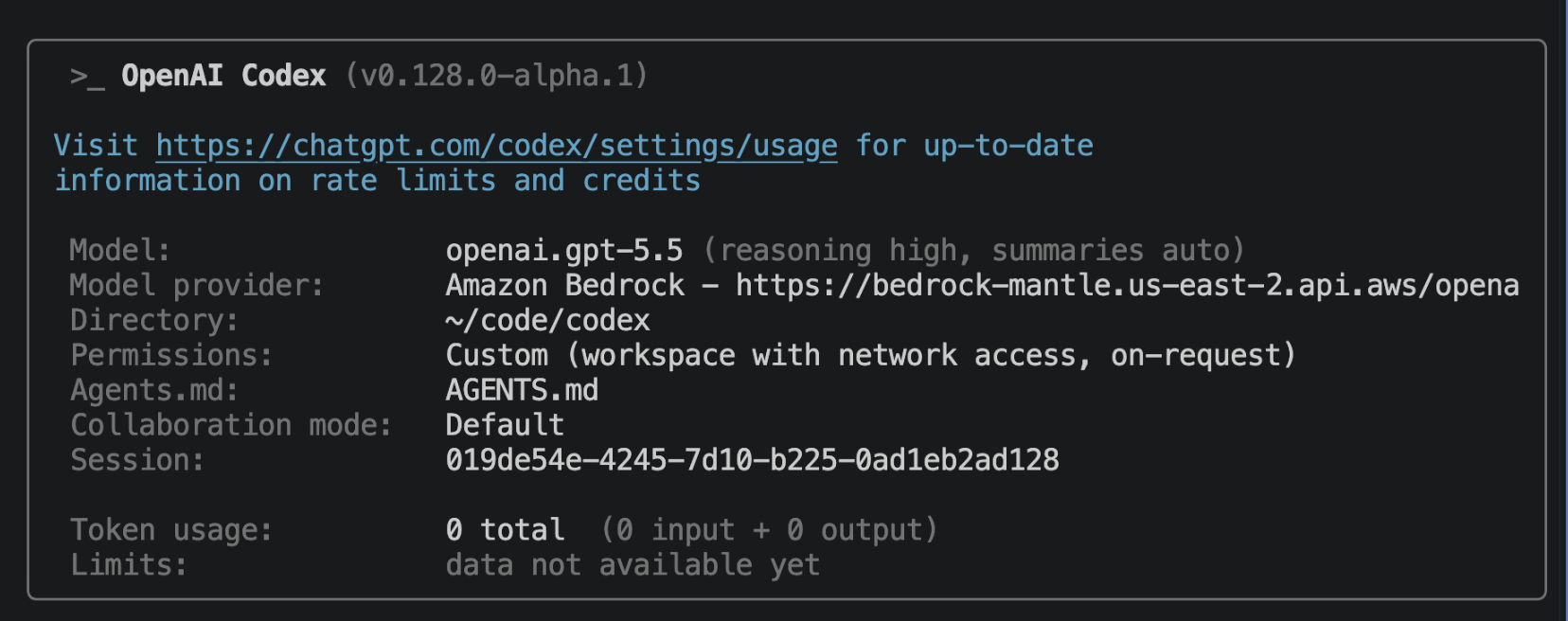
For teams looking to get started, the path is clear: update the OpenAI SDK, configure the base URL to point to the Bedrock mantle endpoints, and begin leveraging the power of GPT-5.5. The era of "AI on your own terms" has officially arrived on AWS.
For further documentation, technical guides, or to view the full compatibility list, developers are encouraged to visit the OpenAI on Amazon Bedrock landing page or join the discussion on the AWS re:Post for Amazon Bedrock.
This report was compiled to reflect the technical specifications and operational milestones as of June 7, 2026.