Elevating DevSecOps: A Comprehensive Deep Dive into the Evolution of AWS Security Agent
The modern software development lifecycle is a high-speed, high-stakes environment where the velocity of deployment often clashes with the critical necessity of security. Since its initial preview at re:Invent 2025, the AWS Security Agent—a cornerstone of the broader AWS Continuum initiative—has sought to bridge this gap. By acting as a "frontier agent" that secures applications proactively from the initial design phase through to final deployment, AWS is fundamentally shifting the security paradigm from reactive patching to preventative intelligence.
As of June 2026, AWS has significantly expanded the capabilities of the Security Agent, introducing deep repository analysis, expanded integrations with third-party platforms, and seamless AI-driven IDE workflows. These updates represent a strategic move to embed security expertise directly into the developer’s natural habitat.
The Chronology of Innovation: From Preview to Powerhouse
The trajectory of the AWS Security Agent demonstrates a rapid maturation process, characterized by a commitment to iterative, feedback-driven development.

- re:Invent 2025 (The Genesis): AWS unveiled the Security Agent in preview. The core vision was to provide a unified tool that performed on-demand, application-specific penetration testing, identifying risks verified through actual exploitability testing.
- March 2026 (General Availability): Following months of rigorous refinement, AWS officially announced the general availability (GA) of on-demand penetration testing, empowering teams to stress-test their production-ready code against real-world attack vectors.
- May 2026 (The Code Review Milestone): A new preview phase introduced full repository code review, moving beyond simple syntax-based linting to provide context-aware, deep semantic analysis of entire codebases.
- June 2026 (Integration & AI Expansion): The latest update brings comprehensive support for non-GitHub repositories (GitLab/Bitbucket), Confluence integration for documentation context, and the launch of the Kiro power and Claude Code plugin, marking the transition of the Security Agent into a truly pervasive AI-dev tool.
Core Pillars of the Enhanced AWS Security Agent
The latest enhancements categorize the Security Agent’s utility into four primary pillars: Code Security, Design Compliance, Threat Modeling, and IDE Integration.
1. Advanced Code Review and Repository Flexibility
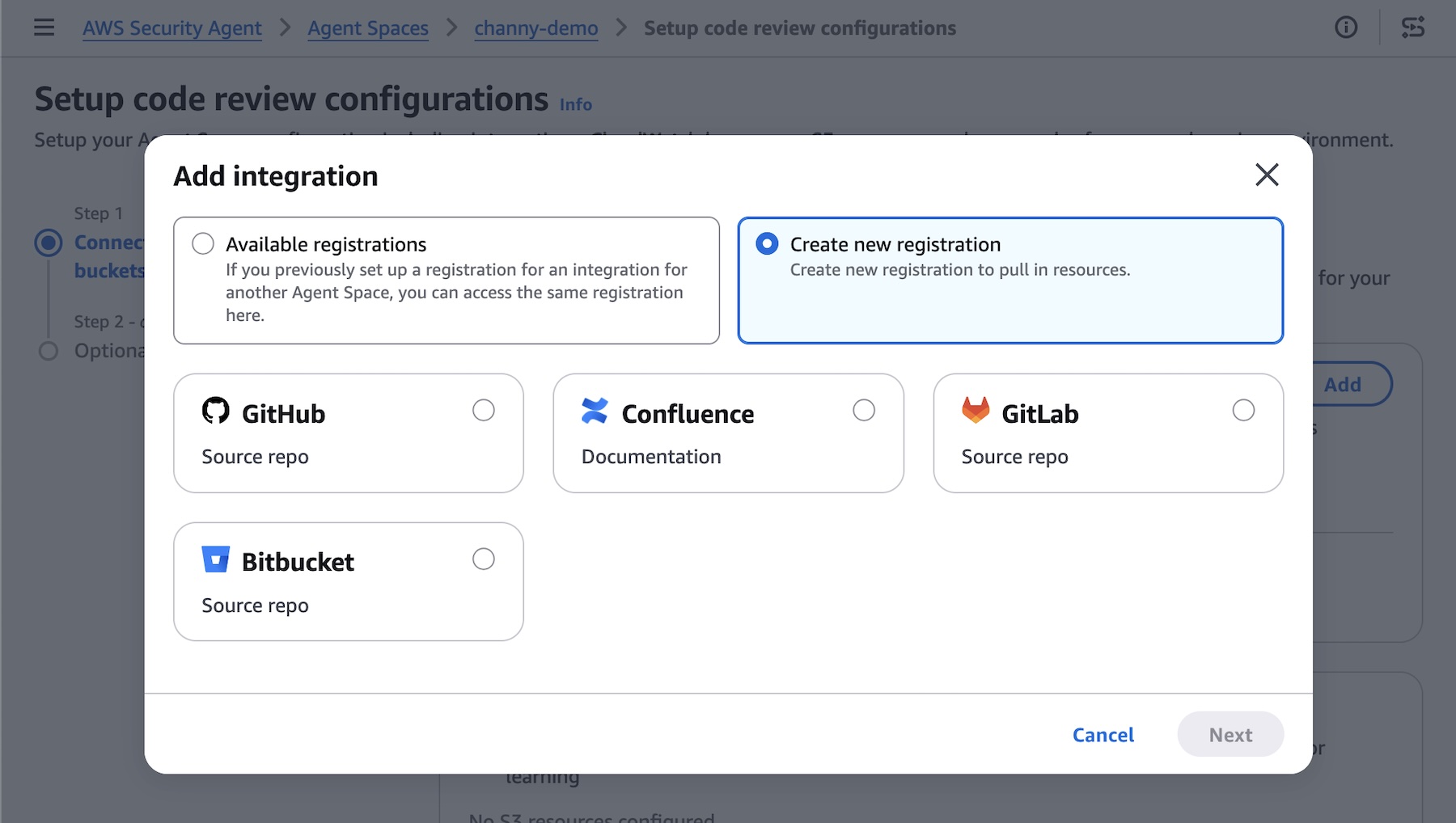
Developers no longer have to operate within a walled garden. The Security Agent now supports GitLab and Bitbucket, encompassing both SaaS and self-hosted deployments. This inclusivity ensures that security teams can standardize their audit procedures regardless of their underlying version control architecture.
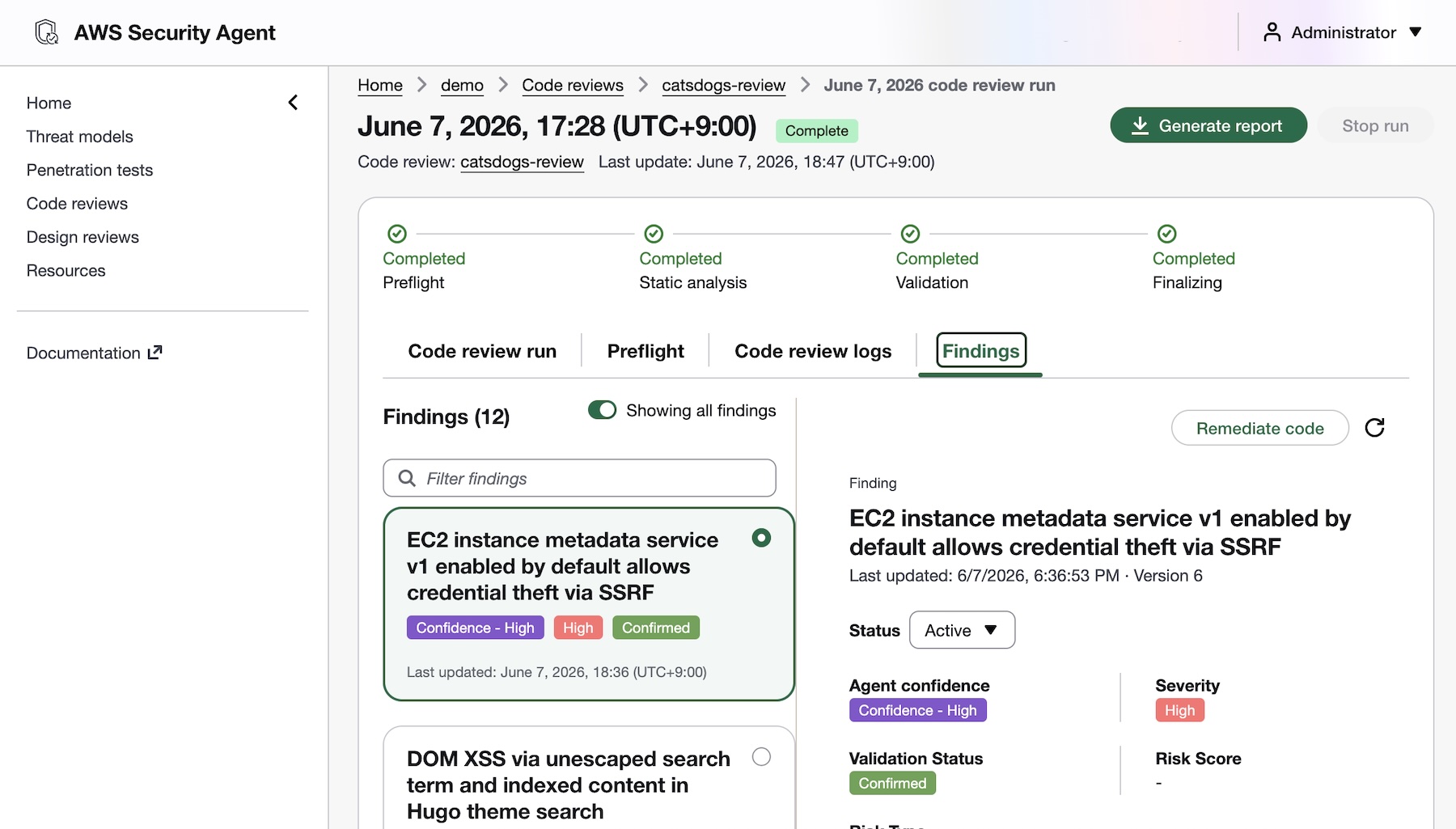
Furthermore, by integrating Confluence, the agent can reference internal security documentation, architectural standards, and team-specific requirements. This creates a "context-aware" security engine that understands not just what the code does, but why it was written in a certain way. By moving beyond pattern matching to deep, reasoning-based analysis, the agent identifies complex vulnerabilities—such as insecure logic flows or improper trust boundary management—that traditional static analysis tools frequently overlook.

2. Design-Time Compliance and Guardrails
Security starts at the whiteboard. The Security Agent’s updated design review module allows teams to continuously validate architectural choices against managed compliance packs, including the AWS Well-Architected Framework, NIST CSF, and PCI DSS.
Because every security finding is mapped back to the organization’s specific compliance posture, developers receive immediate feedback on whether a proposed architecture will meet regulatory requirements before a single line of code is committed. This "shift-left" approach significantly reduces the "compliance debt" that often stalls projects in the final stages of the development cycle.
3. Automated Threat Modeling
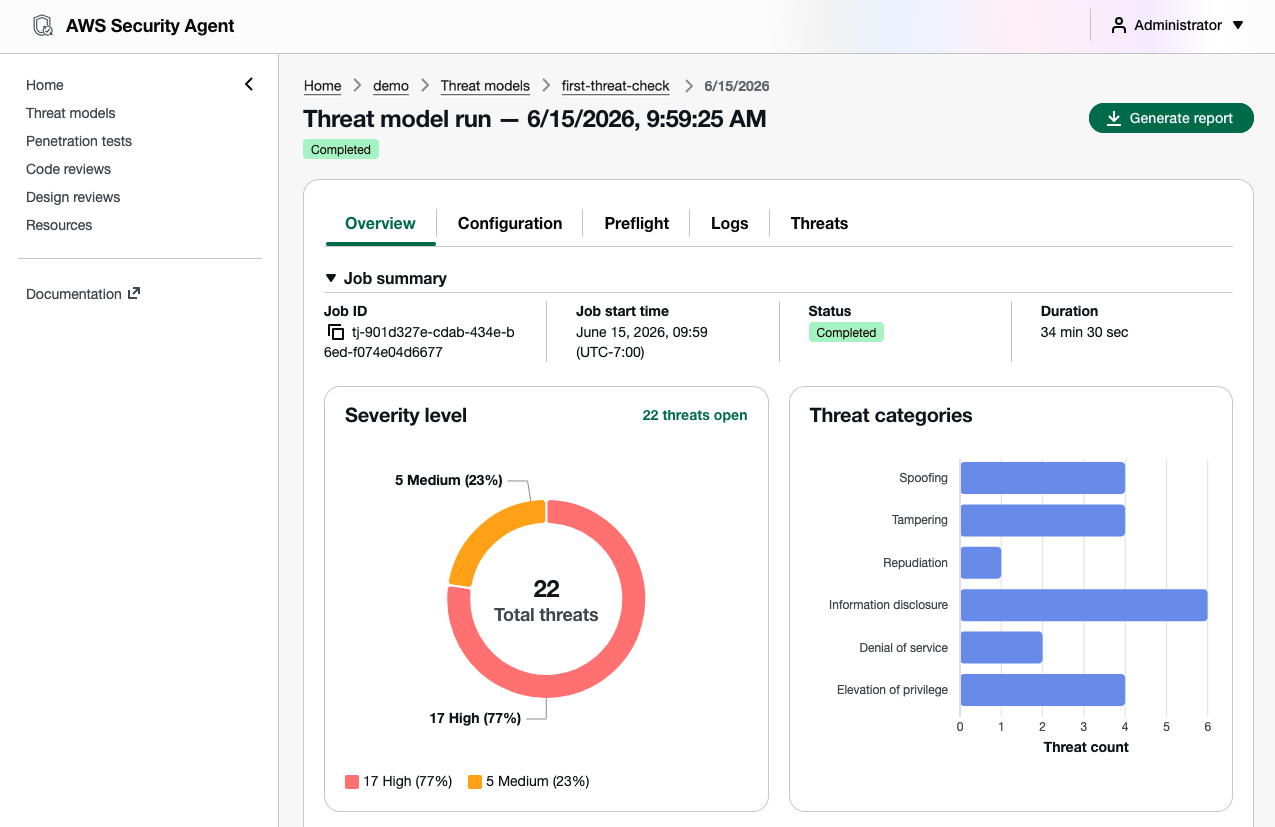
Perhaps the most sophisticated update is the automated generation of threat models. By ingesting design documentation and repository architecture, the Security Agent maps data flows, identifies potential attack vectors, and highlights critical trust boundaries.
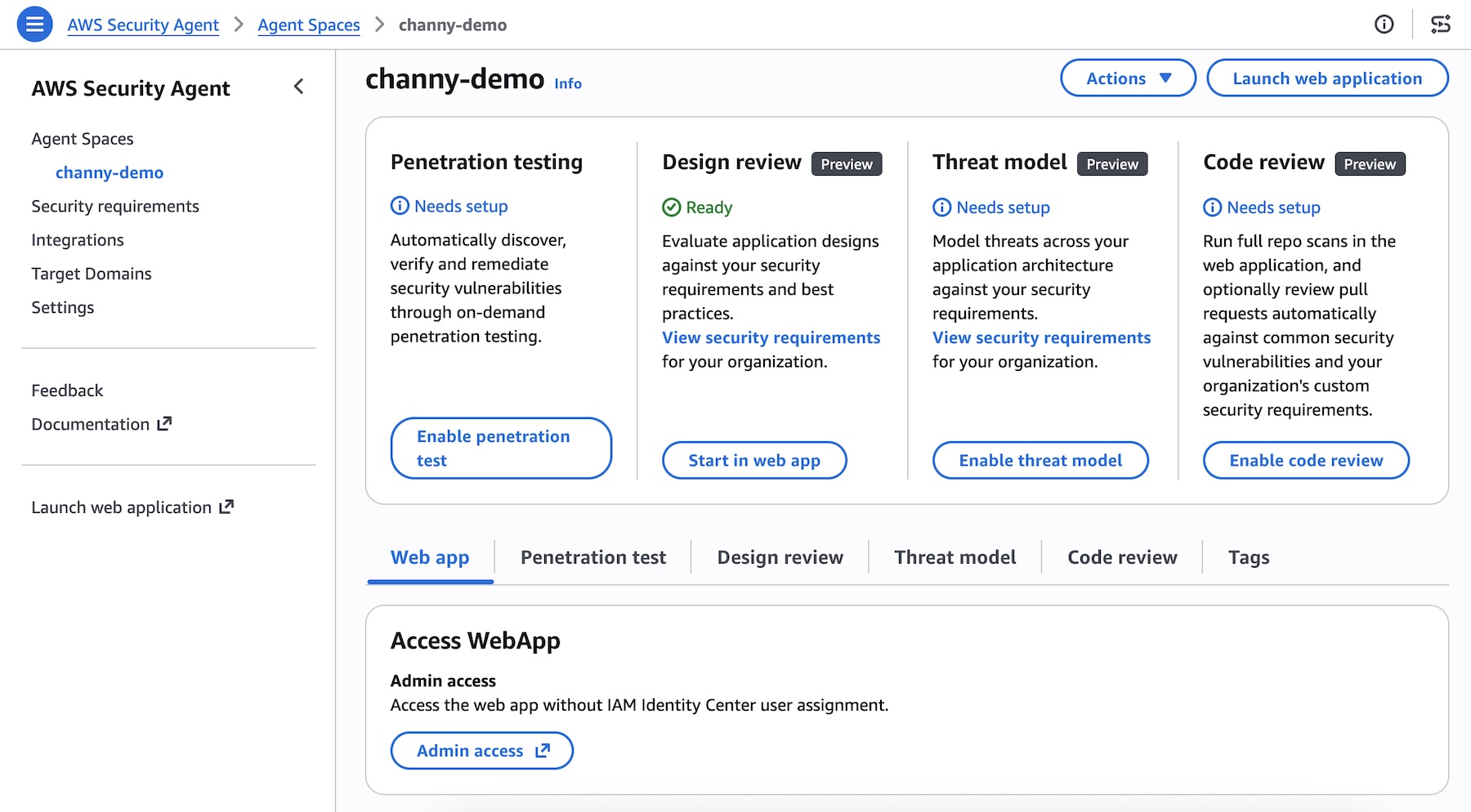
The agent does more than just list risks; it prioritizes them based on business logic and technical exposure. This allows engineering leads to focus their remediation efforts on high-impact threats, effectively transforming threat modeling from a manual, time-consuming exercise into an automated, living artifact of the software development process.
4. Kiro Power and Claude Code Integration
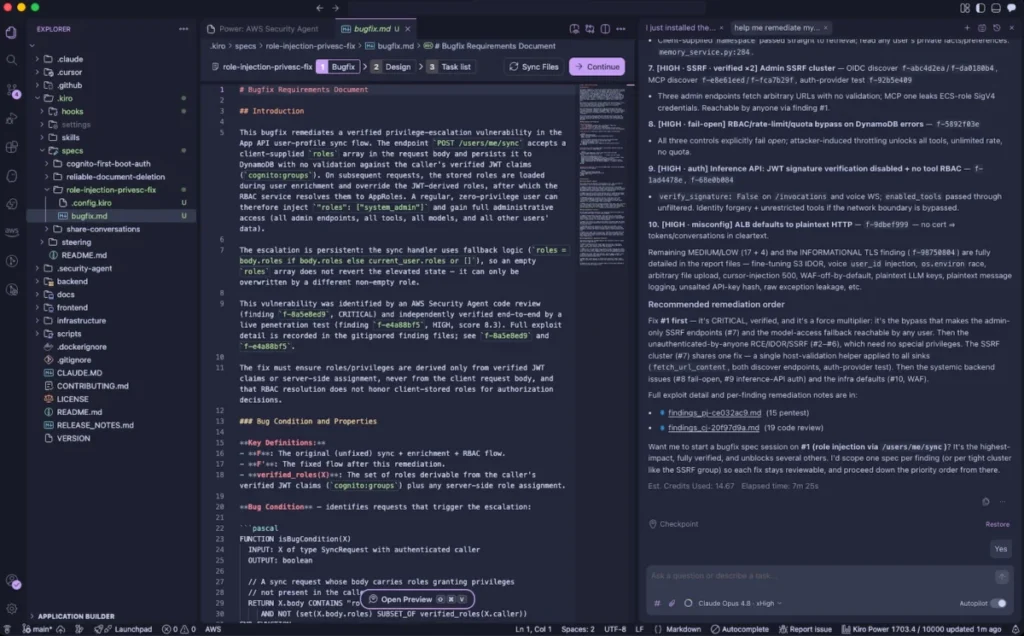
In a significant leap for developer productivity, the introduction of the Kiro power and the Claude Code plugin brings the power of the Security Agent directly into the IDE.
Through the Model Context Protocol (MCP), developers can now trigger security scans, request remediation, and initiate threat models without leaving their development environment. By typing simple commands like "Run a full security scan on this repo" or "Help me remediate my findings," developers receive fix commits and remediation guidance inline. This integration minimizes context switching, allowing security to be handled with the same ease as debugging a functional code error.
Implications for the DevSecOps Landscape
The implications of these advancements are profound. By embedding a "Security-Agent-as-a-Service" across the lifecycle, organizations can achieve a state of continuous security validation.
- Bridging the Skills Gap: Not every developer is a security expert. The AWS Security Agent acts as a virtual security architect, providing actionable guidance that helps junior and senior developers alike write more secure code.
- Reducing "Security Fatigue": By automating the mundane aspects of scanning and compliance checking, the agent frees security teams to focus on strategic initiatives rather than manual triage.
- The Power of Proof: The agent’s ability to simulate exploits—providing proof of exploitability—removes the ambiguity often associated with false positives in automated scanning. When the agent flags a vulnerability, it demonstrates how it can be exploited, which is a powerful motivator for immediate remediation.
Supporting Data and Technical Context
According to recent industry trends, the cost of fixing a security vulnerability post-deployment is often 10 to 100 times higher than fixing it during the design or development phase. The AWS Security Agent directly addresses this metric.
The integration with the AWS Security Agent MCP server allows for an extensible architecture. Developers are not limited to pre-defined toolchains; they can integrate the agent into any AI-powered IDE that supports MCP. This open-source approach to security tooling represents a departure from the proprietary, closed-loop systems of the past, signaling AWS’s intent to make the Security Agent an industry-standard component of the modern DevOps stack.
Official Stance and Future Outlook
AWS has framed this rollout as a "unified agentic offering." By covering design, development, and deployment within a single ecosystem, the company is effectively commoditizing high-level security expertise.
"We are closing the loop," says Channy Yun, a leading voice in the AWS developer relations community. "From the moment you draft a design document to the moment you push to production, the AWS Security Agent is validating, testing, and securing your path."
How to Get Started
- Console Access: Navigate to the AWS Security Agent Console to enable code reviews and threat modeling.
- IDE Setup: Install the Kiro power and configure the MCP server to begin running scans directly from your terminal or editor.
- Explore Pricing: AWS currently offers a 2-month free trial, allowing teams to integrate and test the agent’s capabilities against their own production environments at no immediate cost.
As the industry moves toward more autonomous, AI-driven development, the AWS Security Agent stands as a prime example of how cloud providers are integrating security as a native feature of the infrastructure, rather than an add-on. For organizations looking to scale their development velocity without sacrificing their security posture, the path forward is increasingly clear: leverage the power of agentic, continuous security validation.
For further technical specifications, please consult the official AWS Security Agent User Guide, or engage with the community via AWS re:Post.