The Missing Dimension: Solving 3D Transformations in Cross-Document View Transitions

For web developers pushing the boundaries of modern user interfaces, the introduction of the View Transitions API was a watershed moment. By enabling seamless, native-feeling transitions between states, it brought app-like fluidity to the web. Yet, as developers began to experiment with more complex animations—specifically 3D transforms—they hit a frustrating wall. When attempting to implement a 3D flip effect between two pages, the browser seemed to ignore the depth, rendering the transition as a flat, uninspired animation.
This article explores the technical nuances behind this limitation, the "flattening" behavior of the browser, and the surprisingly elegant solution that allows developers to achieve true 3D spatial depth in cross-document transitions.
The Core Challenge: Why 3D Breaks in View Transitions
To understand the problem, one must first understand how 3D space works in CSS. Typically, a 3D effect requires a "stage" or a parent container with the perspective property applied. This property defines the distance between the user’s eye and the Z=0 plane, providing the visual depth necessary for rotations on the X or Y axis to look realistic.
When we manipulate standard DOM elements—such as a simple image card—this works perfectly. We define a .scene container, assign perspective, and animate the child .card. The browser calculates the projection, and the user sees a crisp, realistic flip.
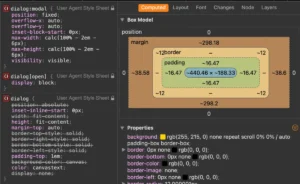
However, when we move to cross-document view transitions, the game changes. The View Transitions API generates a snapshot of the outgoing page and the incoming page, placing them into a specialized pseudo-element tree that exists outside the standard DOM flow. Because this tree is rendered in its own layer, specifically positioned and managed by the browser’s User Agent (UA) styles, the standard inheritance chain for the perspective property is broken. When developers attempt to set perspective on the html or :root elements, the browser simply fails to propagate that depth to the transition snapshots.
A Chronology of the Discovery
The journey to uncovering the fix was one of trial, error, and intense debugging.
Phase 1: The Hypothesis
Initially, developers assumed that since the ::view-transition pseudo-element acts as a container for the snapshot, it should serve as the natural parent for the perspective property. Logic dictated that if the snapshot exists within this pseudo-tree, the parent should be the root of that tree.
Phase 2: The Failed Implementations
Throughout the development cycle, several attempts were made to force the effect:
- Applying
perspectiveto:root: This resulted in no visual change. The browser rendered the transition in a perfectly flat 2D space. - Applying
perspectiveto::view-transition-group: This also proved futile. The UA styles for these pseudo-elements, which control layout, positioning, and scale, appear to override or ignore parent-applied 3D depth. - The "Nesting" Misconception: Many assumed that because view transitions use a flattened tree structure, the solution lay in complex CSS nesting. As noted by browser engineers, this flat tree approach is vital for performance but inherently hostile to traditional 3D perspective inheritance.
Phase 3: The Breakthrough
The "Aha!" moment came from recognizing the distinction between the CSS perspective property and the perspective() transform function. The property requires a parent-child relationship to define a shared 3D space. The function, however, applies the projection directly to the element being transformed. By shifting the perspective definition from the parent container to the individual keyframe animation, the need for an external container is completely bypassed.
Supporting Data and Technical Nuance
The technical architecture of the View Transitions API is designed for stability and performance. The browser captures the visual state of the DOM and "promotes" these snapshots to their own layers.
The Render Layer Problem
When a navigation event triggers a view transition, the browser creates a tree consisting of:
::view-transition(The container)::view-transition-group(The layout manager)::view-transition-image-pair::view-transition-old/::view-transition-new
Because the UA styles for these elements heavily rely on transform and position to manage the transition, applying an external perspective property creates a conflict in the rendering engine. The browser effectively "flattens" the layer to ensure the transition remains performant and predictable.
The perspective() Advantage
By using transform: perspective(1100px) rotateY(...) within the @keyframes block, we are essentially telling the browser: "Calculate the projection for this specific element as if it were in a 3D environment, regardless of its position in the document tree." Because this function is self-contained, it circumvents the layer-flattening conflict.
Official Perspectives and Browser Standards
While the View Transitions API is a massive leap forward, it remains a "living" specification. Discussions among browser engine developers (such as those at Google and Mozilla) highlight that the current implementation of the pseudo-element tree is intended to solve the most common use cases: fades, slides, and cross-fades.
The limitation regarding 3D transforms is a known trade-off. By isolating the transition in a separate layer, the API avoids layout thrashing and ensures that animations are offloaded to the GPU. For those requiring 3D effects, the community recommendation—consistent with the discovery of the perspective() function—is to favor self-contained transforms. This maintains the integrity of the UA-controlled layers while providing the aesthetic depth developers crave.
Implications for Web Design
What does this mean for the future of web design?
- Increased Sophistication: With the barrier of "flat" transitions removed, developers can now create truly immersive navigation experiences. Think of book-like page turns or card-flip transitions that feel like tangible, physical objects.
- Performance Maintenance: By utilizing the
perspective()function rather than trying to force external styles on the root, developers ensure their animations remain performant. Using theperspectiveproperty on thebodyorhtmltags can often lead to layout recalculations; using the transform function keeps the animation contained within the compositor thread. - Cross-Document Consistency: As browser support for cross-document transitions expands beyond experimental flags, the standard for what constitutes a "high-quality" transition is rising. Implementing 3D depth ensures that a site feels cohesive and modern, regardless of the navigation method.
The Final Implementation Pattern
For those looking to implement this, here is the robust template to follow:
@keyframes flip-out
  0%
    transform: perspective(1100px) rotateY(0deg);
    opacity: 1;

  100%
    transform: perspective(1100px) rotateY(-90deg);
    opacity: 0;


::view-transition-old(root)
  animation: flip-out 0.4s ease-in forwards;


::view-transition-new(root)
  /* Inverse logic for the incoming page */
  animation: flip-in 0.4s ease-out forwards;
Conclusion
The evolution of the web is rarely a linear path; it is a series of hurdles and creative workarounds. The struggle to get 3D transitions working in cross-document views highlights a fundamental truth about modern CSS: when the standard inheritance models fail, the solution often lies in the granular application of transformation functions.
By moving away from global parent-based perspective settings and embracing the self-contained power of perspective(), developers can unlock a new realm of visual expression. The "missing dimension" is no longer missing—it was simply hiding in the keyframes all along. As we continue to refine how we build for the web, these small, persistent discoveries will define the next generation of user experience.