WhatsApp Tightens Security: New Server-Side Update Blocks Logins on Outdated Operating Systems
In a significant move to fortify its platform against emerging cybersecurity threats, Meta-owned WhatsApp has introduced a mandatory system check for its global user base. Through a silent, server-side update, the messaging giant is now actively preventing users from accessing their accounts if their devices are running obsolete versions of Android or iOS. This development, which requires no action from the user regarding the app version itself, marks a transition toward more aggressive security enforcement at the OS level.
Main Facts: The New Gateway Security Protocol
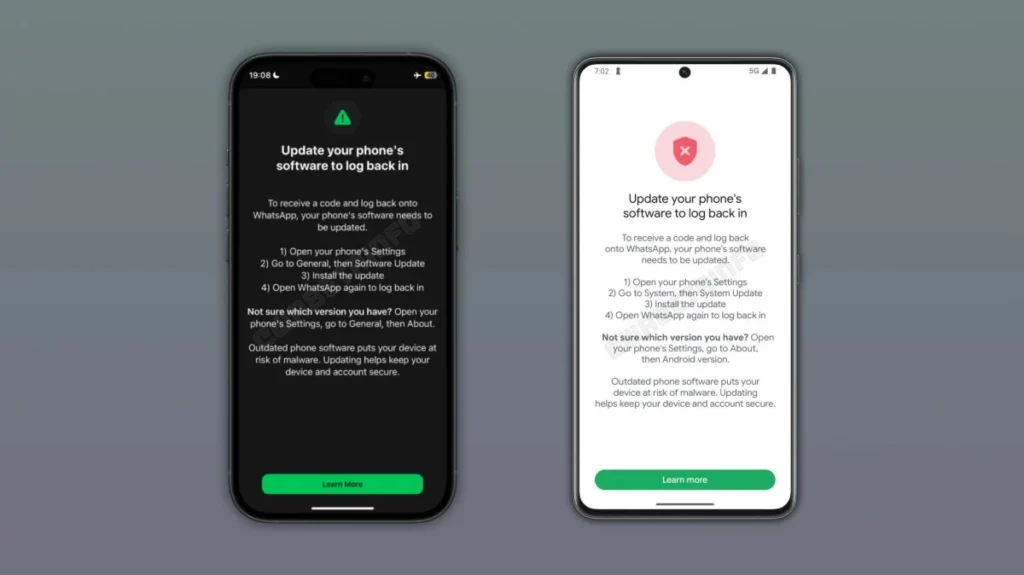
The core of this new functionality is a redirect screen that intercepts the login process. When a user attempts to access WhatsApp on a device running a software version deemed insecure by Meta, the application halts the authentication process. Instead of reaching the chat interface, the user is presented with a non-skippable advisory screen.
This screen provides clear, actionable instructions: the user must navigate to their phone’s system settings, initiate a software update, and bring their OS version up to a standard that meets modern security benchmarks. The application provides internal guidance on how to check the current firmware version, ensuring that even non-technical users can identify the state of their device’s software.
Crucially, this is a server-side implementation. This means the change is not tied to a specific build of the WhatsApp app downloaded from the Google Play Store or the Apple App Store. Instead, WhatsApp’s servers are actively querying the device’s OS environment during the handshake process. If the handshake fails to meet the updated security criteria, the server denies the login request, rendering the app unusable until the device is updated.
Chronology: The Evolution of WhatsApp’s Security Policy
WhatsApp has historically been transparent about its lifecycle support. For years, the company has maintained a "supported devices" list, typically phasing out support for legacy operating systems like Android 4.4 or early versions of iOS every year.
Phase 1: The Lifecycle Deprecation Model
Previously, WhatsApp’s approach to legacy software was passive. The company would announce that support for, say, Android 4.1, would end on a specific date. After that date, the app would eventually cease to function, or users would be unable to receive new feature updates. However, the app often remained functional for basic messaging for a grace period.
Phase 2: The Shift to Proactive Enforcement
The recent move represents a departure from this passive lifecycle management. By implementing a hard "stop-screen," WhatsApp is shifting from a policy of "we no longer support this OS" to "we will not permit you to use our service on an insecure OS." This change was identified through recent reports by WABetaInfo, which highlighted that users on significantly outdated software are now being hit with the blocking screen regardless of whether they have the latest WhatsApp update installed.
Phase 3: The Current Landscape
As of this week, the rollout is appearing globally across both Android and iOS ecosystems. While Meta has not released a granular list of which specific OS versions are being blocked, the pattern suggests that the company is targeting software versions that no longer receive security patches from Google or Apple.
Supporting Data: Why OS Vulnerabilities Matter
To understand why WhatsApp is taking this drastic measure, one must examine the intersection of messaging encryption and OS-level vulnerabilities.
The Illusion of End-to-End Encryption (E2EE)
WhatsApp is famously end-to-end encrypted. This means that the content of a message is encrypted on the sender’s device and only decrypted on the recipient’s device. However, encryption only protects data in transit. It does not protect the data on the device if the operating system is compromised.
If a user is running a version of Android from 2016, that OS likely contains hundreds of unpatched vulnerabilities. A malicious actor could exploit these vulnerabilities to gain "root" or "kernel" access to the device. Once an attacker has this level of access, they can:

- Keylog the device: Capture every character typed into the WhatsApp interface before it is encrypted.
- Screen-scrape: Take screenshots or record the display, rendering E2EE entirely moot.
- Lateral movement: Use the device as a node to send malware to the user’s contacts.
The Scale of the Threat
According to data from cybersecurity research firms, a significant percentage of mobile devices remain on versions of Android that have been "End-of-Life" (EOL) for years. For instance, devices running Android 7 (Nougat) or earlier are highly susceptible to "dirty cow" style exploits and other kernel-level vulnerabilities that are widely documented in the hacking community. By forcing users to update, WhatsApp is effectively shrinking the "attack surface" available to threat actors who target mobile users.
Official Responses and Corporate Strategy
While Meta has not issued a formal press release regarding this specific server-side change, its stance has been consistent throughout its product updates. In previous communications, a WhatsApp spokesperson stated:
"To keep up with the latest advances in technology, we routinely stop supporting older operating systems to focus our resources on supporting the latest ones. If we stop supporting your operating system, you’ll be notified and reminded a few times to upgrade your device to continue using WhatsApp."
This new "blocking screen" is the technological manifestation of that policy. By making the enforcement immediate and mandatory, Meta is insulating itself from liability. If a user’s account is compromised due to a known, unpatched OS vulnerability, the company can point to the fact that it provided a clear path to remediation, which the user ignored.
Implications: A New Era for Digital Security
The implications of this move are far-reaching for the mobile ecosystem, affecting everything from hardware manufacturing to user privacy.
Impact on the "Digital Divide"
One of the primary criticisms of this move is the potential for digital exclusion. Users in developing markets often rely on older, second-hand devices that cannot be updated to the latest versions of Android or iOS. For these users, a mandatory update could mean the difference between having access to a critical communication tool and being cut off from their professional and personal networks.
The Security-First Paradigm
Conversely, the move sets a new industry standard. By essentially "de-platforming" insecure devices, WhatsApp is forcing the mobile ecosystem to move toward better hygiene. When users are forced to update their OS to use their favorite apps, they are simultaneously receiving critical security patches that protect their entire digital identity, not just their WhatsApp account.
Future-Proofing against Malware
The mention of "malware-ridden links" in the initial report is telling. WhatsApp is acknowledging that even if their service is secure, the user’s environment is the weakest link. By implementing this block, they are trying to prevent the spread of malware within the platform. If an account is hijacked via an OS exploit, it can be used to propagate phishing links or malware to every contact in the user’s address book. By ensuring that all active users are on patched, supported software, WhatsApp is essentially performing a "herd immunity" function for the messaging ecosystem.
What Should Users Do?
For the average user, the advice is straightforward:
- Check for Updates: Navigate to your phone’s Settings > General > Software Update (iOS) or Settings > System > System Update (Android).
- Evaluate Hardware Longevity: If your phone no longer receives updates, it is time to consider a replacement. Running an EOL operating system is increasingly becoming a risk that major platforms will simply not tolerate.
- Backup Data: If you are forced to switch devices to remain on a supported OS, ensure that you are utilizing WhatsApp’s cloud backup features (Google Drive or iCloud) to migrate your chat history seamlessly.
Conclusion
WhatsApp’s decision to proactively block logins on outdated operating systems is a calculated risk. While it will undoubtedly frustrate users with older hardware, it serves as a necessary evolution in the age of sophisticated mobile malware. By moving the security perimeter from the application layer to the operating system level, WhatsApp is acknowledging a hard truth: in the modern digital landscape, the security of an app is only as strong as the foundation upon which it runs. As other major platforms likely follow suit, we are witnessing a shift where "security by default" will finally supersede the legacy of support for obsolete technology.