From Farm to Fuel Pump: The Comprehensive Journey of Ethanol Production in India
By Saurav Suman
Published: Jun 30, 2026, 05:14 PM IST | Updated: Jun 30, 2026, 05:32 PM IST
In the global transition toward sustainable energy, India has positioned itself as a frontrunner in the biofuel revolution. Central to this transformation is ethanol—a clean-burning, renewable alcohol-based fuel that is significantly altering the landscape of the Indian automotive and agricultural sectors. As the nation strives to reduce its dependence on expensive crude oil imports and mitigate carbon emissions, the process of ethanol production has evolved from a niche industrial activity into a pillar of the national economy.
Understanding how ethanol moves from the vast fields of sugarcane and grain to the fuel tanks of millions of vehicles requires a look at the intricate chemistry, logistics, and government-led infrastructure that sustain this green energy supply chain.
The Genesis: Raw Material Procurement and Processing
The ethanol production cycle begins far from the fuel pump, deep in the agrarian heartlands of India. The efficiency of the entire biofuel program relies on the selection of feedstocks, which primarily include sugarcane, maize, and rice.
The Role of Sugarcane
Sugarcane remains the primary feedstock for ethanol production in India. The process involves crushing the cane to extract juice. This juice is then processed into molasses—a thick, dark byproduct of sugar manufacturing. Distilleries then ferment this molasses, converting the sugars into alcohol. In recent years, India has moved toward "B-heavy" molasses and direct cane juice routes, which offer higher ethanol yields, thereby maximizing the output from every harvest.
The Rise of Grains
Beyond sugar, the inclusion of maize and surplus rice has been a game-changer. Through a process of enzymatic hydrolysis, starch-rich grains are broken down into fermentable sugars. This diversification is crucial; it ensures that ethanol production remains robust even during seasons when sugar production might fluctuate due to climatic conditions. By utilizing food-grade crops, the government is not only providing a stable income stream for farmers but also effectively managing surplus grain stocks that might otherwise face storage-related spoilage.
The Industrial Transformation: From Sugar to Fuel-Grade Ethanol
Once the raw materials are processed and fermented, the resulting liquid is a dilute alcohol solution. This must undergo a series of rigorous industrial steps to become fuel-grade ethanol.
Fermentation and Distillation
In the distillery, yeast is added to the sugar-rich mash, which consumes the sugar and produces ethanol as a byproduct. Once the fermentation is complete, the liquid is sent through distillation columns. Here, heat is used to separate the ethanol from water and other impurities.
Dehydration: The Final Polish
Standard distillation can only reach an ethanol concentration of approximately 95%. However, to be used in vehicle engines, ethanol must be "anhydrous" (water-free). The final stage involves molecular sieves or other dehydration technologies to remove the remaining moisture, resulting in 99.5%+ pure ethanol. This is the fuel-grade product that meets the stringent quality standards required for blending with petrol.
The Supply Chain: Blending and Distribution
The transition from a refinery product to a consumer-ready fuel is a masterclass in logistics, managed primarily by India’s Oil Marketing Companies (OMCs): Indian Oil Corporation (IOCL), Bharat Petroleum (BPCL), and Hindustan Petroleum (HPCL).
Quality Control and Blending Ratios
Once the ethanol is produced, it is transported to various depots and terminals. OMCs maintain strict oversight of the blending process. Depending on the engine compatibility and regional mandates, ethanol is blended with petrol at approved ratios—currently ranging from 10% (E10) to 20% (E20) across different parts of the country.
The integration of ethanol into the fuel stream is highly automated. At the blending terminals, high-precision injection systems mix the ethanol into the petrol streams, ensuring that every drop delivered to the fuel pump meets the specified octane and energy density requirements.
Chronology: The Evolution of India’s Ethanol Blending Programme (EBP)
The journey to the current 20% blending target was not instantaneous. It is the result of over two decades of policy evolution:
- 2003: The government launches the Ethanol Blended Petrol (EBP) programme on a pilot basis in select states, aiming for a modest 5% blend.
- 2014: The programme is revitalized with a focus on ease of doing business for distilleries and standardized pricing, providing the necessary momentum for scaling.
- 2018: The National Policy on Biofuels is introduced, prioritizing the use of surplus food grains and agricultural waste for ethanol production.
- 2021: The government advances the target for 20% ethanol blending (E20) from 2030 to 2025, signaling an aggressive push toward energy independence.
- 2023-2026: India achieves significant milestones in E20 rollout, with major oil companies expanding infrastructure to handle the increased demand for blended fuels nationwide.
Supporting Data and Economic Impact
The economic implications of the EBP are profound. According to recent data from the Ministry of Petroleum and Natural Gas, India has saved thousands of crores in foreign exchange by substituting petrol imports with domestically produced ethanol.
- Forex Savings: With India importing over 80% of its crude oil requirements, every liter of ethanol blended reduces the import bill, bolstering the national balance of payments.
- Farmer Income: The ethanol sector has provided a secondary, lucrative market for sugarcane and grain farmers, insulating them from the volatility of global sugar prices.
- Environmental Gains: Ethanol is an oxygenated fuel, which helps in more complete combustion. This results in lower emissions of carbon monoxide, unburnt hydrocarbons, and particulate matter compared to pure fossil-fuel-based petrol.
Official Responses and Strategic Outlook
Government officials and industry leaders have consistently emphasized that ethanol is not merely a temporary measure but a permanent fixture of India’s energy future.
"The E20 program is a critical component of our commitment to Net Zero," a senior official from the Ministry of Petroleum stated during a recent energy summit. "By aligning the agricultural sector with the energy sector, we are creating a circular economy that benefits the rural population while cleaning up our urban air."
However, challenges remain. The industry is currently focused on the scaling of "Second Generation" (2G) ethanol, which is produced from agricultural residues like paddy straw and biomass. This will prevent the diversion of food crops to fuel, addressing concerns regarding food security.
Implications for the Consumer and the Automotive Industry
For the average Indian motorist, the transition to blended fuel has been seamless. Modern vehicles are now designed to handle E20 fuel, with manufacturers adjusting engine components—such as fuel lines and seals—to be resistant to the corrosive nature of high-ethanol blends.
What Consumers Should Know:
- Compatibility: Most vehicles manufactured in India since 2023 are E20-compliant. Owners of older vehicles should consult their manufacturer’s manual to ensure compatibility.
- Performance: While ethanol has a lower energy density than petrol, the higher octane rating of ethanol-blended fuels can actually improve engine performance and reduce "knocking."
- Maintenance: The use of ethanol-blended fuel is safe for modern engines, though routine maintenance of the fuel system is recommended to ensure longevity.
The Road Ahead
As India marches toward its 2030 sustainability goals, the ethanol story continues to unfold. The focus is shifting toward diversifying feedstocks even further, incorporating seaweed, municipal solid waste, and cellulosic materials.
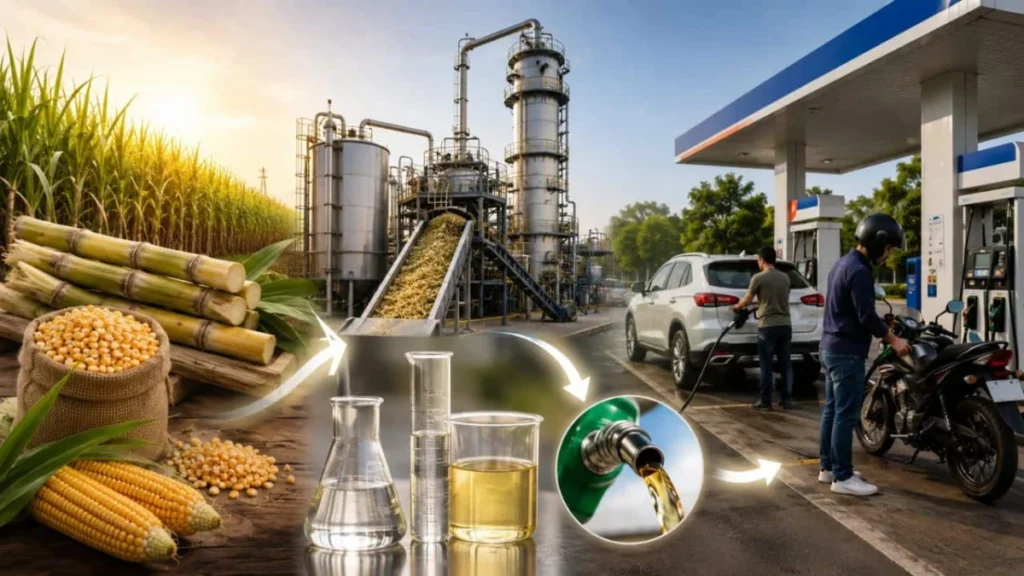
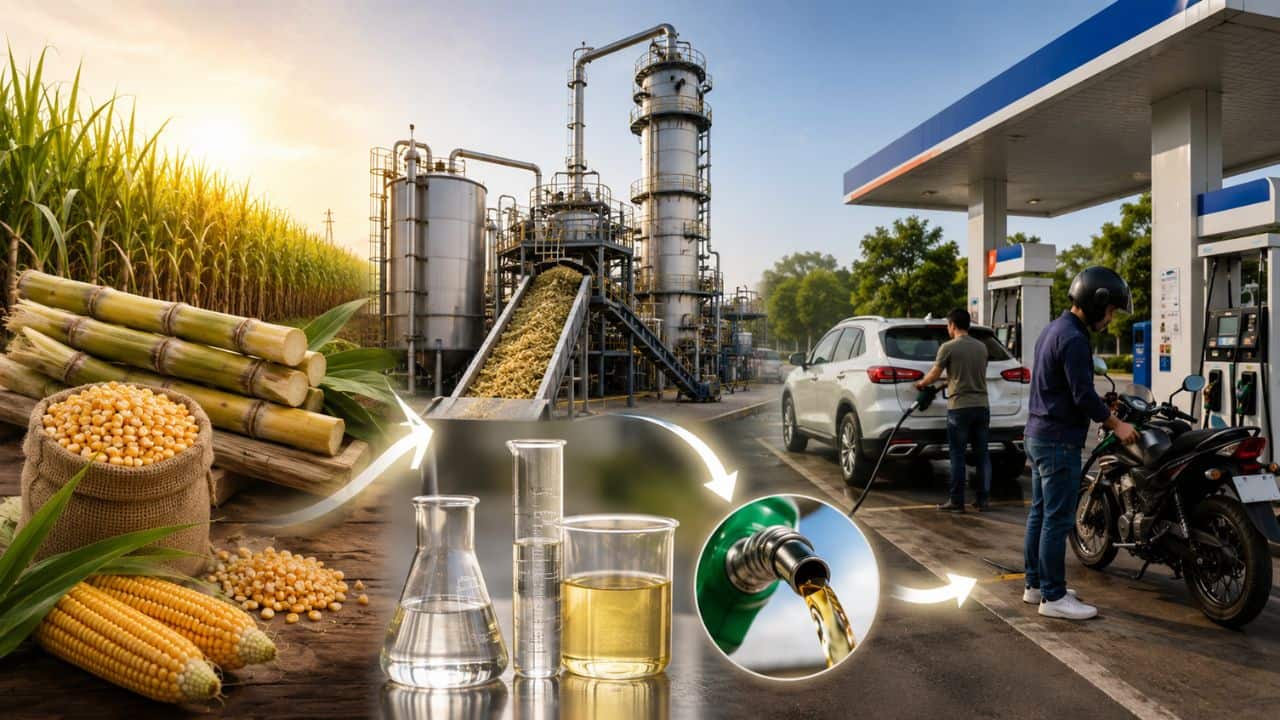
The journey from a crushed stalk of sugarcane to the high-performance fuel in a vehicle’s tank represents a successful marriage of technology, agriculture, and policy. By transforming the byproduct of our farms into the energy that powers our cities, India is not only reducing its carbon footprint but also redefining the very nature of energy security in the 21st century.
As the infrastructure for E20 continues to expand, the ethanol economy stands as a testament to the fact that, when aligned with national interest, the agricultural heart of India can indeed drive the country’s industrial future.