The Fading Echo of a Benchmark: Why Click-Through Rate No Longer Defines Ad Success in the AI Era
For over a decade and a half, the digital advertising industry operated under a seemingly immutable law: a 2% click-through rate (CTR) on a non-brand campaign was the gold standard, the benchmark by which paid search success was measured. This figure wasn’t just a metric; it was an ingrained dogma, a silent agreement across countless agencies and marketing departments. So deeply embedded was this number that, in many instances, its relevance went unquestioned, its origins rarely re-evaluated. Yet, in the rapidly evolving landscape of 2026, where artificial intelligence (AI) increasingly dictates bid strategies and campaign execution, clinging to this traditional benchmark is not just anachronistic – it’s misleading. The once-sacred 2% now represents a historical artifact, a relic from a simpler time that fails to capture the nuanced realities of modern performance marketing.
The core assertion today is that while high CTRs might still appear impressive on dashboards, they no longer singularly signify ad resonance or, more importantly, campaign success. The advent of sophisticated AI-driven bidding algorithms, the diversification of campaign types, and the seismic shift towards intent resolution directly within search engine results pages (SERPs) have fundamentally altered the very meaning of a "click." Advertisers who continue to equate a robust CTR with a winning campaign risk misallocating resources, misinterpreting performance, and ultimately failing to achieve their true business objectives. It’s time for a critical recalibration, a deeper examination of what CTR truly represents in an era where machines learn, adapt, and optimize beyond the simplistic measure of a single interaction.
Main Facts: The Irrelevance of Traditional CTR
The central tenet of modern digital advertising is that campaign success is ultimately defined by measurable business outcomes, predominantly revenue generation, lead acquisition, or other high-value conversions. A click, while an initial engagement, is merely a precursor to these outcomes, not an outcome in itself. The core facts necessitating a re-evaluation of CTR are:
- AI-Driven Bid Strategies: Automated bidding algorithms, such as Maximize Conversions or Target Impression Share, actively manipulate impression volume and targeting based on complex predictive models. This directly impacts CTR, making it an output of AI’s strategy rather than a pure reflection of user interest.
- Diverse Campaign Architectures: Different ad formats and campaign types (e.g., Display, YouTube, Performance Max) inherently have vastly different engagement patterns and, consequently, widely varying CTRs. A blanket 2% benchmark is inapplicable across these diverse channels.
- The Rise of Zero-Click Searches: Generative AI features within search engines, like Google’s AI Overviews, increasingly resolve user queries directly on the SERP, reducing the necessity for a click to an advertiser’s website. This fundamentally challenges the click’s role as a primary interaction metric.
- Focus on Post-Click Actions: True performance marketing prioritizes conversion rates, cost-per-acquisition (CPA), and return on ad spend (ROAS) over raw clicks. A high CTR with low conversion rates is a symptom of inefficiency, not success.
- Transparency Gaps: Ad platforms have yet to provide clear, standardized methodologies for reporting impressions and clicks generated within generative AI interfaces, creating a "shifting target" for measurement.
These facts collectively dismantle the historical reliance on CTR as a standalone indicator of ad efficacy, urging advertisers to adopt a more holistic and outcome-oriented perspective.
Chronology: From Simple Benchmark to Complex Algorithm
The journey of CTR from an unquestioned benchmark to a nuanced diagnostic tool spans more than 15 years, marked by significant technological advancements and shifts in advertising philosophy.
The Golden Age of the 2% Benchmark (Pre-2010s)
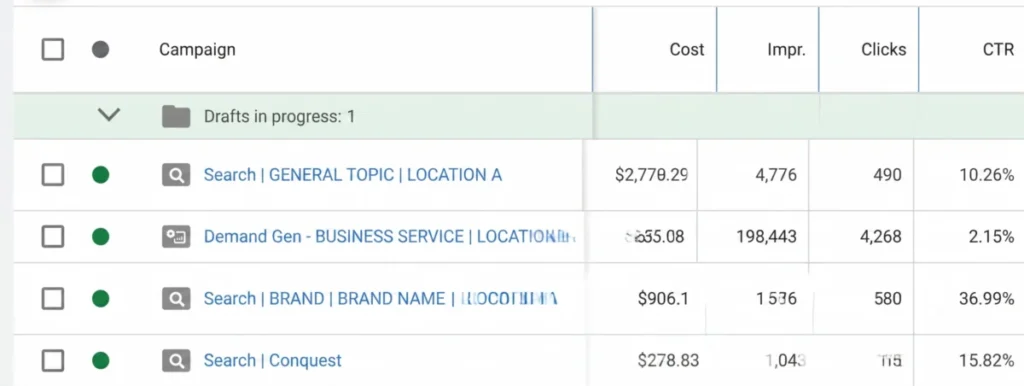
In the nascent days of paid search, the advertising landscape was considerably simpler. Manual bidding was prevalent, and keyword targeting was more precise and less automated. Advertisers meticulously crafted ad copy, selected keywords, and manually adjusted bids to appear for specific queries. In this environment, a click-through rate was a relatively direct measure of an ad’s appeal and relevance to a search query. A 2% CTR on a non-brand campaign became an industry-standard benchmark, widely accepted as a sign of a well-optimized ad group. Brand search campaigns, benefiting from existing user familiarity and intent, naturally commanded higher CTRs, often exceeding 10-20%, while competitor or conquesting campaigns, targeting users less predisposed to click on the advertiser’s brand, would predictably yield lower CTRs. This differentiation was logical and easily understood. The equation was straightforward: Clicks ÷ Impressions = CTR. A higher number generally meant more people found your ad compelling enough to interact with.
The Dawn of Automation and Machine Learning (2010s – Early 2020s)
The mid-2010s saw the gradual introduction and subsequent rapid acceleration of machine learning and AI into digital advertising platforms, most notably Google Ads. "Smart Bidding" strategies began to emerge, promising to optimize for conversions rather than just clicks. Initially, advertisers retained significant control, but over time, the platforms pushed for greater automation, citing AI’s superior ability to process vast datasets and predict user behavior. Updates like Google’s "Journey-Aware Bidding" (as referenced in the original article) signaled a move towards understanding and influencing users at various stages of their purchasing journey, far beyond a single click.
This period marked the beginning of CTR’s transformation. As AI took on more responsibility for determining who saw an ad and when, the direct correlation between ad copy appeal and CTR began to fray. AI wasn’t just showing ads to anyone; it was showing them to specific subsets of users deemed most likely to convert, even if that meant fewer overall impressions. The denominator in the CTR equation (impressions) was no longer a broad, undifferentiated pool, but a strategically curated one.
The AI-Dominant Era (2020s – Present Day)
By 2026, AI is no longer a tool; it’s the engine driving the majority of modern bid strategies. The freedom granted to AI has expanded exponentially, with algorithms making real-time decisions on targeting, bidding, and even creative variations. This era has solidified CTR’s shift from a primary success metric to a diagnostic indicator. The "purity" of the metric, once a direct gauge of human interest, is now filtered through the complex logic of algorithms optimizing for diverse, often conversion-centric, goals. The traditional 2% benchmark has become largely irrelevant, a ghost of PPC past.
Supporting Data: How AI and Campaign Types Skew CTR
The original article alludes to sample data, which, if visualized, would likely show fluctuating or seemingly impressive CTRs that, upon deeper analysis, reveal the influence of automated strategies. Let’s delve into how specific bid strategies and campaign types directly impact the CTR equation, illustrating why a single benchmark is untenable.
The Bid Strategy Effect
Modern bid strategies fundamentally redefine the impression pool, thereby directly influencing CTR.
-
Maximize Conversions / Maximize Conversion Value: These strategies instruct the AI to find users most likely to convert, irrespective of the initial cost per click or impression volume. The AI will strategically limit impressions to a highly qualified audience. For instance, if the AI identifies that users searching for "luxury handmade leather wallets" are far more likely to convert than those searching for "cheap wallets," it will prioritize showing ads to the former, even if it means fewer overall impressions. This focused targeting often results in a higher CTR because the impressions served are to a pre-qualified, high-intent audience. However, this higher CTR doesn’t necessarily mean the ad itself is universally more appealing; it means the AI is doing its job by presenting the ad to the right people. An example might be an ad campaign for high-end watches showing a 5% CTR, not because the ad is groundbreaking, but because Google’s AI is only showing it to individuals with a demonstrated search history for luxury goods, specific income brackets, and relevant geographic locations. The denominator (impressions) is smaller and more targeted, inflating the CTR.
-
Target Impression Share: This strategy aims for visibility. Advertisers set a target percentage of impressions they want to capture (e.g., "appear at the top of the page 80% of the time"). To achieve this, the AI may bid on a much broader range of queries or keywords, even those with lower conversion potential, simply to garner the required impression volume. This broader reach inherently increases the denominator (impressions) while the number of clicks might not scale proportionally, leading to a lower CTR. A plumbing service aiming for 100% impression share for "emergency plumber near me" might find itself with a 1.5% CTR, not because its ads are bad, but because the AI is ensuring maximum visibility across all relevant searches, including those that might be less urgent or less specific, thereby diluting the overall click rate.
-
Maximize Clicks: This is the most straightforward strategy for CTR, as its explicit goal is to generate as many clicks as possible within a given budget. The AI will prioritize showing ads to users with a high propensity to click, regardless of their conversion potential. While this will undoubtedly yield a higher CTR, it often comes at the expense of conversion quality. An advertiser running a "Maximize Clicks" campaign might see a 4% CTR for a generic product, but discover that a significant portion of those clicks come from users simply browsing or comparing, leading to poor conversion rates. In this scenario, a high CTR is a direct outcome of the strategy, not necessarily an indicator of high user intent or ad success.
The Campaign Architecture Effect
Beyond bid strategies, the very nature of different campaign types dictates varying CTR expectations. Applying a 2% benchmark universally ignores these inherent differences.
-
Display Campaigns: These ads appear on websites across the Google Display Network. They are often interruptive and viewed by users who are not actively searching for a product or service. Their primary purpose is often brand awareness or remarketing. Consequently, Display campaigns inherently have remarkably lower CTRs, often well below 0.5%, because they are designed for reach and visual impact rather than immediate click-through.
-
Demand Gen (Discovery) and YouTube Campaigns: Similar to Display, these campaigns leverage rich media and target users based on interests, behaviors, and demographics across platforms like YouTube, Gmail, and Google Discover. While more engaging than static display, they are still largely passive consumption environments. Users are watching videos or browsing content, not actively searching. CTRs for these formats are typically lower than search, often ranging from 0.5% to 1.5%, as they aim to generate interest rather than capture immediate, high-intent clicks.
-
Performance Max Campaigns: These are Google’s automated, multi-channel campaigns that run across all Google channels (Search, Display, YouTube, Gmail, Discover). Due to their expansive reach and varied placements, Performance Max campaigns inherently drive a highly mixed CTR. A single PMax campaign’s reported CTR is an aggregation of very high CTRs from search placements and very low CTRs from display or YouTube placements. This aggregate number, while potentially appearing moderate, tells little about the performance on individual channels or the quality of clicks. An overall 3% CTR for a PMax campaign might mask a 7% CTR on search and a 0.3% CTR on display, making the aggregated number a poor indicator of performance quality. Microsoft Advertising’s equivalent, Smart Shopping and Audience campaigns, exhibit similar multi-channel CTR variations.

In essence, relying on a singular CTR benchmark in this diverse and AI-driven environment is akin to judging the speed of a boat, a car, and an airplane using the same metric. Each operates under different conditions and with different objectives.
Official Responses (or the Lack Thereof): Navigating the Generative AI Frontier
The integration of generative AI within search engines presents a new frontier for digital advertising, one where the official responses from ad platforms are still evolving and, in some critical areas, notably absent.
The Emergence of AI Overviews and Zero-Click Search
Google’s introduction of "AI Overviews" and similar generative AI features marks a pivotal shift. These features aim to resolve user intent directly on the search results page by synthesizing information from various sources, including ads. This directly contributes to the phenomenon of "zero-click search," where users find their answers without ever needing to click through to a website. For instance, a user asking "how to fix a leaky faucet" might receive a step-by-step guide generated by AI, potentially alongside ads for plumbing services or tools. If the AI overview provides sufficient information, the user may not click on any organic or paid links.
This development fundamentally challenges the traditional ad model, where a click was the desired first interaction. When the search engine itself provides the answer, the value of an impression shifts, and the definition of engagement becomes more complex.
The Transparency Gap in Reporting
Crucially, the ad platforms, primarily Google and Microsoft, have yet to provide a standardized, transparent definition of how impressions and clicks generated inside these generative AI blocks are mathematically aggregated in our standard reporting dashboards. This lack of clarity creates a significant "transparency gap" for advertisers.
- What constitutes an "impression" in an AI Overview? Is it merely the ad being visible within the AI-generated content, or does it require some level of interaction?
- What defines a "click" from an AI-generated ad format? Is it a traditional click to a landing page, or could it be an interaction with an expandable element within the AI overview itself?
- How are these new interaction types weighed against traditional clicks and impressions? Without clear definitions, advertisers are left measuring a "shifting target," unable to accurately attribute performance or understand the true impact of their ads within these new environments.
This absence of official, granular reporting mechanisms for generative AI interactions is a significant point of concern. It prevents advertisers from truly understanding the efficacy of their campaigns in these new formats and makes it even harder to rely on aggregate CTRs as a meaningful metric. The implied "official response" is one of ongoing development and adaptation, but with insufficient detail for advertisers to navigate effectively in the present.
Implications: Redefining Success Beyond the Click
The implications of CTR’s diminished role are profound, necessitating a paradigm shift in how advertisers conceive of and measure campaign success.
From Engagement to Conversion: The True North of Performance Marketing
In the world of performance marketing, "success" has always been synonymous with tangible business outcomes: sales, leads, sign-ups, downloads, or specific customer actions that contribute to revenue. A click is merely a means to an end. A high volume of clicks that don’t translate into conversions is not a sign of success; it’s a symptom of inefficiency, potentially indicating poor targeting, misaligned ad copy with landing page content, or a flawed product/service offering.
The modern imperative is to move beyond the vanity metric of CTR and focus squarely on post-click actions. Key metrics for success now include:
- Conversion Rate (CVR): The percentage of clicks that result in a desired action.
- Cost Per Acquisition (CPA): The cost incurred to acquire a single customer or lead.
- Return on Ad Spend (ROAS): The revenue generated for every dollar spent on advertising.
- Customer Lifetime Value (CLTV): Understanding the long-term value of customers acquired through advertising.
These metrics offer a far more accurate picture of campaign profitability and business impact. A fluctuating CTR, when viewed through the lens of strong conversion rates and decreasing CPA, is not a red flag. Instead, it’s evidence that the AI is performing its intended function: actively testing different audiences, placements, and creative iterations to identify the most valuable users, even if it means sacrificing some clicks to gain higher-quality ones.
CTR as a Diagnostic Indicator, Not a Primary Metric
Rather than a primary indicator of success, CTR has evolved into a valuable diagnostic tool.
- Messaging Potency: A healthy CTR still confirms that your ad copy and creative are compelling enough to win the auction and capture attention in a crowded search or display environment. It tells you your message has "cut through the noise."
- AI Efficiency Proxy: In automated campaigns, CTR can serve as a proxy for how efficiently the AI is identifying and targeting potential users. A sudden, unexplained drop in CTR might warrant investigation into audience settings or creative fatigue, while a stable CTR in a conversion-focused campaign might simply mean the AI has found its optimal segment.
- A/B Testing Insights: When A/B testing different ad variations or landing pages, observing changes in CTR in conjunction with conversion rates can provide insights into which elements resonate best with the target audience.
However, these insights are always one piece of a larger puzzle. They must be interpreted in context with conversion data, profitability, and overall business goals.
The Strategic Imperative: Managing Revenue, Not Clicks
The ultimate implication is a fundamental shift in the role of the human advertiser. In the age of AI, the focus should pivot from the tactical management of clicks and impressions to the strategic oversight of revenue and profitability.
- Trust the AI with the Math: Allow the sophisticated algorithms to manage the complex interplay of bids, impressions, and clicks to achieve the desired outcome (conversions, conversion value). Trying to micro-manage CTR in an AI-driven environment is often counterproductive.
- Focus on the "Why": Advertisers must increasingly focus on the "why" behind the numbers. Why are conversion rates improving? Why is CPA decreasing? Is it the creative, the landing page experience, the product, or the AI’s improved targeting?
- Holistic Strategy: Embrace a holistic view of the customer journey, recognizing that ads are just one touchpoint. Optimize the entire funnel, from ad creative to landing page experience to post-conversion follow-up.
- Adapt to New Ad Formats: Stay abreast of new ad formats, especially those driven by generative AI. Understand their potential impact on user behavior and advocate for greater transparency in reporting. Develop strategies for engaging users even in zero-click scenarios, perhaps by optimizing for brand visibility or providing value directly within AI overviews where possible.
The future of PPC success lies not in chasing higher CTRs, but in understanding the sophisticated dance between AI, user intent, and business outcomes.
The Final Verdict On Modern CTR: A Sign of Life, Not Success
In the rapidly evolving ecosystem of digital advertising, where artificial intelligence orchestrates campaigns with unprecedented autonomy, the click-through rate (CTR) has undergone a profound transformation. What was once the undisputed champion of ad performance metrics has gracefully, or perhaps forcefully, stepped aside to become a supporting player. The nostalgic benchmark of a 2% CTR, ingrained in the minds of digital marketers for over 15 years, is now largely irrelevant in its original context.
Today, a healthy CTR is best understood as a sign of life, not a guarantee of success and performance. It signifies that your ad creative is potent enough to win the auction, compelling enough to capture attention, and relevant enough to secure real estate in a generative search layout. It confirms that your message is resonating at the initial interaction point. However, this initial spark of interest does not inherently promise a return on investment, sustained engagement, or, critically, a sale.
The true measure of success in 2026 and beyond lies in the quality of post-click actions. Are those clicks leading to conversions? Are they driving revenue? Are they contributing to a positive return on ad spend? These are the questions that truly define a winning campaign in the age of automation and AI.
As the PPC landscape continues its relentless evolution, driven by ever more sophisticated algorithms and the rise of generative AI, advertisers must consciously shift their focus. Stop asking whether your ads are getting clicked in isolation, and start asking what those clicks are actually buying you in terms of tangible business outcomes. Let the AI manage the intricate math of the CTR spectrum for your ad account, optimizing for the most efficient path to conversion. Your role, as the strategic human element, is to manage the revenue, interpret the broader performance signals, and guide the AI towards ever greater profitability. Embrace this shift, and you’ll not only survive but thrive in the complex, dynamic world of modern digital advertising.