Fuel Rationing Crisis: Dealers Across Tamil Nadu Struggle Under Strict New Government Directives
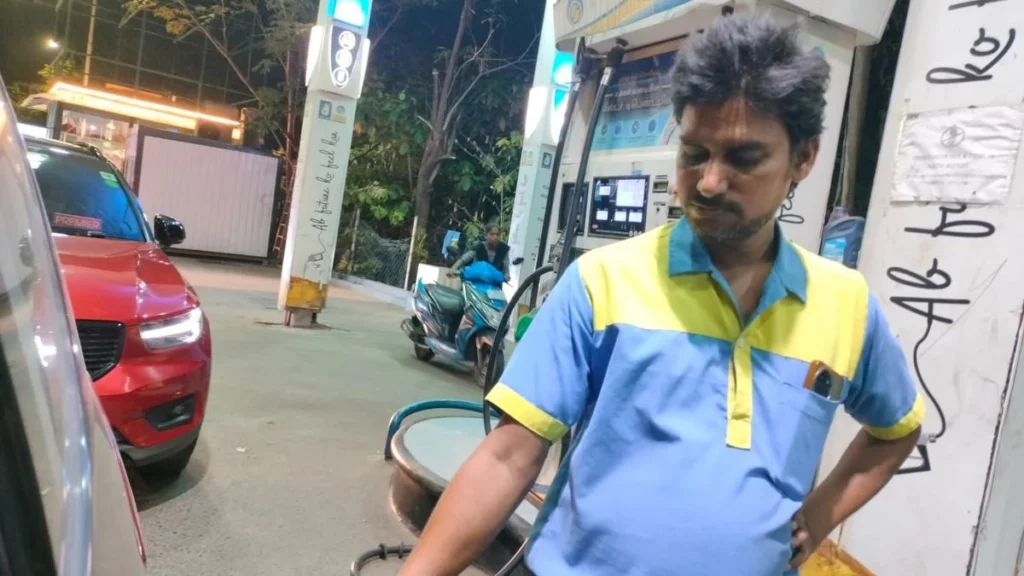
CHENNAI – Across Tamil Nadu, a growing sense of anxiety has gripped fuel retailers and consumers alike. Over the past 48 hours, a wave of stringent fuel rationing measures, mandated by the Central government and enforced by Oil Marketing Companies (OMCs), has transformed routine refueling into a logistical nightmare. From major transport hubs to residential complexes, the ripple effects of these directives are threatening the operational continuity of essential services, including hospitals, schools, and apartment complexes.
The Current Crisis: A Snapshot of the Ground Reality
For the average motorist, the sight of a "No Diesel" sign or a restrictive cap on fuel quantities has become an unwelcome reality. However, the crisis is far more profound for institutional clients who rely on diesel-powered generators to mitigate the impact of frequent power outages.
Dealers, caught between the hammer of government mandates and the anvil of customer demand, are now forced to turn away long-standing clients. "Petroleum retailers have been facing a difficult task over the past two days, declining fuel even to their regular bulk customers," noted a fuel outlet owner in the vicinity of Chennai.
The current atmosphere is one of apprehension. Dealers are not merely choosing to limit supply; they are operating under the looming threat of punitive action from OMCs and federal authorities. The directive, which was previously an informal suggestion, has now been formalized, leaving retailers with little room for maneuver.
Chronology of the Regulatory Shift
The shift in fuel distribution policy did not happen overnight, but the recent escalation has been abrupt.
- Pre-June 2026: For years, a soft cap of 200 litres per customer existed as a standard industry practice, primarily intended to manage inventory and ensure equitable distribution. Crucially, this was an oral instruction, allowing dealers some flexibility to support essential services like local hospitals or residential welfare associations that lack underground storage tanks.
- Early June 2026: Reports of fuel diversion—where subsidized fuel intended for retail consumption was being illegally rerouted for industrial use—prompted a closer look by the Ministry of Petroleum and Natural Gas.
- Mid-June 2026: The Central government issued a formal, written directive to all OMCs. This order mandated strict enforcement of supply limits.
- June 13-14, 2026: OMCs issued stern warnings to retailers. The directive specifically targeted the practice of filling large-capacity tanks, including those of heavy vehicles and industrial barrels, without proper Petroleum and Explosives Safety Organization (PESO) certification.
Supporting Data and Dealer Testimonies
The impact of these regulations is most visible in the creative, albeit frustrating, lengths to which customers must go to secure fuel.
"Customers are now forced to fill half their tanks at one outlet and scout around for the rest," a dealer explained. "I am afraid to fill these vehicles even using two separate bills, as the government and OMCs are currently focused on preventing the diversion of fuel. We are advising our regular customers either to make frequent trips to the outlet or visit multiple nearby outlets."
The "Barrel" Problem
A significant portion of the tension stems from the needs of educational institutions and apartment complexes. These entities often lack the infrastructure—specifically, underground storage tanks and the required PESO licenses—to store large quantities of fuel. They rely on "just-in-time" procurement, arriving at fuel stations with large barrels to fill up for generator use. Under the new guidelines, these dealers are effectively barred from serving them, leaving these institutions vulnerable to power disruptions.
The Cap Structure
The restrictions are not limited to diesel. Dealers report that the policy has expanded to include petrol as well, creating a dual-threat to daily mobility:
- Diesel: A strict cap of 195 litres for non-regular customers and, in many cases, across the board for all heavy vehicles.
- Petrol: A cap of 50 litres per car has been implemented at several major outlets, creating queues and long wait times for private vehicle owners.
Official Responses and the Fear of Penalties
The silence from the OMCs has been met with growing frustration by the dealer community. While the government maintains that these measures are necessary to curb the black market and ensure that fuel reaches the intended end-users, the retailers feel they are being treated as the primary culprits.

"Why should I invite punishment unnecessarily?" asked one retailer, reflecting the sentiment of many. "The OMCs have issued warnings that are impossible to ignore. I would rather not fill tanks of heavy vehicles than risk my license."
The fear is not unfounded. Regulatory bodies are currently conducting spot checks, and any deviation from the written order is being documented as a violation of the dealership agreement. This has created a culture of extreme caution, where dealers are proactively turning away customers to avoid even the appearance of non-compliance.
Implications for Essential Services and Industry
The implications of these supply caps extend far beyond individual motorists. The economy of a modern city is heavily reliant on the seamless flow of energy.
Impact on Essential Services
Hospitals and medical facilities require constant power for life-saving equipment. With summer temperatures soaring and power grids under pressure, the reliance on diesel generators is at an all-time high. By limiting the ability of these institutions to purchase diesel in bulk, the government’s policy threatens to disrupt the very services it is meant to support.
Impact on Logistics and Transport
The logistics sector, already struggling with rising operating costs, is now facing a "refueling bottleneck." Lorries and buses with large tank capacities—essential for the movement of goods and public transport—are being forced to make multiple stops to fill their tanks. This not only wastes time and labor but also increases the congestion at fuel outlets, leading to traffic snarls and reduced efficiency in the supply chain.
The Rise of the Black Market
Market analysts warn that artificial scarcity often triggers the growth of a shadow market. By making it difficult for legitimate consumers to obtain fuel, the policy may inadvertently drive them toward unregulated vendors who operate outside the safety and pricing frameworks of authorized dealers. This risks creating a parallel, higher-priced fuel economy that is difficult to monitor or regulate.
The Road Ahead: Potential Solutions
For the situation to stabilize, there must be a clear distinction between "industrial-scale diversion" and "essential institutional need."
Industry experts suggest that the government could implement a "permit-based" system for institutions like hospitals and residential complexes. If these entities can demonstrate their legitimate need for diesel for emergency generators, they should be allowed to procure fuel through a regulated, albeit strictly monitored, process that does not penalize the local dealer.
Furthermore, communication between OMCs and their retail partners needs to be more transparent. Dealers need a clear, updated manual on how to handle "essential service" clients under the new rules. Without such clarity, the current state of confusion will persist, leading to unnecessary public panic and economic disruption.
As of June 14, 2026, the lines at petrol bunks remain long, and the frustration is palpable. The government’s push for transparency and regulation is understandable, but as the ground reality in Chennai shows, the unintended consequences of broad-brush policies can be severe. The coming weeks will be critical in determining whether the OMCs can refine these directives to protect the supply chain while still achieving their goal of preventing fuel diversion. Until then, motorists and facility managers alike are left to navigate a fuel landscape defined by caps, caution, and long, winding queues.