Navigating the Algorithmic Frontier: Social Media Examiner Releases 18th Annual Industry Report for 2026
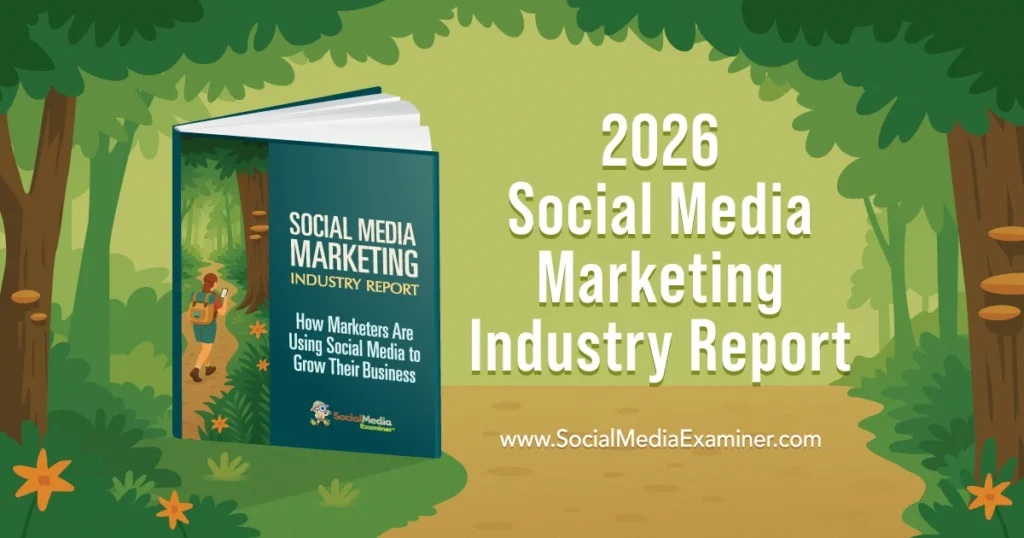
SAN DIEGO, CA — In an era defined by rapid technological shifts and the total integration of artificial intelligence into the digital marketing workflow, Social Media Examiner has released its highly anticipated 2026 Social Media Marketing Industry Report. Now in its 18th year, this comprehensive 44-page study serves as the definitive benchmark for digital strategy, offering a granular look at how professional marketers are navigating an increasingly fragmented and automated landscape.
The report, which distills data from thousands of marketing professionals, arrives at a critical juncture. As organic reach continues to fluctuate and generative AI moves from a "novelty tool" to a "daily necessity," the 2026 findings reveal a profession in the midst of a profound transformation.
Main Facts: The State of Social Media in 2026
The 2026 report highlights a marketing environment that is simultaneously more automated and more focused on "human-centric" organic engagement than ever before. Key findings from the executive summary indicate that while the "pay-to-play" model remains dominant for reach, the value of organic community building has seen a surprising resurgence.
According to the data, 56% of marketers plan to increase their organic activities on Instagram this year, signaling a move away from purely transactional advertising toward long-term brand equity. Furthermore, the report identifies a significant shift in content priorities: 49% of marketers now cite video as their most important content type, with a staggering 70% planning to increase their video production budgets or frequency over the next twelve months.
Perhaps most tellingly, the 2026 report confirms the total normalization of artificial intelligence. 62% of marketers report using generative AI tools on a daily basis—not just for copy generation, but for data synthesis, sentiment analysis, and predictive trend modeling.
Chronology: From Social Networking to AI-Driven Ecosystems
To understand the 2026 report, one must look at the evolution of the industry over the last two decades. When Social Media Examiner released its first report eighteen years ago, the focus was primarily on "status updates" and the novelty of business pages on Facebook.
- The Early Years (2008–2014): Marketing was defined by the "Wild West" of organic reach. Platforms like Facebook and Twitter (now X) were viewed as free distribution channels.
- The Pivot to Video and Paid (2015–2020): The rise of Instagram and the introduction of sophisticated ad managers forced marketers to adopt "pay-to-play" strategies. Video began its ascent with the birth of Stories and the explosion of TikTok.
- The Pandemic and Post-Pandemic Shift (2021–2024): Digital transformation accelerated. Short-form video became the standard, and privacy changes (like Apple’s ATT) forced a re-evaluation of tracking and attribution.
- The AI Revolution (2025–2026): We have now entered the era of Generative Integration. The 2026 report marks the first time that AI usage has moved from a "planned experiment" to a "core daily competency" for more than half of the industry.
This chronology illustrates a shift from "platform-centric" marketing to "content-centric" marketing, and finally to the current "intelligence-centric" model where data-driven insights dictate creative output.
Supporting Data: A Deep Dive into the 2026 Metrics
The 44-page report is supported by over 50 charts and tables, providing a data-rich environment for decision-makers. Several key areas stand out in the 2026 data:
1. The B2B vs. B2C Divergence
While Instagram remains a powerhouse for B2C (Business-to-Consumer) marketers, the 2026 report highlights a widening gap in platform preference for B2B (Business-to-Business) professionals. LinkedIn has solidified its position as the primary engine for B2B lead generation, with 72% of B2B marketers ranking it as their most essential platform. Conversely, B2C marketers are increasingly diversifying into "entertainment-first" platforms, including TikTok and YouTube Shorts, to capture dwindling consumer attention spans.
2. The Video Mandate
The report provides a granular breakdown of the 70% of marketers increasing their video use. It isn’t just about quantity; it is about format. Vertical, short-form video (under 60 seconds) accounts for the largest share of planned growth. However, there is a burgeoning interest in "long-form social," with YouTube seeing a 15% increase in interest from marketers who want to build deeper, educational connections with their audience.
3. Sales Results and ROI
For the first time in the report’s history, "Sales Results" has overtaken "Brand Awareness" as the primary metric for social media success. Marketers are under increased pressure to prove the bottom-line impact of their social spend. The report reveals which platforms are delivering the highest Return on Ad Spend (ROAS), with Meta’s ecosystem still leading, though niche platforms are showing higher conversion rates for specific demographics.
4. Generative AI Workflows
The 62% of marketers using AI daily are not just "chatting" with bots. The report breaks down AI usage into four categories:
- Content Ideation and Scripting: 88% of AI users.
- Image and Video Asset Generation: 54% of AI users.
- Data Analysis and Reporting: 41% of AI users.
- Customer Service Automation: 30% of AI users.
Official Responses: Perspectives from the Front Lines
Industry analysts and the leadership at Social Media Examiner suggest that the 2026 report reflects a "maturation" of the industry.
"Marketers are no longer chasing every new ‘shiny object’ platform," says Michael Stelzner, founder of Social Media Examiner. "The 2026 data shows a strategic consolidation. Marketers are doubling down on what works—video and community—while using AI to handle the heavy lifting of production and analysis. The focus has shifted from being everywhere to being effective where your audience actually lives."
Independent analysts reviewing the report note that the 56% increase in Instagram organic activity is a direct response to "ad fatigue."
"Consumers are getting better at tuning out sponsored content," says Sarah Jenkins, a senior digital strategist not affiliated with the report. "The 2026 report confirms that the most successful brands are the ones returning to the roots of social media: conversation, authentic video, and community engagement. You can’t AI-generate a soul, and marketers are beginning to realize that."
Implications: The Future of the Marketing Profession
The findings of the 2026 Social Media Marketing Industry Report have significant implications for the future of the workforce and brand strategy.
The Skills Gap and the "AI-Augmented" Marketer
The fact that 62% of marketers use AI daily suggests that those who do not adopt these tools are at a severe competitive disadvantage. However, the report also implies that "human" skills—strategy, empathy, and creative storytelling—are becoming more valuable as AI commoditizes basic content production. The marketer of 2026 must be a "prompt engineer" as much as a creative director.
The Death of the "One-Size-Fits-All" Strategy
With the clear divergence between B2B and B2C preferences, the "cross-posting" era is effectively over. The report suggests that brands must tailor their content mix specifically to the platform’s native behavior. A video that works on TikTok will likely fail on LinkedIn, and the 2026 data shows that marketers are finally investing the resources to respect those boundaries.
The Privacy and Ethics Frontier
As AI usage becomes ubiquitous, the report touches on a growing challenge: transparency. With 70% of marketers increasing video, much of which may be AI-enhanced or AI-generated, the industry is approaching a "trust crisis." Future reports will likely need to track how consumers respond to AI-heavy branding versus "verified human" content.
Strategic Refinement
Ultimately, the 2026 Social Media Marketing Industry Report serves as a roadmap for refinement. It encourages marketers to:
- Prioritize Video: If you aren’t a video-first brand in 2026, you are invisible.
- Optimize AI Integration: Move beyond basic text generation into predictive analytics.
- Reinvigorate Organic Communities: Use paid ads for reach, but use organic for retention and sales.
As the industry moves toward 2027, the lessons of this 18th annual report are clear: the tools have changed, and the speed has increased, but the core objective remains the same—building a meaningful connection with a human being on the other side of the screen.
About Social Media Examiner:
Social Media Examiner is the world’s largest social media marketing resource. Its mission is to help marketers navigate the constantly changing social media jungle. The 2026 Social Media Marketing Industry Report is available for free to all subscribers of Social Media Examiner’s daily updates, providing businesses with the data needed to stay one step ahead of the digital curve.