India’s Monsoon Crisis: A Looming Threat to Economic Stability and Food Security
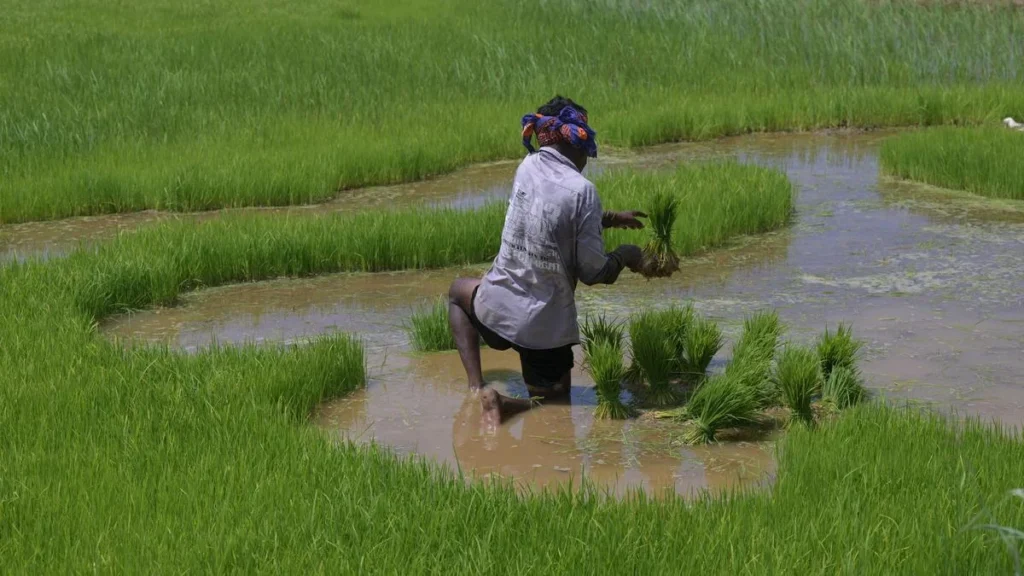
India is grappling with a precarious climate scenario as the 2026 monsoon season takes a worrying turn. Following a June that saw a massive 40% rainfall deficit, the India Meteorological Department (IMD) has issued a sobering forecast: July is expected to witness “below normal” precipitation, likely falling below 94% of the long-period average. As the lifeblood of the Indian economy, the monsoon’s failure is not merely an agricultural concern—it is a systemic risk threatening to trigger inflation, dampen GDP growth, and exacerbate rural distress.
The Chronology of a Waning Monsoon
The current anxiety stems from a lackluster start to the seasonal cycle. June, typically a month of vigorous onset, recorded only 99.5 mm of rainfall against the expected 165.3 mm—a stark 39.8% decline. This shortfall is spread across all four major meteorological subdivisions, indicating a widespread phenomenon rather than a localized weather anomaly.
This trend did not emerge in a vacuum. Weeks prior, Union Agriculture Minister Shivraj Singh Chouhan had sounded the alarm regarding the potential emergence of a “super” El Niño. On June 23, 2026, he warned that the atmospheric phenomenon could severely disrupt Kharif crop cycles, particularly in rainfed regions where irrigation infrastructure remains inadequate. The persistence of these dry conditions into July suggests that the initial fears regarding the monsoon’s health were well-founded, setting the stage for a potentially challenging harvest season.
Supporting Data: An Economy Under Pressure
To understand the gravity of the situation, one must look at the economic indicators. India entered the 2026-27 fiscal year from a position of relative strength, with foodgrain output in 2024-25 reaching a record 357.73 million metric tonnes (MMT). However, a weak monsoon threatens to erode this momentum.

The Inflationary Spiral
The Reserve Bank of India (RBI) has already flagged the monsoon as a critical variable in its growth-inflation outlook. With CPI inflation rising to 3.9% in May 2026 from 3.5% in April, the upward pressure on food, fuel, and core components is palpable. Daily price data leading up to June 18 indicated that food inflation—specifically in edible oils, potatoes, onions, and tomatoes—is already on the rise.
If the monsoon remains deficient, the synergy of local supply shortages and global headwinds—such as elevated fertilizer prices and rising shipping costs due to the ongoing West Asian conflict—could result in a sharp, sustained spike in food prices. As Prof. R. Ramakumar of the Tata Institute of Social Sciences points out, the danger is that this weak monsoon is unfolding against a backdrop of global instability, which limits the government’s ability to use international markets as a safety valve.
Official Responses and Strategic Challenges
The government is navigating a narrow corridor between supporting farmers and managing fiscal discipline. The Union Cabinet has approved a ₹41,533 crore Nutrient-Based Subsidy for phosphatic and potassic fertilizers for the current Kharif season. However, analysts warn that subsidies alone cannot offset a structural lack of water.
Agriculture Minister Shivraj Singh Chouhan’s recent disclosures highlight the vulnerability of the system: 315 districts are currently classified as high-risk, with 111 of these spread across 12 states suffering from acute irrigation deficits. With over half of India’s cultivated land relying entirely on the heavens, the current drought-like conditions are testing the limits of India’s rural resilience.

Economic Implications: A Ripple Effect
The impact of a failed monsoon permeates the economy in three distinct, interconnected phases:
1. The Agricultural Contraction
Agriculture contributes roughly one-fifth of India’s Gross Value Added (GVA) but supports 55% of the population. A decline in rainfall leads to lower yields, which directly hits the income of the rural populace. CRISIL reports suggest that while farmers in regions like Punjab and Haryana might pivot toward paddy, others are moving away from water-intensive crops like maize, choosing instead to plant pulses or, in some cases, leaving land fallow.
2. Rural Demand and Industrial Output
As farm incomes potentially shrink by up to 10%, the non-farm sector in rural areas—specifically construction and local services—faces an immediate contraction. Industries that rely on rural demand, such as the automobile sector, are already feeling the heat. A dip in two-wheeler and tractor sales often serves as a precursor to broader economic slowdowns. Kotak Mutual Fund analysts have projected that a worst-case scenario combining El Niño and a severe drought could shave anywhere from 20 to 65 basis points off the national GDP growth rate.
3. External Sector Pressures
The threat extends to India’s trade balance. Agriculture exports have grown at a CAGR of 8.2% between 2020 and 2025, becoming a vital pillar of the nation’s export profile. A poor harvest could force the government to release buffer stocks or resort to large-scale imports, which would widen the Current Account Deficit (CAD) and exert downward pressure on the rupee.

Historical Context: Learning from the Past
History provides a roadmap of the risks involved. Since 2000, six out of 11 instances of deficient monsoons were linked to El Niño events. The 2009 and 2015 seasons stand out as stark case studies.
- The 2009 Crisis: A lack of rainfall combined with low irrigation coverage caused a significant contraction in crop GVA (-2.5% and -3.2% in subsequent years), leading to double-digit inflation.
- The 2015 Resilience: While 2015 also faced El Niño-driven disruptions, inflation remained muted due to proactive food management and a global slump in commodity prices.
However, experts caution against relying on the 2015 outcome. Prof. Bharat Ramaswami of Ashoka University notes that a second consecutive year of climate stress would be exponentially more damaging, as the buffers built during previous years are depleted.
The Call for “Drought-Proofing”
The recurring nature of these climate shocks has sparked a debate on the necessity of “drought-proofing” the Indian economy. Critics argue that current policies remain reactive, focusing on temporary relief and crop insurance rather than long-term risk reduction.
"We need to pay attention to policies that reduce the risk itself," says Prof. Ramakumar. This includes heavy public investment in irrigation, the promotion of drought-resistant, high-yielding crop varieties, and a radical overhaul of water management systems. Currently, India spends significant resources on insurance, but there is little transparency regarding the efficacy of these payouts in actually stabilizing farmer livelihoods.

Conclusion: A Critical Juncture
As India monitors the skies throughout July, the stakes could not be higher. The combination of a deficient monsoon, global geopolitical tensions, and structural dependencies in the agricultural sector creates a complex challenge for policymakers. Whether the country can mitigate these impacts through timely market interventions and strategic reserves remains to be seen. However, one reality is clear: without a fundamental shift toward sustainable, resilient agriculture, India’s economic growth will remain perpetually vulnerable to the whims of the monsoon.